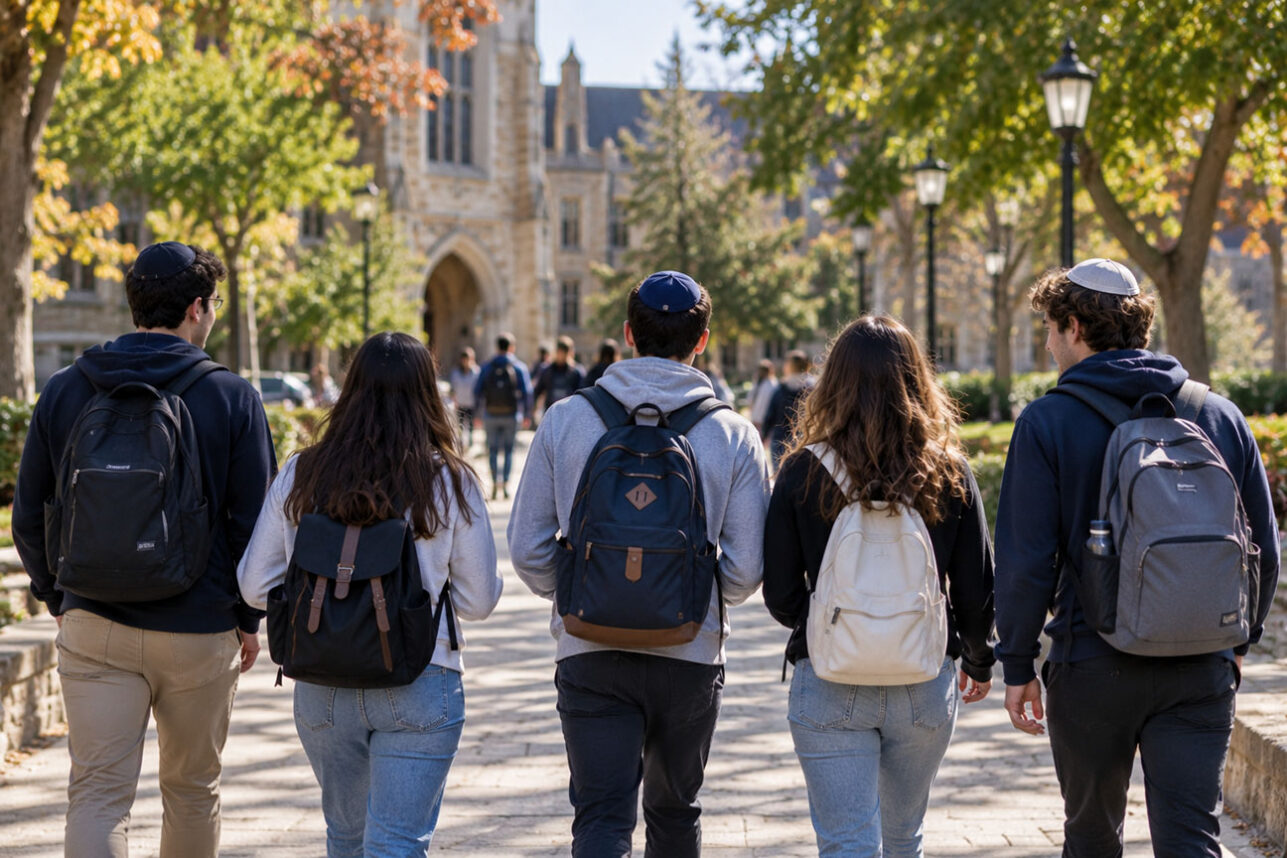
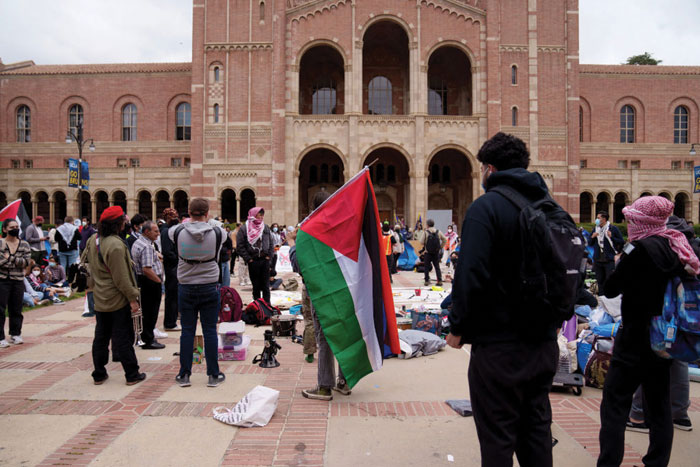
UCLA filed a motion on Aug. 23 dismissing their appeal of a preliminary injunction requiring the university to protect Jewish students from being barred from campus spaces.
The Becket Fund for Religious Liberty announced the university’s voluntary dismissal of the appeal. “We’re glad to see UCLA in full retreat,” Becket President Mark Rienzi, an attorney representing three Jewish students in their lawsuit against UCLA over the university’s handling of the encampment, said in a statement. “Appealing Judge [Mark] Scarsi’s very reasonable order to stop discriminating against Jews was always a bad idea. Dismissing that appeal is the first step on the road to recovery of a campus that welcomes all, including its Jewish students.”
#BREAKING: @UCLA dismisses its appeal: https://t.co/32395eOh9s pic.twitter.com/TuNFoPvN50
— BECKET (@BECKETlaw) August 23, 2024
Statement from Mark Rienzi, Becket's president and an attorney for the students: "We're glad to see UCLA in full retreat. Appealing Judge Scarsi's very reasonable order to stop discriminating against Jews was always a bad idea. Dismissing that appeal is the first step on the road…
— BECKET (@BECKETlaw) August 23, 2024
The university said in a statement to The Journal, “UCLA is committed to fostering an environment where every member of our community is safe and feels welcome. We are in full alignment with the court on that point. While we will always create conditions for the free expression of ideas, we will not tolerate antisemitism, Islamophobia or any forms of discrimination or harassment. The University will forgo an appeal given UCLA’s own anti-harassment and anti-discrimination policies and the current implementation of the directives issued by the UC Office of the President. We will abide by the injunction as this case makes its way through the courts.”
In the injunction, Scarsi wrote “In the year 2024, in the United States of America, in the State of California, in the City of Los Angeles, Jewish students were excluded from portions of the UCLA campus because they refused to denounce their faith. This fact is so unimaginable and so abhorrent to our constitutional guarantee of religious freedom that it bears repeating, Jewish students were excluded from portions of the UCLA campus because they refused to denounce their faith. UCLA does not dispute this. Instead, UCLA claims that it has no responsibility to protect the religious freedom of its Jewish students because the exclusion was engineered by third-party protesters. But under constitutional principles, UCLA may not allow services to some students when UCLA knows that other students are excluded on religious grounds, regardless of who engineered the exclusion.”