Sydney is my second home. I got married there 25 years ago, and I have maintained deep business and family ties to the community ever since. But on a late December day, just before Sabbath, I wasn’t there for business. I stood at the Bondi Pavilion—steps away from the grass where the Hanukkah massacre occurred—to bridge a gap of thousands of miles with a simple stack of paper. I was there to deliver cards from children at nearly a dozen Los Angeles schools, two more from New York and the Bnai Brith Girls Dvash Chapter of Northridge.
This wasn’t just a delivery; it was a defiance of the silence that often follows such horrors. When I met with Rabbi Ulman at the Chabad of Bondi—a man who tragically lost both his son-in-law and his “right-hand” rabbi in the attack—I presented more than just letters. I handed him $500 raised by an eight-year-old girl in LA who emptied her tzedakah, charity, box, alongside a piece of art from her six-year-old sister. These small gestures carry the weight of a Jewish diaspora that refuses to look away.
A Global Shadow of Fear
Why should a reader in Los Angeles or New York care about a tragedy on a beach in Australia? Because the Bondi massacre wasn’t an isolated incident; it was a local eruption of a global fever, a culmination of the hatred of Jewish people, from children to the elderly. Since the day of that cowardly act against Jews lighting Hannukkah candles at one of Australia’s most iconic beaches, a chilling shadow has stretched across Jewish communities worldwide. From London to Los Angeles, the sense of “safe haven” has been shattered.
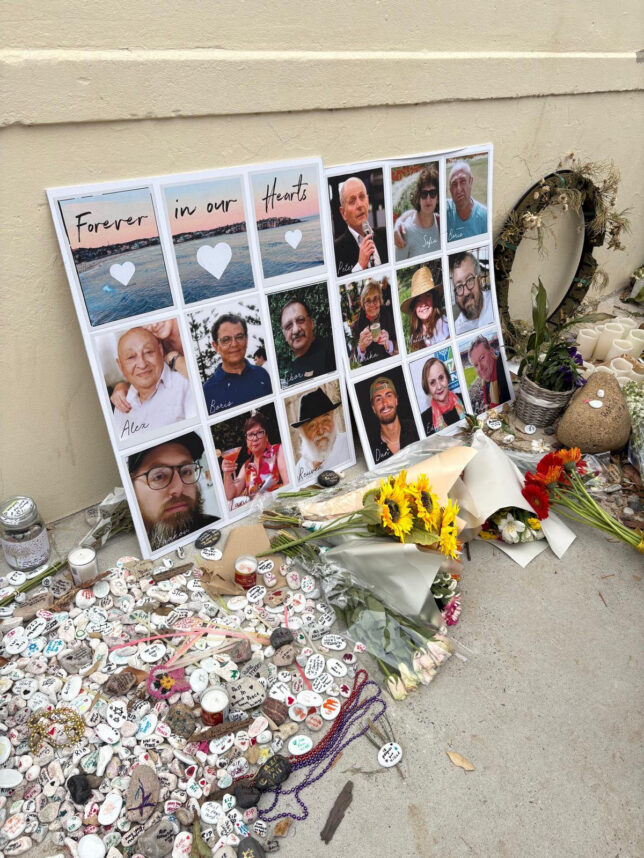
Parents are now forced to have “the talk” with their children about why their schools need armed guards and why they might need to hide their Star of David necklace in public. This collective trauma creates a sense of powerlessness that can be paralyzing. When a community as vibrant and integrated as Sydney’s can be targeted in such a barbaric fashion, it sends a message to every Jew in the diaspora: You are not as safe as you think. This is a conversation I have had with my dual US Australian teenage children, the grandchildren of Auschwitz survivors, who live in Los Angeles and also grew up on Bondi Beach, the most beloved and carefree place in the world for them prior to December 14, 2025.
From Trauma to Agency
In the face of rising global antisemitism, our children feel this vulnerability most acutely. They hear the hushed, worried tones of their parents and see the increased security at their schools and synagogues. My goal with this initiative—supported by The Brigade, a network of entertainment leaders dedicated to confronting antisemitism through storytelling—was to replace that fear with agency.
I wanted these kids to know they have a voice. By writing to the injured survivors and families of victims in Bondi, they weren’t just “processing” a tragedy; they were participating in the ancient Jewish tradition of Areivut—the idea that all Jews are responsible for one another. The fact that the Sydney Jewish Museum is now archiving some of these letters proves that these “small gestures” are, in fact, historical markers of our resilience.
A Call for Accountability
We must be clear-eyed about why this happened. The Bondi massacre was facilitated by systemic failures in the Australian government and police. Their inability to recognize and neutralize the threat before it reached the Pavilion is a cautionary tale for every Western democracy.
We cannot afford to wait for the next tragedy to demand better. We need genuine engagement from leadership to protect Jewish life, not just in Sydney, but everywhere the diaspora calls home. This effort was a small window of action before the holiday break, but its purpose is eternal: to ensure that when the darkness of antisemitism rises, the response from the global community is louder, brighter, and completely unbreakable.
The Bondi Bridge: Why an Australian Tragedy Demands a Global Response
Eric Feig
Sydney is my second home. I got married there 25 years ago, and I have maintained deep business and family ties to the community ever since. But on a late December day, just before Sabbath, I wasn’t there for business. I stood at the Bondi Pavilion—steps away from the grass where the Hanukkah massacre occurred—to bridge a gap of thousands of miles with a simple stack of paper. I was there to deliver cards from children at nearly a dozen Los Angeles schools, two more from New York and the Bnai Brith Girls Dvash Chapter of Northridge.
This wasn’t just a delivery; it was a defiance of the silence that often follows such horrors. When I met with Rabbi Ulman at the Chabad of Bondi—a man who tragically lost both his son-in-law and his “right-hand” rabbi in the attack—I presented more than just letters. I handed him $500 raised by an eight-year-old girl in LA who emptied her tzedakah, charity, box, alongside a piece of art from her six-year-old sister. These small gestures carry the weight of a Jewish diaspora that refuses to look away.
A Global Shadow of Fear
Why should a reader in Los Angeles or New York care about a tragedy on a beach in Australia? Because the Bondi massacre wasn’t an isolated incident; it was a local eruption of a global fever, a culmination of the hatred of Jewish people, from children to the elderly. Since the day of that cowardly act against Jews lighting Hannukkah candles at one of Australia’s most iconic beaches, a chilling shadow has stretched across Jewish communities worldwide. From London to Los Angeles, the sense of “safe haven” has been shattered.
Parents are now forced to have “the talk” with their children about why their schools need armed guards and why they might need to hide their Star of David necklace in public. This collective trauma creates a sense of powerlessness that can be paralyzing. When a community as vibrant and integrated as Sydney’s can be targeted in such a barbaric fashion, it sends a message to every Jew in the diaspora: You are not as safe as you think. This is a conversation I have had with my dual US Australian teenage children, the grandchildren of Auschwitz survivors, who live in Los Angeles and also grew up on Bondi Beach, the most beloved and carefree place in the world for them prior to December 14, 2025.
From Trauma to Agency
In the face of rising global antisemitism, our children feel this vulnerability most acutely. They hear the hushed, worried tones of their parents and see the increased security at their schools and synagogues. My goal with this initiative—supported by The Brigade, a network of entertainment leaders dedicated to confronting antisemitism through storytelling—was to replace that fear with agency.
I wanted these kids to know they have a voice. By writing to the injured survivors and families of victims in Bondi, they weren’t just “processing” a tragedy; they were participating in the ancient Jewish tradition of Areivut—the idea that all Jews are responsible for one another. The fact that the Sydney Jewish Museum is now archiving some of these letters proves that these “small gestures” are, in fact, historical markers of our resilience.
A Call for Accountability
We must be clear-eyed about why this happened. The Bondi massacre was facilitated by systemic failures in the Australian government and police. Their inability to recognize and neutralize the threat before it reached the Pavilion is a cautionary tale for every Western democracy.
We cannot afford to wait for the next tragedy to demand better. We need genuine engagement from leadership to protect Jewish life, not just in Sydney, but everywhere the diaspora calls home. This effort was a small window of action before the holiday break, but its purpose is eternal: to ensure that when the darkness of antisemitism rises, the response from the global community is louder, brighter, and completely unbreakable.
Did you enjoy this article?
You'll love our roundtable.
Editor's Picks
Israel and the Internet Wars – A Professional Social Media Review
The Invisible Student: A Tale of Homelessness at UCLA and USC
What Ever Happened to the LA Times?
Who Are the Jews On Joe Biden’s Cabinet?
You’re Not a Bad Jewish Mom If Your Kid Wants Santa Claus to Come to Your House
No Labels: The Group Fighting for the Political Center
Latest Articles
Israel’s Memorial Day – Why it is Uniquely Meaningful
The Bondi Bridge: Why an Australian Tragedy Demands a Global Response
JNF-USA Women for Israel Luncheon Features Foreign Policy Analyst Lisa Daftari
The Sarah Lawrence Response Is the Problem
Party Disinvited
Longtime Philanthropy Leader Joins AJU, Weekend Retreat Gathers NLP Cohort
Rabbis of LA | A Man of Inclusive Compassion
First of three parts
The Point of Pointless Hatred
Hatred is an ever-present instinct, and like its opposite, love, it can blossom into a full-blown passion.
After – A poem for Parsha Acharei-Mot
After the death of Tony in 2004 I got married. The wedding was the same day as his funeral – terrible planning on everyone’s part…
A Bisl Torah — When a Jew Talks About a Jew
Let us be very careful about how we use our words, especially about a fellow Jew.
A Moment in Time: “Looking Inward, Reaching Upward”
Vermeer’s “Maid Asleep” Contrasted with Artemisia’s Penitent Mary Magdalene
He Built the Campaign That Freed Gaza’s Child Hostages. Now He Is Sharing What He Learned
For businesses and public figures, a crisis is not a question of if, but when. Leaders must be prepared to respond in the way each dilemma demands. The right crisis response, Ben-Horin argues, depends on timing and the leader’s nerve to act.
No Funny Business: How Jewish Entertainers Are Being Targeted on Stage and Off
Some have reportedly hired private security, while others avoid interviews or limit commentary on Israel and the war altogether due to fear of backlash, harassment or professional repercussions.
Print Issue: Israel and America | April 24, 2026
As Israel turns 78, its alliance with America is being questioned from all sides. What is the wise path forward?
Los Angeles Teen Wins Second Place in International Bible Contest
This second place is the highest that an American has won in 13 years.
For Oran Almog, Yom Hazikaron Doesn’t End at Sundown
Oran Almog, who lost his eyesight and five family members in a terror attack in 2003, describes the delicate process of helping fellow survivors and bereaved families continue with their lives.
Stolen in the Holocaust, Trapped in Court: HEAR Act Update Promises a Clearer Path
The updated HEAR Act will not guarantee victory for every claimant, but Congress has now made its message unmistakable: Nazi-looted art cases should not be dismissed because Survivors and heirs could not find what was deliberately hidden from them.
Professor’s Lawsuit Highlights UCLA’s Post–October 7 Campus Climate
For those involved, the lawsuits are not only about past incidents, but about whether they will lead to meaningful accountability and lasting change on campus — so that Jewish faculty and students can feel safe, visible and protected within the university.
Global Survey by the Jewish Agency Finds Strong Optimism About the Future of World Jewry
The report revealed that nearly three-quarters, 74%, of Jewish young adults (ages 18-28) worldwide and two-thirds, 67%, of young adults in Israel believe they can positively influence the future of their communities.
Friday Night Lights: Fried Israeli Schnitzel
Nowadays, most Fridays find me breading and frying schnitzel.
Celebrate Rugelach Day
Like many enduring recipes – traditional rugelach dates back centuries in Eastern Europe – it was passed down, adapted and refined in kitchens through multiple generations.
Table for Five: Acharei Mot-Kedoshim
Holy Living
The $90 Billion Blind Spot: The Diaspora’s Costliest Contradiction
We are so very fortunate that the diaspora shows up when Israel is under rocket fire and we are in shelters. The harder question is whether they will show up when Israel is underpriced.
Teddy’s Bear and the Birth of Israel
A U.S. president’s mercy had helped give the Michtom family the means of substantively supporting the eventual rebirth of the State of Israel.
For Rachel Goldberg-Polin and the Rest of Us
Rachel is a gifted woman who has been chosen to carry a burden. And in turn, she has chosen, by her own telling, to write and to speak about that burden.
More news and opinions than at a Shabbat dinner, right in your inbox.