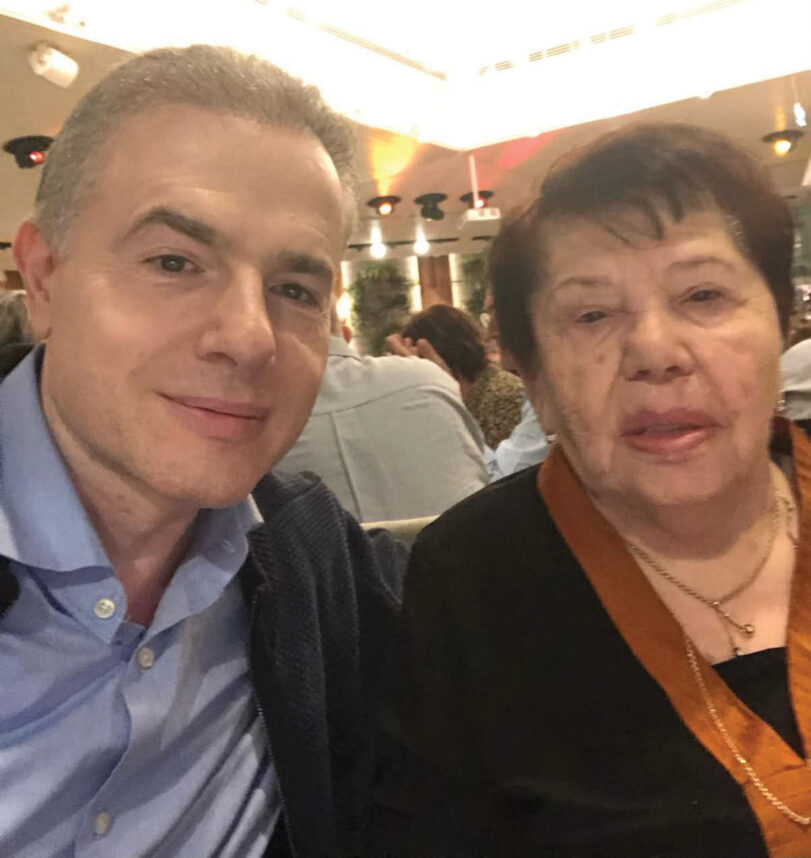
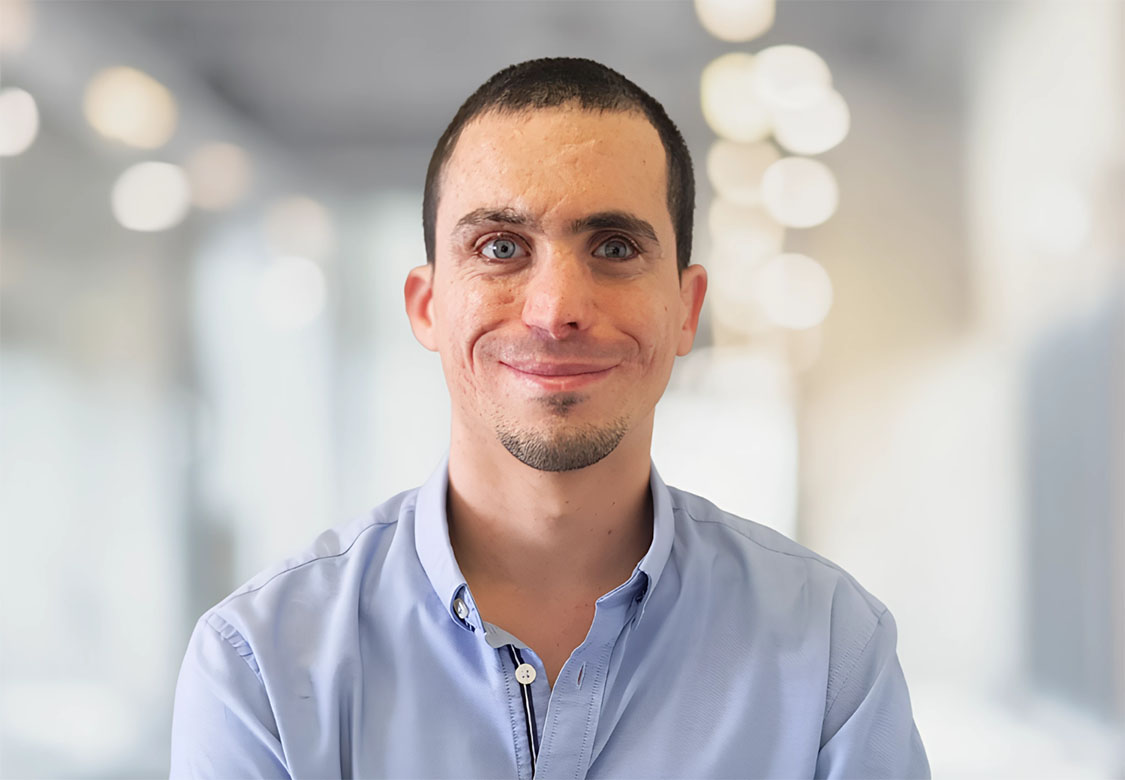
This year, Yom Hazikaron, Israel’s day of remembrance for fallen soldiers and victims of terror, began on the evening of April 20 and ended at sundown on the 21st. But for Oran Almog — and millions of others — Yom Hazikaron never ends. “Yom Hazikaron is not one day,” Almog told The Journal. “It’s every day. It’s present in every meaningful moment, in every achievement, in every decision.”
In 2003 at age ten, Almog was at the Maxim restaurant in Haifa when it was attacked by a Palestinian suicide bomber. Five members of his family were murdered — grandparents Ze’ev (71) and Ruth (70), father Moshe (43), brother Tomer (9) and cousin Assaf (11). Twenty-one civilians were murdered in total. There were 51 injuries, including Almog himself, who was blinded.
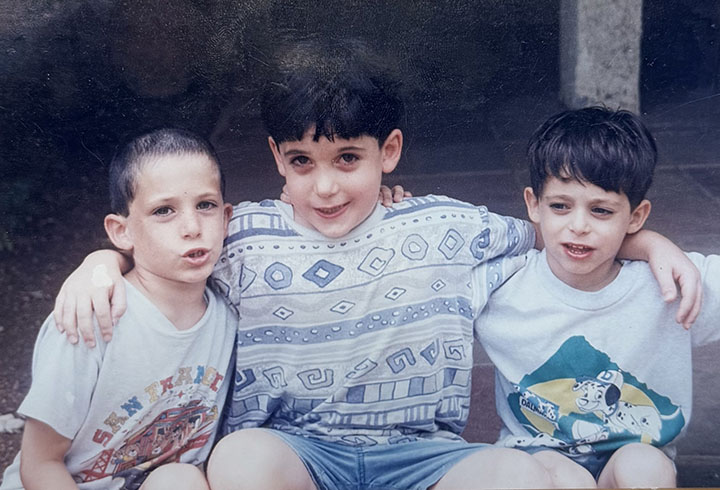
In the 23 years since the restaurant attack, Almog managed to rebuild his life through sports, military service, startup investment and public speaking. He told The Journal that the never-ending process of grieving can be overwhelming. Over the years though, Yom Hazikaron every year helps with the pain. “I didn’t yet know how to hold that amount of pain,” he said. “I learned that this day is not only about what we lost, it’s also about how we choose to live with it.”
The Journal spoke with Chantal Belzberg, who has worked with Oran Almog for years through OneFamily.
“Oran Almog is extraordinary, but not in the way people sometimes think,” Belzberg said. “Oran doesn’t walk into a room and try to inspire people or tell them how to feel. In fact, it’s almost the opposite. What we’ve seen over the years is that his strength comes from a very quiet place. He doesn’t compare pain, he doesn’t minimize it, and he never suggests that someone else should cope the way he does. He simply sits with people in a very real way. And that’s what allows others to open up to him. I have known Oran and his family since the attack, and in many ways, he grew up with us at OneFamily.”
On April 27, Belzberg was presented with the Israel Prize for Lifetime Achievement by the Minister of Education. It is Israel’s highest civilian honor. She still took the time that week to continue to elaborate on Almog and his connection with OneFamily.
“He lost so much, and he lives with very real limitations every day,” Belzberg said. “So when he speaks, it doesn’t feel theoretical. It feels honest. And that creates a kind of trust that is very hard to build otherwise. Oran has always spent Yom Hazikaron with us, at our central ceremony in Jerusalem. Year after year, he is there, part of the OneFamily community, not as a symbol, but as one of many who are carrying memory and loss together. But more than anything, Oran gives people permission. Permission to take their time. Permission to still be in pain. Permission to not be okay. And at the same time, without ever saying it directly, he represents the possibility that life can slowly expand again. Not because someone told you to be strong, but because you are not alone in the journey. And that is something people feel very deeply when they are with him.”
Every year, on the eve of Yom Hazikaron, Almog goes to Jerusalem to attend a ceremony organized by OneFamily, a humanitarian group founded in the wake of another suicide bombing at a restaurant. Their mission is to provide long-term support for victims of terror and their families. It was founded by philanthropists Marc and Chantal Belzberg after the Sbarro pizzeria suicide bombing in Jerusalem on Aug. 9, 2001, which killed 16 and injured 130. “It’s an organization I feel very deeply connected to,” he said. “Being there, surrounded by other families who carry similar stories, creates a sense of understanding that is hard to find anywhere else.”
On the day of Yom Hazikaron, Almog organizes a small memorial with family and friends at a cemetery for victims of terror in Haifa. “Over the years, these moments have become anchors for me,” he said. “They don’t make the day easier, but they give it meaning, and a sense that we are not alone in carrying this memory forward.”
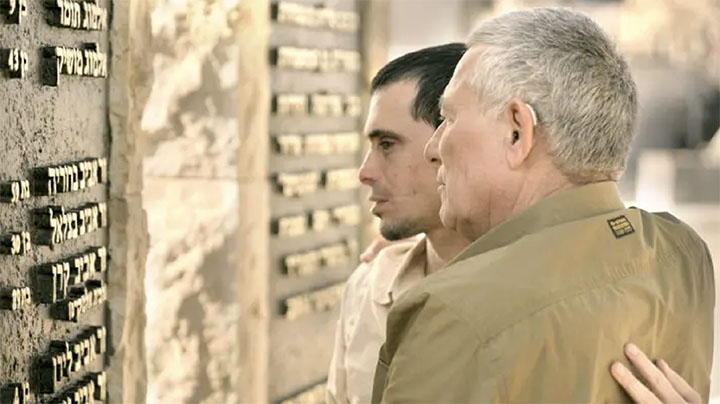
Over time, he reminds them that the question is not if they will find a way forward, but how. “Sometimes [Yom Hazikaron] becomes too structured, too formal,” he said. “But at its core, it’s a very human day. It’s about people, relationships and the cost of life as we know it.”
Transitioning to life without eyesight is never easy, not to mention the sudden and traumatic loss of family. “The transition to life without eyesight was emotional, but also meaningful — it reminds me that independence is not something we take for granted, it’s something that was paid for and something we have a responsibility to carry forward.”
Looking back at those first few years that followed surviving the restaurant attack, Almog filled his life with as much activity as he could. Before the terror attack, he was the youngest child in Israel with a black belt. Without eyesight, though, he wasn’t able to continue. So he spent the next five years training in competitive sailing. “Karate is something that you must see the rival,” he said. “But for sailing, the most important thing is to understand where the wind is. It doesn’t matter if I see or not, because wind is something that you feel. I understand that maybe I have that advantage because I’m blind.” At age 15, he won a bronze medal in the world championship for the blind. On the podium where he accepted his medal, he said it was so much more than coming in top three in the world. “I wanted to show the people who tried to kill me and murdered my family, ‘I won,’” he said. “And it showed me what I’m still capable of, because I didn’t always believe that I could do it.”
The world championships for the blind was the first time Almog felt like he wasn’t just a blind kid from the terror attack. “I am a blind kid from the terror attack who can take all difficulties and make the best out of it,” he said. “It was the first time that I understood that “Okay, I can do whatever I think I can, and the disability or the situations in my life without eyesight, it’s part of my life, but it’s not my life.”
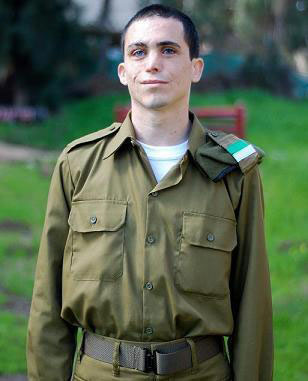
He was not required to serve in the Israel Defense Forces due to his severe injury. He volunteered anyway and worked in an intelligence division. After his service, he started working in startup investment. Since the attacks of Oct. 7, 2023, he has pivoted towards working with clients to direct tech sector capital to help injured survivors rehabilitate. This includes investing in helping fellow Israelis sail through their own storms of mental health struggles. “I think every day how we can help the people to break the blocks, to break the obstacles and to make their life better,” he said. “In the economy, in technology, in their mental health.” He continues to volunteer at OneFamily camps. He taught himself to play guitar at one of the camps. He prefers to play classic rock, with his favorite being Queen’s “Bohemian Rhapsody.”
Still, there are people who are dealing every day with bereavement and trauma — even without physical disabilities. Almog doesn’t offer vague, “if I can do it, you can do it” advice. When asked if there’s anything he says on Yom Hazikaron to other people who are struggling, he said that he tries not to say much, adding that “sometimes the most honest thing is simply to be there.”
It’s the other days of the year when Almog speaks with fellow bereaved families and friends. He finds himself often saying, “You don’t have to be strong right now,” “life can grow around the pain without erasing it” and that there is “no right way to go through this.”
Jewish communities around the world continue to face ongoing threats and antisemitic violence. Almog said that being together and finding a supportive community is the most fundamental way to continue life after terror.
With Yom Hazikaron and all the days between, he and others return to the same question: “What does this memory ask of me?” For Almog, it’s “not just to remember, but to feel connected,” he said. “To understand that behind every name, there is a full life that continues in the people who carry it.”