Yom Kippur asks something unusual of us. It asks us to look in two directions at once. We are commanded to look inward, to take an honest accounting of where we have failed this year. That is teshuva, the work of repentance. But in the middle of this process of self-evaluation, we are also commanded to look forward, while holding close the people we have lost.
Judaism does not believe we can genuinely move forward by only repenting, as if the past did not shape us, and it does not believe we can genuinely move forward by only remembering, as if grief alone were enough. It asks us to hold both – the reckoning and the remembering – at the same time, suggesting this is the only way real progress actually works.
This year on Yom Kippur, I will stand for Yizkor, and I will say my mother’s name, for the first time.
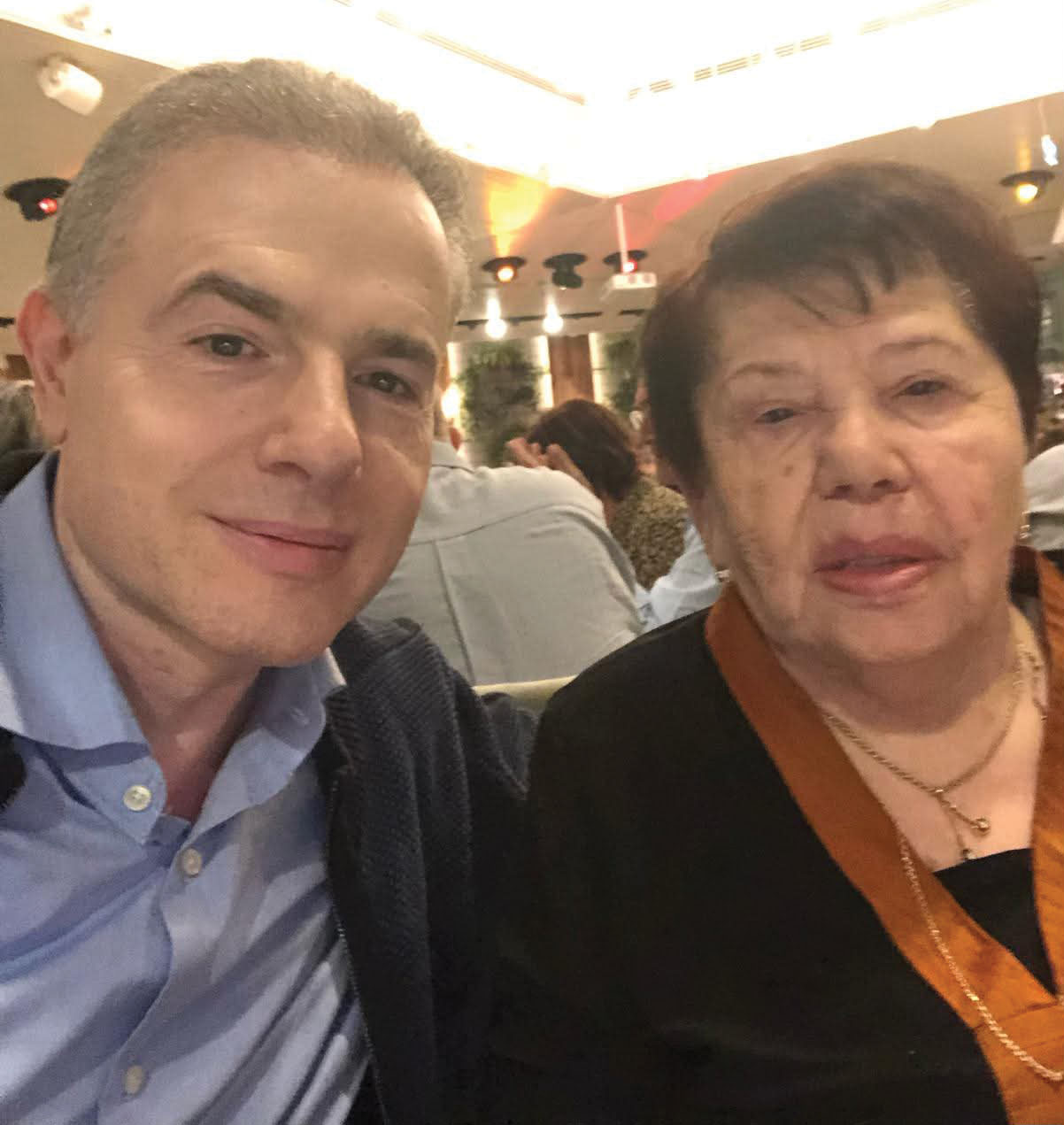
My mother, Yehudit Manheim, passed this summer just days after celebrating her 101st birthday. She was one of the last survivors of the Holocaust.
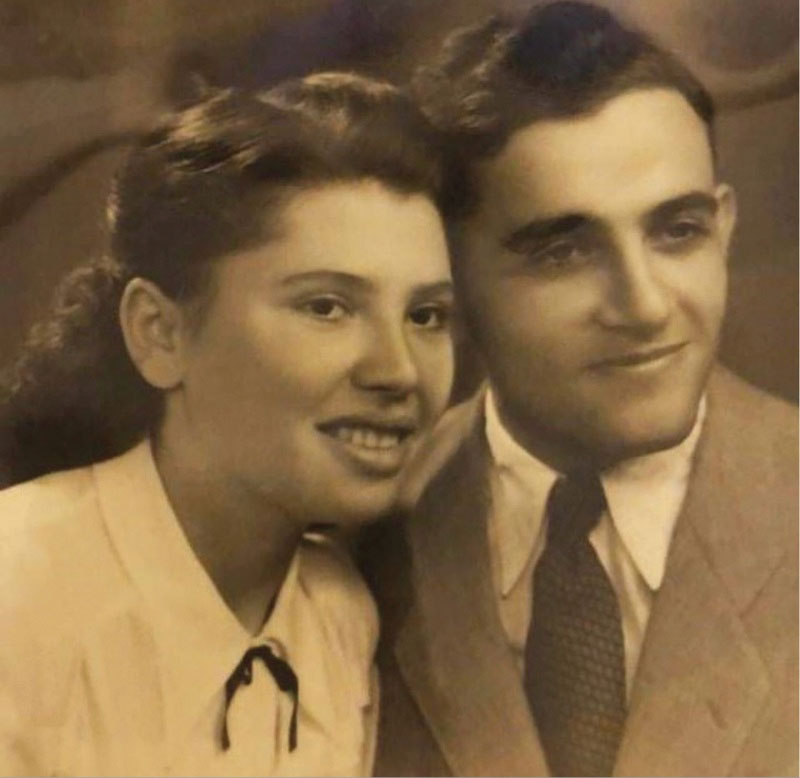
In the spring of 1944, the Nazi regime’s murder machine drew near to her family’s home in Transylvania. Her parents sent her to an aunt in Budapest, hoping to save her life. That aunt, claiming she did not have enough food for her own children, turned my mother away soon after and sent her to wander in the streets of Budapest with nothing, gathering scraps in the market.
Eventually she was captured and deported to Ravensbrück, and then to Bergen-Belsen, unaware that every family member, except for one sister, had already been murdered in the crematoria at Birkenau.
My mother survived Bergen-Belsen, and I grew up as a member of the second generation after the Holocaust. It is a heavy burden that has shaped me every day, and more than anything else, it drove me into public life, serving as a member of the Knesset and Cabinet minister, and into a lifetime of work to strengthen the State of Israel. My mother is the force that drives me forward, especially these days, as antisemitism and hatred of Israel are rearing their ugly heads, unlike anything seen since the dark days of the Holocaust. The commandment that survivors like my mother have entrusted us is to stand strong, with all our might, against our enemies.
On Oct. 7, 2023, during the Simchat Torah holiday, my mother, who always faithfully observed Shabbat, called me. For the first time, she started to reveal pieces of her story during the Holocaust.
“The horrors I am seeing are taking me back to the terrible days that I lived through,” she said. “I will not live for many more years, but promise me that the future of my grandchildren and great-grandchildren in an independent Jewish State will never face an existential threat again.”
“Mom,” I replied, “It would be presumptuous of me to make such a promise. But it is our duty and our mission to never forget the horrors you endured, and to secure the future of our beloved Jewish homeland in Israel.”
I have thought about that exchange every day since. No one person can guarantee a nation’s safety. But a people can, if they are willing to do the work year after year, generation after generation. That is what my mother’s question actually demanded of me. Not a vow, but a practice. And that practice is exactly what Yom Kippur asks of us every year: to hold the reckoning and the remembering together, and let that combination propel us forward and produce something worth living for.
Our tradition has never treated memory as a private feeling – think of all the ways we honor our past as a community, like sitting Shiva or saying Kaddish. It’s not something we hold quietly once a year and then set back down. Rather, we say a name, and then we act, we give, we take on an obligation we would not otherwise have taken on. Because that is what it means to let the dead continue to matter to the living and to honor the memory. My mother did not survive Bergen-Belsen so that her grandchildren could simply remember her once a year. She survived so that they could build, and secure, and continue.
This is what Israel Bonds is all about: building and securing the Jewish State as it navigated absorbing the many waves of new immigrants in the young state’s earliest years to sustaining its economy throughout the years, especially during challenging times like those we have faced since Oct. 7.
Since that heinous day, we have surpassed more than $8 billion in record-breaking global investments, part of more than $57 billion raised over 75 years. This is not a footnote to Israel’s story. It is one of its load-bearing walls, the quiet, continuous mechanism by which one generation’s promise to the Jewish State becomes the next generation’s inheritance.
I could not promise my mother that the State of Israel will never again face an existential threat. No one can. But I can promise her to do everything in my power to make certain her great-grandchildren inherit a Jewish State strong enough to keep answering that threat, generation after generation.
This Yom Kippur, when you take an honest accounting of yourself or rise for Yizkor and hold your own names close, I hope you will also ask what you are prepared to do this year. Some of us will give tzedakah. Some of us will perform a mitzvah we let slip. Some of us will choose to stand behind the State of Israel the way Jews around the world did when Ben-Gurion first asked them to 75 years ago, concretely, and lastingly, through Israel Bonds.
That is the promise I intend to keep for my mother.
Dani Naveh is Israel Bonds President and CEO.