In the final week of the U.S. Open, the fifth set became the story. Carlos Alcaraz, the biggest star in the sport, and Ben Shelton, the up-and-coming American pushing him, took the court after 11p.m. on Tuesday night and didn’t finish until past 3 a.m. Wednesday morning: five sets, tiebreakers, both men still standing in front of the hard-core tennis congregants who’d made their pilgrimage to Flushing and weren’t going anywhere.
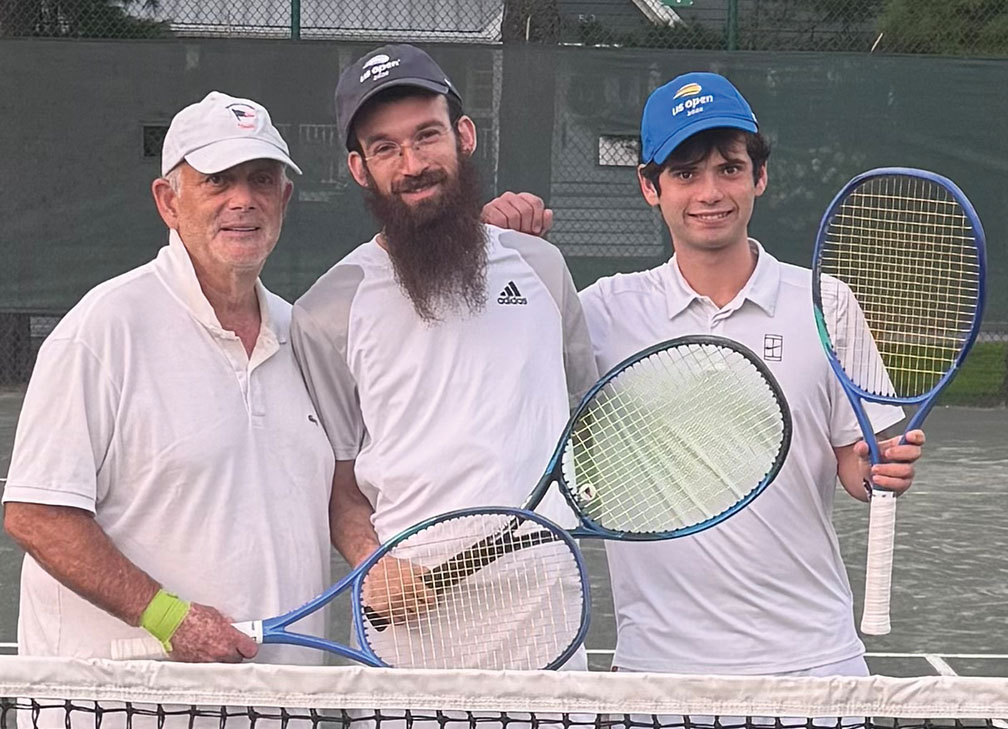
This past week, at our regular Torah and tennis session with Rabbi Chaim Pinczower, a bright and insightful Chabad rabbi, at Beach Point in Westchester, where we play in the same whites we’ll wear to shul before the month is out, our talk of the week’s parsha elevated into tennis, and we asked him if there was a connection to what had just happened at the Open. Here’s what he shared.
I’ve spent years describing that moment as the ninth inning of a World Series game. After watching this one stretch into the early hours of Wednesday morning, I’m revising the metaphor. It’s a fifth set that runs past three in the morning. No fresh legs, no plan B, just whatever is true about a person after four hours on court with nothing left to hide behind. Anyone who stayed to watch Alcaraz and Shelton that late wasn’t just watching strategy. They were watching two men down to their last, truest layer, which is exactly what Neilah is built to reveal in us.
Neilah means “closing.” It’s the fifth and final prayer of Yom Kippur, the one no other day of the year has. Every day we say three prayers: Maariv at night, Shacharit in the morning, Mincha in the afternoon. On Shabbat and every holiday, we add a fourth, Mussaf. Only on Yom Kippur do we get a fifth, and it corresponds to the fifth and highest level of the soul, the one we can only touch this one day, at this one hour.
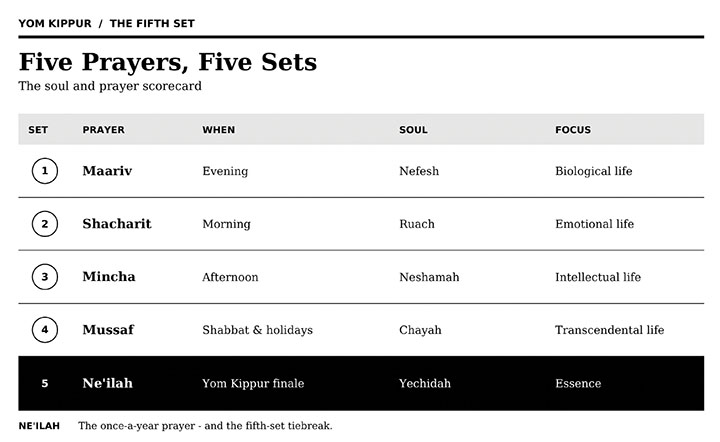
Every other day, we live in the first three levels. On Shabbat we reach the fourth. Only in that last hour before the gates shut do we touch the fifth, yechidah, oneness itself. By Neilah every defense is down. We’ve fasted all day and prayed all day, and there’s nothing left standing between us and the most exposed, most honest part of who we are.
That’s the hour Alcaraz and Shelton were still on court, deep into the early hours of Wednesday morning, when the match was finally decided.
Kabbalistic teachings say there’s no higher moment for a Jew than the instant he’s ready to give his whole life over. That’s the spark and the flame at their closest all year, and it’s also what I watched at three in the morning. Nobody wins a match like that on technique. It comes down to what’s left when everything else runs out.
Both players that night went beyond their best, each one reaching for more than he thought he had left. That’s the mentality worth carrying out of Neilah: not just getting through Yom Kippur but applying that same effort to the whole year ahead, reaching for our potential instead of settling for what’s comfortable, and using it to actually make a difference in 5787.
Conrad Pearlman is a Columbia University Class of 2030 student and tournament tennis player. Mark Pearlman, a business strategist and investor, created JInsider.com, Sinai Live Books and is a tennis aficionado.
Rabbi Chaim Pinczower grew up in Melbourne, Australia, gained early tennis exposure at the Australian Open, received his smicha in Israel and now serves as a Chabad rabbi in Larchmont and Mamaroneck, NY.