fbpx

September 16, 2026

The Essay of the Year

I read hundreds if not thousands of essays a year, on all kinds of subjects. Many of them fascinate me, but this year, one in particular stood out.

It was written earlier this month by Ahmed Fouad Alkhatib, a senior fellow at the Atlantic Council, in The New York Times.

“When I was 11, Hamas’ founder, Sheikh Ahmed Yassin, arrived unannounced at the mosque next to my family’s home in Gaza City,” Alkhatib begins. “It was 2001 and the Islamist terrorist group, which had not yet taken control of Gaza, had turned the el-Yarmouk mosque into a base for proselytizing and propaganda.”

Alkhatib goes on to chronicle the devastation that Hamas has inflicted on its own people:

“Hamas, from its inception, behaved like a mob of gangsters, brutalizing Palestinian women who violated its fanatic sense of morality, torturing and killing those who were suspected of opposing them and carrying out grisly suicide attacks against Israeli civilians.”

He concludes that “for Gaza to recover, Hamas must be expelled.”

This is such a logical observation, why would I pick it as the essay of the year?

That’s just it. Because it is so rare.

The collective assault against Israel has gone so broad and deep this past year it’s been hard finding anyone in the mainstream press who will dare criticize the Hamas murderers who massacred 1,200 innocent souls on Oct. 7, 2023.

Even worse, not only did Alkhatib’s reasonable essay earn him no kudos, he’s been the target of the nastiest attacks from the antizionist crowd. 

Historian and pro-Palestinian activist Zachary Foster launched a personal attack on Alkhatib, calling him the “darling of the American Jewish-Zionist establishment” while describing Zionism as a form of “brain cancer.”

Mehdi Hasan complained to his more than two million X followers that some of the platform’s “worst,” “most dishonest” and “most fanatical pro-genocide” users were sharing Alkhatib’s article.

Alkhatib posted his own reaction to Hasan: 

“Imagine reading a piece that calls for Gaza to become the pride and joy of the Palestinian people and a hub of compelling Palestinian national identity by rejuvenating the territory, embracing peace and rejecting a terror organization that admitted to refusing Gaza development offers worth billions, including an airport and seaport, only to proclaim that the op-ed is ‘pro-genocide.’

“And how was this brilliant conclusion reached? Because the article I published in The New York Times didn’t do the ubiquitous ‘everything has to be Israel’s fault’ that seems to be the only line of thinking within the supposed ‘pro-Palestine’ camp. Speak to Palestinians in Gaza who aren’t Hamas or making content for the pro-Palestine community abroad, and you hear the same thing again and again. They describe, plainly and without theatrics, how Hamas halted Gaza’s development and crippled the broader Palestinian national project since its founding in 1987. They do not need to mention Israel in every sentence to sound authentic to outsiders, including other Palestinians or non-Palestinians alike.”

That’s another crucial reason why the essay stood out: Alkhatib actually cares for the Palestinians. 

“Hamas should have no role in Gaza’s future but, appallingly, so many in the West who consider themselves allies of the Palestinian people still see the group as honorable resistance fighters,” he writes. “Their support for, or failure to denounce, the group only helps perpetuate the degradation of Gaza.”

So little of this is new. For anyone’s who’s been paying attention, we’ve always known that the worst enemy of the Palestinians has been the terrorists who spend money on rockets and tunnels rather than schools and hospitals.

But how often do we hear “pro-Palestinian” activists talk about making Palestinian lives better?

It doesn’t happen because just like Hamas, the antizionist movement cares little about building anything. Its only goal is to take down Israel.

That’s why they get spooked when a credible Palestinian like Alkhatib talks about a better future for the Palestinians and how Hamas will always get in the way of that better future.

As Alkhatib says: “It is time to delegitimize, call out, resist, and dismantle the current ‘pro-Palestine’ movement and build an entirely new apparatus that rejects the hateful, bigoted, racist, homophobic, Jihadi, violent and antisemitic voices that have become mainstream within this failed environment.”

Those are words of hope for Palestinians, but for antizionists, they are words of despair.

That is why it’s my essay of the year.

The Essay of the Year Read More »

More Time to Dream

I was seated at a long wooden table in a coffee shop somewhere near Anchorage, writing a love letter to my wife. Through a skylight came a copper-tinted light, neither bright nor dim. A man entered and took a seat at the far end of the table. I noticed him first for the graceful way he walked, even though he looked to be in his 80s. He sat sipping his coffee and reading Book I of Marcus Aurelius’s Meditations, in which the old emperor fondly considers the people who had been his teachers. At some point he sidled over, nearer to me. We got to talking, he in his heavy English accent and I in my Minnesotan.

As if he’d already known I’d be interested, he began telling me about the mentorship he’d had from birds.

“When I was young, mid-teens,” the falconer began, “I was already a skilled falconer. I had imported birds from a gentleman in Tennessee. There were two. Both peregrine falcons. Quite difficult to train at first, but I had all the accoutrements. The thick leather glove they would land on, the hoods, the little bells around their legs, and so on.”

I shifted in my seat, drawing my chair a few inches closer to the table.

He paused, watching me. “I hope I’m not disturbing you. I sense you’re busy.”

“No, please,” I said. “I’m listening.”

“You see, I learned from the falcons, not only the art of catching prey, but also the ways of evil. The birds held a great deal of anger. I’d come to understand it was their desire not simply to catch food for sustenance, but to rip apart their prey.

“Being young, watching them destroy again and again, I began to live my life like those birds, making prey of those I should have loved, ripping them apart and seeking from them only what I desired. As you could imagine, this led me nowhere good.”

The falconer looked up briefly at me. There was a hitch in his voice. He dabbed his eyes with the corner of a napkin and began again.

“I once stood staring out the window of my flat at a flock of doves,” he said. “They had alighted in an open cobblestoned area. Though they were always present, I’d never paid them much attention. In fact, they bothered me. I found them dismal. Worthless if you must know. Their behavior was, as everyone is aware, a great deal different from that of the falcons. They ate seeds, scraps of food left behind, nothing involving blood. I watched as if it were the first time I’d seen doves.”

The falconer looked over at me, as if to gauge whether what he was saying still held my interest. When he was sure it had, he continued. His voice quieter.

“I stared, nearly spellbound as they pecked together in a kind of dance, each cooing in the way a mother might do for her infant. I had always mistaken this behavior for timidity. Especially among men. Only then did I realize that it was a kind of fierceness. A fierceness for harmony, for peace, for a kind of strength that the falcons could never possess.”

The falconer sipped at the remainder of his coffee. He turned his head toward the window as black thunderclouds hurried across the sky.

“It was as though I had undergone an abduction of my senses. That was how suddenly I turned my whole being toward the doves, toward the peaceable. I found in them something I’d never allowed myself to consider. My own yearning for gentleness, for tenderness. I found in those moments a greater strength than I’d ever possessed. You see, I don’t trust weakness. I fear it.”

Now the sky, which had grown dark as encroaching clouds gathered, brightened for a split second as a bolt of strange horizontal lightning struck. The flash gave way to an extended moment of utter silence. Then came a crash of thunder so terrible it portended the absolute end of the world.

The falconer stirred the last dregs of his coffee and gave a laugh, as though the violent booming were an ironic underscore to everything he’d just said.

“This notion of civility and peacemaking, it’s not for the timid. Not for the faint of heart.”

The man disappeared, dissolved along with his book. A door swung open. I felt a powerful gust of wind. It carried the scent of blue spruce and summer rain. The ink on the letter I was writing vanished. The tin roof of the coffee shop blew away and water entered from everywhere, rising fast above the tabletop where the man and I had just sat. I scrambled onto the counter where years ago a barista once stood.

Another lightning strike. And one more. Not sky to ground. Side to side. The copper-tinted light was no more. I waited for the thunder. Waited for the absolute end of the world.

Waited and waited.

I awoke then from the dream just as my wife left the bed. It was still dark. The birds hadn’t begun to chirp.

Lately, she’s been waking earlier than normal. She creeps out of the bedroom, quiet as humanly possible. She knows I need my rest and knows — intuitively, I think — that I need time to dream.

Lots more time to dream.


Peter Himmelman is a Grammy and Emmy nominated performer, songwriter, film composer, visual artist and award-winning author. This piece was published in his Substack.

More Time to Dream Read More »

Israel’s Clinical Trial Illusion: Testing Drugs Is Not the Same as Capturing Economic Value

Israel has built an impressive clinical trial ecosystem. Its hospitals participate in sophisticated international studies, its investigators work with multinational pharmaceutical companies, patients gain access to experimental therapies and Israeli physicians contribute scientific expertise and evidence to the development of new drugs. Pharma Israel states explicitly that “Most of the clinical trials are conducted by multinational pharmaceutical companies” and says that this extensive clinical research activity positions Israel at the forefront of medical innovation worldwide.

That success deserves to be protected and expanded. But it can also create a strategic illusion in which the volume of clinical trials conducted in Israel is interpreted as evidence of the amount of drug development and economic value being created for Israel. Those are not the same thing.

A multinational pharmaceutical company can sponsor a global clinical trial that includes Israeli hospitals. Israeli investigators may recruit patients, generate important data and contribute scientific expertise. The sponsor can combine those data with results from other countries and use the evidence to seek regulatory approvals in the United States, Europe and other markets. Yet the investigational drug, the development program, the regulatory submissions and the commercial rights may all belong to companies outside Israel. If the drug succeeds, the economic returns generated by approval and commercialization flow according to ownership and licensing rights, not according to where individual trial sites were located.

Israel still benefits from hosting the trial. Hospitals receive research funding. Physicians and research teams gain experience. Patients may obtain earlier access to experimental therapies. The healthcare system strengthens its research infrastructure and its relationships with global pharmaceutical companies. These are meaningful benefits and should be celebrated. But they are different from the economic value created by owning rights to a successful drug and participating in the returns generated when that drug reaches the market.

That is the distinction national statistics need to make clear. Clinical trial activity tells us where part of the research is performed. It does not tell us who sponsors the development program, who owns the investigational drug or holds the relevant rights, who submits the evidence for regulatory approval or who captures the economic returns.

The distinction can become especially important when an Israeli startup biotechnology company develops an asset and later partners or licenses it to a global pharmaceutical company. Such a transaction may be exactly the right decision and can itself generate substantial economic value for the Israeli company through upfront payments, milestones, royalties or equity value. But if the global pharmaceutical company then takes responsibility for subsequent development and sponsors multinational trials that include Israeli hospitals, those trials remain part of the global company’s development program. Their presence in Israel does not mean that the investigational drug is being developed by an Israeli company or that the resulting economic value will accrue primarily to Israel. The Israeli economic benefit depends on the rights and financial participation retained in the transaction.

This is why the volume of clinical trials can become a misleading proxy for the strength of a national pharmaceutical industry. A country can be an excellent location for multinational clinical research while much of the ownership, regulatory responsibility and economic upside associated with the drugs being tested sits elsewhere.

Israel therefore needs to distinguish clearly between clinical research activity and economic value creation. Clinical trial activity should continue to be measured and celebrated because it reflects genuine clinical research strength. But if the question is whether Israel is building a stronger pharmaceutical industry, different measures are needed. How many investigational drugs are sponsored by Israeli companies? How much ownership and economic participation do Israeli companies retain as those assets advance? How often do successful programs generate regulatory approvals, licensing income, royalties, company growth and reinvestment that accrue to the Israeli economy?

Those measures answer a different question from the number of trials conducted in Israeli hospitals. One measures participation in global clinical research. The other measures how much economic value Israel creates and retains from drug development.

Israel should want more clinical trials. It should want Israeli patients participating in global research, Israeli investigators working with leading pharmaceutical companies and Israeli hospitals competing successfully for international studies. There is nothing wrong with being an exceptional place to conduct clinical research. The mistake is treating that achievement as evidence of something it does not measure.

Clinical trial statistics tell us where investigational drugs are tested. They do not tell us who owns the assets, who uses the evidence to obtain regulatory approvals or who captures the economic value when those drugs succeed. If Israel wants to know whether it is building not only a world-class clinical research ecosystem but a powerful pharmaceutical industry, that is the distinction it needs to measure.


Professor David Adler is Chief Scientific & Medical Officer of the PATHORA Institute of Pathology & Tissue Medicine. He is a senior pharmaceutical leader in oncology drug development and translational medicine with over 15 years of experience, including a decade in senior leadership at Bayer AG’s Global Oncology Clinical Development organization. He holds academic appointments at the Hebrew University of Jerusalem, Ben-Gurion University of the Negev, and the University of Bonn.

Israel’s Clinical Trial Illusion: Testing Drugs Is Not the Same as Capturing Economic Value Read More »

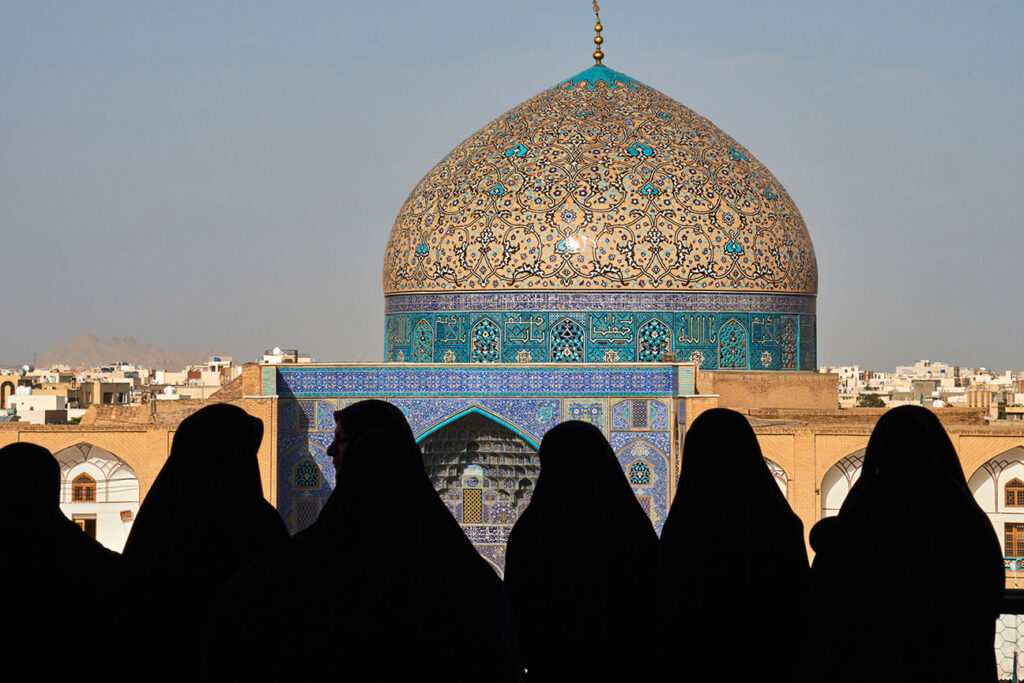
Iran’s Mandatory Hijab Is its Achilles’ Heel

On June 23, 1988, just weeks before the Iran-Iraq war ended, I was arrested and beaten in Tehran for not wearing my headscarf according to Iran’s mandatory hijab laws.

Five veiled morality-police officers assaulted me. They shouted accusations of “moral corruption” at me and other young women. Inside the police van, they spat on us and called us traitors – publicly shaming us by stating that while Iranian soldiers were fighting Saddam Hussein at the country’s borders, we were disgracing our nation.

We were teenage girls. Yet to the Islamic Republic, we were the “enemy within.”

I was fortunate. I was able to call the mother of a friend – a devout, veiled Muslim woman who opposed compulsory hijab. Her family had connections to the Iranian Revolutionary Guard Corps (IRGC), and she used those connections to secure my release. I survived the ordeal, but I learned its lesson: Fear the state. Keep quiet. Obey.

I stayed silent about another part of my identity. I am from a Jewish family, and revealing that fact could have made my situation even more dangerous. Religious minorities in Iran have been vulnerable to political pressure and discrimination since the 1979 revolution. My parents, who themselves faced harassment at work, would have been terrified had they known what happened to me.

Decades later, the Islamic Republic is still policing women’s bodies. But something important has changed: The regime has learned that it cannot rely on religious ideology alone. Increasingly, it must combine ideology with nationalism, military power and propaganda.

That evolution exposes one of the regime’s deepest contradictions.

The death in police custody of Jina Mahsa Amini, a young Kurdish woman arrested over her headscarf, ignited the 2022 “Woman, Life, Freedom” uprising. Many women across Iran removed their headscarves in defiance of authorities, often knowing they could face arrest, violence, fines or imprisonment.

Yet the Iranian state has not simply doubled down. It has also learned to appropriate the imagery of the resistance.

In recent months, state-sponsored demonstrations have featured women who are veiled in some instances and unveiled or loosely veiled in others. During the recent wartime mobilization, Iranian state media have showcased women as symbols of national unity and patriotic resistance. Reuters has reported that the government has increasingly emphasized nationalism and Persian national symbols in its propaganda, even as the IRGC remains central to the state’s power.

This is not necessarily liberalization. It can be something more cynical: selective enforcement.

The message appears to be that an Iranian woman may be unveiled when her image serves the state — but not necessarily when her freedom challenges the state.

That distinction matters.

Compulsory hijab law is the Islamic Republic’s Achilles’ heel. IRGC’s repression has turned against the “enemy within,” women.

That strategy became especially visible after the nationwide protests that began in late December 2025. The protests were fueled by economic hardship and rapidly developed into a broader challenge to the political system. Authorities responded with lethal force, mass arrests and long periods of internet shutdown. Human-rights organizations documented extensive abuses while the blackout made it extraordinarily difficult to report the full scale of the killings.

At the same time, the government intensified public displays of national unity.

This is where the hijab contradiction becomes politically revealing. The state that arrests women for violating compulsory dress rules can simultaneously put women who are not traditionally veiled on display when their images serve its propaganda.

The Iranian judiciary continues to prosecute dissidents under sweeping national security and religious charges. Women’s-rights activists, journalists and political opponents have faced imprisonment and, in some cases, the death penalty. Fatemeh Sepehri, a devout Shiite Muslim woman and outspoken critic of the Islamic Republic, has been imprisoned since 2022 for criticizing the policies of IRGC. Sepehri – who has always been fully veiled – is a widow of an Iran-Iraq war veteran. 

Like Fatemeh Sepehri, my friend’s mother, the devout Muslim woman who helped save me in 1988, opposed compulsory hijab. So do many other religious Iranian women. Their objection is not to faith. It is to the state’s appropriation of faith as an instrument of political control.

The Islamic Republic’s most enduring strategy has been to make opposition to the regime appear synonymous with opposition to Iran, Islam or national security.

This strategy places the ordinary Iranian population in an impossible position: oppose the political leadership of IRGC and risk being portrayed as an enemy of the nation; support Iran against foreign attack and risk strengthening the very institutions that repress you.

The IRGC has become particularly adept at exploiting that dilemma. A state apparatus that must constantly adjust which version of itself it presents — Islamic, nationalist, revolutionary, military or patriotic — is revealing its vulnerability.

That is why the hijab remains so significant.

For decades, the Islamic Republic of Iran treated women’s veiling as a test of obedience. Today, it sometimes treats women’s appearance as a tool of propaganda. But Iranian women have spent decades rejecting that premise. I know because I was one of them. In 1988, fear taught me to put on the headscarf.

Girls cannot attend elementary school without hijab and no one is accepted into the University campuses without wearing hijab. The Judiciary in Mashhad has requested a harsher enforcement of hijab rules in the city. The loyal base of IRGC and the Basij demands hijab rules. They want a population adhering not only to nationalism but also to the strict hijab according to their interpretation of Shia Islam. Thus, the political fight over hijab continues. 

The younger generation who are well connected to the outside world via social networks and VPNs that bypass the censorship, have since taught the world something far more consequential: A government can force a woman to cover her hair. It cannot force loyalty.

That may ultimately be the Islamic Republic’s greatest contradiction — and its deepest vulnerability.


Elham Gheytanchi is an Associate Faculty member at Santa Monica College.

Iran’s Mandatory Hijab Is its Achilles’ Heel Read More »

Yom Kippuring

The Talmud says Yom Kippur is one of the happiest days of the year for the Jewish people. That was true for me as a child.

Yom Kippur was the day the heavenly gates of sweets and freedom swung open. While the adults prayed and fasted, my friends and I, fueled by sugar, raced up and down the synagogue stairs playing games.

The biggest thrill came before the Torah reading. The Rimonim, the removable silver ornaments that crowned the Torah case, were auctioned. If my father won, I got to hold them during the reading. Then, when everyone stood and the Torah was carried back, I got to place the Rimonim on it myself, as close to the Torah as a child could get. Instead of being packed like sardines with the rest of the congregation, I sat high on my father’s shoulders, holding on to his spiky chin with one hand and the Rimonim with the other, with the whole congregation in view.

Before I crossed over to the men’s section, some women would gather around and whisper their prayers into my ears. I couldn’t read Hebrew. I didn’t understand the official prayers. None of that seemed to matter. They believed God listened especially carefully to children, and I was entrusted with their private negotiations with heaven. I was no longer disturbing the prayers. I was carrying them.

But when it was time to place the Rimonim back on the Torah, excitement took over. I forgot every request, name, and whispered plea.

So I stretched my right hand toward one side of the congregation and my left toward the other. I kissed my hands and blew the kisses toward the raised, open Torah.

Those were my first prayers.

When we moved to Israel, Yom Kippur felt familiar and completely different. The streets emptied of cars, buses and taxis and belonged to children on bicycles, skateboards and scooters. I thought this was an excellent arrangement.

Until I crashed into my neighbor Shmulik.

“You’ll burn in hell!” he yelled, brushing dust from his white suit.

“I’m sorry. It was an accident,” I said as I tried to get up, wiping my bloody elbow with spit.

“An accident you’ll pay for in hell.”

“Look, I’m sorry. I’ll say it two more times, and if you still don’t forgive me, then it’s your problem, not mine.”

I picked up his prayer book, kissed it and handed it back.

“I forgive you, but …” He paused, kissed the prayer book himself and returned to dusting his pants.

“Will God forgive you? For riding a skateboard on Yom Kippur … you’ll still burn in hell.”

Then he walked away.

But his question didn’t.

If anyone else had said it, I probably would have forgotten the whole thing. But Shmulik regularly beat his older brother at chess, and in my childhood hierarchy of authority, this made him someone worth taking seriously.

But I wasn’t bat mitzvah age yet. Judgment and burning in hell could wait. I had a skateboard to ride and candy to eat.

Then suddenly I was 11, old enough to begin practicing for the fast.

There I was in the synagogue with a thick, heavy prayer book, unable to follow anything. When everyone sat, I stood. When everyone stood, I sat. Like an upside-down turtle, I flipped back and forth through the pages. The prayers were too fast and too long. I was too slow and too short.

The synagogue was hot. Babies cried. Women prayed and talked. The crowd blocked both my oxygen and my view of the Torah. My throat felt full of sand. My stomach seemed to have expanded into the rest of my body.

And somewhere around noon I began to wonder if this was what hell felt like.

“Who shall live and who shall die; who shall perish by water and who by fire …” the cantor chanted.

“And who by starvation?” my stomach asked.

“But repentance, prayer and good deeds can annul the severity of the decree,” the cantor continued.

My hunger had no ears to listen.

I remember almost nothing about judgment or repentance from that Yom Kippur.

I remember an apple.

Red. Shiny. Juicy.

A boy sitting near me kept biting into it, crunch after crunch.

That apple contained the entire world.

And with that sharp turn toward adolescence, I began to hate Yom Kippur.

I wanted it to be over before it had even begun. At the Seudah Mafseket, the final meal before the fast, I ate as much as I possibly could, as if I could preload myself for the next 25 hours.

The night before Yom Kippur, we kids made bets about which pre-bar/bat mitzvah child would last longest without eating. By morning, the conversation had shifted to what we would eat to break the fast.

Years passed.

I moved again, this time to Los Angeles. I found myself walking with a group of Jews toward a lake in the park for Tashlich, the symbolic ritual of casting away our wrongdoings.

In Israel, Yom Kippur had filled the streets. Here, even Tashlich felt different.

I felt awkward and strangely at home.

A father kept trying to stop his little boy from feeding all the bread to the fish.

“For the third time, Jacob, this is serious. We’re not here to feed the fish.”

The boy disagreed.

I tore off a small piece of bread and began reciting Mi El Kamocha.

And suddenly another Tashlich returned to me.

Years later, friends from Israel called to tell me that the boy who had sat beside me in chemistry lab had been killed in combat. I kept remembering how baby-faced he was. He was only 20. Until then, death had belonged mostly to newspapers and distant people. Now it had stepped into my life.

That year, Yom Kippur changed again: I could no longer sleepwalk through it.

“There were two special entrances into the Temple,” the rabbi said, “one for mourners and one for newlyweds.”

I didn’t know which entrance belonged to me.

Somewhere along the way, I had gotten locked out of my own temple.

I picked up the Machzor.

The book was no longer heavy.

I was.

As a child, all I had was spirit, and I was full of it. Now, faced with this loss, it was my spirit that was starving.

Until then, life had mostly seemed like something that happened on its own. You woke up, you rode your skateboard, you fought with Shmulik, you ate candy, you grew older.

Now I understood that sometimes life had to be chosen.

I didn’t know exactly how to do that. Fasting, at least, was familiar.

There are moments when I am immersed in the prayers. But sooner or later, a pounding headache reminds me that Yom Kippur is not an out-of-body experience. By noon, just before the Torah reading, the old burn starts moving between my stomach and my throat.

During Musaf, I am no longer hungry or thirsty. Fasting has transformed into pure pain. I get dizzy. I am nauseated. I can no longer be still.

And yet, just when my body seems to have the least to give, something shifts. At my weakest point, it teaches my spirit what comfort never could: how to be small, how to surrender, how to accept that I am not all that and still believe I can become more.

The hunger strips away some of the noise. I become less interested in convincing God, or myself, that I am doing Yom Kippur correctly. I become more willing simply to stand there.

By late afternoon, between Musaf and Neilah, the rabbi begins speaking. I close my eyes and try to concentrate.

Around me, everything becomes a kind of static: children laughing and crying, women shushing them, someone weeping nearby, someone shifting in her chair, pages turning and my own silence.

By the time Neilah approaches, the synagogue is packed. Ashkenazim, Sephardim, Israelis, Persians, Americans. Old and young. Rich and poor. Joyful and sad.

On any other day, we belong to different worlds. Our differences can leave us divided and cold toward one another.

But today, we gather under one roof.

Most of these people I do not know by name.

But I know them in my prayers.

Our prayers are in the first-person plural: we.

We are all trying, in our own imperfect ways, to find an entrance into a better self.

We sing our longings, pains and joys, our voices woven into a stubborn unity that makes me tremble. We are terrible singers who can barely carry a tune, but we carry a history that binds us as one.

Then comes Avinu Malkeinu.

The cantor begins singing in his husky voice. Beside him stands his five-year-old son, singing with him.

I hear the two voices at once.

The father’s voice reaches the part of me that has learned grief.

The child’s voice reaches somewhere older.

Somewhere I am still sitting on my father’s shoulders.

Somewhere women are still whispering prayers to me.

Somewhere, I believe even the prayers I had forgotten are heard.

The cantor knocks on the podium.

Silence.

For one suspended moment, no one moves.

And there I am again, with more to say to God than words can hold.

And yet, I am embarrassed by the pettiness of some of my requests and have nothing grand enough to offer in return.

I am back where my prayers had begun: in silence, with kisses.

At the end of Neilah, the shofar sounds, one long cry that seems to carry everything we have been holding all day. The congregation breaks open. Familiar strangers hug, kiss and bless each other, singing Oseh Shalom.

I am happy. Relieved, exalted, and hungry for the chance to be someone slightly better than I had been. 


Hilla Gohary Kerendian is an Israeli-Iranian American essayist and storyteller whose work blends lived experience and imagination to explore identity, memory, and the human heart. She writes Change of Heart Stories on Substack.

Yom Kippuring Read More »

Embracing Paradox

According to Plato, Socrates once declared something to the effect of “I know that all I know is that I do not know anything.” 

The Danish philosopher Søren Kierkegaard, whose masterpiece, “Fear and Trembling,” centered on the binding of Isaac, argued that the examination of such logically self-contradictory statements – or paradoxes – may lead to critical insight into life’s great mysteries.

Perhaps true, but it can also lead to a giant headache. Consider, for example, one of the more famous paradoxes: “This statement is false.” Nothing like trying to make sense of infinite regress to keep one up at night! 

Then there is Joseph Heller’s classic observation that attempting to get out of military service by claiming insanity proves that you are, in fact, sane. His contribution to the popular vernacular, “Catch-22,” lives on. And for millennia, people have been uncomfortably musing on statements such as this brain teaser from the Greek philosopher Heraclitus: “The only constant is change.”

When I taught economics, I used paradoxes to help illustrate fundamental points. On the macro side, there is John Maynard Keynes’ Paradox of Thrift: while it is commendable for someone to replace spending with savings in order to prepare better for retirement, if we all did that, economic growth would slow and each of us would end up saving less than before. On the micro side, there is Adam Smith’s Diamond-Water Paradox: water is essential to life and diamonds are not, yet diamonds are expensive and water is virtually free. Why? Because diamonds are scarce and water is plentiful. 

While these examples demonstrate basic principles of economics, paradoxes in the Torah and in the liturgy teach us much more important truths.

“Remember what Amalek did to you on your journey, after you left Egypt … you should blot out the memory of Amalek from under heaven. Do not forget!” (Deuteronomy 25:17-19). Erase the memory, but don’t forget it. I reflect on that one whenever I fall into a funk thinking about the savagery of Hamas and how the world moved against the Jewish people following the Oct. 7, 2023 massacre. 

Should we pretend that horrible day never happened? No. But neither should we relive it over and over again in a Groundhog Day sort of nightmare, especially if our anguish immobilizes us. Rabbi Jay Levy explained to me that Torah scribes have a brilliant way to deal with this passage’s dichotomy. Before commencing work on a Torah scroll, they write the name Amalek on a scrap of paper or parchment and then blot it out, thereby remembering history, without allowing past traumas to paralyze them from moving forward.

And there is the enigma of the haunting Kol Nidre prayer chanted at the start of Yom Kippur. With our lives hanging in the balance, it is reasonable to ask for forgiveness for unfulfilled vows and promises. But note that we are asking to be absolved for future promises, not for the sins of the past. Of course, there is a massive amount of scholarly commentary on this, but I have an explanation that works for me – if you believe you will eventually be forgiven for falling short, you might as well set as lofty goals as possible.

As Kierkegaard envisioned, paradoxes such as these reveal truths that more logical statements may not. 

Grappling with the seemingly inexplicable is something to keep in mind as we resolve to improve ourselves in the days ahead. I bet that many of us are vowing to become more thoughtful, more compassionate and more productively engaged. But even if we were to make meaningful progress toward achieving those aspirations, let’s recall one of the most notable of all paradoxes, attributed to Zeno, the ancient Greek philosopher. According to Zeno’s Paradox, if you get halfway to an end point, and then halfway again and again and again, you will still never reach it. 

But don’t despair. During their 40-year trek, the Jewish people not only received the Torah, they gained a resilience that has served us well to this day.

It’s widely known that the journey matters as much as the destination. Now that’s a paradox with which we can easily relate.


Morton Schapiro served for more than 22 years as President of Northwestern University and Williams College. He taught almost 7,000 undergraduates over his more than 40 years as an economics professor.

Embracing Paradox Read More »

When Eleven Jurors Agree — and One Does Not

The mistrial in the Lindsay Clancy case presents a remarkable paradox about justice.

After weeks of testimony and more than 36 hours of deliberation, 11 Massachusetts jurors reportedly favored acquitting Clancy, who admitted killing her three young children but maintained that postpartum psychosis rendered her not criminally responsible. One juror disagreed. Because a criminal verdict must be unanimous, Judge William Sullivan declared a mistrial.

The law demanded unanimity. An ancient Jewish court might have taught us to be suspicious of it.

The Talmud records an astonishing rule: “A Sanhedrin in which all [the judges] saw the defendant as guilty — they acquit him.” (Sanhedrin 17a.) Maimonides later codified the principle: If every judge in a capital case initially declares the defendant guilty, “he is exempt,” and a death sentence can follow only when some judges have first argued for acquittal and are then outvoted.

At first glance, the rule seems absurd. Surely 23 judges agreeing on guilt should be more convincing than 13 judges overcoming 10 dissenters. Why should more agreement produce less confidence?

The Talmud’s explanation goes to the nature of justice itself. In a capital case, a decision for conviction was postponed overnight so judges could reconsider and search for grounds of innocence. If not a single judge could initially perceive any argument for the defendant, meaningful reconsideration had become impossible.

Rabbi Joseph B. Soloveitchik, one of the foremost Jewish thinkers of the 20th century, offered a profound explanation. A court deciding a capital case must be capable of finding at least some “basis and reasoning for acquittal.” If every judge sees only guilt and no possible argument for innocence, he wrote, there is a “defect and deficiency” in the judicial process itself. Unanimity, paradoxically, may demonstrate not that a case has been considered perfectly, but that it has not been considered from every side.

That ancient insight deserves attention after the Clancy mistrial.

American law approaches unanimity differently. It protects the accused by insisting that the prosecution persuade every juror beyond a reasonable doubt. Thus one holdout can prevent conviction — but, as Clancy’s case demonstrates, one holdout can also prevent acquittal. Eleven jurors apparently concluded that the prosecution had failed to establish criminal responsibility; one juror prevented their judgment from becoming a verdict.

The foreperson reported “with a heavy heart” that the jury could not reach unanimity. Prosecutors must now decide whether to put Clancy, her family and the public through another trial.

Jewish law does not provide an answer to the Clancy case. Its capital procedure belongs to a different legal system and cannot simply be transplanted into Massachusetts.

But it offers a question worth asking.

Perhaps justice is not always measured by how completely disagreement has disappeared. Sometimes disagreement is evidence that deliberation has actually occurred.

The Talmud understood something psychologically profound: A dissenting voice need not be an obstacle to justice. It can be evidence of justice at work.

And sometimes the most dangerous courtroom is not the one in which one person still says, “I disagree.”

It is the one in which nobody does. 


Rabbi Benjamin Blech is Professor of Talmud at Yeshiva University.

When Eleven Jurors Agree — and One Does Not Read More »

Why Do I Write?

David Suissa wrote a column in the Jewish Journal entitled “Why Do I Write?” He has not stopped writing since Sept. 7, 2006. 

He said, “I wrote that first column, titled ‘Welcome to the Hood,’ on a whim, having no clue it might turn into a weekly gig that would keep going and going … and going. I just kept writing.”

David is also Publisher and Editor-in-Chief of the Jewish Journal. He manages the publication’s overall direction and oversees its content along with writing a weekly column. I pity the poor man for how much he must get done each week.

Similarly, decades ago, Rob Eshman, then editor, asked me to write something for The Journal. Aside from writing stand-up comedy and a play when I was 12 years old, I never wrote anything like a column before. It never crossed my mind. After writing a few for Rob, I stopped.

After taking over The Journal, David gave me a call and talked to me about a story I wrote about my father, how moved he was by it and how it inspired him to write. He then asked me to write something. Since that call, I’ve been writing a biweekly column for more than a decade.

Writing for the Jewish Journal has neither made me rich nor made me famous or sought after by national papers. What it has done is give me enormous pleasure, confidence and satisfaction, while also making me a better writer. That ain’t chump change. I even wrote a five-star-reviewed and published book, “Why Not? Lessons on Comedy, Courage and Chutzpah.” 

So why do I write?

1. I write to stick it to my teachers who told me I would probably amount to very little.

2. I write because if my parents returned, they would be very happy I succeeded at something I enjoyed.   

3. I write because it’s amazing to see these ideas come out of me and to shape a story like a sculptor shapes a piece of clay.

4. I write because it’s so good for my mind.

5. I write because people tell me how much they enjoy my writing.

6. I write to prove to myself that I am not stupid.

7. I write because it’s fun.

8. I write because I enjoy the solitude it allows me to bask in.

9. I write because I get to go into a writer’s trance, and when I wake from it, I am amazed at how much time flew by and how much I have accomplished.

10. I write because God gave me a gift, and it’s wrong not to use the gift that God gave me.

11. I write because it’s hard.

12. I write to hopefully make this a better world.

13. I write to let people know that they are not alone.

14. I write because it lets me understand that I am not alone.

15. I write because my family is proud of me.

16. I write to prove I can write without using four-letter words.

17. I write because I am amazed that every time I think I am out of ideas, God tosses me a fresh one.

18. I write to find out about myself and what makes me tick.

19. I write to gain empathy.

20. I write to say I am sorry for things that may have hurt someone.

21. I write because I like to be thought of as a writer.

22. I write because I enjoy talking with other writers.

23. I write because I make myself laugh when I write something funny.

24. I write because I am touched when I write honestly, and it’s the only place I allow myself to cry.

25. I write because I never, ever thought I could do it.

26. I write because I did not go to Yale or Harvard.

27. I write for clarity.

28. I write because … why not?

29. I write to even the score.

30. I write because nobody tells me what to write.

31. I write to stay healthy.

32. I write because my heart has things to disclose to me and others. 

33. I write because I have no reason not to. 

Why do you do what you do?


Mark Schiff is a comedian, actor and writer and hosts, along with Danny Lobell, the “We Think It’s Funny” podcast. His new book is “Why Not? Lessons on Comedy, Courage and Chutzpah.”

Why Do I Write? Read More »

Yizkor This Year for Me Is Like Never Before

Yom Kippur asks something unusual of us. It asks us to look in two directions at once. We are commanded to look inward, to take an honest accounting of where we have failed this year. That is teshuva, the work of repentance. But in the middle of this process of self-evaluation, we are also commanded to look forward, while holding close the people we have lost. 

Judaism does not believe we can genuinely move forward by only repenting, as if the past did not shape us, and it does not believe we can genuinely move forward by only remembering, as if grief alone were enough. It asks us to hold both – the reckoning and the remembering – at the same time, suggesting this is the only way real progress actually works. 

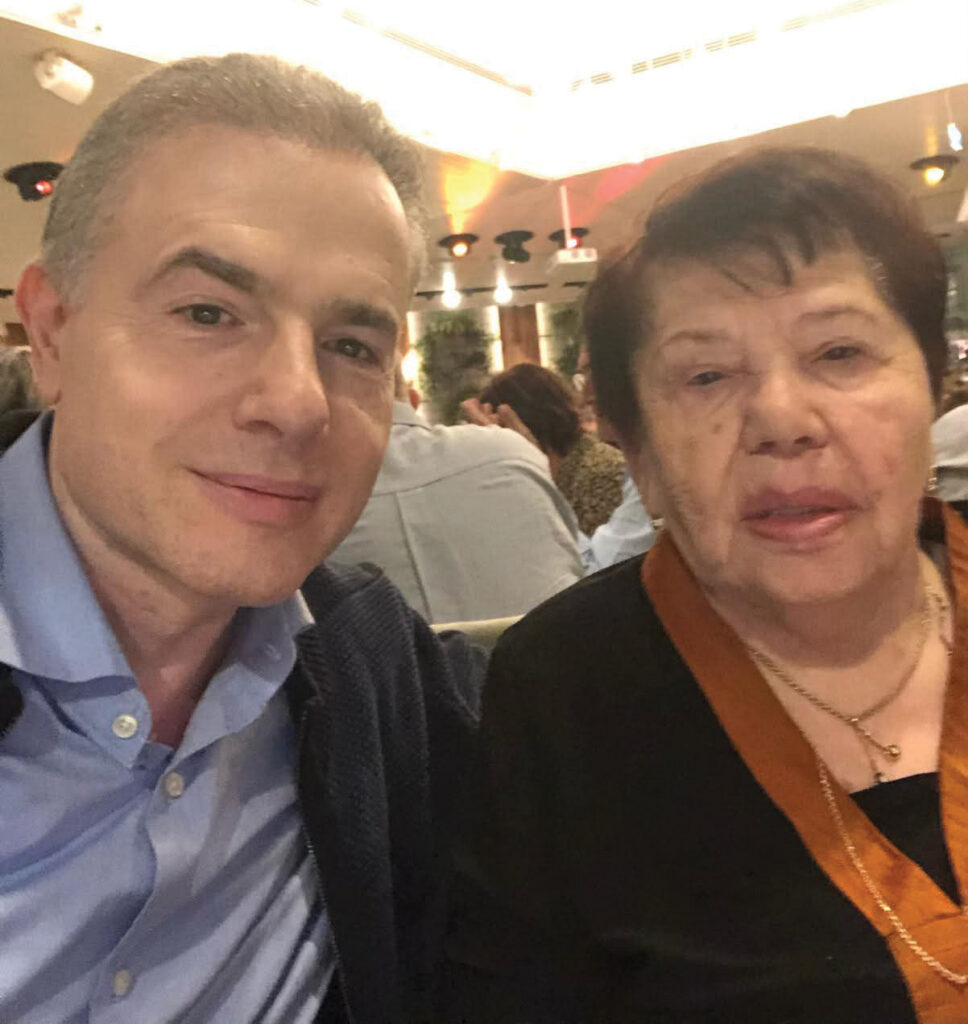
This year on Yom Kippur, I will stand for Yizkor, and I will say my mother’s name, for the first time.

My mother, Yehudit Manheim, passed this summer just days after celebrating her 101st birthday. She was one of the last survivors of the Holocaust.

In the spring of 1944, the Nazi regime’s murder machine drew near to her family’s home in Transylvania. Her parents sent her to an aunt in Budapest, hoping to save her life. That aunt, claiming she did not have enough food for her own children, turned my mother away soon after and sent her to wander in the streets of Budapest with nothing, gathering scraps in the market.

Eventually she was captured and deported to Ravensbrück, and then to Bergen-Belsen, unaware that every family member, except for one sister, had already been murdered in the crematoria at Birkenau.

My mother survived Bergen-Belsen, and I grew up as a member of the second generation after the Holocaust. It is a heavy burden that has shaped me every day, and more than anything else, it drove me into public life, serving as a member of the Knesset and Cabinet minister,  and into a lifetime of work to strengthen the State of Israel. My mother is the force that drives me forward, especially these days, as antisemitism and hatred of Israel are rearing their ugly heads, unlike anything seen since the dark days of the Holocaust. The commandment that survivors like my mother have entrusted us is to stand strong, with all our might, against our enemies. 

On Oct. 7, 2023, during the Simchat Torah holiday, my mother, who always faithfully observed Shabbat, called me. For the first time, she started to reveal pieces of her story during the Holocaust.

“The horrors I am seeing are taking me back to the terrible days that I lived through,” she said. “I will not live for many more years, but promise me that the future of my grandchildren and great-grandchildren in an independent Jewish State will never face an existential threat again.”

“Mom,” I replied, “It would be presumptuous of me to make such a promise. But it is our duty and our mission to never forget the horrors you endured, and to secure the future of our beloved Jewish homeland in Israel.”

I have thought about that exchange every day since. No one person can guarantee a nation’s safety. But a people can, if they are willing to do the work year after year, generation after generation. That is what my mother’s question actually demanded of me. Not a vow, but a practice. And that practice is exactly what Yom Kippur asks of us every year: to hold the reckoning and the remembering together, and let that combination propel us forward and produce something worth living for. 

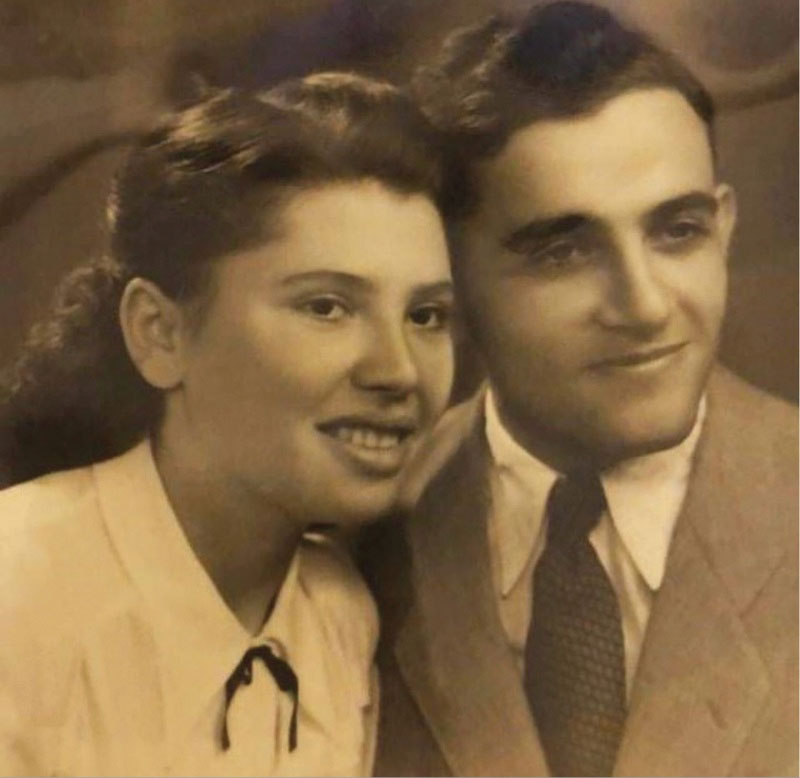
Dani’s parents

Our tradition has never treated memory as a private feeling – think of all the ways we honor our past as a community, like sitting Shiva or saying Kaddish. It’s not something we hold quietly once a year and then set back down. Rather, we say a name, and then we act, we give, we take on an obligation we would not otherwise have taken on. Because that is what it means to let the dead continue to matter to the living and to honor the memory. My mother did not survive Bergen-Belsen so that her grandchildren could simply remember her once a year. She survived so that they could build, and secure, and continue. 

This is what Israel Bonds is all about: building and securing the Jewish State as it navigated absorbing the many waves of new immigrants in the young state’s earliest years to sustaining its economy throughout the years, especially during challenging times like those we have faced since Oct. 7.

Since that heinous day, we have surpassed more than $8 billion in record-breaking global investments, part of more than $57 billion raised over 75 years. This is not a footnote to Israel’s story. It is one of its load-bearing walls, the quiet, continuous mechanism by which one generation’s promise to the Jewish State becomes the next generation’s inheritance.

I could not promise my mother that the State of Israel will never again face an existential threat. No one can. But I can promise her to do everything in my power to make certain her great-grandchildren inherit a Jewish State strong enough to keep answering that threat, generation after generation.

This Yom Kippur, when you take an honest accounting of yourself or rise for Yizkor and hold your own names close, I hope you will also ask what you are prepared to do this year. Some of us will give tzedakah. Some of us will perform a mitzvah we let slip. Some of us will choose to stand behind the State of Israel the way Jews around the world did when Ben-Gurion first asked them to 75 years ago, concretely, and lastingly, through Israel Bonds.

That is the promise I intend to keep for my mother.


Dani Naveh is Israel Bonds President and CEO.

Yizkor This Year for Me Is Like Never Before Read More »

A New Way to Look at Hate

One of the blessings of the New Year is that it encourages us to see old things in new ways.

Take the word “hate.”

On any given day, the word captures the sickening rise in animosity toward Jews and Israel.

Why did Hamas massacre 1200 Israelis on Oct. 7? Because they hate Jews.

Why do Iranian mullahs dream of eradicating the Jewish state? Because they’re filled with hate for Israel.

Whether it’s on college campuses or fashionable movie festivals or in U.N. bodies, the assault on Jews, just as it has been for millennia, is colored with hate.

In that view, hate is an exterior threat.

But during the period of introspection of the Holy Days, hate is no longer just an outside threat. It’s also an inside threat. It’s a personal act. We reflect on the moments during the past year when we may have gotten carried away with hate and anger, and we atone. 

Since we aim so high at this time of year, we’re also more conscious of what can destroy us and what can elevate us.

What can destroy us? You guessed it. Hate.

If you think hate is bad for the hated, it’s even worse for those doing the hating.

“To be free, you have to let go of hate,” the late Chief Rabbi Jonathan Sacks wrote. “Hate harms the hated, but destroys the hater.”

Sacks argued that allowing resentment to define one’s identity prevents true liberty. We must live with the reality of hate but not live in it.

“The wisdom of Moses’ command not to despise Egyptians still shines through today,” Sacks wrote. “If the people had continued to hate their erstwhile oppressors, Moses would have taken the Israelites out of Egypt but would have failed to take Egypt out of the Israelites. They would have continued to be slaves, not physically but psychologically. They would be slaves to the past, held captive by the chains of resentment, unable to build the future.”

What is so heartening about this teaching is that it suggests a new way of looking not only at hate but at Jew-haters.

Yes, they’re a threat.

Yes, it would be better if there were significantly fewer of them.

Yes, we must stay vigilant and confront them.

But let’s never forget that “hate destroys the hater.”

“The Jewish people have lost more than most nations have ever built,” a sharp thinker on X named Mor posted recently. “We are not just any people. We are one of the elders. We have outlasted empires that once thought they would last forever. Babylon. Rome. The caliphates. The Third Reich. They are chapters. We are the book.

“There are still only about 16 million of us in a world of 8 billion. We have one small country we never stopped belonging to. The most widely read book in human history is a book about our people. We are loud. We are proud. And we will never apologize for still being here after so many tried to make sure we wouldn’t be. That is why some cannot stand us. Not because we are powerful. Because we survived them. Because their civilizations rose by the sword and vanished, and we are still lighting candles on Friday night.”

They hate, and we light Shabbat candles.

While it’s normal to bemoan the hate that comes our way, let’s be grateful that we’re not the ones doing the hating; that we’re not allowing hate to corrode our souls; that we still have the power and the wisdom to be happy.

“Because gratitude is the key to happiness, anything that undermines gratitude must undermine happiness,” Dennis Prager wrote in last week’s Rosh Hashanah cover story.

Dennis, who has written a book on happiness, taught that hate and resentment can only undermine gratitude, which can only undermine our happiness.

If ever there was a silver lining for the alarming rise in Jew-hatred we’ve seen in recent years, let it be the karmic prospect that the act of hating undermines the happiness of the haters.

Happier than the haters. I’ll take that any day.

A New Way to Look at Hate Read More »