Acharei Mot — after the death of (Leviticus 16:1–18:30)
After the death of Tony in 2004 I got married.
The wedding was the same day as his funeral –
terrible planning on everyone’s part.
We left a seat for him at our table.
He broke several of the laws listed
in this week’s text before he left
but he never claimed to be Jewish
so there was nothing to forgive. He was
my first friend to go in the ground.
After the death of Cleopatra,
my first cat, I was inconsolable.
The vet tried everything and
left us with only one option.
The look in her eyes when he gave her
the shot will never leave me.
We put her in the ground under a Buddha
When we sold that house, we quietly
declared our perpetual right to visit her.
After the death of our teacher,
the sweet singer of Israel, we all gathered in
Orange County to take our turn with the shovel.
It was a makeshift reunion of people who
only saw each other once a year. We loved
each other harder than Miriam’s song.
After the death of my mother, I tried to
get past her decades-long inconvenience.
I took care of her possessions and paperwork.
I could have told her this was coming
and she never would have believed me.
I sent her home to her motherland.
Let her rest with her parents. I love L.A.
but maybe that’s where I should go to
some day. A holy land. A family gathering.
Rick Lupert, a poet, songleader and graphic designer, is the author of 29 books including “God Wrestler: A Poem for Every Torah Portion.” Visit him at www.JewishPoetry.net
Lashon Haron, evil speech, is often compared to a traveling salesperson selling tales. While we may think about the internal ramifications of evil speech—how gossip damages the souls of the person speaking and the person listening, we may not think about the external consequences.
Especially when Jews choose to speak evil speech about other Jews.
In his essay, “The Plague of Evil Speech,” Rabbi Jonathan Sacks questions the efficacy of Jews slandering the beliefs, opinions, rituals, and traditions of other Jews. He writes, “For a people of history, we can be bewilderingly obtuse. Time and again, unable to resolve their own conflicts civilly and graciously, Jews slandered their opponents to the civil authorities, with results that were disastrous to the Jewish community as a whole.” He continues, “Diminishing their opponents, the self-proclaimed defenders of the faith diminished themselves and their faith. They managed to convey the impression that Judaism is simple-minded, narrow, incapable of handling complexity, helpless in the face of challenge, a religion of anathemas instead of arguments, excommunication instead of reasoned debate.” In other words, when Jews choose to publicly shame, cancel, denigrate each other’s Judaism and polarize each other, we do not even manage to elevate our own opinion. Instead, we destroy another world in the process—this one being, the Jewish people as a whole.
Engaging with and challenging each other—this is the Jewish way. We are coming off the holiday of Pesach in which we spend an entire evening offering questions, revealing the nuances of our tradition. However, when another Jew publicly defames another and likewise determines their Judaism speaks for all Jews, as history has proven, the Jewish people end up sinking lower—spiritually and societally.
Let us be very careful about how we use our words, especially about a fellow Jew. May we hold ourselves to a higher standard, using our words to lift the other, and in doing so, find that we have ultimately, raised all of us to elevated planes of holiness.
Shabbat Shalom
Rabbi Nicole Guzik is senior rabbi at Sinai Temple. She can be reached at her Facebook page at Rabbi Nicole Guzik or on Instagram @rabbiguzik. For more writings, visit Rabbi Guzik’s blog section from Sinai Temple’s website.
Eli doesn’t just like to climb walls – he engages them!
For a long time now, Eli’s been charging upward, refusing to be intimidated by height, by gravity, by the quiet voice that tells most of us to stay safely on the ground.
(And yes—for those wondering—the entire space is padded, and helmets aren’t required!)
I’ll admit it: my heart stopped for a moment in time watching him up there. But what stayed with me wasn’t the fear—it was the clarity.
Suspended by a rope, guided by an instructor, powered by his own determination, Eli went up—and then did it again. And again.
Watching him, I thought of Rabbi Nachman of Breslov, who taught that when we truly look inward, we don’t just find ourselves—we find God. And in doing so, we come to understand others more deeply as well.
Climbing a wall is never just about co-ach/ strength. It’s about mo-ach, mind-set.
The moment when we decide to reach higher than feels comfortable.
The moment when we trust the rope, the guide, the people holding us steady.
The moment when we realize we cannot do it alone—and that we were never meant to.
Eli’s climb is a reminder:
We all face walls. Real ones. Emotional ones. Spiritual ones.
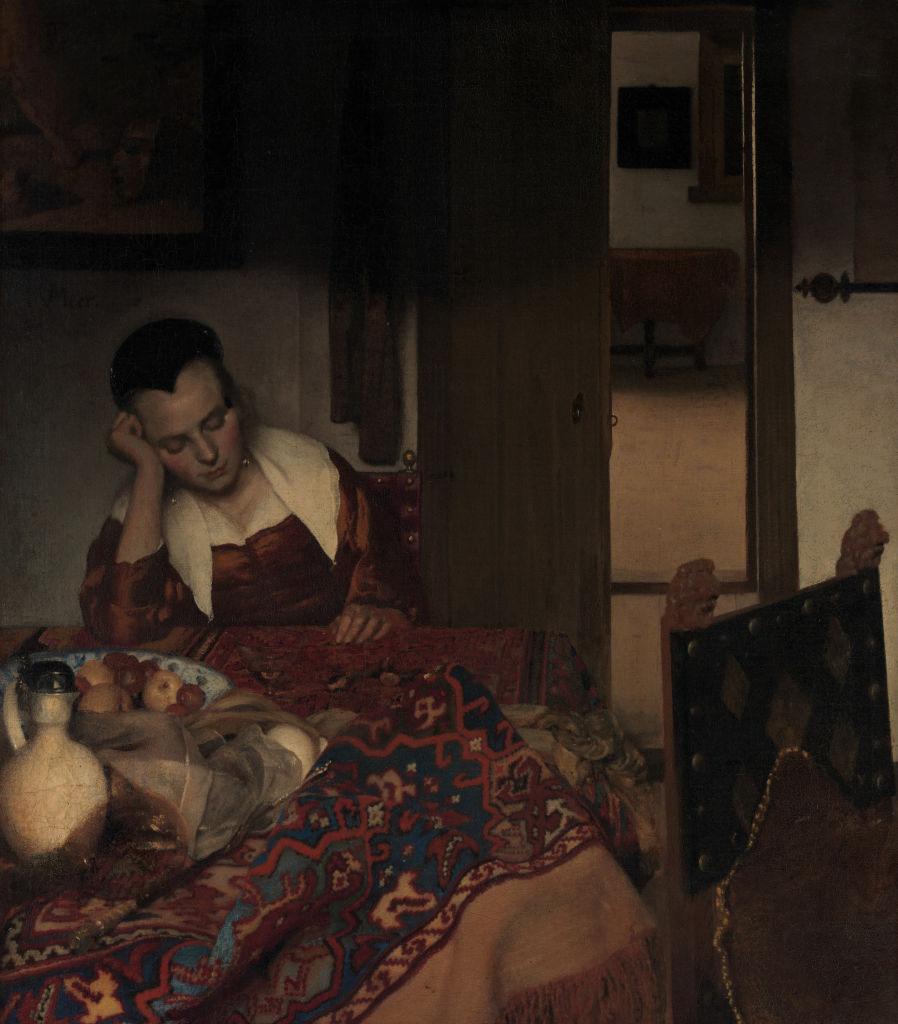
Vermeer’s maid who’s asleep is not drunk,
her pearls not on her ears but on the table,
for her my admiration can’t be shrunk.
The painting I read as a fable
of proverbial female valor like the one
in Proverbs, “valor” wordy label
the maid most winningly has won,
to do this beyond rubies able.
Did Proverbs’ “woman of valor” aishet chayil inspire Vermeer?
By taking off her earrings, “Woman Asleep” has a value higher: painted peer.
But painting Mary Magdalene, Artemisia –
Gentileschi’s daughter – thought the penitent saint
found being sinful more than being valorous far easier…
the moral told by Artemisia’s paint.
In “The Violence in Vermeer,” New Yorker, 4/13/26, Anthony Lane writes:
It is easy to treat the Dutch artist as an agreeable intimist—a transcriber of domestic niceties. But he grew up in a world of war, starvation, and massacres. His paintings were safe havens……
At the Met, for instance, “A Maid Asleep” (or, “A drunken sleeping maid at a table,” as it was described when sold at auction, in 1696) shows not a young hedonist who has been overdoing the booze, as might be inferred from the glass in front of her, but someone who has just unveiled her heart to God. Her ghost of a smile should be parsed as beatific rapture. As for the glass, the affinity is with communion wine. In the same vein, if you are struck by Vermeer’s “Woman Holding a Balance,” in the National Gallery in Washington, D.C., and by the curious fact that the balance is empty, Graham-Dixon can explain. Indicating the jewels on the table in front of her, he says that she has undone them and laid them down, the better to renounce her worldly possessions for higher treasures: “She has put her conscience in the scales, and found it so light as to be weightless. She has done no evil, bears no burden of sin.”
Reading Anthony Lane’s discussion of Vermeer’s “A Maid Asleep” caused me to wonder whether the painting may have been inspired by this line in Proverbs, Prov. 31:10, which states, describing a woman of valor:
א How precious is a woman of valor! Her worth is far beyond that of rubies.
In Artemisia Gentileschi’s “Penitent Mary Magdalene,” WSJ, 4/18/26, Karen Wilkin writes;
Artemisia Gentileschi’s ‘Penitent Mary Magdalene’ (1625-26). Kimbell Art Museum
Women artists have received steadily increasing attention in recent years. Those from the Renaissance to the 19th century have been brought into the canon, redressing centuries of neglect, while once well-known female artists of the past whose reputations faded are again highly visible. Today’s viewers are not surprised to learn that in the 18th century, Elisabeth Vigée-LeBrun was the favorite portraitist of Marie Antoinette and visitors to Venice competed to have their likeness made in pastel by Rosalba Carriera. Then there’s Artemisia Gentileschi (1593-1654). Famous in the 17th century for her bold, sometimes disturbing paintings, she was largely forgotten when Baroque opulence went out of style. She had studio training, usually unavailable to women at the time, because she was the daughter of a painter and, motherless from an early age, had the same opportunities as her brothers, who followed in the family tradition. Her father, Orazio Gentileschi, was among the many artists in Rome who responded to Caravaggio’s radical new way of staging religious subjects with vivid realism, populating them with sturdy figures bathed in theatrical light, often engaged in violence, front and center. This approach was in demand, long after Caravaggio’s death in 1610, and embraced enthusiastically by Artemisia, whose paintings soon surpassed those of her brothers……
….Painted after Artemisia returned to Rome after several years in Florence, the roughly life-size, seated figure is folded elegantly into the rectangle of the canvas. A flood of light separates her from a boundless, dark background. She is lost in contemplation, head on hand, eyes closed, although absent a few clues we could be forgiven for thinking the painting is simply an image of a dozing, voluptuous woman. But dimly visible on the left, an ointment jar and a small mirror, emblems of her previous life of luxury and sin, appear to have been discarded, signaling her entry into a new, virtuous existence. Is she fully committed? She still wears a bracelet and an earring.
Gershon Hepner is a poet who has written over 25,000 poems on subjects ranging from music to literature, politics to Torah. He grew up in England and moved to Los Angeles in 1976. Using his varied interests and experiences, he has authored dozens of papers in medical and academic journals, and authored “Legal Friction: Law, Narrative, and Identity Politics in Biblical Israel.” He can be reached at gershonhepner@gmail.com.
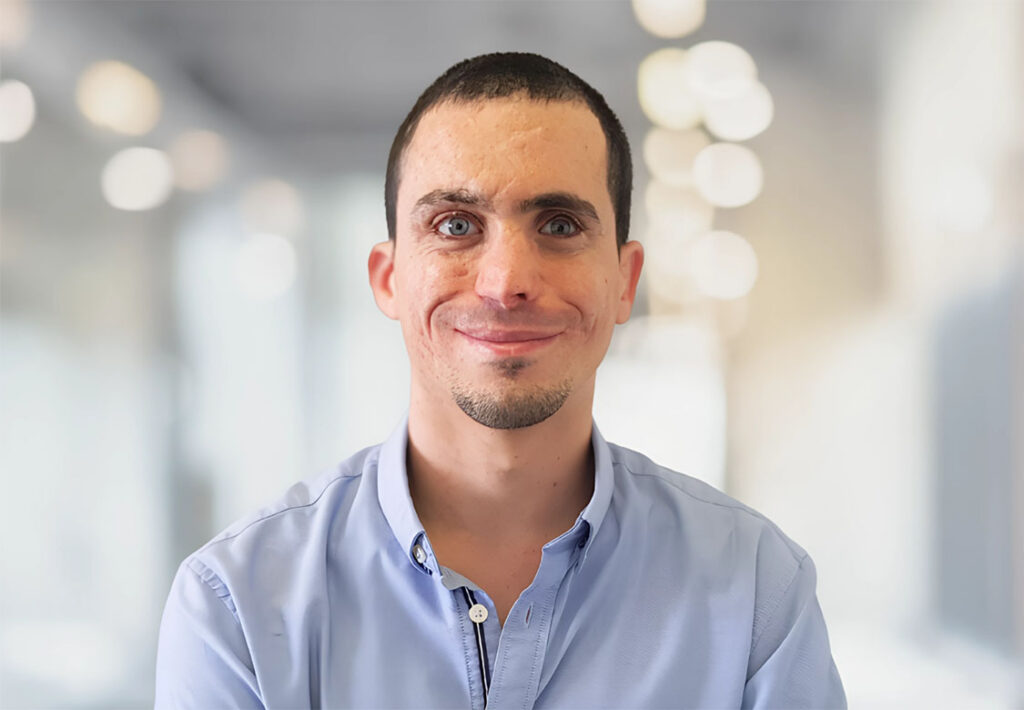
On the morning of October 8 – less than 24 hours after the deadliest day in Jewish history since the Holocaust – Itay Ben-Horin woke to a WhatsApp message that would come to define his career: “Good morning, this is Renana Gome-Yaakov from Nir Oz. I was referred to you.”
Renana’s two sons, Or (16) and Yagil (12), had been abducted from their home by Hamas terrorists on Oct. 7. Devastated but determined, Renana knew that securing her children’s release on an international stage would require careful strategy. Ben-Horin helped create a communications approach centered around a morally unequivocal message, which resonated emotionally and strategically with global media: children should not be involved in any war.
Interview after interview, families of hostages appeared on the world’s leading news channels, pouring their hearts out to keep their children’s plight at the forefront of global attention. Together with Oved Yehezkel, former cabinet secretary under Prime Minister Ehud Olmert, Itay and Renana established what would become the International Headquarters for the Rescue of Child Hostages – a rapid-response operation set up within days to coordinate media, diplomatic and behind-the-scenes pressure on behalf of the families. One of their first moves was mobilizing 86 Nobel laureates across disciplines to sign a declaration calling for the children’s immediate release. A second petition, signed by 300 of the world’s leading jurists, followed. The team also established discreet channels of communication with senior figures in Qatar’s government and secured the first-ever meeting between hostage families and Qatari ambassadors. Within six weeks, the world saw the release of the first child hostages.
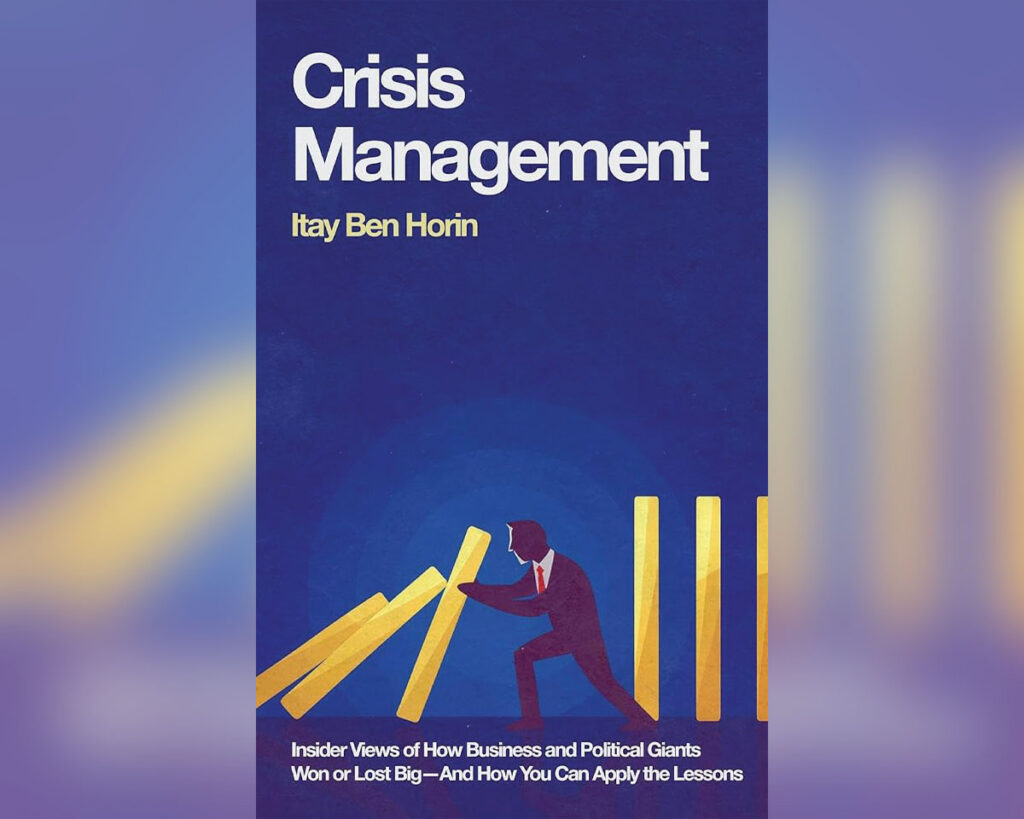
The success of that effort is representative of the types of compelling crises outlined in a new book, “Crisis Management: Insider Views of How Business and Political Giants Won or Lost Big, And How You Can Apply the Lessons,” written by Itay Ben-Horin. Newly expanded into English and available to a global readership, the book presents sixteen major crises spanning politics, business and media, offering an unflinching look at the responses that make — or break — a campaign.
One of Israel’s best-known communications strategists, Ben-Horin has spent more than two decades inside the crisis room, advising hundreds of organizations, corporations and senior political leaders through some of the most consequential moments of their careers. The crisis scenarios dissected throughout the book, including McDonald’s facing sustained criticism over unhealthy food, a racism incident at a Starbucks branch and Bill Clinton’s affair threatening to derail his presidential campaign, reveal just how much leaders can learn from public figures who have trudged through the murky waters of corporate failures, political scandals and international crises.
For businesses and public figures, a crisis is not a question of if, but when. Leaders must be prepared to respond in the way each dilemma demands. The right crisis response, Ben-Horin argues, depends on timing and the leader’s nerve to act. “A crisis pushes your abilities to the limit,” he writes. “It demands excellence and resilience and tests you as a manager, as a leader and as a person.”
The Clinton chapter offers a particularly poignant, behind-the-scenes look into what that looks like in practice. When tabloid journalist Gennifer Flowers revealed a 12-year extramarital affair with Clinton during his 1992 presidential campaign, his team faced a defining choice. Ben-Horin lays out the five strategies they considered — ignore it, change the subject, attack, apologize or confront — and explains why Clinton’s advisors ultimately chose the riskiest option: to go straight to the heart of public attention and confront the story head-on, live on national television.
The gamble paid off. In an ABC News poll conducted after the broadcast, 73 percent of respondents agreed the question of an extramarital affair was between Clinton and his wife. 80 percent said the accusations should not be an issue in the campaign at all. A crisis that could have ended his candidacy became, in Ben-Horin’s telling, the moment that propelled his campaign forward.
The book’s release in English marks a significant moment for Ben-Horin, who has long been one of the most prominent voices in Israeli public life on questions of communications, reputation and leadership under pressure. The lessons, Ben-Horin argues, are universal and designed to reach executives, policymakers, consultants, communications professionals and anyone who bears responsibility for leading organizations through turbulent moments — regardless of sector or geography.
The chapter about the International Headquarters for the Rescue of Child Hostages was improvised under the most unimaginable pressure by a man who had spent 25 years preparing for exactly that moment. That is, ultimately, what Crisis Management is about: not a formula for when things go wrong, but the discipline of becoming the kind of leader who can find the answer when no formula exists.
Jewish stand-up comedians have long had a talent for finding humor in even the most uncomfortable and difficult situations—just look at Larry David’s “Curb Your Enthusiasm.” But it becomes far harder when the issue is their own safety. In the past two and a half years, since the war in Israel erupted, several Jewish performers have found themselves facing a different kind of stage pressure: cancellations, protests and security concerns tied not to their material, but to their identity and public stance on Israel.
And the more support they show for Israel, the more backlash some say they receive.
Take comedian and actor Michael Rapaport, for example. He has been consistently outspoken in his support of Israel and has traveled there multiple times since Oct. 7, 2023. His posts about the hostages and his public support of Israel on social media and in interviews have made him a frequent target of online criticism from pro-Palestinian activists.
Michael Rapaport speaks to the crowd people gathered outside the HaKirya base which serves as the IDF’s headquarters to demand the return of the hostages held by Hamas on February 24, 2024 in Tel Aviv, Israel. (Photo by Roy Rochlin/Getty Images)
The repercussions have played out on stage. In May 2024, his sold-out show at Comedy on State in Madison, Wisconsin was canceled shortly before the performance after the venue cited an “escalating protest environment” and safety concerns. He faced another cancellation in August 2025 when his appearance at Stardome Comedy Club in Birmingham, Alabama, was cancelled on the day of the show following reported threats tied to his pro-Israel advocacy. In both cases, Rapaport said he did not cancel the events himself, framing the decisions as driven by security risks linked to backlash over his political stance.
Other stand-up comedians have also been affected. In late July–early August 2025, Jewish comedians Rachel Creeger and Philip Simon had their Edinburgh Fringe shows pulled just days before the festival opened, after the venue cited “safety concerns” for staff. Creeger was scheduled to perform “Ultimate Jewish Mother” and Simon was set to host “Jew-O-Rama,” but both were told the venue was “no longer willing to host them,” prompting criticism over the timing and the implication that Jewish acts themselves had become a point of contention. Following an outpouring of support from audiences and fellow comedians, both shows eventually found other homes.
Jerry Seinfeld has also faced repeated disruptions tied to his public stance on Israel, including protests and heckling at live appearances in the U.S. and abroad. At a Duke University event in September 2025, he drew backlash after criticizing the “Free Palestine” movement and suggesting it functions as antisemitic rhetoric. “Free Palestine is, to me, just — you’re free to say you don’t like Jews,” he said, adding, “I’m actually thinking the Klan is a little better because they can come right out and say it.” He has also encountered on-stage interruptions at comedy shows, which he has responded to with sarcasm while defending comedy venues as inappropriate spaces for political protests and warning that Jewish performers are increasingly being singled out.
The pressure is not limited to comedians. Jewish musicians have also reported similar experiences. Mikey Pauker, a musician known for blending devotional and contemporary styles, has faced multiple cancellations tied to his public support of Israel. Last December, a scheduled sound-healing performance in Nevada City, California, was cancelled, just one day after he played a sold-out Hanukkah concert in the same town. Pauker said the decision followed an escalating campaign of intimidation tied to his Jewish identity and his self-described Zionism, with organizers citing “security concerns,” echoing an earlier cancellation in 2024 at Harbin Hot Springs.
Mikey Pauker. Photo by Julie Romano
Other Jewish musicians, including reggae artist Matisyahu, have also faced recurring pressure campaigns over the years, with shows in different locations being canceled or threatened amid protests and safety concerns linked to his public support for Israel.
Much like performers, some Jewish influencers and public figures say they are increasingly cautious in how they speak publicly. Some have reportedly hired private security, while others avoid interviews or limit commentary on Israel and the war altogether due to fear of backlash, harassment or professional repercussions. This has contributed to what many describe as a growing climate of self-censorship in parts of the entertainment and media world.
Some stand-up comedians The Journal contacted with were reluctant to go on record. One said the situation had affected his income to the point that he ultimately decided to stop discussing Israel publicly and adjust parts of his material. Another described receiving repeated hostile messages and threats on social media whenever he posted anything related to Israel — even something as simple as a trip to Jerusalem. He told The Journal that several of his shows were canceled, and venues that previously booked him said they could no longer host him due to concerns about possible disruptions. He was sent messages warning him that continued public commentary on Israel could lead to consequences, including on-stage repercussions. “I know that other comedians are receiving the same threats, but I simply can’t afford losing any more venues,” he said.
Fifteen-year-old Jack (Akiva) Shrier of YULA High School in Los Angeles earned second place at this year’s Chidon HaTanach in Israel— a Bible contest considered one of Israel’s most prestigious academic competitions. The contest has been held in Jerusalem since 1958 on Yom Ha’atzmaut. This year, due to the war, the event was pre-recorded and will be broadcast on April 22.
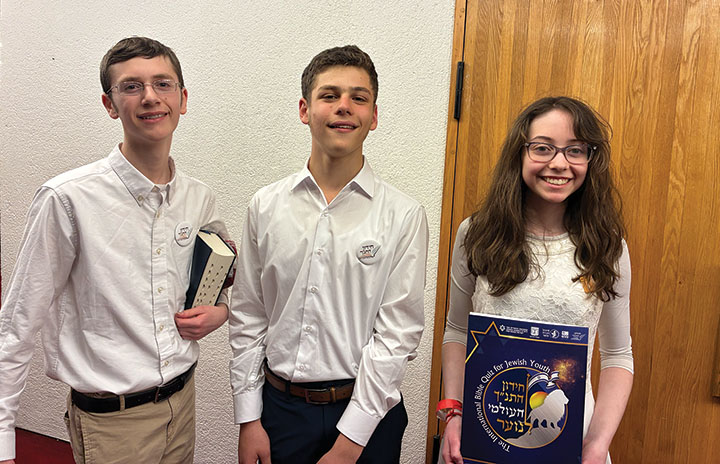
While Israeli contestants usually dominate the top places, this year American contestants claimed three of the top four spots. An Israeli contestant won first place. Joshua Applebaum placed third and Hadassa Esther Richt placed fourth.
Abigail K. Shrier, Jack’s mother, who accompanied him to Israel for the contest, spoke with the Journal by phone and described how extraordinary the win was for the American contestants.“This second place is the highest that an American has won in 13 years,” she said.
Jack’s father, Zach Shrier, who owns a financial planning business in Los Angeles, spent many hours preparing his son for the competition. For him, seeing his son compete felt like closing a circle.
“When I learned about Chidon Hatanach, I was in college. I had a friend who was the U.S. champion back in 1994, and I felt disappointed that nobody had ever told me about this when I was in high school because I would have loved the experience,” he said. “I had it in the back of my mind that maybe my kids would want to do it. But then of course life gets busy and I forgot all about it.”
He recalled that old dream when his twin sons, Jack and Raphael (Rafi), returned home from Camp Stone in Pennsylvania in 2021. They told their parents that their counselor had participated in the Bible contest and that they wanted to do so as well.
“I said, ‘Wow, I can’t believe it. I always was sort of hoping you were going to say that,’” recalled Zach.
The twins started competing the following year, in 2022, and quickly stood out. That year, Raphael placed first and Jack second in the sixth-grade division. The following year, Jack took third place in the national finals, while Raphael placed fifth.
Their younger sister Dafna came in second place last year in the sixth-grade division.
Sponsored by the Jewish Agency for Israel, the U.S. National Bible Contest is open to Jewish students in grades six through eleven and tests detailed knowledge of multiple books of the Bible. Each year, roughly 700 students begin the process, with about 300 advancing to the national finals in New York. From there, just four students—three high schoolers and one middle schooler—are selected to represent the United States on the international stage, a one-time opportunity that many participants prepare for rigorously.
Last year, Jack won first place in the U.S. National Chidon HaTanach, earning the title of national champion and securing his spot as one of the American representatives at this year’s international competition in Israel. His twin brother, Raphael, placed fourth in the nation, making him eligible to compete again.
From L to R: Joshua Applebaum (third place), Jack (Akiva) Shrier (second place), Hadassa Esther Richt (fourth place) Photos courtesy of: Abigail Shrier
The competition has long attracted viewers in Israel and around the world who enjoy testing their Bible knowledge against some of the most challenging questions in the field. Some of the questions asked this year were: Which biblical figure cut off a tree trunk and carried it on his shoulder and instructed others to do the same? (Judge Abimelech) and: In which location were the threshing floors of Israel raided by the Philistines? (Keilah, in 1 Samuel).
To come this far, Jack and Raphael prepared before and after school and on weekends, often testing each other. Along the way, they gained not only knowledge but also friends from around the world who share a love of Torah.
“For years my dream has been to get to the final two in the chidon,” Jack told The Journal. “[My win] made me realize that all my work had paid off, and that the five hours a day of study really wasn’t just for a place in a competition, but a way for my teachers to recognize that their help had paid off, too. Winning then wasn’t just a place but an expression of all the family friends and teachers who helped me along the way.”
This year, Yom Hazikaron, Israel’s day of remembrance for fallen soldiers and victims of terror, began on the evening of April 20 and ended at sundown on the 21st. But for Oran Almog — and millions of others — Yom Hazikaron never ends. “Yom Hazikaron is not one day,” Almog told The Journal. “It’s every day. It’s present in every meaningful moment, in every achievement, in every decision.”
In 2003 at age ten, Almog was at the Maxim restaurant in Haifa when it was attacked by a Palestinian suicide bomber. Five members of his family were murdered — grandparents Ze’ev (71) and Ruth (70), father Moshe (43), brother Tomer (9) and cousin Assaf (11). Twenty-one civilians were murdered in total. There were 51 injuries, including Almog himself, who was blinded.
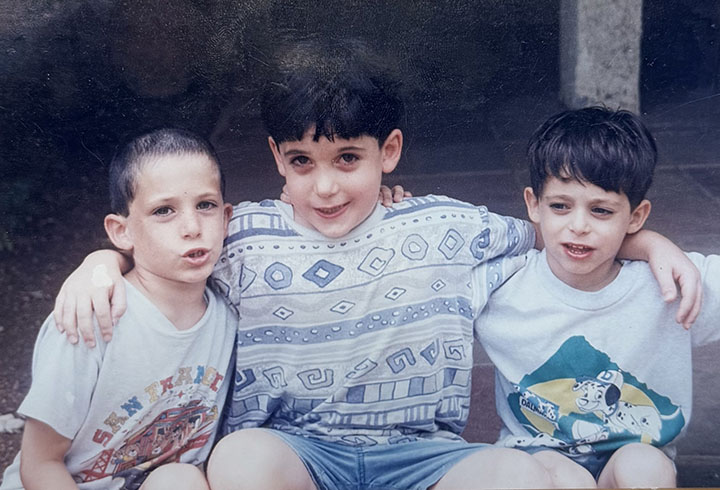
Oran Almog (center) with his siblings in the early 2000s
In the 23 years since the restaurant attack, Almog managed to rebuild his life through sports, military service, startup investment and public speaking.He told The Journal that the never-ending process of grieving can be overwhelming. Over the years though, Yom Hazikaron every year helps with the pain. “I didn’t yet know how to hold that amount of pain,” he said. “I learned that this day is not only about what we lost, it’s also about how we choose to live with it.”
The Journal spoke with Chantal Belzberg, who has worked with Oran Almog for years through OneFamily.
“Oran Almog is extraordinary, but not in the way people sometimes think,” Belzberg said. “Oran doesn’t walk into a room and try to inspire people or tell them how to feel. In fact, it’s almost the opposite. What we’ve seen over the years is that his strength comes from a very quiet place. He doesn’t compare pain, he doesn’t minimize it, and he never suggests that someone else should cope the way he does. He simply sits with people in a very real way. And that’s what allows others to open up to him. I have known Oran and his family since the attack, and in many ways, he grew up with us at OneFamily.”
On April 27, Belzberg was presented with the Israel Prize for Lifetime Achievement by the Minister of Education. It is Israel’s highest civilian honor. She still took the time that week to continue to elaborate on Almog and his connection with OneFamily.
“He lost so much, and he lives with very real limitations every day,” Belzberg said. “So when he speaks, it doesn’t feel theoretical. It feels honest. And that creates a kind of trust that is very hard to build otherwise. Oran has always spent Yom Hazikaron with us, at our central ceremony in Jerusalem. Year after year, he is there, part of the OneFamily community, not as a symbol, but as one of many who are carrying memory and loss together. But more than anything, Oran gives people permission. Permission to take their time. Permission to still be in pain. Permission to not be okay. And at the same time, without ever saying it directly, he represents the possibility that life can slowly expand again. Not because someone told you to be strong, but because you are not alone in the journey. And that is something people feel very deeply when they are with him.”
Every year, on the eve of Yom Hazikaron, Almog goes to Jerusalem to attend a ceremony organized by OneFamily, a humanitarian group founded in the wake of another suicide bombing at a restaurant. Their mission is to provide long-term support for victims of terror and their families. It was founded by philanthropists Marc and Chantal Belzberg after the Sbarro pizzeria suicide bombing in Jerusalem on Aug. 9, 2001, which killed 16 and injured 130. “It’s an organization I feel very deeply connected to,” he said. “Being there, surrounded by other families who carry similar stories, creates a sense of understanding that is hard to find anywhere else.”
On the day of Yom Hazikaron, Almog organizes a small memorial with family and friends at a cemetery for victims of terror in Haifa. “Over the years, these moments have become anchors for me,” he said. “They don’t make the day easier, but they give it meaning, and a sense that we are not alone in carrying this memory forward.”
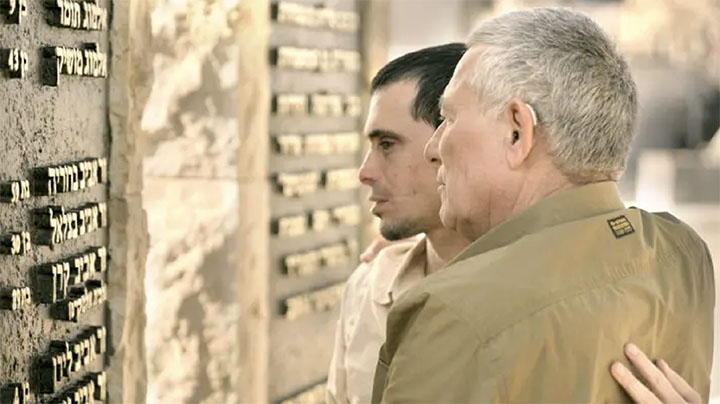
Oran Almog at memorial
Over time, he reminds them that the question is not if they will find a way forward, but how. “Sometimes [Yom Hazikaron] becomes too structured, too formal,” he said. “But at its core, it’s a very human day. It’s about people, relationships and the cost of life as we know it.”
Transitioning to life without eyesight is never easy, not to mention the sudden and traumatic loss of family. “The transition to life without eyesight was emotional, but also meaningful — it reminds me that independence is not something we take for granted,it’s something that was paid for and something we have a responsibility to carry forward.”
Looking back at those first few years that followed surviving the restaurant attack, Almog filled his life with as much activity as he could. Before the terror attack, he was the youngest child in Israel with a black belt. Without eyesight, though, he wasn’t able to continue. So he spent the next five years training in competitive sailing. “Karate is something that you must see the rival,” he said. “But for sailing, the most important thing is to understand where the wind is. It doesn’t matter if I see or not, because wind is something that you feel. I understand that maybe I have that advantage because I’m blind.” At age 15, he won a bronze medal in the world championship for the blind. On the podium where he accepted his medal, he said it was so much more than coming in top three in the world. “I wanted to show the people who tried to kill me and murdered my family, ‘I won,’” he said. “And it showed me what I’m still capable of, because I didn’t always believe that I could do it.”
The world championships for the blind was the first time Almog felt like he wasn’t just a blind kid from the terror attack. “I am a blind kid from the terror attack who can take all difficulties and make the best out of it,” he said. “It was the first time that I understood that “Okay, I can do whatever I think I can, and the disability or the situations in my life without eyesight, it’s part of my life, but it’s not my life.”
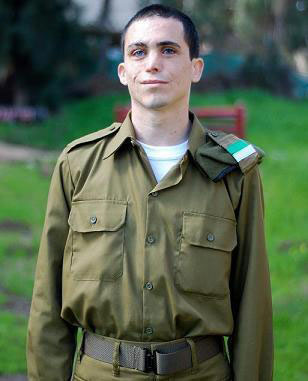
Oran Almog during his service in the IDF
He was not required to serve in the Israel Defense Forces due to his severe injury. He volunteered anyway and worked in an intelligence division. After his service, he started working in startup investment. Since the attacks of Oct. 7, 2023, he has pivoted towards working with clients to direct tech sector capital to help injured survivors rehabilitate. This includes investing in helping fellow Israelis sail through their own storms of mental health struggles. “I think every day how we can help the people to break the blocks, to break the obstacles and to make their life better,” he said. “In the economy, in technology, in their mental health.” He continues to volunteer at OneFamily camps. He taught himself to play guitar at one of the camps. He prefers to play classic rock, with his favorite being Queen’s “Bohemian Rhapsody.”
Still, there are people who are dealing every day with bereavement and trauma — even without physical disabilities. Almog doesn’t offer vague, “if I can do it, you can do it” advice. When asked if there’s anything he says on Yom Hazikaron to other people who are struggling, he said that he tries not to say much, adding that “sometimes the most honest thing is simply to be there.”
It’s the other days of the year when Almog speaks with fellow bereaved families and friends. He finds himself often saying, “You don’t have to be strong right now,” “life can grow around the pain without erasing it” and that there is “no right way to go through this.”
Jewish communities around the world continue to face ongoing threats and antisemitic violence. Almog said that being together and finding a supportive community is the most fundamental way to continue life after terror.
With Yom Hazikaron and all the days between, he and others return to the same question: “What does this memory ask of me?” For Almog, it’s “not just to remember, but to feel connected,” he said. “To understand that behind every name, there is a full life that continues in the people who carry it.”
On the eve of Yom HaShoah, April 13, 2026, President Donald Trump signed the Holocaust Expropriated Art Recovery Act (HEAR Act) of 2025 into law. The legislation, which garnered broad bipartisan support in both chambers, was necessary due to a legal landscape that was falling short of honoring the government’s longstanding support in principle for restituting Nazi-looted artworks to the Jewish families from whom they were stolen during the Holocaust.
The legislation was spearheaded by Art Ashes, the nonprofit foundation established by philanthropist Joel Greenberg, to provide financial assistance for research and legal costs to families seeking to recover their ancestors’ looted artworks. Art Ashes assembled the coalition of Jewish, Survivor and other human rights organizations that advocated for passage, including Monuments Men and Women Foundation, Simon Wiesenthal Center, World Jewish Restitution Organization and the World Jewish Congress. Greenberg, a former prosecutor in the Justice Department’s Office of Special Investigations, called the law “a meaningful victory for Holocaust Survivors and their heirs,” adding that it removes barriers that have long favored wrongdoers over victims.
Stolen pieces by Picasso, Schiele and Pissarro exemplify the need for the new law, and the impact it will have on current and future cases.
Zuckerman v. Metropolitan Museum of Art involved Pablo Picasso’s painting “The Actor,” which Alice and Paul Leffmann had to sell to pay Germany’s onerous “flight taxes” when they escaped in 1937. Fifteen years later, the Met acquired the work and published a false provenance stating that “The Actor” was in a “German private collection (until 1938).” In 2010, the Leffmanns’ great-grandniece discovered the painting at the Met and sued for its return. But the Second U.S. Circuit Court of Appeals dismissed the case because it found the heir’s delay in filing was “unreasonable.”
A similar result confronted the heirs of Fritz Grünbaum, the Jewish Viennese cabaret star and outspoken Nazi critic whose collection included 81 works by Egon Schiele. He was imprisoned in Dachau and forced to sign over his art collection. After many years of concealment one drawing was quietly placed into the market and the Grünbaum’s heirs’ sued, but the court dismissed the case, saying the heirs “were aware of – or should have been aware of” their rights and had not acted diligently.
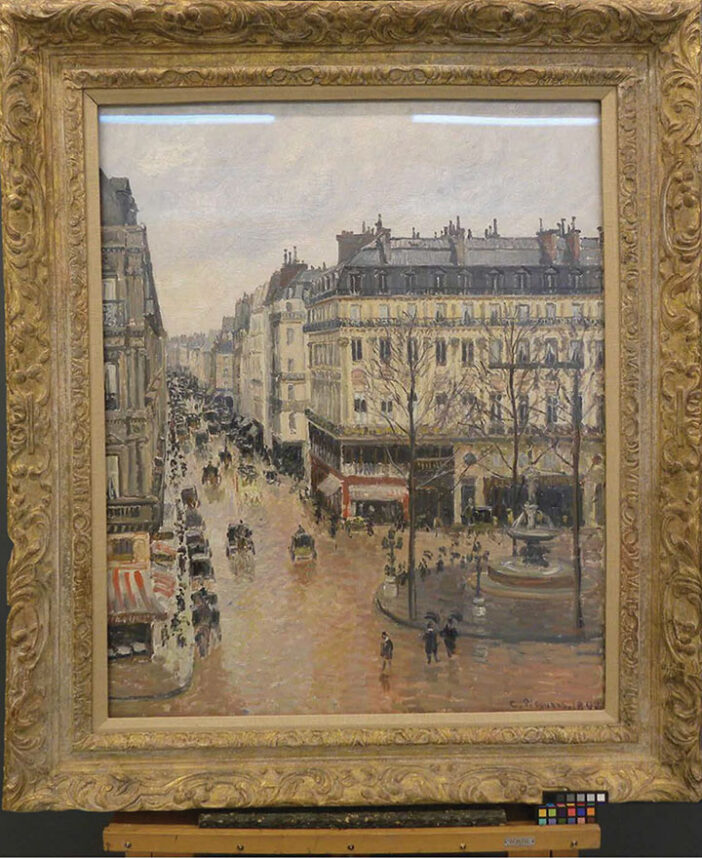
Lilly Cassirer’s Camille Pissarro masterpiece, “Rue St-Honoré,” was – indisputably – looted by the Nazis in 1939. After searching for decades, her grandson Claude Cassirer learned a museum owned by Spain had the painting. The U.S. Ninth Circuit Court of Appeals applied a Spanish law that allows possessors to acquire “good title” to stolen property after three years. It rejected California law, the state where Mr. Cassirer had retired, where true owners of stolen property cannot lose title when they lack actual knowledge of the location of the artwork.
Photograph of Camille Pissarro’s “Rue St. Honore” taken by Jonathan Petropoulos, the plaintiffs’ expert historian, during a court-ordered examination. Courtesy: Jonathan Petropoulos
Among the several important changes in the HEAR Act of 2025, it expressly precludes all defenses based on the passage of time. While the change comes too late for the Leffmann heirs, the Grünbaum heirs have several pending cases in which the defendants can no longer argue unreasonable delay, and at least 60 other Schieles remain undiscovered. The Cassirer case was revived by two U.S. Supreme Court decisions, and a 2024 statute mandating California law apply in stolen art cases. In addition, the new HEAR Act precludes application of laws like Spain’s “finders-keepers” law, still prevalent in Europe.
The 2016 and 2025 HEAR Acts acknowledge that “nonbinding” international agreements encouraging research and restitution by museums and foreign governments have largely failed. In the late 1990s, more than forty governments endorsed the Washington Principles that called on museums and governments to investigate the provenance of works in their collections, publish the results and return Nazi-looted art to their rightful owners. Yet a 2020 State Department report found that U.S. and foreign museums are mostly not following the principles, and when items are found they frequently engage in aggressive litigation to hold onto Nazi-confiscated art.
According to prominent Holocaust scholars and historians, these tactics deny the brutality of the Holocaust, treat recovery of Nazi-looted art as if they are ordinary commercial disputes: anesthetizing history and denying the reality of the Nazis’ genocidal madness.
A bipartisan group of lawmakers concluded that courts have too frequently frustrated the purpose of the HEAR Act of 2016 by continuing to rely on time-based and other nonmerits defenses. The original law also contained a sunset provision set to expire Dec. 31, 2026, threatening to close the courthouse doors for families still searching for stolen art.
These imminent concerns led Congress to unanimously pass the HEAR Act of 2025. The new law clarifies that Holocaust restitution cases should be decided solely on merit, specifically eliminating certain defenses and doctrines in Nazi-looted art cases, and reestablishing, in perpetuity, the six-year statute of limitations that doesn’t start until the date of actual discovery of the artwork.
The bill’s lead sponsors included Senators John Cornyn (R-Texas) and Richard Blumenthal (D-Conn.), and Representatives Laurel Lee (R-Fla.) and Jerrold Nadler (D-N.Y.). Lee recognized that for many families, the fight to recover stolen artwork has lasted generations and that the legislation reaffirms “our nation’s commitment to justice, accountability, and historical truth.” Nadler, who also helped lead passage of the original HEAR Act of 2016, put the issue starkly on the House floor: “We must confront this unacceptable and repugnant reality, which continues to allow entities and individuals to profit off the Jewish people’s pain.”
Despite the bill’s bipartisan support, France’s national railway, SNCF, aggressively lobbied against the bill, arguing that a 2014 settlement should also bar claims involving looted art. Advocacy groups, including Art Ashes, rejected that interpretation, saying the agreement addressed deportation-related harms, not theft of personal property. “After acknowledging its role in deporting tens of thousands of Jews and compensating Survivors, it now seeks to limit heirs’ ability to recover stolen property in American courts. That is wrong,” said Greenberg.
The American Association of Museum Directors and the German Embassy also lobbied against the legislation.All of the opponents’ objections amounted to arguments to make it easier for museums and foreign governments to hold onto artworks that had been looted from Holocaust victims. Fortunately, members of the U.S. House and Senate roundly rejected these arguments.
Klara Firestone of Los Angeles is a member of the executive committee of another coalition organization, the Holocaust Survivors Foundation USA. She believes the measure matters not only for restitution for individual families but also for Holocaust history and memory. “The HEAR Act of 2025 is a high priority for the Holocaust Survivor community, not only because of the justice it would serve in individual cases, but because the law will support accurate documentation of the true brutality of the Holocaust, and serve as an important force to combat the explosion of antisemitism and Holocaust denial here and around the world,” she said.
The updated HEAR Act will not guarantee victory for every claimant, but Congress has now made its message unmistakable: Nazi-looted art cases should not be dismissed because Survivors and heirs could not find what was deliberately hidden from them. For families still searching, that clarification may finally reopen a path to justice blocked for far too long.