The Talmud says Yom Kippur is one of the happiest days of the year for the Jewish people. That was true for me as a child.
Yom Kippur was the day the heavenly gates of sweets and freedom swung open. While the adults prayed and fasted, my friends and I, fueled by sugar, raced up and down the synagogue stairs playing games.
The biggest thrill came before the Torah reading. The Rimonim, the removable silver ornaments that crowned the Torah case, were auctioned. If my father won, I got to hold them during the reading. Then, when everyone stood and the Torah was carried back, I got to place the Rimonim on it myself, as close to the Torah as a child could get. Instead of being packed like sardines with the rest of the congregation, I sat high on my father’s shoulders, holding on to his spiky chin with one hand and the Rimonim with the other, with the whole congregation in view.
Before I crossed over to the men’s section, some women would gather around and whisper their prayers into my ears. I couldn’t read Hebrew. I didn’t understand the official prayers. None of that seemed to matter. They believed God listened especially carefully to children, and I was entrusted with their private negotiations with heaven. I was no longer disturbing the prayers. I was carrying them.
But when it was time to place the Rimonim back on the Torah, excitement took over. I forgot every request, name, and whispered plea.
So I stretched my right hand toward one side of the congregation and my left toward the other. I kissed my hands and blew the kisses toward the raised, open Torah.
Those were my first prayers.
When we moved to Israel, Yom Kippur felt familiar and completely different. The streets emptied of cars, buses and taxis and belonged to children on bicycles, skateboards and scooters. I thought this was an excellent arrangement.
Until I crashed into my neighbor Shmulik.
“You’ll burn in hell!” he yelled, brushing dust from his white suit.
“I’m sorry. It was an accident,” I said as I tried to get up, wiping my bloody elbow with spit.
“An accident you’ll pay for in hell.”
“Look, I’m sorry. I’ll say it two more times, and if you still don’t forgive me, then it’s your problem, not mine.”
I picked up his prayer book, kissed it and handed it back.
“I forgive you, but …” He paused, kissed the prayer book himself and returned to dusting his pants.
“Will God forgive you? For riding a skateboard on Yom Kippur … you’ll still burn in hell.”
Then he walked away.
But his question didn’t.
If anyone else had said it, I probably would have forgotten the whole thing. But Shmulik regularly beat his older brother at chess, and in my childhood hierarchy of authority, this made him someone worth taking seriously.
But I wasn’t bat mitzvah age yet. Judgment and burning in hell could wait. I had a skateboard to ride and candy to eat.
Then suddenly I was 11, old enough to begin practicing for the fast.
There I was in the synagogue with a thick, heavy prayer book, unable to follow anything. When everyone sat, I stood. When everyone stood, I sat. Like an upside-down turtle, I flipped back and forth through the pages. The prayers were too fast and too long. I was too slow and too short.
The synagogue was hot. Babies cried. Women prayed and talked. The crowd blocked both my oxygen and my view of the Torah. My throat felt full of sand. My stomach seemed to have expanded into the rest of my body.
And somewhere around noon I began to wonder if this was what hell felt like.
“Who shall live and who shall die; who shall perish by water and who by fire …” the cantor chanted.
“And who by starvation?” my stomach asked.
“But repentance, prayer and good deeds can annul the severity of the decree,” the cantor continued.
My hunger had no ears to listen.
I remember almost nothing about judgment or repentance from that Yom Kippur.
I remember an apple.
Red. Shiny. Juicy.
A boy sitting near me kept biting into it, crunch after crunch.
That apple contained the entire world.
And with that sharp turn toward adolescence, I began to hate Yom Kippur.
I wanted it to be over before it had even begun. At the Seudah Mafseket, the final meal before the fast, I ate as much as I possibly could, as if I could preload myself for the next 25 hours.
The night before Yom Kippur, we kids made bets about which pre-bar/bat mitzvah child would last longest without eating. By morning, the conversation had shifted to what we would eat to break the fast.
Years passed.
I moved again, this time to Los Angeles. I found myself walking with a group of Jews toward a lake in the park for Tashlich, the symbolic ritual of casting away our wrongdoings.
In Israel, Yom Kippur had filled the streets. Here, even Tashlich felt different.
I felt awkward and strangely at home.
A father kept trying to stop his little boy from feeding all the bread to the fish.
“For the third time, Jacob, this is serious. We’re not here to feed the fish.”
The boy disagreed.
I tore off a small piece of bread and began reciting Mi El Kamocha.
And suddenly another Tashlich returned to me.
Years later, friends from Israel called to tell me that the boy who had sat beside me in chemistry lab had been killed in combat. I kept remembering how baby-faced he was. He was only 20. Until then, death had belonged mostly to newspapers and distant people. Now it had stepped into my life.
That year, Yom Kippur changed again: I could no longer sleepwalk through it.
“There were two special entrances into the Temple,” the rabbi said, “one for mourners and one for newlyweds.”
I didn’t know which entrance belonged to me.
Somewhere along the way, I had gotten locked out of my own temple.
I picked up the Machzor.
The book was no longer heavy.
I was.
As a child, all I had was spirit, and I was full of it. Now, faced with this loss, it was my spirit that was starving.
Until then, life had mostly seemed like something that happened on its own. You woke up, you rode your skateboard, you fought with Shmulik, you ate candy, you grew older.
Now I understood that sometimes life had to be chosen.
I didn’t know exactly how to do that. Fasting, at least, was familiar.
There are moments when I am immersed in the prayers. But sooner or later, a pounding headache reminds me that Yom Kippur is not an out-of-body experience. By noon, just before the Torah reading, the old burn starts moving between my stomach and my throat.
During Musaf, I am no longer hungry or thirsty. Fasting has transformed into pure pain. I get dizzy. I am nauseated. I can no longer be still.
And yet, just when my body seems to have the least to give, something shifts. At my weakest point, it teaches my spirit what comfort never could: how to be small, how to surrender, how to accept that I am not all that and still believe I can become more.
The hunger strips away some of the noise. I become less interested in convincing God, or myself, that I am doing Yom Kippur correctly. I become more willing simply to stand there.
By late afternoon, between Musaf and Neilah, the rabbi begins speaking. I close my eyes and try to concentrate.
Around me, everything becomes a kind of static: children laughing and crying, women shushing them, someone weeping nearby, someone shifting in her chair, pages turning and my own silence.
By the time Neilah approaches, the synagogue is packed. Ashkenazim, Sephardim, Israelis, Persians, Americans. Old and young. Rich and poor. Joyful and sad.
On any other day, we belong to different worlds. Our differences can leave us divided and cold toward one another.
But today, we gather under one roof.
Most of these people I do not know by name.
But I know them in my prayers.
Our prayers are in the first-person plural: we.
We are all trying, in our own imperfect ways, to find an entrance into a better self.
We sing our longings, pains and joys, our voices woven into a stubborn unity that makes me tremble. We are terrible singers who can barely carry a tune, but we carry a history that binds us as one.
Then comes Avinu Malkeinu.
The cantor begins singing in his husky voice. Beside him stands his five-year-old son, singing with him.
I hear the two voices at once.
The father’s voice reaches the part of me that has learned grief.
The child’s voice reaches somewhere older.
Somewhere I am still sitting on my father’s shoulders.
Somewhere women are still whispering prayers to me.
Somewhere, I believe even the prayers I had forgotten are heard.
The cantor knocks on the podium.
Silence.
For one suspended moment, no one moves.
And there I am again, with more to say to God than words can hold.
And yet, I am embarrassed by the pettiness of some of my requests and have nothing grand enough to offer in return.
I am back where my prayers had begun: in silence, with kisses.
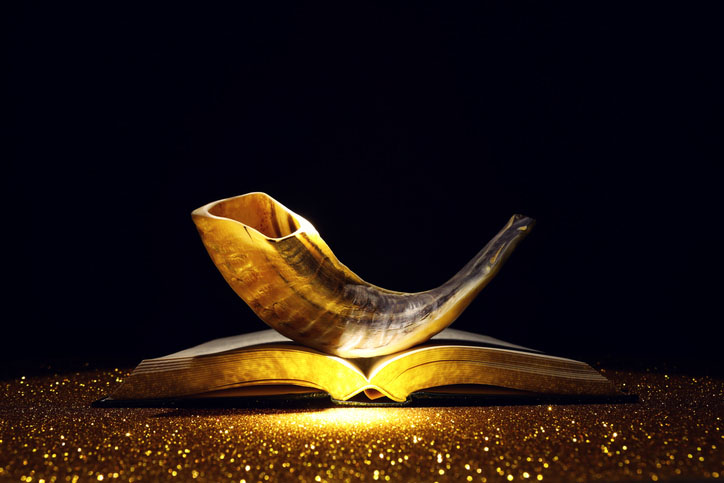
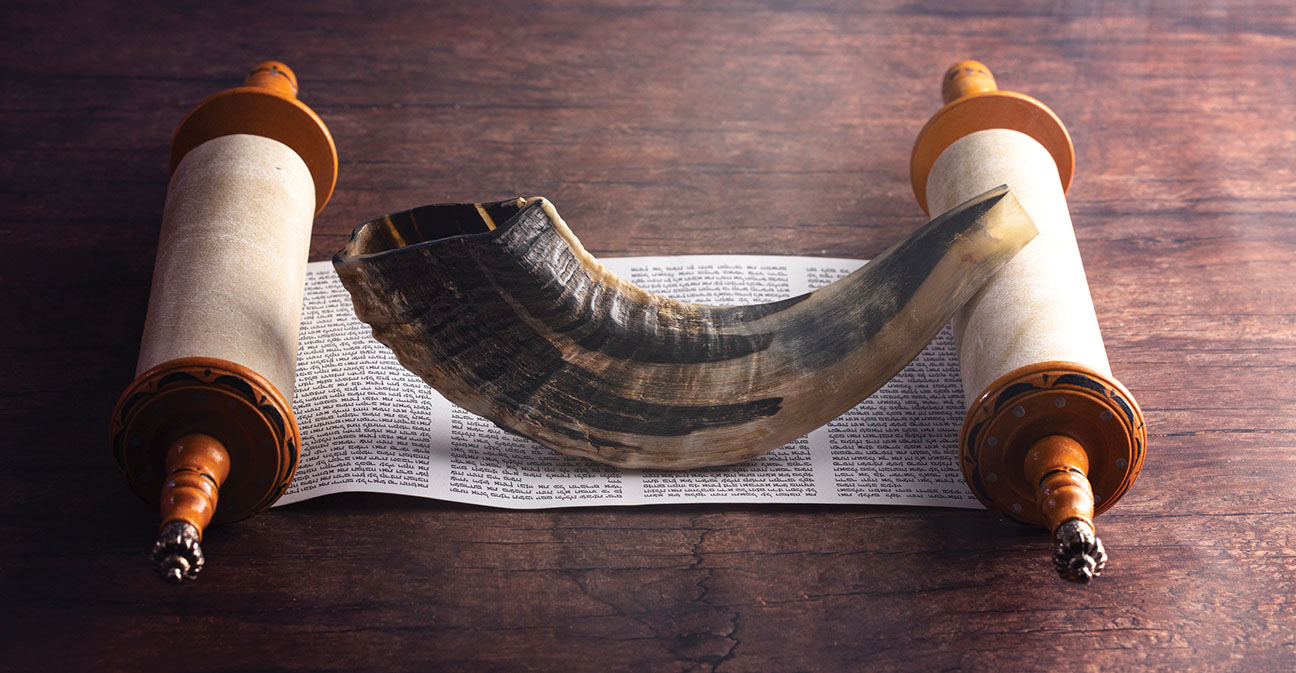
At the end of Neilah, the shofar sounds, one long cry that seems to carry everything we have been holding all day. The congregation breaks open. Familiar strangers hug, kiss and bless each other, singing Oseh Shalom.
I am happy. Relieved, exalted, and hungry for the chance to be someone slightly better than I had been.
Hilla Gohary Kerendian is an Israeli-Iranian American essayist and storyteller whose work blends lived experience and imagination to explore identity, memory, and the human heart. She writes Change of Heart Stories on Substack.