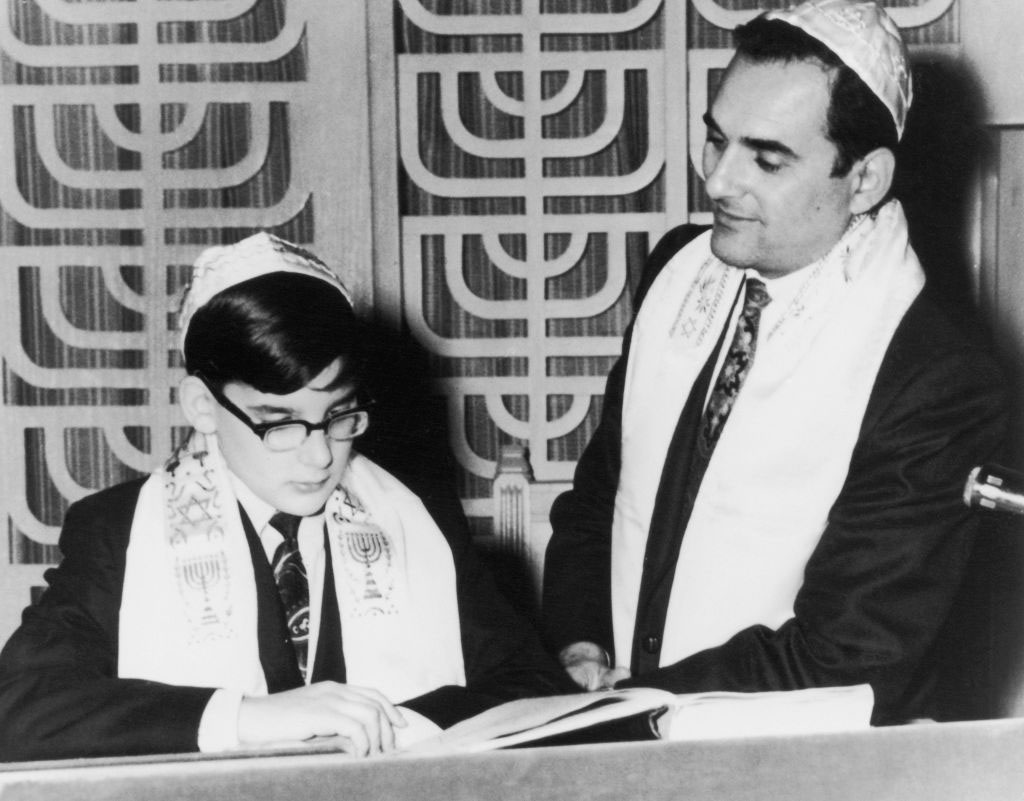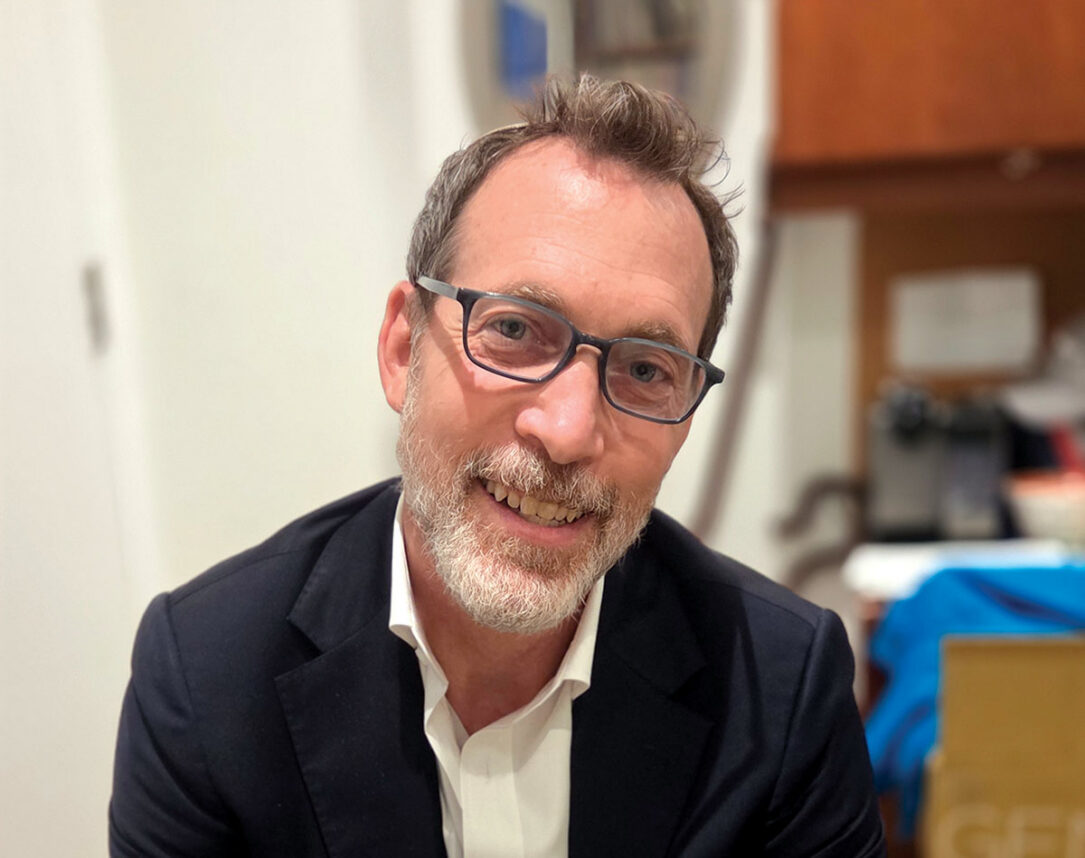
As Rabbi Bradley Shavit Artson takes his place as American Jewish University’s Mordechai Kaplan Distinguished Scholar it should be noted that for 40 years, he has been at the forefront of changes in the Jewish world.
Artson, who has been dean of AJU’s Ziegler Rabbinical School for 25 years, proudly pointed out that “we have helped almost 300 people become rabbis across North America, Israel and Uganda. The key word for him is “people.” When he attended rabbinical school in the 1980s, it was men only. “They weren’t knowingly admitting LGBT people,” he said.
As a rabbinical student, Artson wrote a paper in favor of ordaining gays and lesbians. “Officially, it was quite unpopular,” he said, “but under the surface very popular” across the non-Orthodox world. “It was on the Reservation Desk at the Jewish Theological Seminary library, at Hebrew Union College’s library and UC’s library. They couldn’t keep it in stock. They kept having to copy it because people kept coming/going back for more and more.” He’s proud there’s a much broader range of people studying for the rabbinate today. “We have students in the school who came out the day the Law Committee authorized it. That was a very exciting moment 15, 20 years ago. I was amazed by that.”
More recently, he was at services as a congregant when one of his rabbinical students came up to him. He wanted to introduce Artson to his then-boyfriend. “I stopped him, and I said ‘I am happy you are doing that, and I just want to point out what a historic miracle this is, that you come up to your rabbinic school dean and your full expectation is that I am going to be excited for you – and that is going to be my whole response. I just want us to notice that things do change.’
That is Rabbi Artson’s message in a nutshell: “I want to say that things do change. We can’t be passive. We can’t wait for them to change. But people do learn, and things can get better.”
The reason for this, he said, was simple: “American culture was ready for change. That took a long evolution. It wasn’t something that just happened overnight. For sure I met resistance.”
People would yell at him in rabbinical school. “I would have strangers come up to me in the cafeteria and shriek at me. But over time, younger people were just at home with the change.” He has seen the same issue with trans students. “They are at home,” Rabbi Artson said. “Once you realize you don’t have to be afraid of something, once you get to know actual people, you see they are wonderful in their own ways. Things you didn’t think could be sources of learning, actually are.”
The happily married father of two and grandfather of one knows people fear change. He mentioned the classic case of a rabbi who was told “we want you to bring change.” Sure, the rabbi responded, “we’ll move Friday night services.” No, said the congregants. We don’t want that. OK, we’ll do more Hebrew. No, said the congregants, we don’t want that. More English? We don’t want that. Change the melodies? We don’t want that. But we want change.
“We are all afraid of change,” Rabbi Artson said. “Once you grow accustomed to it, you forget why it was a problem in the first place.”
The reason he took on this battle was very close to home. “I had some loved ones who came out to me when I was just starting rabbinical school at JTS in New York in 1983,” he said. “I always have felt God as a loving presence. I have always felt God was passionate about justice and human dignity. And so I always have believed that any Jewish law that seems to violate human dignity and justice, we are just reading it wrong.
“I brought that to rabbinical school. And that was a burning question because of the loved one in my family.” He wrote a 40-page paper, making legal and halachic arguments for gay marriage. When the paper was returned, he started flipping through the pages, and there were no marks. “Page after page. I got to the last page, and he said ‘Wrong A.’ He thought I was wrong in my argument. He thought it was a brilliant argument. It stunned me.”
The most crucial portion of his work was 11 words: “I never have been afraid of thinking differently from other people.” He was raised that way. “My mother, especially, always has been a beacon of light to me,” he said. “My Mom is one of the bravest and most loving people I ever have known. And so the two things I never doubted were that I was worthy and lovable, and that I had as much right to an opinion as anybody.”
How many 66-year-old men speak this way? “To this day, my mother, formerly a psychotherapist in San Francisco, still lives there, and, thank God, is very much alive, and still an inspiration.”
His family has been “absolutely” supportive of his views. “My mother had a hard time with my believing in God. That I talked to God and that I think God answers me, for my mother would be no different than thinking I was talking to Mickey Mouse, and he answered me.”
Fast Takes with Rabbi Artson
Jewish Journal: What is your proudest achievement?
Rabbi Artson: Three. Being married to Elana. Being the father of Jacob and Shira. And I am now a Zayde. I have the best einekl (grandson) in the world.
JJ: Your favorite Shabbat moment?
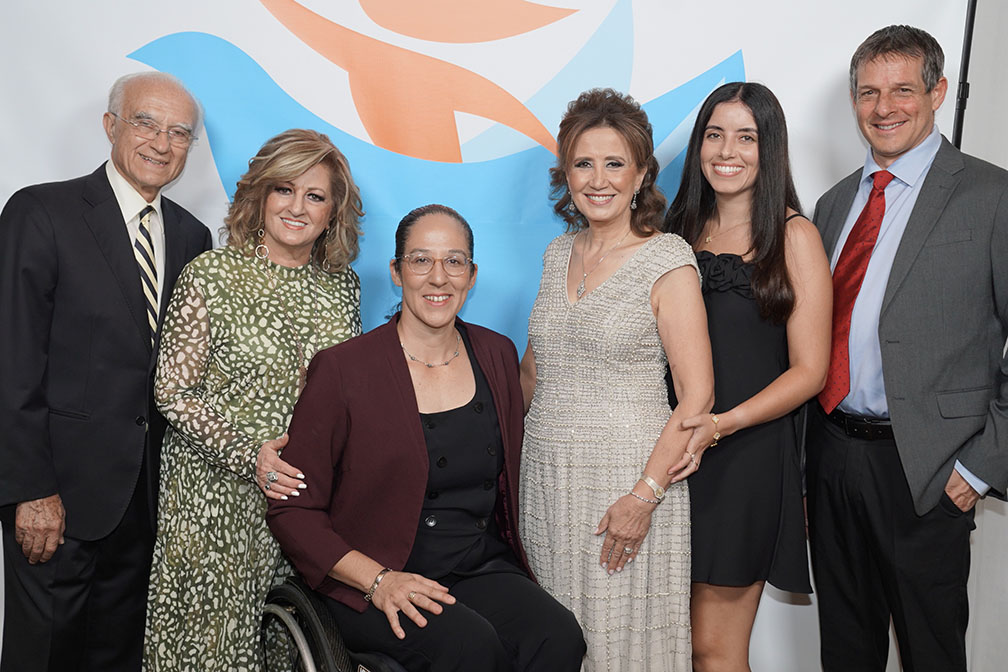
RA: I am one of the richest people in Los Angeles because almost every Friday night I have around the table, my wife, my son, my daughter, my son-in-law and my grandson. When I look around the table, I feel the blessings overflowing.
JJ: Your next career goal?
RA: This is my last great adventure.