While on a Passover program in Panama, I learned a vital lesson about not judging people by appearances.
The program took place in a five-star beachfront resort in Playa Bonita, Panama. The hotel offered live entertainment in the lobby every evening.
One night, my husband and I stopped to listen. Across from us sat a couple. The woman was obviously decked out for a special evening – long dress, fancy hairdo, high-heeled sandals. Beside her sat her companion, dressed in dark, casual clothes.
As the singer’s voice soared, the man stared unwaveringly at his phone. No matter how beautiful the song was, his attention did not stir. He was glued to the phone. The woman frequently glanced at him, smiled, made small comments, and generally tried to get his attention. He was impervious.
Immediately, my judgment machine flew into gear. “How rude!” I thought. Here’s this woman wanting her companion to share the evening with her, and all he can do is stare at his phone. I turned to my husband and whispered, “Do you think I should say anything to him?” Thank heaven, my husband replied with a firm “No.”
We struck up a conversation with the woman, who told us that the man was her husband, and they were celebrating their 20th anniversary. This was enlightening: Obviously, this was not a first date. I wondered if they’d been together so long that he no longer wanted to talk to her. I wondered a bunch of things about their relationship, all ending with the idea that he was a rude, insensitive fellow who deserved a talking-to.
I could barely restrain myself from being the person who delivered the rebuke about the rudeness of staring stubbornly at one’s phone in the middle of a special occasion.
When the music ended, he finally put down the phone and looked at us.
“I’m hard of hearing,” he said, “and I forgot to put in my hearing aids. When music plays, it sounds like a loud shriek in my brain. I try to ignore it by getting into my own space until it’s over.” In other words, he was partly deaf, and the phone was his only way to reduce the pain in his head. Woops!
I asked him how he had damaged his hearing. “I was in the military, and the earplugs they gave me didn’t work.” This was getting worse. Not only had I misjudged his reason for burying himself in the phone, I also learned that he lost his hearing in service to our country!
He became chatty once the room was quiet and told us that after his military service, he became an inspector for the Alcohol, Tobacco, and Firearms Agency, ensuring that bars followed the rules about serving alcohol. “I was not a popular guy,” he said. He had to stand strong against unscrupulous bar owners, organized crime, and large corporations such as Heineken.
After leaving the ATF, he became a juvenile probation officer. He said he quit when he kept seeing the same kids returning to his office after repeatedly breaking the law. He had to deal with snarling adolescents who refused to play by the rules.
In short, he was a tough dude, able to hold the line against intense resistance.
And I had come within a hair’s breadth of insulting him about using his phone.
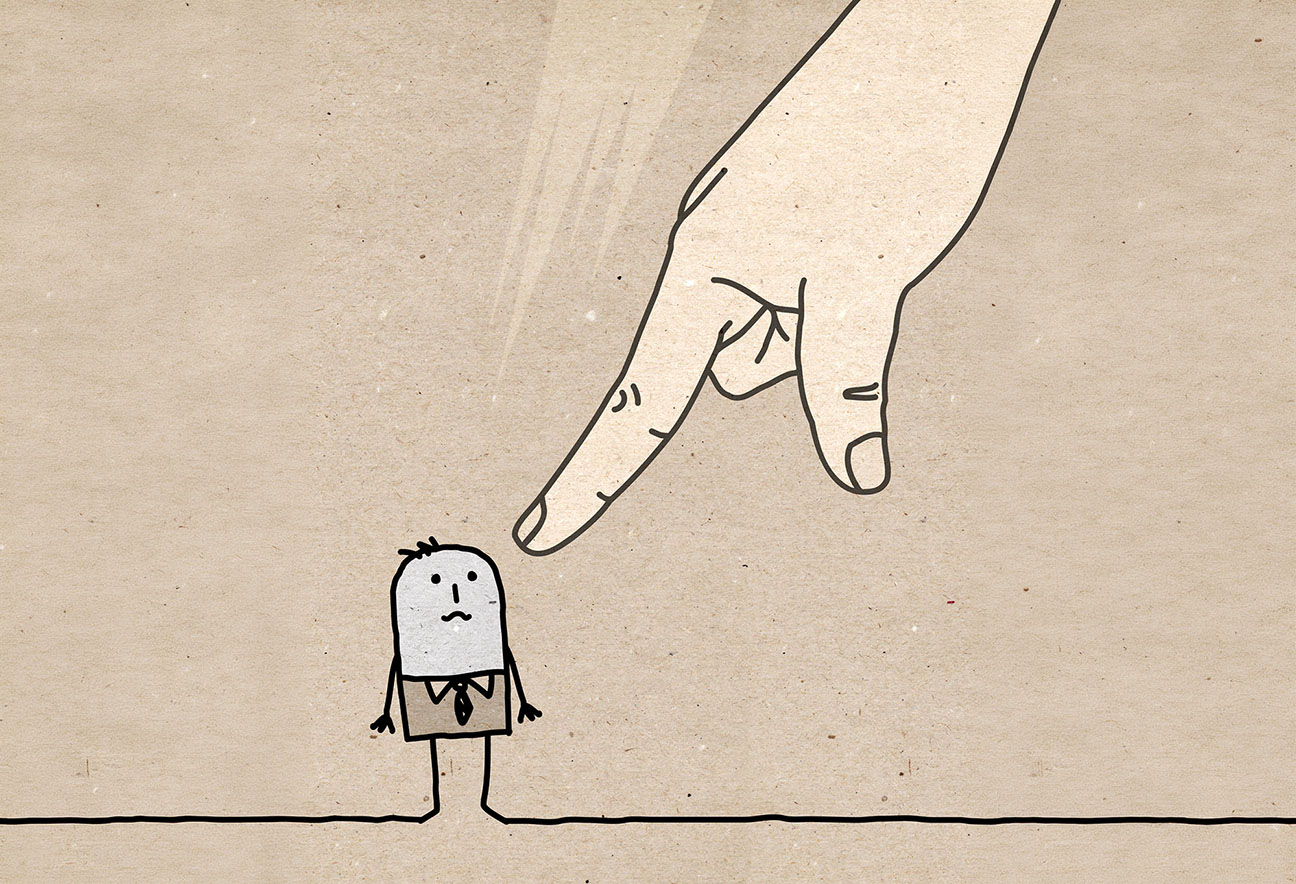
It’s easy to judge others based on appearances. We observe people and jump to conclusions about them, their characters, their relationships, and countless other factors – all of which we know nothing about. The truth is that, while we can observe others’ behavior, we cannot interpret it without understanding the situation from that person’s perspective.
Maybe that woman’s outfit in shul seems inappropriate to you; it might be the most modest thing she owns, and she is doing her best to fit in.
Maybe someone is talking in a tone we consider too loud. Perhaps they have a hearing problem and do not know how they sound.
When it comes to judging other people, we cannot believe all we see. Accept this reality humbly. The next time you’re tempted to jump to a snap conclusion, remind yourself, “Maybe I don’t know what’s really going on.”
I changed as a result of my mistake in Panama. I committed myself to focusing on just what I can observe and refraining from making judgments or conclusions about situations iof which I am entirely ignorant.
I don’t know whether “reducing judgmentalness” or “not drawing conclusions from appearances” is included in the middot, or character traits, we are supposed to work on during this period of Sefirat HaOmer, which counts 49 days between Pesach and Shavuot, but they are sure to be on my list.
Elizabeth Danziger is the author of four books, including “Get to the Point,” 2nd edition, which was originally published by Random House. She lives in Venice, California.