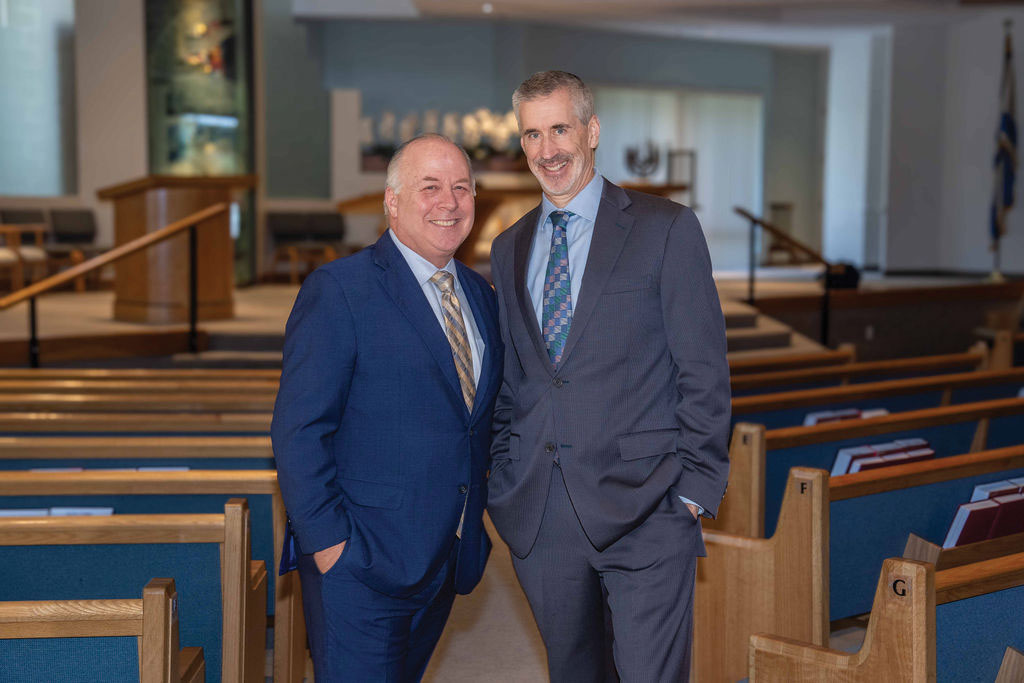
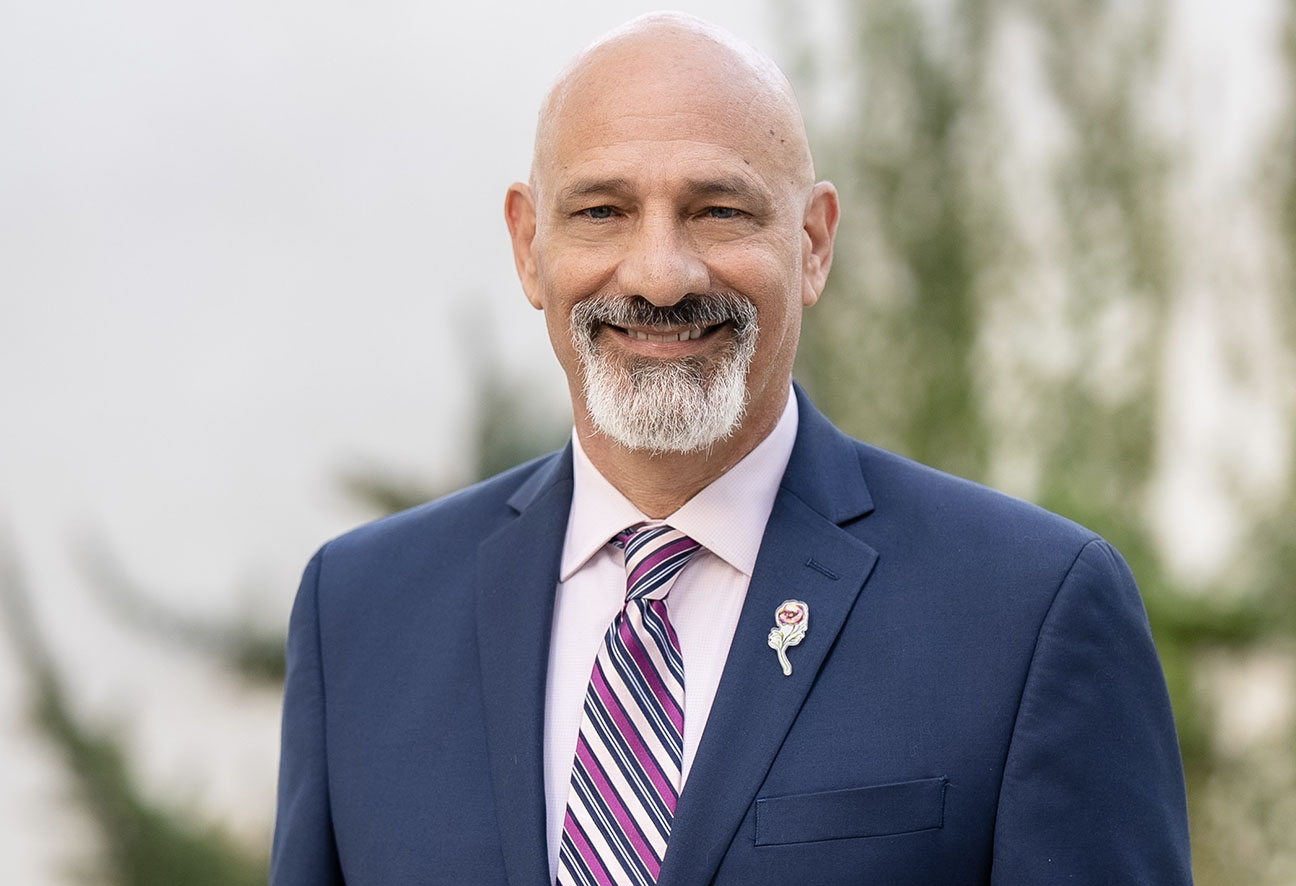
On the first Shabbat of every month, members of Temple Emanuel of Beverly Hills dive into a sound bath. Rabbi Jonathan Aaron, a 30-year veteran of the community, explained: “The word ‘bath’ makes people feel as if they are going to take a bath,” he said. “But it’s more like they are bathed in sound. The sound completely fills the room. You lie back and allow yourself to bathe in sound. There’s no water. It’s dry – unless you bring water to drink.”
Rabbi Aaron’s interest in sound baths was sparked by his family. Shortly after the pandemic, the rabbi and his family – his wife and two daughters – became regulars at a Venice Boulevard yoga studio. His daughters and his wife, a yoga instructor, were daily regulars. One daughter obtained her instructor’s license in Thailand, and the other is a sound bath specialist.
“What’s interesting to me,” said the rabbi, “is that when I look at my daughters, in their 20s, and other younger people – I ask, ‘what are they looking for? Why aren’t they coming into synagogues?’ What’s funny was, the impetus for doing a sound bath: A lot of people are exploring mindfulness. Many are exploring meditation.”
He described what it felt like when he first experienced a sound bath. “It was late on a Wednesday night, at 9 o’clock,” the Boston native who became senior rabbi in 2016 told The Journal. “This was after the pandemic. My daughter said ‘Hey, let’s do this sound bath. I hear the woman is fantastic.’”
Something clicked; the Aaron family participated every week for a year. “We would go to a sound bath for an hour or 90 minutes,” the rabbi said. A Japanese woman led the exercises, and occasionally she sang. “When we were done,” he said, “there was this incredible, peaceful feeling.” But it was not a straight line. “Sometimes we would have a very agitated feeling because it’s not always comfortable. Sometimes it makes your body vibrate a little bit. It works on the beta waves in your head.”
Memories from those early experiences remain fresh in Rabbi Aaron’s mind. “What it does is bring a calming presence through the sound into your mind,” he said. “I will say there are times when my mind wanders like crazy. Other times, I am able to concentrate.
“What I learned about meditation is, I am sure if I said to you ‘You should try meditation,’ you would say ‘OMG, my mind is working too much.’ Those are the minds that need meditation because it’s the muscle that you strengthen that allows your mind to wander.
“We all know our minds are going to wander,” Rabbi Aaron said. “Our minds are going to start thinking about the troubles we are having, everything going on in the world that is so difficult to deal with now. The meditation is ‘I’ve got to bring this back because I am just concentrating on the sound right now.’ Or, ‘I am just concentrating on my breath right now.’”
Asked if he experiences this differently from his daughters, the rabbi replied with a flat “no.” When he meditates, “It’s mindfulness meditation, which is only concentrating and noticing my breath,” he said. “I don’t have a mantra. Personally, I don’t like directed meditation as much. I like it when it’s ‘Just think about your breath.’
He suggests you try it for one minute. “In 20 seconds, your mind will go away, and then you’ll say ‘all I am doing now is concentrating on my breath. I’ll get to the problems of the world.’”
Does Rabbi Aaron exercise alone? Is there an ideal time of day? “When I personally meditate, I try to find a set time of the day when I can do it,” he said. “If I am not able to do it at the set time, when I get home, I will sit quietly, alone, for 20 minutes.”
During the pandemic, he led online meditation for his community four days a week. Eventually it became a regular event on Temple Emanuel’s schedule.
Rabbi Aaron led it for about two and a half years. “It’s hard to get back to it,” he remembered. “It would be for a half-hour. I would start with five to seven minutes of a D’var Torah or some kind of spiritual teaching. Next we would go quiet for 20 minutes. And then I would bring us back and finish.”
Rabbi Aaron’s instructions were perfectly clear: “Close your eyes and concentrate on your breath. Notice your breath. It’s ‘how’s my stomach lifting? What is the feeling in my neck? Is my heart beating harder? What does my breath feel like?’ And then I think, ‘I told my daughter I was going to call her. I’m just concentrating on my breath right now. I have a meeting at 3 o’clock, and I have to get there on time.
“I shouldn’t be thinking about those things now. I have to be concentrating on my breath. How am I going to go to that meeting? Your mind is going – ‘hold on. You’re just doing this for 20 minutes. Concentrate on your breath.’
“That is the exercise,” the rabbi said. “It’s not that you are bad if your mind wanders. It will wander. It’s the ability to bring it back for just a moment.
“Twenty minutes can seem like a long time. It is. During that span, there might be a few as 15, 20, 30 seconds when you are actually concentrating in that way. There might be other times where it’s almost the whole 20 minutes. That is the way a mind spins.”
“Close your eyes, and that’s it,” said Rabbi Aaron.
Fast Takes with Rabbi Aaron
Jewish Journal: What is your favorite form of relaxation?
Rabbi Aaron: Golf.
J.J.: Your favorite Shabbat moment?
R.A.: When we are at home sitting around singing.
J.J.: Do you have an unfulfilled wish?
R.A.: I can’t say I do.