
One verse, five voices. Edited by Nina Litvak and Salvador Litvak, the Accidental Talmudist
“From twenty years old and upwards, all who are fit to go out to the army in Israel, you shall count them by their legions you and Aaron.”
-Numbers 1:3
Aliza Lipkin
Writer and Educator, Ma’ale Adumim, Israel
The Book of Bamidbar opens with Hashem commanding Moshe to take a census of the nation. He instructs Moshe and Aaron to count all men eligible for military service, those 20 years and older, using the word “pakad.” Of the five possible Hebrew words for “count,” Hashem intentionally chose this one to convey a deeper message.
A striking example of pakad appears when Joseph, before his death, tells his brothers that Hashem will surely “pakod yifkod”/remember them, take them out of Egypt, and bring them into the Promised Land. Later, Hashem sends Moshe back to Egypt and instructs him to use this exact phrase as proof of his divine mission to redeem the people. In Bamidbar, Hashem uses the same word for counting the soldiers.
This choice powerfully reminds the nation that Hashem keeps His promises and can miraculously redeem them when needed. It was meant to instill strength and confidence as they enlisted, knowing Hashem is the ultimate “Ish Milchama” (Man of War) who guarantees victory.
Though Hashem could bring them into the Promised Land without human effort, that is not His will. Instead, He desires a partnership: we follow His ways, do our part and He blesses our efforts as we build the future together.
Rabbi Barry J. Chesler
School Rabbi, Jewish Studies Faculty, SSLI
How do we evaluate Moses and Aaron? Moses is the greatest prophet; the Torah itself is called the Five Books of Moses. Aaron is often found wanting. In Numbers alone, there is the slander against Moses and his participation in the sin at the rock. But, he is also the high priest.
When we consider our verse, it seems that Aaron is awkwardly tacked on at the end: From 20-years-old and upwards, all who are fit to go out to the army in Israel, you shall count them by their legions you and Aaron. Jacob Milgrom observes that while God speaks only to Moses, Aaron, too, is commanded. Perhaps to emphasize this point, the NJPS translation moves up the last phrase to the beginning of the verse. Moses and Aaron become equals in undertaking the sacred task of the census. Neither can do it alone.
We sometimes minimize the importance of the priesthood and the sacrificial system in Biblical religion. The priest, especially the high priest, is also a conduit of the divine word. The prophet hears the word of God like no other. But the priest, too, is essential to translating God’s word into action. He is required as much as the prophet. Our verse reminds us that it is not the one who hears the divine word that is of utmost significance, but the one who undertakes to make it live in the world. And that is a task available to each of us.
Rabbi Natan Halevy
To understand this on a deeper level, we connect the census to the same Hebrew word used when the Israelites left Egypt, where it states that Hashem lifted us on the wings of eagles. This intimates that we were innately connected to the highest ministering angels. Just as the number of men 20 years old and upward reached over 600,000, so too this figure is intrinsically linked to the number of ministering angels. The four encampments of the Israelites were also inherently connected to the four camps of angels surrounding the divine presence. Hashem was preparing the nation to serve in His holy service, mirroring the angels above. All of these elements demonstrate that in the amalgamation, unity and connection of our nation, we possess all the spiritual strengths, gifts and elevated qualities of the higher spiritual worlds. Through this profound connection to the higher source, we are able to reveal the deep secrets of the Torah in this physical realm. Consequently, the angels become secondary to us because of our elevated spiritual status. We become the resting place for the divine presence of Hashem. Thus, we are not only a physical army but also a spiritual army of Hashem, revealing His divinity throughout this world.
Just as one must reach 20 to be mature enough for a physical army, so too one must be 20 — when knowledge becomes more fully formed — to be completely fit for the spiritual army. The real purpose of this counting was spiritual strengthening, since Hashem already knows our number. That is why the Hebrew word for counting truly means to “lift up.”
Rabbi Michael Barclay
Temple Ner Simcha; “The Rabbi’s Table” on 790 KABC-AM (www.TheRabbisTable.com)
This verse has a subtle but important teaching about maturity … and about political realities. This census count is determined by who is “fit to serve.” But the counting is led by both Moses and Aaron. As the leader of the nation, Moses makes sense. But why Aaron?
Aaron is the High Priest of Israel, responsible for serving the spiritual needs of the people. As such, he, more than any other person, understood the psychological/emotional/spiritual qualities that allow someone to actually be “fit” to serve. As an example, someone who is mentally ill is not fit to go to war; but neither are newlyweds (Deut. 24:5) or those who are “afraid and disheartened” (Deut. 20:8). All of the Levites were entirely left out of this census (Num. 1:47) as were all resident aliens. Moses could evaluate the physical state of each man over 20, but only through the filter of Aaron’s wisdom and oversight could the official count be established.
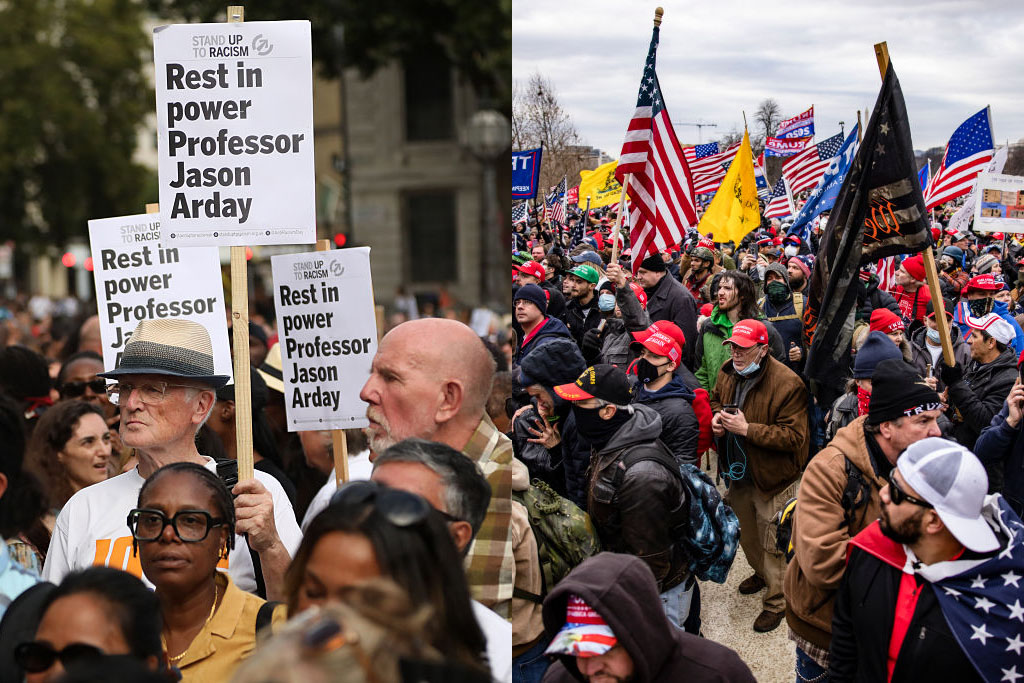
This entire census was built upon how Aaron counted … upon his discernment. Although Aaron was a political leader, the census succeeded only because of his spiritual wisdom and ethics. But today, as gerrymandering has become so prevalent, do we have people of equal wisdom and ethics as Aaron doing the counting? Or are the leaders of our nation (on both sides of the aisle) more concerned with “winning” than discernment?
As we approach state elections in this heated political climate, we need to remember the wisdom of this verse; the importance of ethical leadership; and the words attributed to Stalin: “It’s not important who votes, it’s important who counts the votes.”
Katia Bolotin
Recognition is viewed as an essential human need. Feeling “seen” and “heard” engenders a sense of belonging and connection. Recognition fosters self-worth and overall well-being.
In this week’s Torah reading, Parsha Bamidbar, the value of every individual is uplifted. G-d instructs Moshe and Aaron to take a census of all men who would be eligible for battle. Tribe by tribe, the heads of households appeared individually in front of Moshe and Aharon. Each gave his name to be counted, not as a mere number, but rather as an essential component of a greater distinctive whole.
Ramban (Nachmanides) states that one reason for the census was so that every individual had the opportunity to benefit from the attention and recognition given to him by Moshe and Aaron.
The Torah’s message is clear. Each person is Divinely endowed with traits and specific abilities meant to be developed. We all have essential roles to play in a greater, collective, journey-spanning generations. In our digital world, many feel insignificant and distant from their spiritual roots. Let’s reclaim the Torah’s timeless relevance, in which the inherent value of each individual is both recognized and maximized. It’s not enough to count each individual; we must make each individual count.