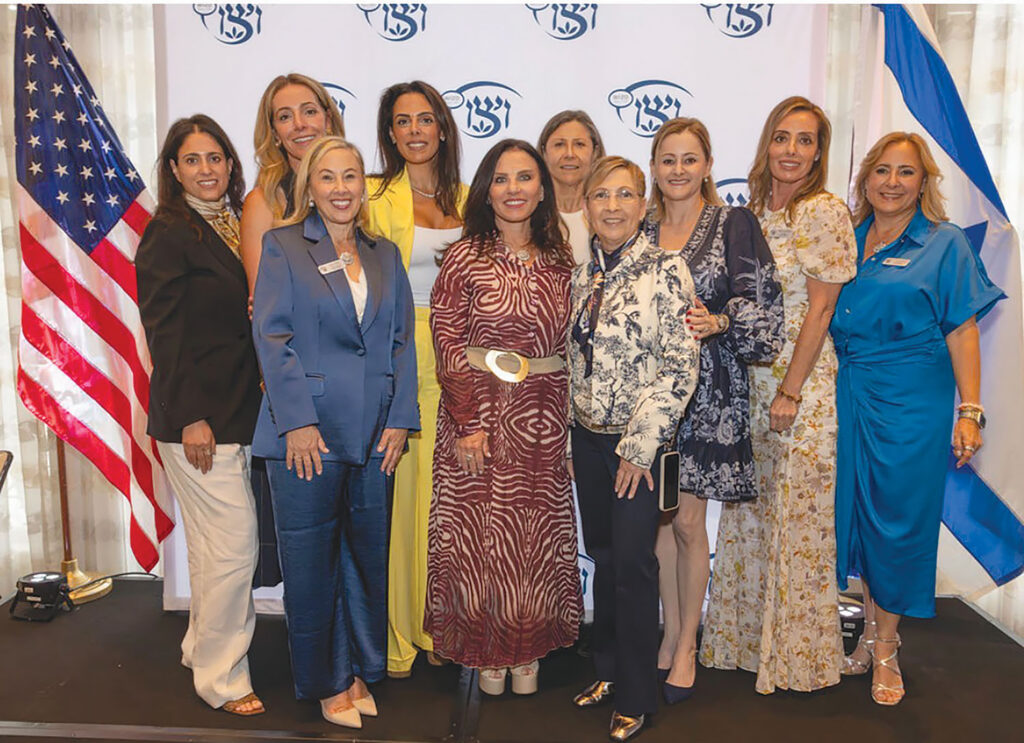
In a room of over 100 orthodox women who are trained experts in death and dying, I felt alive and seen.
Each of us, normally unable to share much with our loved ones about the losses we encounter daily, were suddenly long-lost sisters. Hospice and Palliative Care doctors, social workers, and chaplains. End-of-life doulas, funeral directors, and leaders of Jewish organizations supporting the bereaved. And the Chevra Kadisha, the women who perform the dignified ritual of tahara (cleansing, dressing, and praying for the deceased before burial). We serve in both adult and pediatric settings.
We knew each other already through the lives we have had the privilege to escort from this world to the next. Through the brokenness and rebuilding, and through our spiritual commitment to serve Hashem and Am Yisrael in the most painful and liminal of moments.
We were at the two-day inaugural “Core Vital Voices Conference” for orthodox women who support the dying, care for the deceased, and comfort the bereaved. Led by Core Founder and CEO Mrs. Aliza Bulow, MMC and Director of Core Communities of Practice Elissa Felder, RN, MMC, Core creates professional communities of practice for orthodox women to support each other and collaborate. This was the first international convening of Orthodox female practitioners across the full end-of-life continuum. The conference was rooted in Torah values and focused on unifying, shaping, and supporting us as caregivers.
Over the course of the conference, multiple panels addressed our hypothetical patient, “Miriam”. We discussed our care for her and her family from the time of diagnosis and treatment through palliative care, hospice, funeral preparations with the Chevra Kadisha, burial and shiva, and concluding with a focus on bereavement and complex grief.
To say this conference gave me vitality does not do it justice. Why? To borrow the words of author and podcaster, Mrs. Miriam Ribiat: “We are people who spend our lives caring for neshamahs. Helping bring aliyah to those who passed on. And helping the living survive grief, pain, and heartbreak down here. Maybe that’s why those two days felt so deeply nourishing to the soul.”
And, being human ourselves, we also came with our own personal stories of death, dying, and grief.
Less than twenty-four hours later, I sat in a room with over 740 Jewish women of all denominations who were hanging on every word that Rachel Goldberg-Polin spoke. We were at the Jewish Federation of Northern New Jersey’s Women’s Spring Luncheon. This room was full of women who have spent the last two plus years gathering– most often at hostage rallies and vigils— with heartbreak and hope. A diverse group united in our investment in the future, vitality, and safety of the Jewish people and the Jewish State.
Every time she speaks, Rachel Goldberg-Polin is both the mother of Hersh Goldberg-Polin z’’l, and of the Jewish people. Rachel Imeinu, our biblical mother Rachel, is known in our tradition to weep for God’s children, petitioning God not to forget us but rather to save and embrace us. Rachel Imeinu is not comforted herself until this redemption comes. She is pained and broken along with us (Yirmiyahu 31:14-16).
I feel my breath catch. Rachel Goldberg-Polin raised a question that also came up at the Core Vital Voices conference. How does a mourner answer the question, “How are you?”
At the conference, there was a nuanced discussion. Should that ever be asked? Is it callous, awkward, and harmful, or does it express the human need to show care and concern. Should we instead say something like, “I’m thinking of you” or “How are you doing today”– acknowleding that grief is a wave, constantly changing each day, and even moment?
I am a chaplain, and in our training this is not only a discussion, but the introduction to a foundational principle in spiritual care for all faiths. Chaplains are trained to hear the hardest questions and to function counter to the human instinct, which is to fix. “How are you?” is often coming from a good place. From the person wanting to help, offer relief, and make it better. To lift one sixtieth of the suffering (as our tradition teaches visiting the sick can). But the truth is, in life’s most broken of moments, chaplains (and humans) cannot fix. Fixing is not only not possible, but it can be harmful, silencing a soul crying out to be held, halting natural grief that is part of the process of finding comfort and resilience. Instead, chaplains are called to be present. We hold, we witness, we support others in accessing their spiritual resources, and we accompany. We honor the grief, loss, and love by seeing and hearing them when it is unbearable.
This is not limited to chaplains. The Jewish tradition teaches that we do not ask “How are you?” to a mourner. We do not greet with “sheilat shalom”, the normal way of greeting, because we know the answer. Their world is shattered, altered forever. They are living the waves of grief. So rather than speaking first (which would be more socially comfortable), the Jewish law requires the visitor at a shiva home to wait for the mourner to speak. Prioritizing listening to pain over our instinct to fix.
Back at the Core Vital Voices Conference, Mrs. Malkie Klaristenfeld, Founder and Director of Knafayim and Director of Volunteers for Chai Lifeline’s Crisis Teams, spoke about Moshe being told in the book of Shemot to remove his shoes, as he was on holy ground at the burning bush (Shemot 3:5). Why? Mrs. Klaristenfeld explained that shoes protect and prevent discomfort. So it seems Hashem was aligning kedusha (holiness) with vulnerability. From this, she offered, “What if kedusha is not primarily comfortable, but perhaps destabilizing?” I would posit that every single woman at that conference would use the word “holy” to describe end-of-life care. Not naively, but rather with the nuance of Mrs. Klaristenfeld’s wisdom.
At the JFNNJ gathering, Rachel Goldberg-Polin spoke to this with the raw clarity only she can convey. “It’s very strange to me that somebody would say ‘How are you?’ while I have a knife sticking out of my heart. And yet they don’t see it. And I can’t be mad or upset with people who don’t see it. It’s like for someone who is born blind, trying to explain blue to them. How do you explain blue to the blind? It’s very complicated. And I think part of my [new] book is me desperately wanting you to see my blue. I want you to see my pain.”
This is the experience of so many of us on the worst days of our lives and their aftermath. Wanting someone to be with us in our pain, without the onus being on us to be seen.
Mrs. Klaristenfeld taught, “If breaking is part of our reality, then the defining question of life is not what can we do to avoid it, but what happens after?”
Less than twenty-four hours later, I heard Rachel Goldberg-Polin respond as though in chevrusa, in her reflection on grief: “I realized, this sensation that I am experiencing is the love that has continued growing. Because love does not die. And I didn’t know that…Love is stronger than death. And love is stronger than time. And I didn’t know…Grief is a gorgeous price that we pay for the privilege of having loved someone so deeply and endlessly. And so grief is a badge of love.”
This is what we do after.
Over 100 Orthodox Jewish women who walk with the dying and the bereaved. Over 740 Jewish women of all denominations listening to and honoring the grief of one mother. Love that continues to grow, living beyond death.
“So says the Lord: A voice is heard on high, lamentation, bitter weeping, Rachel weeping for her children, she refuses to be comforted for her children for they are not. So says the Lord: Refrain your voice from weeping and your eyes from tears, for there is reward for your work, says the Lord, and they shall come back from the land of the enemy. And there is hope for your future, says the Lord, and the children shall return to their own border.” (Yermiyahu 31:14-16).
Rabbanit Alissa Thomas-Newborn, BCC is the Director of Spiritual Care Studies at Gratz College, a chaplain at NewYork-Presbyterian Columbia University Irving Medical Center and Morgan Stanley Children’s Hospital of New York, and the rabbanit of Congregation Netivot Shalom in Teaneck, NJ.