fbpx

May 14, 2026

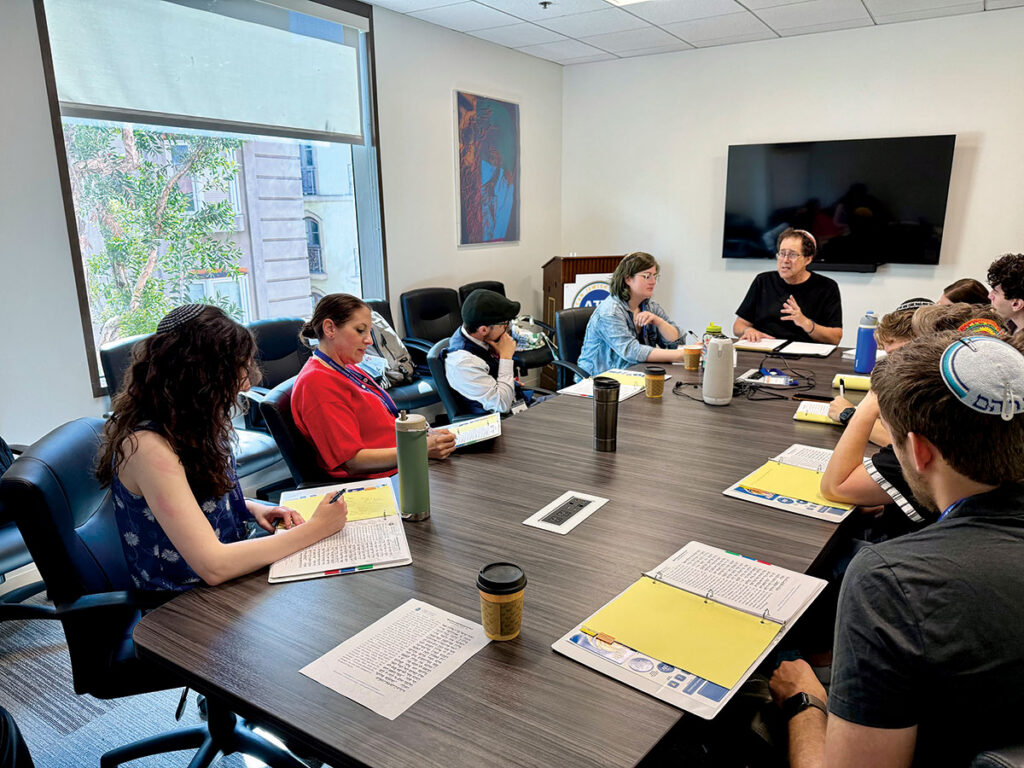
AJU’s Ziegler School: Growth and Transformation

This has been a time of extraordinary challenge and change, not only for the Ziegler School of Rabbinic Studies of American Jewish University, but for every rabbinical school across North America. Those stresses reflect transformations sweeping across higher education, seminaries of every faith, religious denominations, and the demographic and technological landscape of our age.

Economic realities demand serious reckoning. But beyond finances, the world of the rabbinate and the world of congregations have been fundamentally remade. It’s not the same as it was 20 years ago. It is not the same as it was 40 years ago. Synagogues that don’t adapt will not survive.

Every single rabbinical school is confronting the reality that the old streams of rabbinical students have dried up. The person who went to a Solomon Schechter day school, spent summers at Camp Ramah, participated in a Year Course in Israel – that student has largely disappeared. That doesn’t mean there aren’t great people out there.  It means we have to find them differently. Today, we are reaching people who never imagined becoming rabbis, who discovered Judaism and fell in love with mitzvot later in life, and who are looking for a path forward. That is a blessing — and it creates a profoundly different educational environment.

Technology and social media have utterly upended our expectations. A rabbi today must know how to command a room and command a social media feed. They have to know how to perform when they speak in public, they have to know that something they say in a synagogue adult education class to 15 people can reach 15,000 by morning. That means rabbis are having to learn an entirely different set of skills, including how to balance a budget, fundraise, partner with lay leaders, and supervise staff. There’s just an enormous number of skills that weren’t on the docket when I started rabbinical school, and we have to pivot to be able to provide that expanded mastery, without compromising the competence in scripture, rabbinics, preaching, counseling, and teaching.

These converging forces have upended Jewish organizational life at every level, prompting a comprehensive reassessment of what is needed for rabbinical education. Institutions that aspire to lead must dig deep, ask hard questions, and respond with bold courage.

American Jewish University’s Ziegler School of Rabbinic Studies is facing these shifting possibilities directly. We are blessed with visionary leadership, professional and volunteer, under the guidance of our new president, Jay Sanderson. This is a moment of great possibility and expansive vision. This is a moment for transformation and for change.

The challenge is how we can reinvent rabbinical training so that it’s not clinging to models that no longer work, is sustainable, and addresses the needs of today and tomorrow’s Jewish community. An honest assessment requires that we raise questions that were once forbidden or might make some people squirm.

For example, we didn’t used to have the capacity to provide training online. But I will tell you that many other noble institutions—including Hebrew Union College, Reconstructionist Rabbinical College, Hartman, and Hadar—are now actively offering hybrid rabbinical training in which there’s a significant component of learning online. AJU has to consider its own signature approach to these new tools. We have to examine a hybrid fusion of online and in-person approaches, both for pedagogical advance and to accommodate new sociological realities. And we have to embrace new possibilities for the sake of sustainability and meeting actual communal trends.

Denominational identity has shifted, and it helps to distinguish between two ways of thinking about it. On the one hand, denomination can refer to a particular nexus of bureaucracy (professional organizations), institutional networks (congregational umbrellas), and ideology. That particular form of denominational loyalty has been waning for some time, and is, frankly, uninspiring.

But if by denominational identity we mean, for instance, a deep commitment to the primacy of Hebrew and classical texts, to historical and liturgical continuity, rich mitzvah observance, to the question of training rabbinical students in a context that is explicitly Zionist and supportive of Israel, then to the degree that those interlocking commitments express what has been a denominational perspective, those remain front and center. These are all pressing values that must be on the table, shaping our desired outcomes.

All the big questions must receive consideration and analysis. All must be on the table. For that very reason, it must be stressed that no decisions have been made, except the decision to pursue rich, deep conversation to seek an emerging consensus. It means we need to be open to hearing the arguments others raise with us, so that even if we don’t buy their solution, we can craft a coherent, thoughtful response.

I know there will be substantive responses to many of these issues, and that the Ziegler School will not, at the end of the day, be the same rabbinical school it was 5, 10, or 25 years ago. All living things change, and we are committed to a thriving, living, superb rabbinical school at AJU. There will be a Ziegler School when the dust settles.

While AJU pursues this course of exploration, conversation, and rebuilding, it is simultaneously committed to ordaining and educating out the current batch of students. In a few weeks, the current students will register for Fall semester courses, which will continue to be offered at our AJU Beverly Hills campus. Learning will continue, and these students will receive a Ziegler ordination upon completion of their studies, which may lead to membership in the Rabbinical Assembly.

All change can feel like turmoil, I understand. But I affirm it is for the good. President Sanderson and the board are committed to strengthening the university’s fiscal strength, both for the university as a whole and for the Ziegler School, working together to eliminate the siloing of AJU’s various programs so they can work in symbiosis.

We are asking questions that we should have been asking for quite some time. The board is addressing itself to responsibilities with great seriousness, and Jay Sanderson is leading us toward transformation and growth. To partner with him, we need to stay engaged, stay involved, and participate in this exciting rebirth.

The best days of American Jewish University are in our future.


Rabbi Dr. Bradley Shavit Artson holds the Abner and Roslyn Goldstine Dean’s Chair for the Ziegler School of Rabbinic Studies of American Jewish University. Starting this July, he will step down as dean after 25 years and be promoted to the AJU Mordecai Kaplan Distinguished Scholar.

AJU’s Ziegler School: Growth and Transformation Read More »

A Guava Gourmet Cheesecake for Shavuot

My grandmother did not have elaborate silver candelabra for her Friday night candles. As a little girl, I can remember her sitting at her kitchen table, a silk chiffon scarf casually draped over her head, lighting her candles, one by one, melting the bottom of each candle, placing it on a plate covered with foil paper. My grandmother was blessed with eight children, so her plate quickly filled with many candles. As she would light the last candle, she would breathe the words “Ezra Sofer.” Then she would wave her hands in front of the candles and recite the blessing.

The light of her candles was glorious and as a little girl, I was convinced that she had a mystical superpower in that moment. Of course, her superpower was raising children and grandchildren filled with faith and regard for Jewish tradition.

My grandmother, Nana Aziza was born in Al Uzair and her family for many generations were the keepers of the Tomb of Ezra the Scribe. The Holy Shrine, with its turquoise tiled dome, still stands on the western bank of the Tigris River in the south of Iraq.

It is a memorial to Ezra, who is credited with the Ingathering of the Exiles from Babylon to rebuild the Second Temple in Jerusalem. He established the Great Assembly and wrote the model text for the Torah, a meticulous scroll, which was kept in the Temple and against which all others were to be checked for accuracy.

It was considered especially important to make the pilgrimage to the Shrine at Shavuot, the holiday that marks the Giving of the Torah on Mount Sinai.

My mother remembers the people who came from all over Iraq and even as far away as India. She remembers that all the rooms of the family compound were filled, so people would sleep in the open air on the huge roof and camp in the surrounding area.

For Iraqi Jews, Shavuot will always means kahi, a fried Iraqi pastry, served with a sprinkling of sugar and kheimar, a clotted buffalo cream. I have fond memories of my mother rolling out the dough, spreading butter on each layer, folding again and again, frying the kahi and serving it to us. It was devoured in seconds.

My grandmother would serve ajja shiriya, a savory frittata featuring Italian parsley and vermicelli noodles and sambusak bil j’bin, cheese-filled turnovers. She would finish the meal with her incomparably deliciously crispy baba t’amar and a small glass of her sweet cardamom chai.

—Sharon

Shavuot is the Biblical festival that marks the beginning of the wheat harvest and a time when the milk is especially sweet and plentiful as the cows have enjoyed a sweet Spring diet. There is a tradition that since the Jews in the desert had not learned the Laws of Kashrut before the giving of the Torah, that we too eat only dairy on Shavuot.

For most Jews, Shavuot means dairy meals — fish, pasta, quiche and of course, cheesecake. But for my Moroccan family, Shavuot was not centered around dairy. My mother served festive tajines and salads filled with fresh herbs to celebrate spring, as well as delicate pastries and sweets flavored with honey and orange blossom. There were breads. Elaborate breads, braided, decorated and studded with fragrant anise seeds.

Of course, when Neil and I were raising our family in Los Angeles, we joined in the popular Ashkenazi dairy customs. Our meals centered around fun, themed menus: Italian pasta night, with cheesy garlic bread, Mexican enchiladas with rice and beans, French poisson and haricots vert.

We really went to town with the desserts. I would make an Oreo Chocolate Pudding Lasagna (for some reason only on Shavuot) and all the kids devoured it. I would make Magnolia Bakery’s famous Banana Cream Pie (recipe can be found on Pinterest). New York style cheesecake with lots of different toppings.

Nowadays, we follow Neil’s Rhodesli tradition of desayuno, a traditional Sephardic lunch of flaky cheese and spinach filled boyos and cheese burekas, as well as salads, cheeses and olives. Dessert is sutlach, a ground rice milk pudding.

When my boys were younger, their favorite cheesecake was a mango cheesecake, from a recipe made by our good friend Abe Abraham.

Our fond memories of this divine cheesecake inspired Sharon and me to take the tropical flavors to the next level by incorporating guava jam from our new favorite company, Guava Gourmet. We swirled their guava marmalade into the top of the cheesecake before we baked it. We made a lush cream cheese frosting with a tiny bit of lemon zest, and topped it with fresh mango and pretty roses from the garden.

Let’s just say, Shavuot gives us a wonderful, guilt-free excuse to indulge in this guava mango cheesecake!!

—Rachel

Guava Mango Cheesecake

Crust

2 cups graham cracker crumbs

3 Tbsp sugar

1 tsp ground cinnamon

1/2 cup unsalted butter, plus extra for greasing

Filling

4 8-ounce packages cream cheese, room temperature

4 Tbsp all-purpose flour

1/2 tsp salt

1 1/2 cups sugar

1 cup sour cream

2 tsp vanilla extract

1 tsp lemon zest

4 large eggs, at room temperature

2 Tbsp guava marmalade

Cream cheese frosting, optional

1 ripe atalufa mango, diced

Cream cheese frosting

8 oz cream cheese, room temperature

1/2 cup powdered sugar, sifted

Lemon zest, to taste

Beat all the ingredients together until smooth.

Preheat oven to 400°F.

Lightly grease a 9-inch springform pan.

In large bowl, combine graham cracker crumbs, sugar, cinnamon and melted butter.

Stir until mixture is well blended and crumbs are moist.

Place crumbs in the pan and use a glass to press until evenly spread on the bottom and 1 inch up the side of pan. Bake for about 10 minutes, until golden brown.

Reduce the oven temperature to 325°F.

In a large bowl, combine the cream cheese, flour and salt. Set mixer to medium speed and beat until smooth and fluffy. Add sugar, sour cream, vanilla and lemon zest. Beat until well blended, scraping down sides frequently. Add eggs one at a time, beating well after each addition.

Pour the cheesecake mixture into the crust. Swirl the marmalade into the top of the cheesecake.

Bake cheesecake for 60 to 70 minutes.

Let cheesecake cool. Then cover and refrigerate, for one day. Before serving, top with cream cheese frosting and diced mango.


Sharon Gomperts and Rachel Emquies Sheff have been friends since high school. The Sephardic Spice Girls project has grown from their collaboration on events for the Sephardic Educational Center in Jerusalem. Follow them
on Instagram @sephardicspicegirls and on Facebook at Sephardic Spice SEC Food. Website sephardicspicegirls.com/full-recipes.

A Guava Gourmet Cheesecake for Shavuot Read More »

Celebrate National Hamburger Month

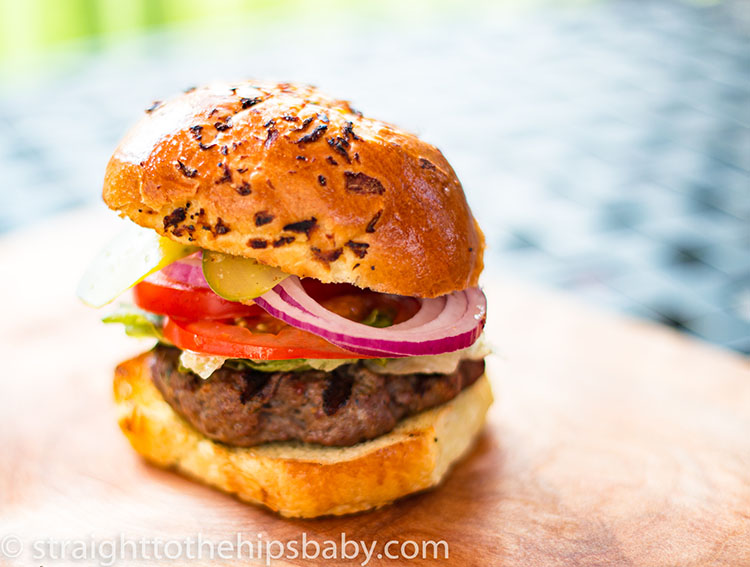
May is National Hamburger Month! While there may be limitations on how to enjoy burgers due to the laws of kashrut, it just means Jews have to get a little more creative. From classics and twists on all-beef burgers to turkey and plant-based options, there are plenty of delicious ways to celebrate this holiday, which kicks off the summer burger season.

“We grill a lot during the summer in my house, so having a low-fuss, delicious hamburger recipe is a must,” Jessie-Sierra Ross, founder of Straight to the Hips, Baby and author of “Seasons Around the Table,” told The Journal. “A lot of cooks mix tons of different flavorings and several types of beef into their burgers, but sometimes simplifying is the key to the best flavor.”

Ross’ recipe uses basic pantry spices and high-quality 85% fat ground beef to let the meat shine. “The patties come out juicy and perfectly seasoned, ready for all of your favorite toppings,” she said.

My Favorite Burger

8 patties

1 Tbsp kosher salt

2 tsp garlic powder

2 tsp dried parsley

1 tsp onion powder

1 tsp smoked paprika

1/4 tsp freshly ground pepper

1 Tbsp Worcestershire sauce

1 egg

2 ½ pounds organic 85% fat ground beef

1. In a large mixing bowl, combine the salt, dried spices and Worcestershire sauce. Add the egg and lightly beat.

2. Add the ground beef and mix thoroughly by hand.

3. Using a kitchen scale, measure out about 1/3 of a pound of the ground beef mixture and form into a loose ball (roughly a handful). Flatten into the desired size for your hamburger buns and make a small indent with your thumb in the middle. This helps the burger maintain its shape during cooking. Place on a large plate or a wax paper-lined cutting board.

4. Repeat until you have 8 patties.

Grill to your desired temperature (medium-rare is recommended) and top with your favorite burger fixings!


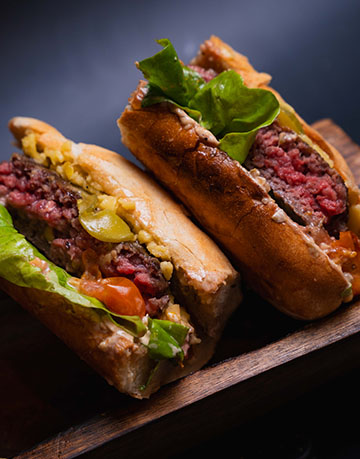
“There’s something deeply nostalgic and universal about a burger,” chef Olivia Ostrow, Owner, Maison Ostrow/Maison Baguette, told The Journal. “It’s comfort food, celebration food, late-night food and family food.”

As a French chef, Ostrow has reinterpreted the burger through her own lens. “[It has] richer flavors, more intentional textures, and balance in every bite,” she said.

Maison Baguette Wagyu Burger

1 large onion, thinly sliced

2 Tbsp olive oil

Maison secret sauce (or your favorite sauce)

2 pounds kosher Wagyu ground beef

Kosher salt

Freshly ground black pepper

4 artisan baguettes or demi baguettes

Dill pickles, sliced

Hand-cut fries (fresh and crispy)

1. Caramelize the onions: In a pan over medium-low heat, cook the sliced onions in olive oil for about 25 minutes, stirring occasionally, until deeply golden and soft. Set aside.

2. Prepare the sauce: Place sauce in a bowl and refrigerate while preparing the burgers.

3. Form the patties: Divide the Wagyu beef into four equal portions and gently shape into patties. Season generously with kosher salt and black pepper.

4. Cook the burgers: Heat a cast-iron pan or grill until very hot. Cook the burgers for 3–4 minutes per side, depending on desired doneness. Remove from heat and let rest for a few minutes.

5. Toast the bread: Lightly toast the baguettes until warm and slightly crisp.

6. Assemble: Spread a generous amount of sauce on both sides of the baguette. Add the Wagyu patty, caramelized onions, pickles and a handful of crispy fries directly inside the baguette.

7. Serve: Serve immediately, while warm and crispy.


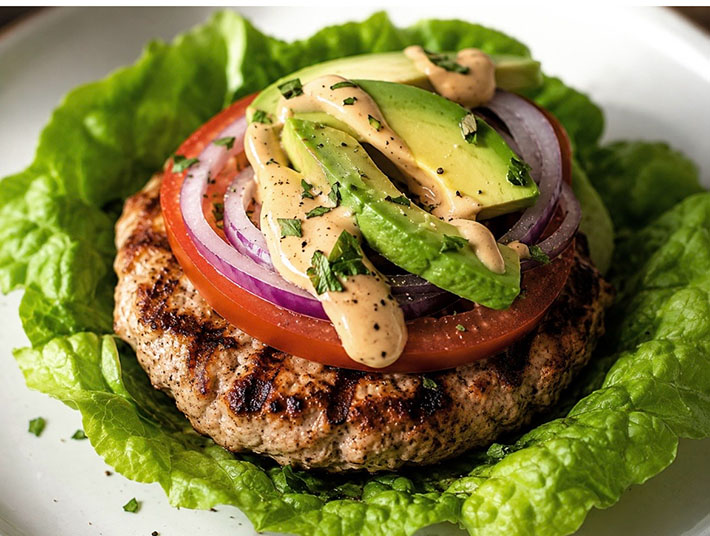
For those seeking a healthier option, look no further than Dawn Lerman’s turkey burger.

“It’s a classic burger rebooted with fiber and superfoods,” Lerman, a nutritionist and author of “My Fat Dad: A Memoir of Food, Love, and Family, With Recipes,” told The Journal.

Zucchini keeps the burgers juicy, while adding fiber and without changing the flavor, while sumac delivers anti-inflammatory benefits. “As a nutritionist, I’m passionate about creating delicacies with ingredients that support your body, keep you full longer and nourish you without sacrificing flavor,” she said. “Growing up, my 450-pound ad man father could sell America anything crispy, creamy or covered in sauce, while I was usually in the kitchen trying to come up with a healthier version of whatever he craved.”

High Fiber, High Protein Turkey Burger

Adapted from “My Fat Dad”

For the burger:

1 pound organic dark meat ground turkey

1 small zucchini, grated and squeezed dry

2 Tbsp finely diced onion

1 garlic clove, minced

1 Tbsp Dijon mustard

1 tsp Worcestershire sauce

1 tsp sumac

Salt and black pepper

Olive oil spray

For the sauce:

1/4 cup plain Greek yogurt

1 Tbsp ketchup

1 tsp Dijon mustard

Splash of pickle juice

1. In a bowl, combine turkey, zucchini, onion, garlic, Dijon, Worcestershire, sumac, salt and pepper and form into 4 patties.

2. Grill or cook in a skillet over medium heat for about 5 to 6 minutes per side until cooked through.

3. Stir together the sauce ingredients and serve on a whole grain bun, lettuce wrap or collard wrap.


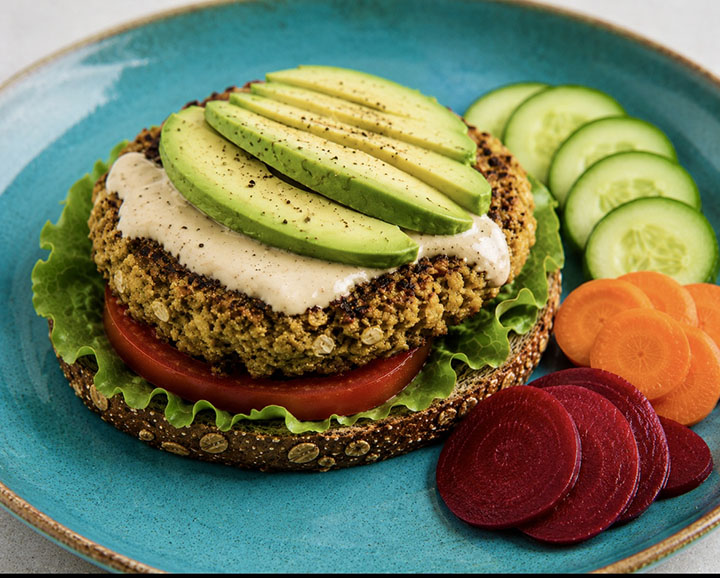
If you want to go totally meatless, Lerman has that covered too.

In this recipe, nutritional yeast and sunflower seeds add crunch, plant protein and B-vitamins, while turmeric delivers anti-inflammatory and antioxidant benefits.

“Coming of age in Greenwich Village in the 1970s, one corner sold fries and egg creams while the other sold sprouts, grains and health food staples,” Lerman said. “When my 450-pound ad man dad thought going vegetarian might help his waistline, I came up with this hearty meatless burger that is still a favorite … with both my nutrition clients and my family.”

A Hearty Healthy Meatless Burger

1 block extra firm tofu, pressed

1/2 cup rolled oats

1 carrot, grated

2 scallions, sliced

1 Tbsp low sodium tamari

1 tsp sesame oil

2 Tbsp nutritional yeast

2 Tbsp sunflower seeds

1 tsp turmeric

Black pepper

Olive oil spray

Sauce

2 Tbsp tahini

Juice of 1 lemon

Warm water to thin

Pinch of salt

1. Crumble tofu into a bowl, mashing half slightly for texture. Add oats, carrot, scallions, tamari, sesame oil, nutritional yeast, sunflower seeds, turmeric and pepper and form into patties.

2. Chill for 20 minutes.

3. Cook in a lightly oiled skillet for about 4 to 5 minutes per side until crisp and golden. Stir together the sauce ingredients and drizzle over the burgers.

4. Serve on a sprouted or whole grain bun, lettuce wrap or collard wrap with avocado, sprouts and tomato.

Celebrate National Hamburger Month Read More »

Table for Five: Bamidbar

One verse, five voices. Edited by Nina Litvak and Salvador Litvak, the Accidental Talmudist

“From twenty years old and upwards, all who are fit to go out to the army in Israel, you shall count them by their legions you and Aaron.”

-Numbers 1:3


Aliza Lipkin

Writer and Educator, Ma’ale Adumim, Israel

The Book of Bamidbar opens with Hashem commanding Moshe to take a census of the nation. He instructs Moshe and Aaron to count all men eligible for military service, those 20 years and older, using the word “pakad.” Of the five possible Hebrew words for “count,” Hashem intentionally chose this one to convey a deeper message.

A striking example of pakad appears when Joseph, before his death, tells his brothers that Hashem will surely “pakod yifkod”/remember them, take them out of Egypt, and bring them into the Promised Land. Later, Hashem sends Moshe back to Egypt and instructs him to use this exact phrase as proof of his divine mission to redeem the people. In Bamidbar, Hashem uses the same word for counting the soldiers.

This choice powerfully reminds the nation that Hashem keeps His promises and can miraculously redeem them when needed. It was meant to instill strength and confidence as they enlisted, knowing Hashem is the ultimate “Ish Milchama” (Man of War) who guarantees victory.

Though Hashem could bring them into the Promised Land without human effort, that is not His will. Instead, He desires a partnership: we follow His ways, do our part and He blesses our efforts as we build the future together.


Rabbi Barry J. Chesler

School Rabbi, Jewish Studies Faculty, SSLI

How do we evaluate Moses and Aaron? Moses is the greatest prophet; the Torah itself is called the Five Books of Moses. Aaron is often found wanting. In Numbers alone, there is the slander against Moses and his participation in the sin at the rock. But, he is also the high priest.

When we consider our verse, it seems that Aaron is awkwardly tacked on at the end: From 20-years-old and upwards, all who are fit to go out to the army in Israel, you shall count them by their legions you and Aaron. Jacob Milgrom observes that while God speaks only to Moses, Aaron, too, is commanded. Perhaps to emphasize this point, the NJPS translation moves up the last phrase to the beginning of the verse. Moses and Aaron become equals in undertaking the sacred task of the census. Neither can do it alone.

We sometimes minimize the importance of the priesthood and the sacrificial system in Biblical religion. The priest, especially the high priest, is also a conduit of the divine word. The prophet hears the word of God like no other. But the priest, too, is essential to translating God’s word into action. He is required as much as the prophet. Our verse reminds us that it is not the one who hears the divine word that is of utmost significance, but the one who undertakes to make it live in the world. And that is a task available to each of us.


Rabbi Natan Halevy

RabbiHalevy@KahalJoseph.org

To understand this on a deeper level, we connect the census to the same Hebrew word used when the Israelites left Egypt, where it states that Hashem lifted us on the wings of eagles. This intimates that we were innately connected to the highest ministering angels. Just as the number of men 20 years old and upward reached over 600,000, so too this figure is intrinsically linked to the number of ministering angels. The four encampments of the Israelites were also inherently connected to the four camps of angels surrounding the divine presence. Hashem was preparing the nation to serve in His holy service, mirroring the angels above. All of these elements demonstrate that in the amalgamation, unity and connection of our nation, we possess all the spiritual strengths, gifts and elevated qualities of the higher spiritual worlds. Through this profound connection to the higher source, we are able to reveal the deep secrets of the Torah in this physical realm. Consequently, the angels become secondary to us because of our elevated spiritual status. We become the resting place for the divine presence of Hashem. Thus, we are not only a physical army but also a spiritual army of Hashem, revealing His divinity throughout this world.

Just as one must reach 20 to be mature enough for a physical army, so too one must be 20 — when knowledge becomes more fully formed — to be completely fit for the spiritual army. The real purpose of this counting was spiritual strengthening, since Hashem already knows our number. That is why the Hebrew word for counting truly means to “lift up.”


Rabbi Michael Barclay

Temple Ner Simcha; “The Rabbi’s Table” on 790 KABC-AM (www.TheRabbisTable.com)

This verse has a subtle but important teaching about maturity … and about political realities. This census count is determined by who is “fit to serve.” But the counting is led by both Moses and Aaron. As the leader of the nation, Moses makes sense. But why Aaron?

Aaron is the High Priest of Israel, responsible for serving the spiritual needs of the people. As such, he, more than any other person, understood the psychological/emotional/spiritual qualities that allow someone to actually be “fit” to serve. As an example, someone who is mentally ill is not fit to go to war; but neither are newlyweds (Deut. 24:5) or those who are “afraid and disheartened” (Deut. 20:8). All of the Levites were entirely left out of this census (Num. 1:47) as were all resident aliens. Moses could evaluate the physical state of each man over 20, but only through the filter of Aaron’s wisdom and oversight could the official count be established.

This entire census was built upon how Aaron counted … upon his discernment. Although Aaron was a political leader, the census succeeded only because of his spiritual wisdom and ethics. But today, as gerrymandering has become so prevalent, do we have people of equal wisdom and ethics as Aaron doing the counting? Or are the leaders of our nation (on both sides of the aisle) more concerned with “winning” than discernment?

As we approach state elections in this heated political climate, we need to remember the wisdom of this verse; the importance of ethical leadership; and the words attributed to Stalin: “It’s not important who votes, it’s important who counts the votes.”


Katia Bolotin

Katia-Bolotin.com

Recognition is viewed as an essential human need. Feeling “seen” and “heard” engenders a sense of belonging and connection. Recognition fosters self-worth and overall well-being.

In this week’s Torah reading, Parsha Bamidbar, the value of every individual is uplifted. G-d instructs Moshe and Aaron to take a census of all men who would be eligible for battle. Tribe by tribe, the heads of households appeared individually in front of Moshe and Aharon. Each gave his name to be counted, not as a mere number, but rather as an essential component of a greater distinctive whole.

Ramban (Nachmanides) states that one reason for the census was so that every individual had the opportunity to benefit from the attention and recognition given to him by Moshe and Aaron.

The Torah’s message is clear. Each person is Divinely endowed with traits and specific abilities meant to be developed. We all have essential roles to play in a greater, collective, journey-spanning generations. In our digital world, many feel insignificant and distant from their spiritual roots. Let’s reclaim the Torah’s timeless relevance, in which the inherent value of each individual is both recognized and maximized. It’s not enough to count each individual; we must make each individual count.

Table for Five: Bamidbar Read More »