They saw. They knew. They did nothing.
Those three lines kept running through my head as I watched the extraordinary mini-series “We Were the Lucky Ones.” For some reason, this mini-series, out since 2024, has received minimal attention. But for the hard truths it exposes about the world’s inhumanity before, during, and after the Holocaust, it is crucial to watch right now.
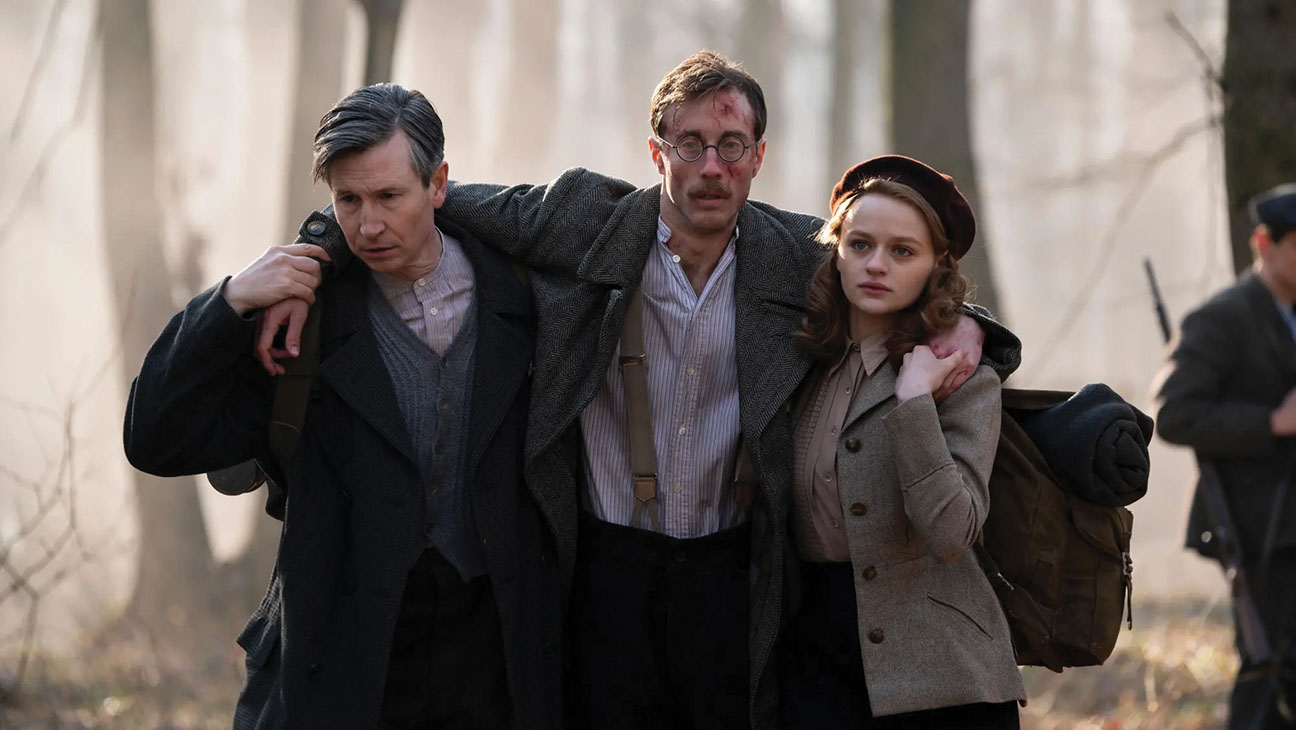
The eight-part series is an adaptation of Georgia Hunter’s 2017 bestselling novel of the same name. It tells the story of how the Kurc family from Rodem, Poland, survived the war. At 15, Hunter discovered that her grandfather, Addy, was a survivor and that their family is Jewish. Addy was one of the five Kurc siblings who miraculously survived, along with their parents, Sol and Nechuma.
One of the ways this series is unique is that it focuses on surviving outside the camps, in hiding, constantly running, facing impossible choices. Ultimately, the family gets spread out from Siberia to Brazil. But they survive. It’s not a story of victimhood. It’s a story of strength and resilience.
Because the Holocaust was not just 6 million dead bodies. It was 6 million indecencies; 6 million indignities carried out for nearly a decade.
We’ve been taught that the world was shocked when it saw images from the camps. But even those who didn’t know about the camps, most were well aware of what was happening on the streets of Europe; many participated.
The series shows precisely what we’re seeing today—an inversion of morality. When a moral contagion is able to move effortlessly through “civilized” societies—without social media. When the brain allows lies and conspiracies to dictate thoughts and actions.
For the first time, I finally understood Hannah Arendt’s “banality of evil.” Arendt was wrong about the Nazis. They weren’t “just following orders.” We have photos, footage, and testimony showing the glee with which they carried out their barbarism. But far too many Germans, Poles, and French watched the beatings in the streets and did nothing—or mocked, laughed, and joined in.
Totalitarian systems demand conformity, submission, and obedience. What they’re able to create is not just a failure to think, but an ability to detach emotionally from the consequences of your actions.
We are all capable of hate. But to be able to turn hate into violence, to ignore evil, that takes a level of sickness so profound, it has yet to be named. The Polish family that took the Kurcs’ home and wouldn’t even allow them to get their furniture and belongings back after the war—why has no one ever asked: what’s wrong with you?
The series is full of stellar performances by a nearly all-Jewish cast. Joey King as Halina and Logan Lerman as Addy are particularly inspired. “The Holocaust is in me,” said Robin Weigert who plays Nechuma. It’s in each of us.
Some of the more poignant lines from the series: “Who does this?” “It turns out people could be like this.” “The bottom keeps dropping.” “Hope is not a crime; it’s a necessity.” “Find the humor.” “Faith is a choice.”
And the one that sticks with you because of the 3,000 years of persecution it points to: “No Jewish eyes.” Meaning, in order to survive in hiding Jews couldn’t show sadness or fear.
The question we should be asking right now is not: will this happen again? It absolutely could happen again. But what ideological systems are creating today’s moral contagion? The answer of course is the red-green alliance. Communism/Socialism plus Islam equals anti-Semitism. It’s not a coincidence that all three are repressive ideological systems that create a moral vacuum.
Today, the moral contagion of antisemitism has the added bonus of social media and paid “influencers.” It’s not about the lies. We’ve been asking: How can the world defend the barbaric Islamic regime occupying Iran? The same way the world watched pogroms on the streets of Germany, Poland, and France and looked away, or worse.
Today’s antisemitism on the streets of Europe, Australia, Canada, and the U.S. is essentially the same as it was 85 years ago. “Kill Jews” is the common refrain. Not Zionists, Jews.
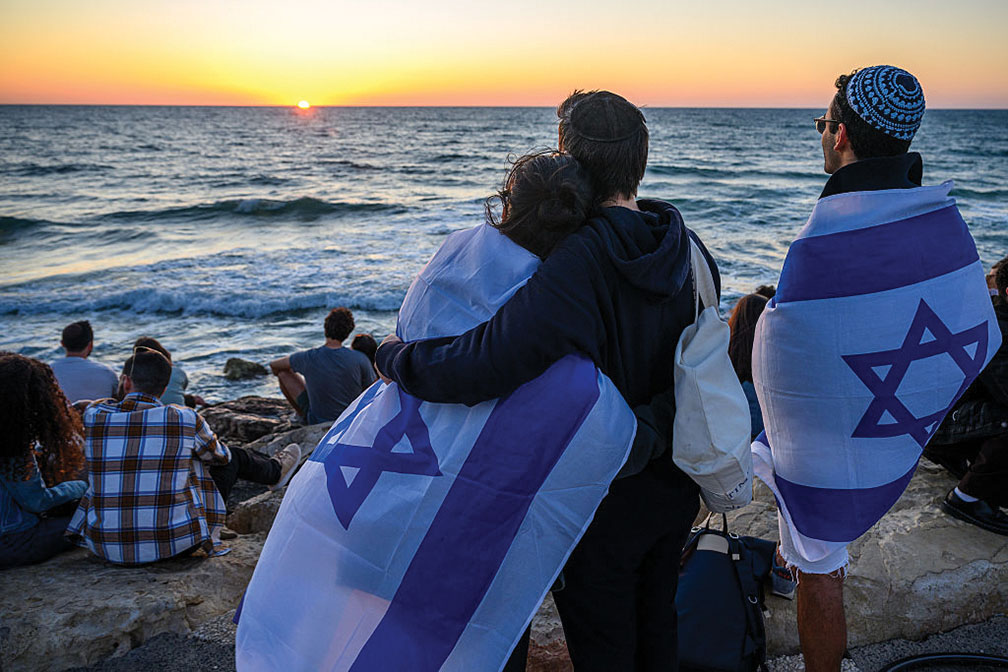
This time we have Israel to inspire our Maccabean strength, resilience, and infinite pride. And while we quietly grieve all those who have been lost throughout our history, our eyes today are full of stubborn determination. We will not let it happen again.
But this time we have Israel to inspire our Maccabean strength, resilience, and infinite pride. And while we quietly grieve all those who have been lost throughout our history, our eyes today are full of stubborn determination. We will not let it happen again.
Karen Lehrman Bloch is editor in chief of White Rose Magazine.