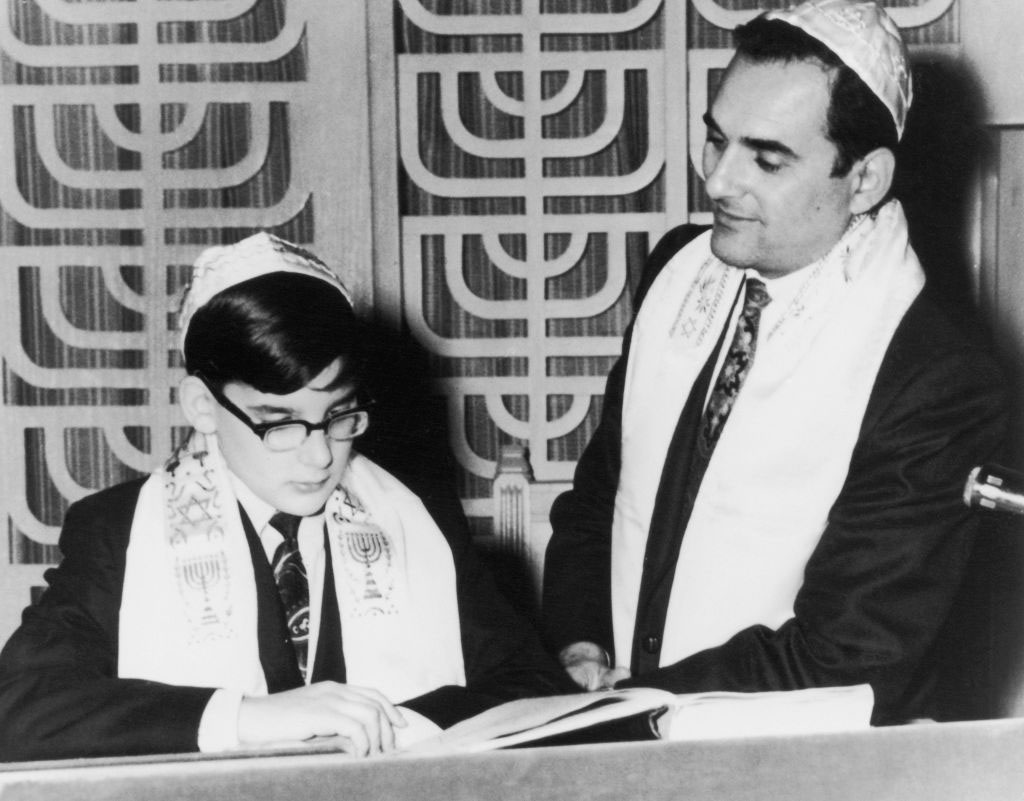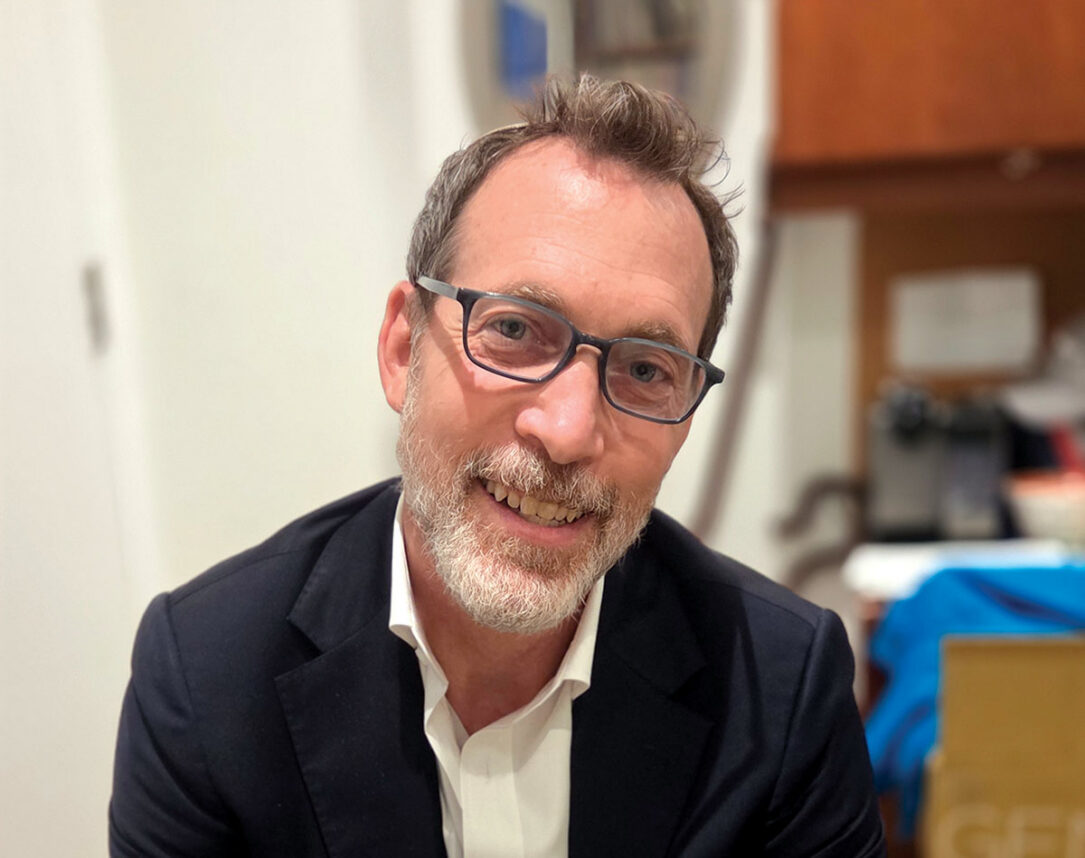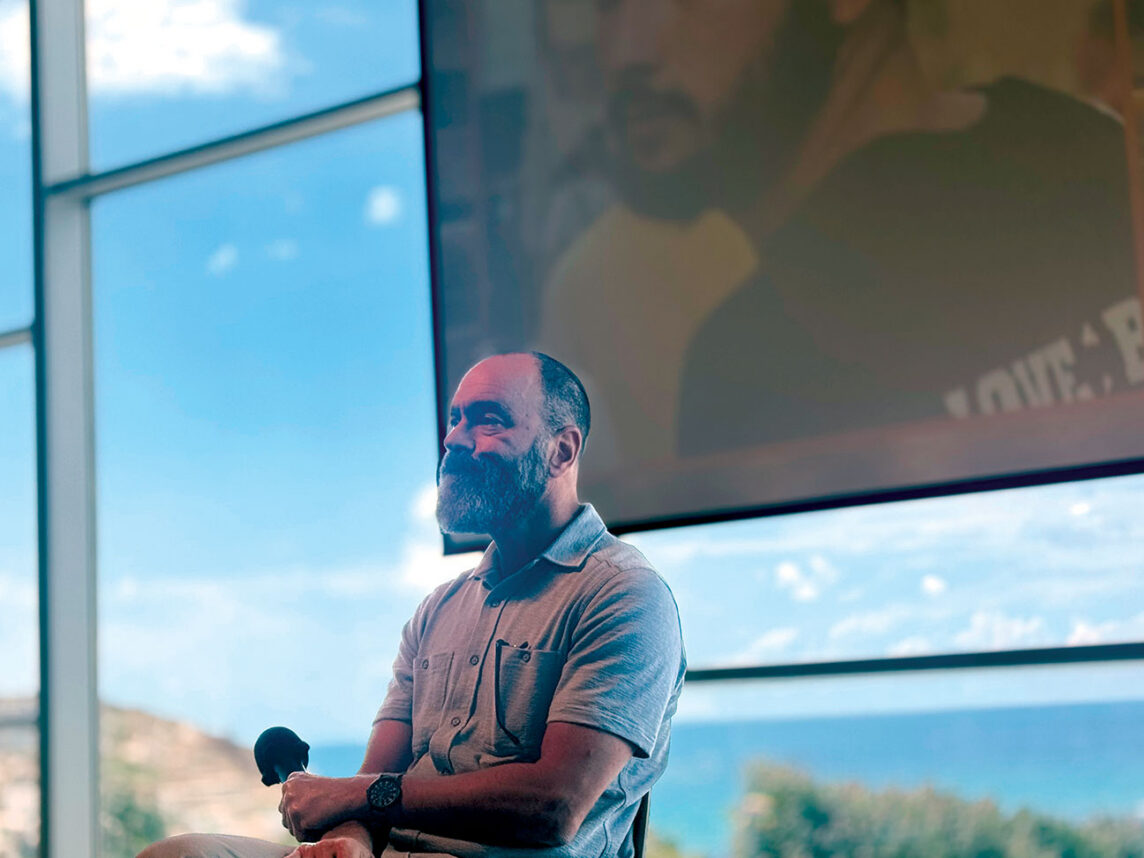
A rabbi whose mother is an athiest might sound like a pitch for a sit-com, but for Rabbi Bradley Shavit Artson, it was his reality. His mother, now a retired psychotherapist, does not believe in God. But there is a happy ending. The rabbi, who is set to become American Jewish University’s Mordechai Kaplan Distinguished Scholar on July 1, and his mother have lovingly made peace. The Dean of AJU’s Ziegler School of Rabbinic Studies for the past 25 years made their détente sound natural.
He is quick to take any opportunity to credit his mother. “Here is another great gift I got from my mother,” he began. “She always has put people first. Ideas matter, but people first. So the fact we disagree on fundamental things – she thinks I am nuts, she thinks I am wrong – but what she really values is scholarship and human dignity. I have used my rabbinate with LGBT people, with environmental issues, with Israel and peace in the Middle East and with special needs issues. Those are issues that my mother holds dear. We can differ on our metaphysics, but she really admires the leadership I have been able to muster.”
As reported in last week’s Journal, prior to his 1988 ordination, Rabbi Artson was a muscular early voice for LGBT acceptance in the Jewish community. Was he able to convince some people who opposed his position to come around? “Many, many, many have,” he replied. “Even many who didn’t, could respect the integrity of the position.”
How did he accomplish this? “A very timely question,” he said. “We live in such a partisan age. Someone once asked President Clinton how he dealt with Sen. Bob Dole as his enemy. Clinton said ‘He’s not my enemy. He’s my opponent.’”
That exchange, Rabbi Artson said, shows that two sides can hold opposing views without turning into enemies. “The challenge is an approach out of curiosity,” he said. “Why would someone who is a thoughtful, caring person feel so strongly in a way I completely reject? Instead of writing it off, say ‘Let’s talk about that. What do you do with this? How do you handle that?’
“If we can get back to willingness to learn from each other – and we still don’t have to agree – but if we are willing to see each other as sources of learning, then we can do better than tolerate. I am willing to grow, to talk to you about something I find deeply problematic. In the process, you may not come around to my opinion, but you may say, ‘That’s not totally crazy. I understand why you feel that way.’ So we can see each other’s humanity.”
It should be clear Rabbi Artson is a calm, thoughtful presence, even when clashing with persons holding sharply opposite opinions. Using a phrase he would repeat throughout the conversation, he said “People can have strong disagreements without being enemies.”
Rabbi Artson called this reasoning “the genius of rabbinic Judaism,” a phrase that also comes up repeatedly. Noting that the Torah includes a vast number of opinions, he said the Mishnah and the Talmud multiply that. “Having a religion that loves good questions, that loves honest conversation and doesn’t insist on a smothering conformity, that is the greatness of rabbinic Judaism,” he said.
The rabbi stressed multiple times that Jews and others should be willing to learn from each other. “We still don’t have to agree,” he said. “But if we are willing to see each other as sources of learning, then we can do better than tolerate. I am willing to grow, to talk to you about something I find deeply problematic. In the process, you may not come around to my opinion, but you may say ‘that’s not totally crazy. I understand why you feel that way.’”
People are afraid of being different, he said. “We all are afraid of being ‘out there’ when everyone else is ‘over here.’” Part of the joy of life — and “one of the strengths of Jewish faith,” he said – is that “we can help people to really feel loved. I don’t expect righteousness to only come in one flavor. There are lots of different ways to be a decent human being. Part of it, then, is not to demand of people that they have to conform.”
One way that Rabbi Artson brings people to his viewpoint is never elevating his voice. “I am not silent, but it’s never at the expense of someone else’s voice. It’s not about ego. I take seriously that I am a servant of the Holy One.“ His job, he said, “is to make people feel their own holiness. So if they walk out thinking about my holiness, then I didn’t do what I was supposed to do. They should walk out feeling their own.”
Has Rabbi Artson ever doubted his beliefs?
He paused. “I grew up an atheist, and I became observant in college,” he said. “I have been with the same God and the same woman for 42 years. That doesn’t mean Elana and I haven’t had our tough moments. And it doesn’t mean God and I haven’t had our tough moments. That’s part of love. But I never doubted either of them.”
And has he always had full self-control?
“No,” he replied. “I am better publicly containing myself. If you could talk to my dog, she would reveal an entirely different version of who I am.”