Halakha and ethics: a case study.
There was a custom in Damascus in the 17th century, that for the purposes of tax assessment, the properties of the wealthy were evaluated up to 3000 grushim (the currency at that time), thereby creating a situation that any properties or financial holdings above 3000 grushim were tax exempt. In modern economic terms: a tax ceiling. The rationale for this was that if they collected taxes on the wealthy beyond this amount, the wealthy would hide their properties and financial holdings. This was accepted in the community for many years.
The middle class and poor grew tired of this privilege for the wealthy, and requested to annul the tax ceiling. The wealthy responded by saying that this was the “custom of the community” for many years, and that they had no intention of making any changes. “If the community became poorer, that’s their tough luck, but the wealthy should not bear the burden.”
Sounds familiar, right?
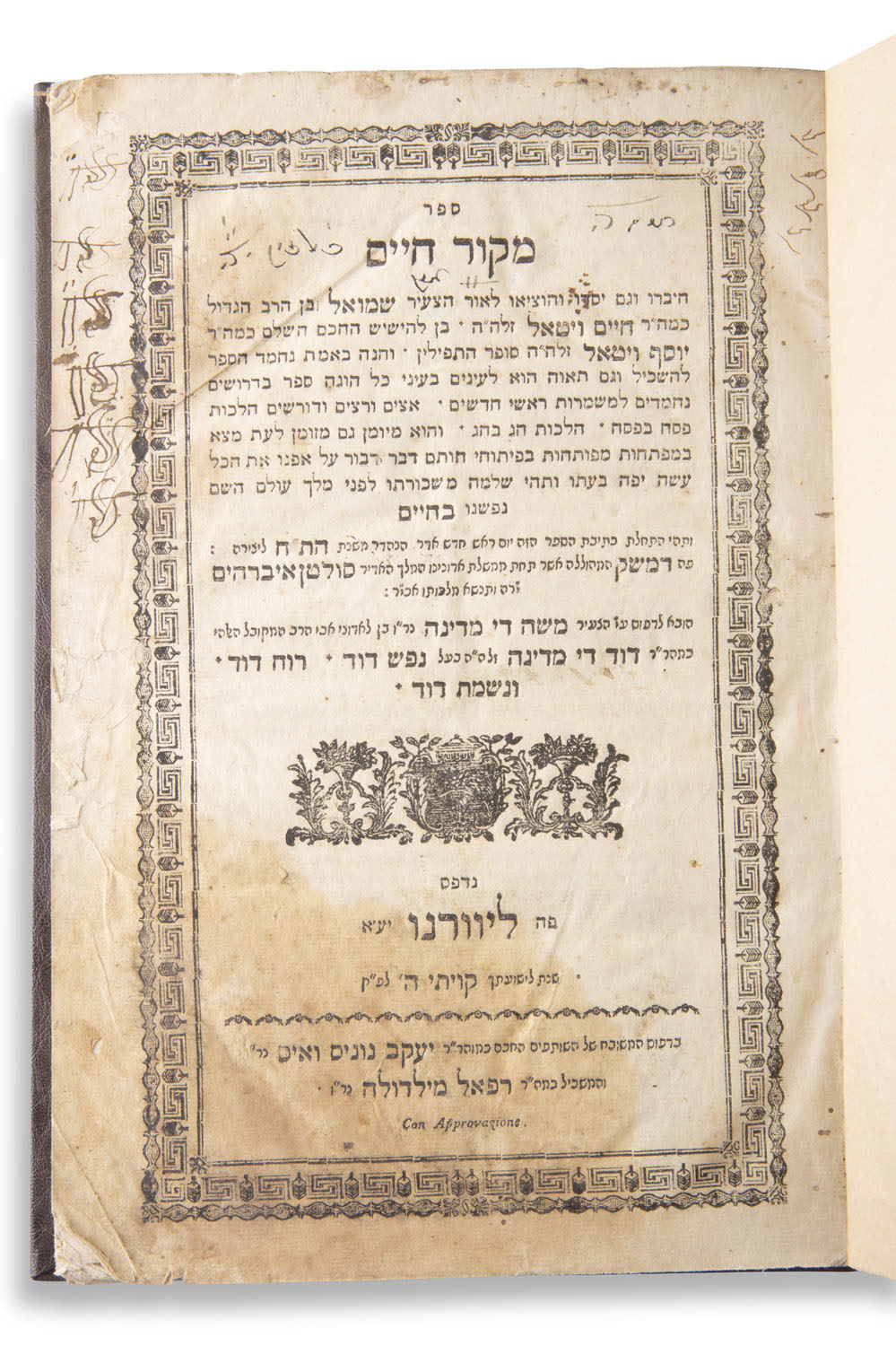
Rabbi Shmuel Vital, a young rabbinic prodigy, kabbalist and halakhic judge (dayan) in Damascus, contemplated whether or not to get involved in this dispute. “Why should I get involved? Does it not say in Pirkei Avot, ‘He who shuns the office of judge rids himself of enmity, theft, and false swearing’”?
Rav Vital further contemplated: “If I remove myself from this situation, our community will be destroyed through unpreventable disputes. If I speak up, I will surely acquire for myself enemies. But my duty as a rabbi, as a representative of God’s teachings, is to speak the truth, and to make a halakhic decision that may not please everyone, but would ultimately reflect mercy towards the needy.”
“In principle” writes Rabbi Vital, “the original custom should be upheld, and it cannot be changed unless the entire community – including the wealthy – agree together to change it. This is the principle of the halakhic system.”
“However,” he says, “all of this applies when we are speaking about what we would consider a ‘proper custom.’ But when we are speaking about a custom that was designed to favor the wealthy and create financial losses upon the poor, would such a custom find favor in God’s eyes? Would God view favorably a ‘custom’ that takes a middle class person who has only 100 grushim in savings, from which he must sustain his family, and pay taxes on the entire amount? This, while a wealthy person with 10,000 grushim in savings, from which he eats, holds lavish parties and continues to amass savings, pays on only 3000 grushim, and is exempt from paying on the rest? The rich get richer, while the poor continue in the path of poverty? This is the trait of Sodom!”
Rabbinic courage, leadership and integrity at its finest.
Shabbat Shalom
Rabbi Daniel Bouskila is the international director of the Sephardic Educational Center.