fbpx

July 3, 2025

Dealing With Mamdani

Think back to the beginning of June, when we were mourning the deadly attack in Colorado, after an antisemitic terrorist had firebombed a Jewish rally there calling for release of the Israeli hostages. We were watching for signs of progress in negotiations between the United States and Iran over that country’s nuclear capability. Oh, and Andrew Cuomo was enjoying a comfortable lead in polls for the New York City mayoral election, although Zohran Mamdani had just moved into a distant second place.

What a difference a month makes.

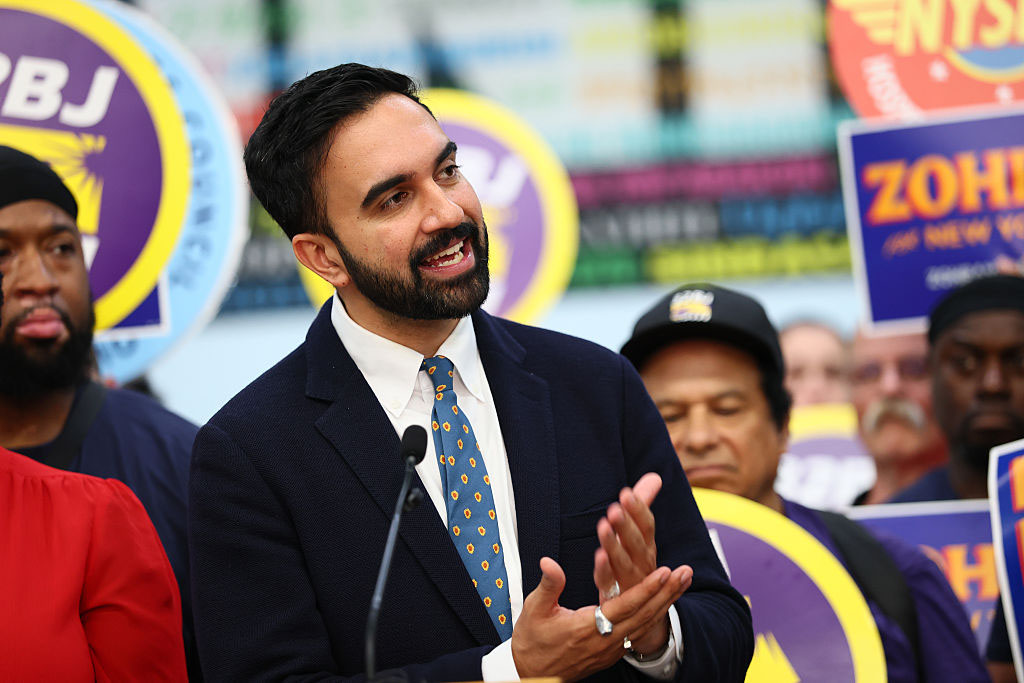
Just weeks later, missile strikes against Iran by Israel and the United States have fundamentally upended Middle Eastern geopolitics in ways that we do not yet understand. But we are just as ill-prepared to predict the impact of Mamdani’s stunning upset victory, which means that city’s next mayor is likely to be an anti-Zionist who has publicly stated that he does not believe that Israel should be a Jewish state and has defended the term “globalize the intifada.” In the campaign to lead America’s largest city, the oft-trampled line between anti-Zionism and antisemitism was all but erased.

Mamdani has also proposed an aggressive program for combatting anti-Jewish hate crimes and appears poised to attract a significant portion of Jewish votes. But his nomination dramatically underscores the tensions within the Democratic Party over Israel and the burgeoning growth of anti-Zionist sentiment among progressive voters. While New York City politics certainly do not reflect those of the country as a whole, the success of such a high-profile candidate as Mamdani does reflect broader trends that pose an increasingly serious threat to both Jewish Americans and the Jewish state.

It bears repeating that neither party has a monopoly of anti-Israel sentiment. The recent debate surrounding the U.S. action in Iran has been a reminder that the isolationist wing of the Republican Party is rapidly growing and it does not appear that Israel will be exempt from these America First sentiments. But the animus on the left is much more prominent and Mamdani’s election would only fuel this hostility. 

National Republicans are gleeful that they can use Mamdani’s controversial positions on crime, taxes and government spending in next year’s midterm elections. But their loudest and shrillest voices have spent more time and energy vilifying his Muslim heritage than defending either Jews or Israel. And Democrats seem divided between those who are genuinely excited by his candidacy, those who will attempt to make grudging peace with him and those who are willing to seek other possible options.

Although his victory is not assured, Mamdani will now be a heavy favorite in the city’s general election this November. It appears likely that Jewish leaders, along with business leaders and other centrist Democrats who are wary of Mamdani’s ultra-progressive agenda, will attempt to coalesce behind an alternative. Cuomo has not yet decided whether he will run again, but he would clearly be seen as damaged goods by an electorate that has just decisively rejected him. The field also includes a gadfly Republican candidate, as well as a virtual unknown local attorney who is running as an independent.

Then there is the scandal-plagued current mayor, Eric Adams, who announced this spring that he would seek reelection not as a Democrat but on the “EndAntisemitism” ballot line. While Adams was probably not anticipating Mamdani’s rise, the recent turn of events may work out to the benefit of the battle-scarred and unpopular incumbent.

In the early 1990s, the voters of Louisiana faced a choice in their governor’s race between the former governor Edwin Edwards, who had been accused of various types of corruption, and the former Ku Klux Klan grand wizard David Duke. Edwards’ supporters gave out bumper stickers with the slogan “Vote For the Crook, It’s Important.”

It now appears that Adams, who has faced a criminal indictment for a range of campaign finance violations before the U.S. Justice Department dropped the charges earlier this year, is the only viable opponent who could prevent Mamdani winning in November. His advisors may want to think about tracking down some of those old bumper stickers and reusing them this fall.


Dan Schnur is the U.S. Politics Editor for the Jewish Journal. He teaches courses in politics, communications, and leadership at UC Berkeley, USC and Pepperdine. He hosts the monthly webinar “The Dan Schnur Political Report” for the Los Angeles World Affairs Council & Town Hall. Follow Dan’s work at www.danschnurpolitics.com.

Dealing With Mamdani Read More »

A Bisl Torah — Tiny, Little Jewish Joys

Journalist Jancee Dunn asks us to look for life’s tiny, little joys. Often, the grandeur of happiness feels unattainable; it’s too lofty and fleeting. But tiny, little joys can be seen and felt every day.

Dunn cites author Bree Groff, who says we tend to focus on pet peeves, small things that disproportionately annoy us. Instead, Groff suggests focusing on reverse pet peeves, small things that disproportionately bring us joy.

Your daily (summer) list may be like mine: seeing a vibrant rose in my garden, being nudged for an extra cuddle from our golden retriever, getting in a sunset walk, or even organizing a drawer that has needed cleaning for months.

But of course, I couldn’t help but think about the tiny, little Jewish joys that also bring me pleasure; little, tiny Jewish acts that not only bring joy, but also cultivate routine and gratitude. These are small acts that anchor us in an ever-shifting world.

Little, tiny Jewish joys: kissing the mezuzah, saying a blessing before and after eating, praying Shma, making challah, lighting Shabbat candles, making a minyan… the list goes on and on.

They are acts that will most certainly bring a sense of joy and that also shape and build a lifetime of faith.

Make it a summer of tiny, little joys. And while you’re at it, make it a summer of tiny, little Jewish joys as well. No doubt, our hearts and our souls will reap the benefits.

Shabbat Shalom


Rabbi Nicole Guzik is senior rabbi at Sinai Temple. She can be reached at her Facebook page at Rabbi Nicole Guzik or on Instagram @rabbiguzik. For more writings, visit Rabbi Guzik’s blog section from Sinai Temple’s website.

A Bisl Torah — Tiny, Little Jewish Joys Read More »

Hayek’s Fatal Conceit and the Red Heifer

Before the grave there is a cradle.
Death of wisdom comes from fatal
conceit, which leads to false solutions
of problems, like absurd ablutions
which fail to cleanse the troubled mind,
confusion by them underlined.

The Priestly laws of the red heifer
anticipated Hayek, effer-
vescence of this law quite in-
explicable. We can’t begin
to understand what Solomon,
the wisest monarch, gave up on,
but I say that this ritual burst
this bubble. We must quench the thirst
for explanations, since solution
of any problem brings pollution.

Believing that we can explain
everything is quite insane.
Some things aren’t rational, defying
reason. If you choose to view
them rationally it means that you
will cause your mind to be defeated,
being fatally conceited.

Before Hayek, very clever,
taught us that intelligence
solves, often, nothing, the red heifer
taught us that laws need not make sense,
and that trying to control them a conceit
that’s often fatal, and is why
attempts to do so can defeat
those who on human sense rely.


Num 19;2 states:

זֹ֚את חֻקַּ֣ת הַתּוֹרָ֔ה אֲשֶׁר־צִוָּ֥ה יְהֹוָ֖ה לֵאמֹ֑ר דַּבֵּ֣ר ׀ אֶל־בְּנֵ֣י יִשְׂרָאֵ֗ל וְיִקְח֣וּ אֵלֶ֩יךָ֩ פָרָ֨ה אֲדֻמָּ֜ה תְּמִימָ֗ה אֲשֶׁ֤ר אֵֽין־בָּהּ֙ מ֔וּם אֲשֶׁ֛ר לֹא־עָלָ֥ה עָלֶ֖יהָ עֹֽל׃
This is the ritual law that YHWH has commanded: Instruct the Israelite people to bring you a red cow without blemish, in which there is no defect and on which no yoke has been laid.

The ritual of the red heifer (Numbers 19) describes purification of corpse-contamination by sprinkling the ashes of a red heifer on the affected individual. The ritual causes pollution of the layman who decontaminates the corpse-contaminated person, a paradox that the Rabbis state was beyond Solomon’s ability to explain.

In “Javier Milei’s Gift for Pope Leo: ‘Man is not born wise, rational and good, but has to be taught to become so.’—Hayek,” WSJ, 6/15/25, Andy Kessler writes:

On June 7, Pope Leo XIV met with Argentine President Javier Milei at the Vatican. Mr. Milei reportedly gave the new pope a historical document from 1642, a handwoven vicuña poncho, and Austrian economist Friedrich Hayek’s 1988 book, “The Fatal Conceit: The Errors of Socialism.” Even though the book costs only $18.83 on Amazon, it was the most valuable gift.

Hayek’s fatal conceit is that “man is able to shape the world around him according to his wishes.” It’s a hearty defense of free markets—of classical liberalism. My colleague Matthew Hennessey got taken to task by the vice president for defending free markets on these pages. In 2025!

Hayek pounds home the point that markets are about price discovery. Wealth creation “is determined not by objective physical facts known to any one mind but by the separate, differing, information of millions, which is precipitated in prices that serve to guide further decisions.”……

My poem suggests that the statement in Num. 19:2, “This is the ritual law that YHWH has commanded,” implies that the comprehensibility of the ritual laws of the Torah follow the paradigm established by the law of the red heifer, the Torah’s ritual laws being determined by factors  that, like wealth creation, are not determined by physical facts.  whose mistaken misidentification as a causes of puzzling  realities can be as fatal a conceit as the one that Hayek attributed to the identification of socialism as a cause of wealth creation.

This poem’s application  of Friedrich Hayek’s concept  “fatal conceit” to the comprehensibility of ritual laws of the Torah such as the ritual law of the red heifer explains the following rabbinic ally related story about Dama the son of Netina:

According to a rabbinic story (Jerusalem Talmud  Peah 1:1, 15c, Qidd. 1:7, Babylonian Talmud Qiddushin 61b), Dama, son of Netina was a a gentile council president who lived in Ashkalon in the first century C.E.

It happened once that one of the precious stones fell out of the High Priest’s breastplate, and was lost. Seeking a replacement, the sages were referred to a certain Dama ben Netina who purportedly had the exact jewel they required in his possession. They offered him one hundred dinar, and Dama accepted their offer. When he went to fetch the jewel he discovered that he could not access it without waking his father. So he returned and informed his clients that he could not provide them with the item they sought. Assuming that he was trying to renegotiate the price, they increased their offer until they reached a sum of 1000 dinar. When his father finally woke up he brought them the jewel, and they were still willing to pay him their final offer of 1000 dinar. Dama, however, was only willing to accept their initial offer of one hundred, saying: “What? Do you think that I would sell the honor of my fathers for mere coins? I refuse to derive any tangible benefit from the honor of my fathers!”

The Jerusalem Talmud asks what heavenly reward Dama received for such meritorious behavior. The answer given was that on that very night a pure red heifer was born to Dama’s cow, enabling Jews to purchase this extremely rare item from him for a small fortune. The rabbis’ explanation of a puzzling event was a conceit which coincidentally involved identifying Dama ben Netina’s red heifer, the active agent of a ritual that has no logical explanation, as the cause of an event with which it has no logical connection.


Gershon Hepner is a poet who has written over 25,000 poems on subjects ranging from music to literature, politics to Torah. He grew up in England and moved to Los Angeles in 1976. Using his varied interests and experiences, he has authored dozens of papers in medical and academic journals, and authored “Legal Friction: Law, Narrative, and Identity Politics in Biblical Israel.” He can be reached at gershonhepner@gmail.com.

Hayek’s Fatal Conceit and the Red Heifer Read More »

A Moment in Time: “4th of July – A Time of Reflection”

Dear all,

I was on a bike ride this week when I came across this egret, deep in reflection, through the dense fog of the early morning.

As I gazed, I considered the state of our country and our world as we celebrate 249 years of Independence.

And like the egret, I reflected as well:

Are we living the dreams of those who gave birth to our values in our country?

Are we advancing the dreams to include those who were originally denied those values?

Are we demanding more of our leaders when they don’t exemplify these values?

Are we demanding more of ourselves to exemplify these values?

Are we properly acknowledging our parents, grandparents, and great-grandparents who came to this country because they were born in places that denied these values?

Are we supporting countries that uphold the values dear to us (women’s rights, LGBTQI, minority, etc.)?

Yes, all this filtered my mind.

And after a moment in time, the egret lifted its wings and soared through the fog into the expanse.

May we all take the opportunity to reflect -and the responsibility to soar into our next chapter, harnessing the values that will launch us into 250 years and beyond.

With love and shalom,

Rabbi Zach Shapiro

A Moment in Time: “4th of July – A Time of Reflection” Read More »

Passing Through – A poem for Parsha Chukat

Let us pass through your land. We will not venture into fields or vineyards or drink well-water. We will walk along the kings road until we have passed through your territory.” ~ Numbers 21:22

We’ve been passing through lands lately
without asking permission.

Close to forty years into this walk
and we’re leaving the place a mess.

Or was that last week or the week before?
It’s hard to tell the difference between

this ancient text and CNN.
Maybe the Torah is being televised.

The great mystery of It being given
in its entirety before we experienced

all of it – solved. Everything is possible
with today’s technology.

We can televise things.
We can blow things up.

We can record it all so
fifty-seven hundred years in the future

someone can parse its lines for
the sake of art…for the sake of

wondering what it all means
as we teach it to our children.


Rick Lupert, a poet, songleader and graphic designer, is the author of 29 books including “God Wrestler: A Poem for Every Torah Portion.” Visit him at www.JewishPoetry.net

Passing Through – A poem for Parsha Chukat Read More »

Sderot Mayor in L.A., Mauthausen Liberation Anniversary, Braid Show’s Debut, LAJFF Kickoff

Last month, Sderot Mayor Alon Davidi appeared at Sephardic Temple to discuss how Sderot, an Israeli city located less than one mile from Israel’s border with Gaza, was impacted by the Oct. 7 attacks.

“For us, the seventh of October was a very dark day,” Davidi said, addressing a crowd of approximately 150 people at the Westwood synagogue.

On Oct. 7, Sderot was the “first place terrorists came to kill people,” he said. “The biggest challenge was we did not have any time. Nobody called us. Nobody prepared us and said, ‘Mayor, 10 minutes from now, someone will come.’”

Dorel Abramovitz, director of development at The Sderot Foundation, moderated the discussion with Davidi, titled “From the Frontlines of October 7.”

Held June 9, the event occurred just four days before Israel’s strike on Iran. Jewish National Fund-USA (JNF-USA) — which has long supported the development of Israel’s southern communities — organized the gathering. 

“Jewish National Fund-USA has had a long and successful partnership with the City of Sderot for over 20 years — building resilience centers, a bomb-proof indoor playground, and providing trauma care and community support,” JNF-USA Greater Los Angeles Director Janice Levy said. “Through these efforts, Jewish National Fund-USA has played a pivotal role in strengthening Sderot’s community, ensuring that its residents receive the support needed to heal, grow, and thrive.”

Additional attendees included Levy’s husband, Avi Levy, who serves as the executive director at Sephardic Temple, and Neuriel Shore, executive director at Brothers for Life, which supports wounded IDF soldiers.

The event began with a video presentation featuring footage from Hamas’ Oct. 7 attack on Sderot. The clips showed Hamas terrorists taking over the city’s police station, as six Sderot police officers sought refuge on the station’s roof. Four of the six officers lived through the ordeal.

After the moderated discussion with Davidi, speakers informed the crowd of giving opportunities to support the Sderot Foundation, which implements resilience, employment, informal education, culture and community welfare programs, along with special projects, toward the goal of enhancing the lives of Sderot’s approximately 30,000 residents.


Rabbi Abraham Cooper (right of flag) participates in a ceremony marking the 80th anniversary of the liberation of Mauthausen. Courtesy of Simon Wiesenthal Center

Rabbi Abraham Cooper, associate dean at the Simon Wiesenthal Center, recently participated in an event commemorating the 80th anniversary of the liberation of the Mauthausen concentration camp in Austria. 

During the somber but moving procession, Cooper—joined by survivors, descendants of survivors and U.S. officials—returned a replica of the “Mauthausen Flag,” a symbol of freedom during liberation, to the camp.

The original makeshift American flag, now housed at the Simon Wiesenthal Center’s Museum of Tolerance in Los Angeles, was hand-sewn by concentration camp prisoners using SS laundry and Nazi banners in anticipation of the American troops’ arrival. The inmates sewed 56 stars onto their American flag, not knowing the exact number.

Cooper called it “a flag sewn in faith,” representing hope in the darkest place. 

The event took place on May 11, marking the May 5, 1945 liberation of the Mauthausen concentration camp.

“On this historic day, the Museum of Tolerance does more than remember; it recommits,” Simon Wiesenthal Center CEO Jim Berk said. “To protecting truth. To defending dignity. And to ensuring that the words ‘Never Again’ are not simply whispered at memorials, but upheld through action, education, and unwavering vigilance.”


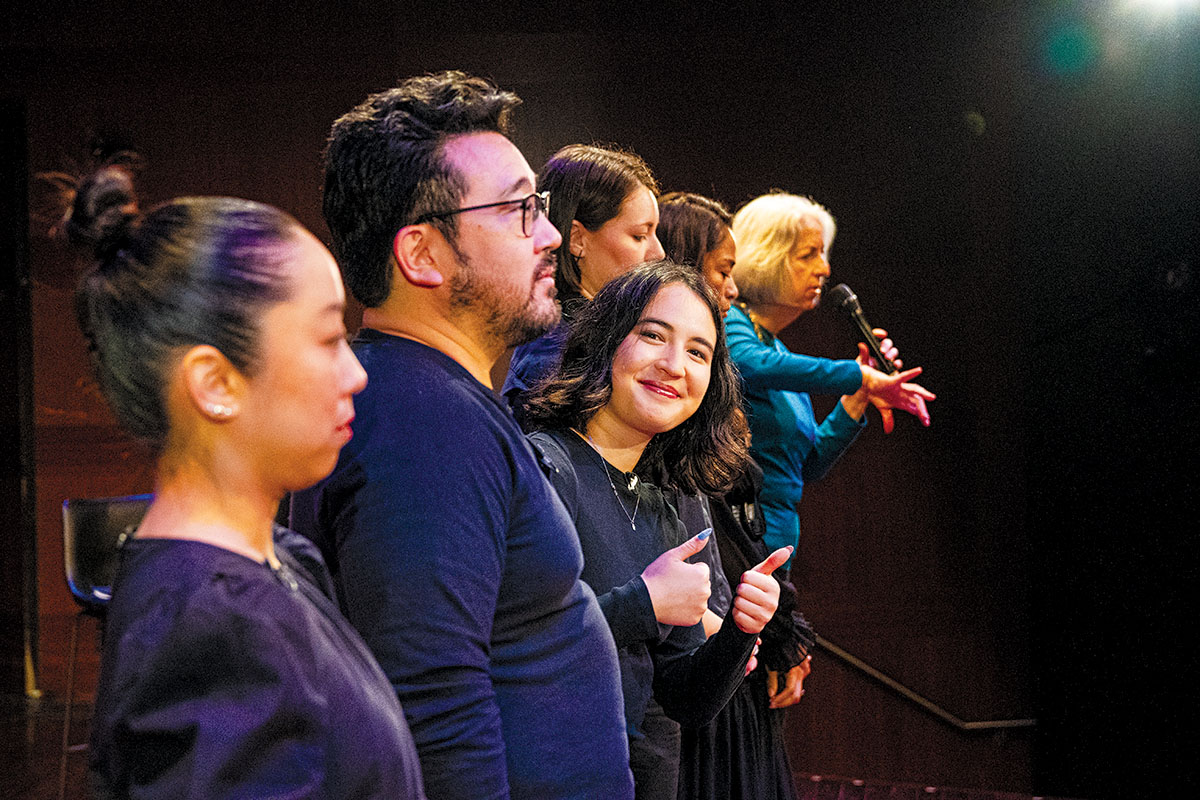
“What Do I Do with All This Heritage?” cast and director Susan Morgenstern. Photo by Vanessa Bloom

“What Do I Do with All This Heritage?” the record-breaking, first-ever theater show about Asian American Jews, made its East Coast debut in May after last year’s hit California run. 

The show played to enthusiastic crowds at Temple Israel of Boston, with support from Combined Jewish Philanthropies, on May 15, and on May 18 at New York City’s Museum of Jewish Heritage: A Living Memorial to the Holocaust. 

A groundbreaking collaboration between The Braid, the go-to Jewish story company, and The LUNAR Collective, a national organization by and for Asian American Jews, this joyful theatrical experience is now seeking new communities to visit next, according to those involved with the production.


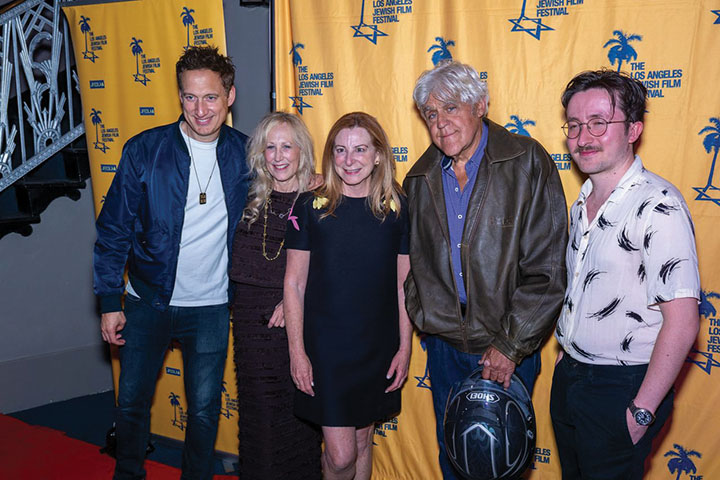
From left: Comedian Elon Gold, LAJFF Director Hilary Helstein, Jewish Federation Board Chair Orna Wolens, Jay Leno, who plays Ed Sullivan in “Midas Man,” and Johna Lees, who plays John Lennon in “Midas Man.” Photo by Todd Felderstein, L.A. Jewish Film Festival

The community gathered last Thursday for the start to the 20th annual Los Angeles Jewish Film Festival at the gala opening night in Beverly Hills at the Saban Theater. 

The festival’s kickoff featured the Los Angeles premiere of “Midas Man,” the story of the Beatles manager Brian Epstein. Epstein, who was Jewish, signed the Beatles when they were playing dingy clubs in Liverpool. Believing in their talent, he oversaw their career, transforming them into chart-topping sensations and cultural pioneers. The biopic captures Epstein’s professional successes as well as his personal struggles as a gay man living in England at a time when homosexuality was illegal. 

Jay Leno, who plays Ed Sullivan in the film, made a rare red-carpet appearance at the Saban for the premiere. 

Before the screening, those gathered in the Saban’s art deco lobby posed in front of a backdrop designed like the Beatles’ iconic “Abbey Road” cover. After the screening, a panel featured the film’s director, Joe Stephenson; actor Johna Lees; the film’s writer, Brigit Grant; and Beatles historian Martin Lewis, discussing the yearslong effort of making the film.

The evening ended with Lees, a musician, offering a stirring performance of the Beatles’ “Now and Then”—dubbed “the last Beatles song.”

Sderot Mayor in L.A., Mauthausen Liberation Anniversary, Braid Show’s Debut, LAJFF Kickoff Read More »

Rabbis of LA | How Rabbi Nancy Myers Broke the Stained-Glass Ceiling

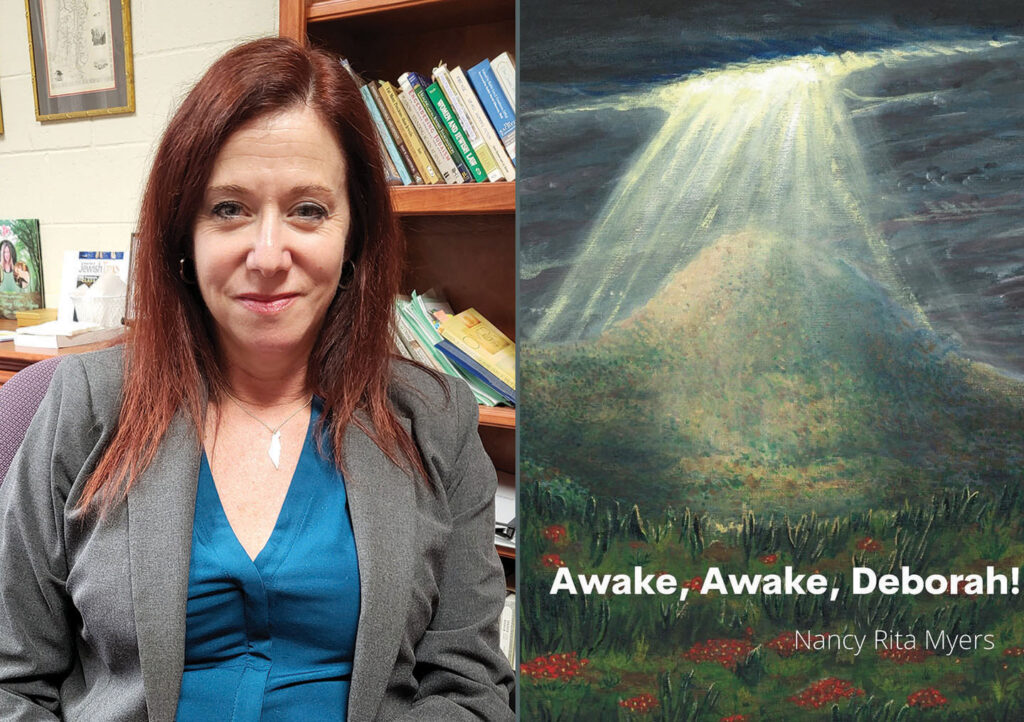
If there’s one thing that’s characterized Temple Beth David’s Rabbi Nancy Myers career, it’s her persistence. When she was ordained by Hebrew Union College in the early part of the 2000s, it was not easy being a female rabbi. 

But before she went out looking for a job, the Buffalo, New York native asked her colleagues for advice. “Since I was new, I asked colleagues in the field. She asked “what senior rabbis I should work with and who to avoid. Some senior rabbis, especially ones with great names, can be terrible to work with. Colleagues directed me to the mensches.”

One of the mensches she was directed to was Rabbi Steve Hart at Temple Chai in the Chicago suburb of Long Grove. “I was looking for a mensch, someone where I wouldn’t be the dog the senior rabbi would kick,” she said. “Steve Hart was indeed a mensch. I was the first female rabbi in the northwest suburbs of Chicago.” Myers said she values her suburban Chicago days “because I learned a lot about healthy temple teams where there is a real partnership between lay leaders and the clergy – as opposed to a hierarchical model.”

But after six years, she was looking for new challenges. By 2003, she said, “I wanted my own synagogue.” Her strengths, she said, are “teaching, preaching, leadership and pastoral care.” But it was harder than she imagined. “Becoming an assistant associate? Very desirable,” she said. “I know that because I was told it behind the scenes.”

At one Philadelphia congregation she was told “we are not sure we’re ready for a woman rabbi.” At a congregation in Chicago, she was being fast-tracked to be the new rabbi. Suddenly, the process slowed. Myers clearly remembers the scene in the temple’s rabbi emeritus’ dark office. “He said 12 words that slammed the door: ‘Nancy, you’re one of the bright ones. But there’s a female cantor.’”

Her disappointed but sharp reply: “Ahh, there’s too much estrogen on the bimah!”

The rabbi explained that because Myers was a woman, board members were worried she wouldn’t be strong enough with problematic lay leadership. She fired back: “I told him, ‘What a shame because that is not my weakness.’”  The executive director of the Board of Rabbis in Chicago told her she could sue, but that did not appeal. 

Returning to Buffalo did appeal, but there wasn’t a good congregational match. She realized she was looking to replicate her Temple Chai experience. “I certainly found it here,” she said on a sunny afternoon in Orange County. She especially loves the music program, which she calls “exceptional … I came from a large temple and they didn’t have the music program we have here.”

She said Temple Beth David “did the most thorough interview process here of any temple I have dealt with,” she said. “They flew me out for a number of days and many interviews.” She was impressed that Beth David leaders “were and are very down to earth.” And she has become Temple Beth David’s longest-serving rabbi.

But things did not start off so auspiciously. During her first High Holy Days at Beth David, “quite an incident” occurred. At her first Erev Rosh Hashanah service, she was giving a sermon about the prisoner abuse scandal at Abu Ghraib in Iraq. “I was 34 years old,” she said, “perceived as young, and obviously I am a woman. I was told behind the scenes people weren’t sure they were ready for a woman rabbi.”

The place was packed, she said. Then, “a man walks down the aisle, motioning for a time out. I’m thinking, ‘Wow! Someone must have had a heart attack. That’s happened before.’ I stop speaking. He starts to yell ‘You have no right to be up there! You have no right to be talking politics on the pulpit. This is wrong!’ and he’s going off.

“My very first Rosh Hashanah. I am stunned. Not sure what to do with this. I look back at (the temple’s) president.  His face is shocked, too. I’m thinking, ‘if this man is speaking for everyone, I have to close my machzor and off the bimah I go. I am done here.’” 

The seconds slowly ticked by until another person in the congregation stood up and said “I was finding very meaningful what the rabbi was saying, and I want her to finish.” There was limited applause. “That’s all I needed to know,” she thought, “that I wasn’t alone.”

She took the mic and said ‘I, as the rabbi, when I give a sermon, I do not purport to speak on behalf of all of you. I don’t expect all of you to agree with what I am saying. But the time to disagree is afterward. I think it’s an important part of a rabbi’s mission to speak about lofty rabbinical texts and God, but it’s part of a rabbi’s mission to talk about current issues affecting us, and to talk about history and archeology and psychology and science. All of them belong in a sermon.”

Twenty-one years later, Rabbi Myers reflected on that moment. “What came out of that – that was good – was that people who didn’t like the contents of my sermon, liked the way I handled it.”

“I think it’s an important part of a rabbi’s mission to speak about lofty rabbinical texts and God, but it’s part of a rabbi’s mission to talk about current issues affecting us.”

Fast Takes with Rabbi Myers 

Jewish Journal: What do you do on your day off?

Rabbi Myers: Nothing terribly exciting. Pilates, gardening, I love to cook, salads, soups, stews, chicken, fish…everything, I also bake and I catch up on bills.

J.J.: Your favorite Jewish food?

R.M. : I make a great chicken soup, but I don’t really have one.

J.J.: Your favorite moment of the week?

R.M. : Sometimes at services when the cantor and choir are singing something beautiful, I feel how blessed I am to be here.


Three years ago, Myers set out to write a novel about Israelites struggling for survival – led by the rarest ancient hero, a woman – in the early 13th century B.C.E.

Don’t turn away, as I did at first, because this lady knows how to tell a compelling story, especially to skeptics.

Rabbi Myers connects in “Awake, Awake, Deborah!” by deploying language as fresh and appealing as early-morning milk or the funniest show on television last night.

The book opens shortly after 1200 B.C.E when ancient Israelites first came into history in an extra biblical sense, but in a familiar position. First mentioned by the conquering Merneptah, an Egyptian Pharoah, 1209 B.C.E., he wrote that Israel “was laid to waste and his seed not.”

Myers alludes to the Book of Judges one-sidedly identifying “men of skill, strategy and might.” Only one woman was listed, Deborah, “who has two whole chapters, four and five, devoted to her leadership in a time of great danger to the Israelites.”

During a sabbatical from her Orange County shul, Rabbi Myers penned “Awake, Awake, Deborah!” because “I always have been fascinated with Deborah,” she told The Journal.

“She is the only female judge listed in the Book of Judges. I have wondered how a woman could have risen to leadership during a time when women didn’t function in these kinds of roles.”

Why this book? Because she loves biblical history and archeology.

“I wanted to fuse my knowledge in an engaging, entertaining novel.”

In an article for the Central Conference of American Rabbis, Myers wrote about her book and a study guide she wrote with a friend. Briefly, she describes a typical Israeli struggle: 

“As the Israelites struggled for survival, they had to contend with differing groups of Canaanites, as well as the Sea Peoples from Greece who invaded the coast. According to Jo Ann Hackett, there was a lack of centralization in society and no permanent administration, not even a standing army. And so, we have an opening for unlikely leaders such as outcast men and even a woman to rise to power. Perhaps it is because of this time of upheaval that the Israelites of the early Iron Age were willing to allow a woman to lead them and help them survive. Everything was in tumult.”

Rabbis of LA | How Rabbi Nancy Myers Broke the Stained-Glass Ceiling Read More »

Laughter, Pain and Truth: Abel Horwitz’s ‘Kosher Salt’ Tackles Antisemitism Head-On

There were times when Abel Horwitz needed to be escorted to his car after performing his one-man show, “Kosher Salt.” What kind of show calls for an escort? One that tackles antisemitism — and how to solve it — once and for all.  “Every time I’m doing the show I’m aware that I announce publicly where I’m going to be and what time, and that makes me very nervous,” Horwitz admitted.

Thankfully, he hasn’t been physically attacked, but online harassment — mostly from trolls — has been frequent. Some friends didn’t appreciate his stance on Israel, and those friendships ended. But others surprised him. “I have a very close friend who was sending me some very aggressive and angry text messages about Israel bombing Iran to a group chat we are both a part of,” Horwitz recalled.

He responded calmly, suggested a phone call, and what followed was a series of respectful conversations, each rooted in dialogue and fact-checking. The two now engage in ongoing discussions where both sides are heard. 

“He’s listening to me, trying to understand where I’m coming from, and willing to change his point of view the more he learns,” Horwitz said. “I’d much prefer to focus on friends like that than those who probably weren’t my real friends to begin with.”

“Kosher Salt” is a bold, satirical show that uses absurdist comedy to tackle the serious and deeply troubling rise of antisemitism. Blending humor with hard truths, Horwitz leans into the outlandishness of anti-Jewish conspiracy theories — at one point performing as a shapeshifting lizard from outer space — as a way to disarm the audience before confronting them with the real-world consequences of hate speech and Holocaust denial.

Rather than focus on the complexities of the current Middle East conflict, Horwitz directs attention to the broader surge in antisemitic rhetoric since 2016, and the disturbing ignorance of Holocaust history among young Americans. The show’s goal is clear: To entertain, provoke thought and spark dialogue about the persistence of antisemitism in modern society.

What led Abel Horwitz to write “Kosher Salt” began on Oct. 7, 2023. On that day, “Abandon,” a show in Las Vegas that he had co-written and produced, opened. It had taken him two years to develop and canceling wasn’t an option. After all, the show must go on.

Toward the end of the run, Horwitz went to see a production of “Indecent” by Paula Vogel, which tells the story behind God of Vengeance, the play that featured the first lesbian kiss in Broadway history. “The show came from a Jewish theater, and to watch a distinctly Jewish show and hear Yiddish spoken on stage, I just wept. I couldn’t stop crying,” Horwitz said.

He was at a breaking point in his life — drinking heavily and getting into fights with his friends and girlfriend. The overwhelming emotion he felt after watching “Indecent” made him realize something wasn’t right. He needed a change.

After hearing about volunteers traveling to Israel to help farmers who had lost their workers due to the war, he flew there in January 2024. “When I went to Israel, I said I need to sober up, and it gave me a lot of clarity. I spent two weeks in Israel picking grapefruits and oranges.”

When he returned to the U.S., he began working on “Kosher Salt.” “I knew I couldn’t just continue what I was doing. I had to speak about this — about antisemitism — and where my heart and soul are. I started as soon as I came back. I set up a meeting with the man who became my director. I signed up for a solo show workshop, and the first draft was basically everything that was going through my head.”

Antisemitism is something Horwitz has dealt with since a young age. He grew up in Albuquerque, New Mexico where the Jewish community was is very small, and he often felt like he stood out because of it.

“I felt like an outsider. I have a very Semitic name, and I was told repeatedly that I’m going to hell because I don’t believe in Christ. I was reminded constantly that I was different. I was very conscious when the check came in the restaurant and we needed to divide it between friends. Any notion of money, of course, got me teased.”

Horwitz recalls being called “Christ killer” and hearing people openly talk about not wanting to be “Jewed down” on a price. “Growing up, I didn’t like being Jewish. If there was a way that I could have washed the Judaism out of me, I would have,” he said.

In 2018, his relative Dr. Jerry Rabinowitz was murdered in the Pittsburgh synagogue shooting — another painful reminder that being Jewish in the U.S. can be dangerous. “His murder shattered my family,” said Horwitz. “The shock and trauma of that is a wound that will never heal.”

Despite his difficult experiences with antisemitism, Horwitz approaches the subject with humor. In “Kosher Salt,” he switches characters, invites audience members on stage and uses classic Jewish wit to explore the topic. “The show is very funny. There are a lot of clown elements to it. But I also speak very sincerely. At one point, I take off the character I’m playing and show just the raw vulnerability. I’m trying to get you to fall in love with me but also feel my pain.”

Interestingly enough, Horwitz doesn’t speak about Israel, Palestine or the war in his show. He sensed that the topic puts off his audience. “My first draft of the show, I talked about what a beautiful country Israel is and that I saw Muslim and Jewish children playing on the same playground together,” said Horwitz. “One of the notes I’ve been given was that the minute I mentioned Israel, I lost half of my audience.”

After listening to audience feedback during the first performances of the show, he decided not to say “Israel” or “Palestine” at all. But even without using those “triggering” words, some people simply don’t want to hear anything related to the topic.  “When I walk around and hand out flyers and tell people I’m going to solve antisemitism in 45 minutes, some people immediately shut down, and I can see it in their eyes what they are thinking. It’s not everybody. Racism against Jewish people is very real. But I also have many people who say, ‘hey, that’s cool.’”

On July 13, Abel Horwitz will perform “Kosher Salt” at the Electric Lodge in Venice as part of the inaugural Daredevil Arts Festival. “I’m working to add 10 more minutes where I talk about Jewish indigenousness to the land and the hypocrisy of people who talk about Indigenous people but then, in the same breath, refer to white European Zionist colonizers,” he said.

Horwitz hopes to take his show on a tour across the U.S., and possibly worldwide. His goal is for audiences to walk away with a deeper understanding of the real consequences of antisemitism.

“Elie Wiesel was once asked why he wrote about such a singular experience in ‘Night’ instead of the entire Holocaust,” said Horwitz. “He said, ‘I can’t speak for everybody, just for myself.’ I found that very powerful. I’m doing the same — speaking from my own experience.”

“Kosher Salt” will be performed at the Electric Lodge, 1416 Electric Ave. in Venice, on Sunday, July 13 at 5:30 p.m. 

Tickets are:  $15 and can be purchased at eventbrite.com/e/kosher-salt/

Laughter, Pain and Truth: Abel Horwitz’s ‘Kosher Salt’ Tackles Antisemitism Head-On Read More »

YouTuber Nate Friedman Exposes Anti-Israel Protesters in Viral Street Interviews

A year ago, New Yorker Nate Friedman, 27, picked up a camera and microphone and hit the streets to expose the truth behind demonstrators in his town — covering everything from voter fraud to the activists holding signs that label Israel an apartheid state and call for United States to stop funding it.

Along the way, he uncovered some eye-opening revelations, including the funding behind anti-Israel protests and the widespread lack of knowledge among many demonstrators about the realities in the Middle East.

In just one year, Friedman has built a substantial online presence, amassing over 230,000 followers on Instagram and more than 200,000 subscribers on YouTube.

Friedman has developed a distinctive approach to conducting interviews. He nods, listens attentively, avoids confrontation, and refrains from correcting misinformation on the spot — creating an atmosphere in which interviewees feel comfortable enough to speak freely. In a recent video, Friedman spoke with a woman wearing a keffiyeh and several pins on her jacket. One read, “This Jew says no to Palestinian genocide,” another said, “Israel is a Terrorist” and the third supported the anti-Zionist Democratic candidate for NYC mayor: “Zohran for New York City.”

 “Do you want Israel destroyed?” Friedman asked. “Yes,” the woman replied. She went on to claim that Iran targets only military sites, not civilians. “I would love them to assassinate Smotrich, Ben-Gvir and Netanyahu.”

“Would you say it’s fine if millions of Jews are dead in the process?” Friedman pressed. The woman seemed to have no problem with that. She went on to say that Israel has no right to defend itself, but the Palestinians do. She also insisted that Hamas had only targeted army bases on Oct. 7, but some civilians got killed along the way.  “IDF only knows how to kill unarmed civilians,” she announced.

Friedman provides commentary following each clip, fact-checking and correcting misinformation often presented during his interviews. In this particular case, the protesters insisted that many Iranian women went to the streets freely without wearing hijabs and called for the destruction of Israel.

“I didn’t find any credible report of women without hijab calling for the destruction of Israel in Iran,” Friedman commented. “There have been many anti-hijab protests that have resulted in arrests — most famously that of Mahsa Amini, who was killed in police custody for wearing an improper hijab,” he said.

In an interview with The Journal, Friedman said that he began his YouTube channel interviewing immigrants. 

“I asked migrants who are they voting for, and that reached over 700,000 viewers. I revealed that there were some people who were here illegally and have heard that they could be voting in the election and that raised a lot of awareness to potential voter fraud.”

Friedman, an experienced videographer who has worked for other creators and organizations, began posting videos, each receiving anywhere from hundreds of thousands to millions of views.

His videos can range from being eye-opening and informative to the absurd and comical — such as the case of Karin Schall, associate director of development and special events manager at Lincoln Center.

In the video titled “I Exposed No Kings Protestors,” Friedman is seen interviewing an immigrant who repeatedly curses President Trump using explicit language, while Schall does everything she can to interrupt the recording. At one point, she begins blowing a red whistle and holds up a yellow sign with an arrow pointing at Friedman that reads: “Right Wing Troll.”

Friedman revealed that he had found Schall – on social media – at about 100 other protests around the city. “It’s clearly a very well established industry,” he said referring to organized protests. “Rise and Resist is just the tip of the iceberg.”

Friedman said that Schall was probably assigned to him that day and that her “job” was to stop him from conducting interviews with protesters.

Friedman believes that many protesters are being paid — anywhere between $25 to $30 an hour. He claims that George Soros and his son are among the largest funders of anti-Israel demonstrators, though not the only ones. “It’s something I started investigating,” he said.

What stood out to Friedman at the No Kings protest was a conversation with a Jewish protester who supported Zohran Mamdani. “It gives a little context as to how Mamdani won,” said Friedman said. “There are over 1 million Jewish people in NYC, and to become mayor, you need their vote. If most had supported Cuomo, he would have won.”

When Friedman asked the man whether he believed Hamas could coexist with Jews in Israel, the protester replied, “I can’t speak for Hamas.” Friedman added, “The fact is, their leaders have been recorded multiple times saying they want to kill every Jew on earth. It’s not just about Israel — it’s Christians too. Hamas has put out videos saying Islam is the only religion they want across the globe.”

Many of Friedman’s interviews leave viewers stunned — often questioning whether the protesters truly believe what they’re saying or are simply repeating talking points for pay.

One man, holding a large handmade sign that read “I Stand with Iran,” told Friedman he was with Veterans for Peace. 

“We are standing against the killing of innocent people in Palestine,” the man said. “Netanyahu has extended this war, faking peace negotiations. Israel now attacked Iran unprovoked, under the guise that they have a nuclear weapon. They’ve been talking about that nuclear weapon for 25 years. Iran would never want to nuke America.”

“What about the supreme leaders who say ‘Death to America’?” Friedman asked. “It’s bulls—, that’s part of our propaganda,” the man replied.

Later, while editing the footage, Friedman inserted clips showing crowds in Iran chanting “Death to America” and “Death to Israel,” along with a speech by Iran’s Supreme Leader, Ayatollah Ali Khamenei, declaring: “Death to America is not just a slogan — it’s our policy.”

Asked how he manages to stay quiet while hearing their lies, Friedman explained: “I think that I’m there to do a job. I have the responsibility to deliver the truth to the people who watch me,” he said. “There’s a little bit of irony. It was well-documented in the Democratic Party platform to be kind and tolerant of many different views — but in practice, this is not the case. I don’t even give my opinion in the videos on the street, but I’ve had people urge others to stop someone from talking. It’s kind of ironic, because they say, ‘be kind to everyone.’”

The YouTuber believes that millions of dollars are being funneled into organized demonstrations — a central focus of his current investigations.

“The New York Post reported that thousands of dollars were given to the Columbia protesters who set up the encampment,” he said. “If you multiply that by all the other encampments across the country and by movements like Rise and Resist, the Palestinian Youth Movement, and Within Our Lifetime, you’re talking about millions of dollars.”

One of the websites reportedly used to recruit protesters is Crowds on Demand. A visit to their site reveals the following message: “[This] is your home for impactful advocacy campaigns, demonstrations, PR stunts, crowds for hire, and corporate events. Services available nationwide. We can set up protests, rallies, demonstrations …”

Talking about New York Jews who supported Mamdani, Friedman said, “It’s interesting to see how Jewish people [are] supporting a man who doesn’t recognize Israel’s right to be a Jewish state.” Referring to the woman wearing pins supporting Mamdani, Hamas and Hezbollah, he added, “This woman, living in America, is pro-Hamas, pro-Hezbollah and, according to her pin, she is Jewish. If you ever wondered how there were Jews who supported Hitler, then now you have known one of them.”

YouTuber Nate Friedman Exposes Anti-Israel Protesters in Viral Street Interviews Read More »

Pride Isn’t Cancelled. It’s Just in Mitzpe Ramon Now.

This Friday, July 4, the small desert town of Mitzpe Ramon will host its fifth annual Pride and Tolerance March—one of the only such events taking place in Israel this year. In a country still reeling from war and ongoing hostilities, the march stands as a rare beacon of visibility, resilience, and hope for Israel’s LGBTQ+ community.

Earlier this week, organizers of the march extended a public invitation to Eliya Winter, the head of the local council, urging him to join the event and help “tell a new story of shared life” in Mitzpe Ramon. Their letter called for an end to the divisive narrative that has often pitted liberal and religious forces against each other in the town, leading to painful splits and episodes of homophobia.

“We invite you to act together to stop the narrative in which Mitzpe Ramon is a symbol of struggle between liberal and religious conservatism,” organizers wrote. “We believe Mitzpe Ramon can be a place for everyone.”

The message reflects a growing desire among residents to move beyond past tensions and create a more inclusive community. Organizers praised recent moderation in public discourse and acknowledged efforts behind the scenes to foster greater acceptance. Still, they stressed the need for visible support from local leadership.

The march comes just days after a local resident, Sherya, returned home to find eggs thrown at his balcony, where he had hung a Pride flag in anticipation of the event. “Those eggs were a symbol of ‘you don’t belong here,’” he wrote in a social media post. “But I do belong, and this act only reinforced for me how important this march is—for me, for that young person who sees me, and for the Mitzpe Ramon I believe in. Only love will win.”

Despite such incidents, organizers remain undeterred. “There is still a small extremist minority that seeks to disrupt the good community here—but we will not let it defeat or stop us,” they said. “Most people in Mitzpe Ramon want to live here together, in dignity. The march is an opportunity to show that it’s possible.”

Since 2021, the Pride and Tolerance March has grown into a defining event for the local LGBTQ+ community and their allies. In a year when Pride events in Tel Aviv and other major cities have been canceled due to security concerns, Mitzpe Ramon’s determination to march is a testament to the community’s strength and the importance of visibility in Israel’s periphery.

The march is organized by residents, families, and educators, with support from LGBTQ+ organizations across the Negev and the country. “If you missed out on marching this year, come join us,” organizers urge. “Your presence matters. It’s a chance to stand with a close-knit community that keeps showing up, and to remind everyone that Pride exists everywhere.”

Schedule and Community Activities

The event will begin at 10:00 a.m. with community stalls and activities for children. At 11:00, local LGBTQ+ residents will deliver short speeches, followed by live music, communal singing, children’s storytime, and a shared prayer. The march through the streets of Mitzpe Ramon will start at noon, culminating in a closing event at the Spice Route Quarter with a local makers market.

Photo credits: Israel Police, Shimon Bokshtein

Mitzpe Ramon’s Pride and Tolerance March is more than a local celebration; it is part of a wider struggle for equality and recognition in Israel. The “Pride Zone,” a local initiative supported by the Keshet NGO, has worked since 2021 to strengthen the LGBTQ+ community in the region, provide professional support, and challenge discrimination from local authorities.

In the words of the organizers: “In times like these, we must shine a light. We choose hope, love, and pride. We insist on standing together for freedom and life, for equality, safety, and tolerance for everyone.”

This article is based on statements and materials provided by the organizers of the Mitzpe Ramon Pride and Tolerance March, and the Keshet NGO.

Pride Isn’t Cancelled. It’s Just in Mitzpe Ramon Now. Read More »