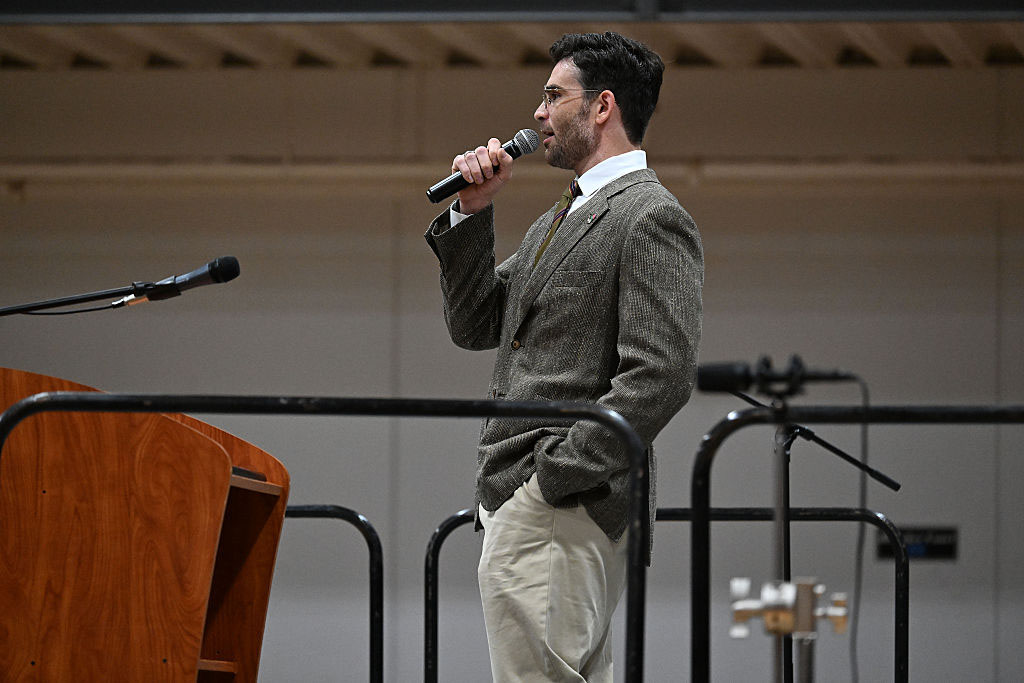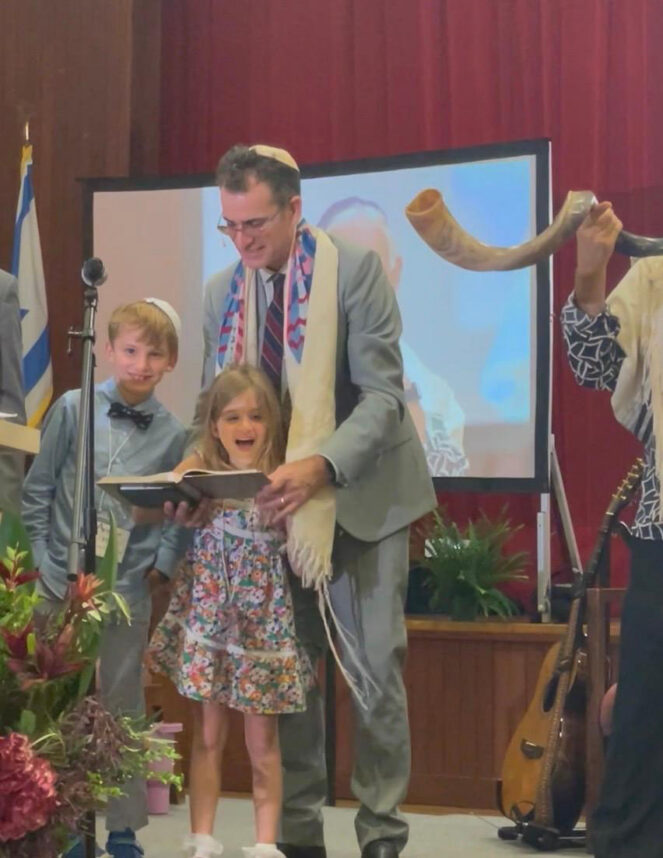
When Sinai Temple’s Simchat Torah Festival took place on Oct. 14, there was plenty to rejoice.
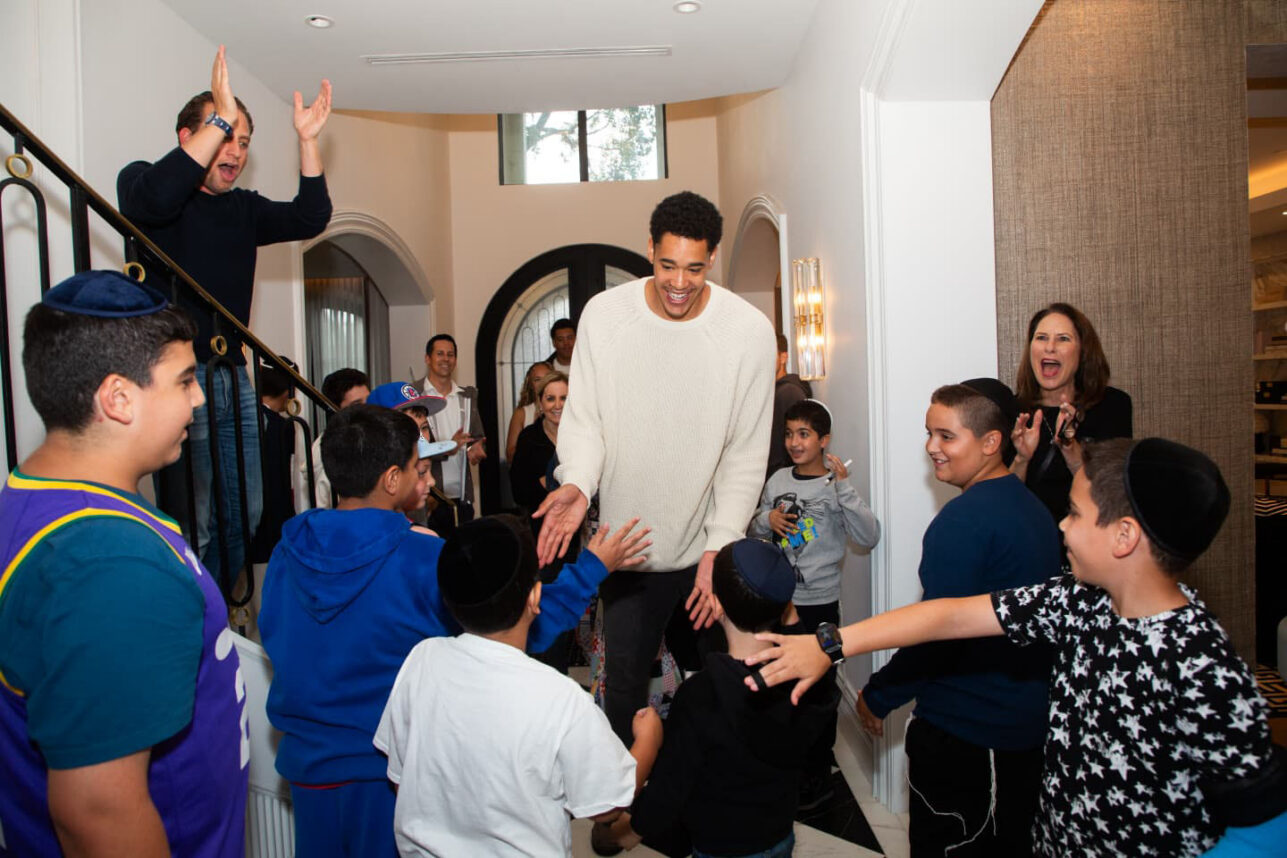
The festivities kicked off at 5 p.m. with a block party held on a closed down Holmby Avenue, a residential street bordering Sinai’s Westwood campus. It was all joyous vibes as the synagogue’s clergy, Co-Senior Rabbis Erez Sherman and Nicole Guzik, led the hundreds of partygoers in hakafot — dances performed on Simchat Torah that see people circling the bimah while carrying Torah scrolls.
“Don’t lose steam — don’t lose steam,” Guzik implored the crowd. “We’re only at the third hakafah.”
Everyone obliged. On Holmby, children waved Israeli flags while Sinai Temple Cantor Marcus Feldman led a four-piece klezmer band in upbeat Jewish tunes. Sinai Emeritus Rabbi David Wolpe and Rabbis Avi Taff and Gavriella Kornsgold also turned out, as did community members from Kehillat Israel, the Pacific Palisades-based community that was uprooted from its physical campus by the Palisades fire earlier this year. They were all in celebratory spirits.
It wasn’t just Simchat Torah — which marks the completion of the annual Torah reading cycle — that everyone was celebrating; just one day prior, Hamas had released all 20 of the remaining living hostages, a moment the Sinai community had been eagerly anticipating for more than two years.
The event was dubbed “the Sinai Temple Niv Raviv z’l Simchat Torah Festival,” named after a woman who was murdered on Oct. 7. Niv’s cousins are members of Sinai.
On Holmby, Wolpe dedicated the program’s sixth hakafah — traditionally, seven hakafot are performed on Simchat Torah — to all Sinai members who refused to give up hope for the return of the hostages.
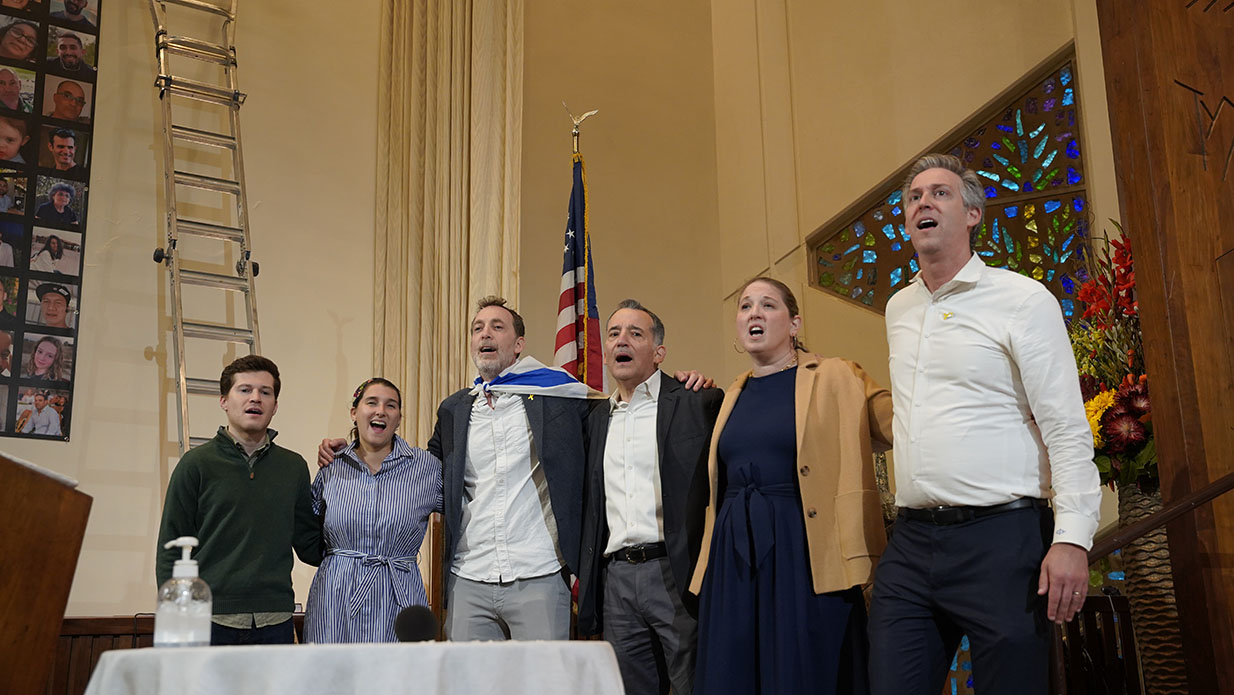
Around 6 p.m., everyone in attendance began marching onto the Sinai campus, where they found seats inside the temple’s sanctuary. Marking the hostages’ return, the Sinai leadership then ordered taken down a 20-foot-by-20-foot banner that featured photos of all the hostages — along with the text, “Keep Their Names Alive” — that had been hanging prominently on Sinai’s wall for the past two years.
Those in the pews cheered as the banner was removed. The recitation of the Shehecheyanu — a Jewish blessing of gratitude — followed.
“I didn’t think they’d come home and that we’d able to take the banner down by the time this event was happening,” Sherman told The Journal before Tuesday’s event.
But they did.
Acknowledging the joy surrounding the return of the hostages, along with the concern over the deceased hostages who’ve yet to be returned, Sherman and Guzik — who are husband and wife — described the gathering as “Mar v’ Matok,” Hebrew for “The bitter and the sweet.”
Immediately following Oct. 7, 251 seats in the Sinai sanctuary were sectioned off to commemorate the approximately 251 hostages abducted by Hamas. But on Tuesday, the roped-off seats were for each of the deceased hostages still in Gaza.
Sinai felt the tragedy of Oct. 7 on a personal level — it isn’t only Niv Raviv who has relatives at Sinai. Amiram Cooper, who was abducted by Hamas on Oct. 7 and died in captivity, had a niece who is a Sinai congregant. As of press time, Cooper’s remains were still in Gaza.
Those in attendance danced with two Torah scrolls that were dedicated to Raviv’s family and to Cooper.
But it was an evening of mixed emotions — a rejoicing occasion tinged with sadness because of those whose bodies have yet to come home. After everyone came together in the sanctuary, Rabbi Taff read the names of each of the deceased still being held in Gaza, and in response to each name, everyone in the sanctuary said “Achshav” — Hebrew for “now.”
The singing of Naomi Shemer’s “Jerusalem of Gold” followed.
By the end of the event, there was a giant blank space on the Sinai sanctuary wall where the hostages banner had previously been. The blank space symbolized joy, hope and the return everyone had been waiting on for far too long.