fbpx

October 22, 2025

Shabbat Joy — Moroccan Fish with Leeks and Peppers

Long before I light my candles,   the smoky scent of my Moroccan fish signals that Shabbat is coming. Like my mother and my grandmothers before me, I serve my family and friends this flavorful, saucy fish dish every Friday night.

For Sephardic Jews, serving fish as the first course on Friday night is symbolic of blessing and continuity. Fish, with their plentiful eggs, represent fertility and abundance. Their constantly open eyes are a sign of divine protection. And the fact that they swim deep in the ocean means that they are always protected from “ayin ha’ra,” the evil eye.

In the olden days, fish was considered a delicacy and special foods were always served for “oneg Shabbat,” the pleasure of Shabbat.

Dag,” the Hebrew word for fish, shares the same root as the word “da’agah,” which means worry, so in eating fish on Shabbat, we symbolically leave our worries behind and enter the peace of the holy day.

Every week, my Moroccan fish is a little different. Depending on my mood, I’ll use leeks instead of onions. Sometimes I add thinly sliced carrots and sometimes I’ll add cooked garbanzo beans to make the dish heartier. Some weeks I crave a rich, full-bodied sauce made with tomato purée; other times I keep it light, letting the flavor of the fresh fish shine through.

However, my sauce always begins the same way, with a generous pour of olive oil in the pan. Then I will layer in leeks or onions, and red, yellow and green peppers, along with a handful of chopped cilantro. Once the vegetables soften, I add canned cherry tomatoes, paprika, cumin, turmeric, a bit of preserved lemon and capers. I add a couple of dried Mexican ancho chilis for heat. Then I nestle in the fish. I like to serve sea bass, though salmon is a wonderful, more practical option when feeding a crowd. I add a splash of water, cover the pot and let everything simmer gently until the sauce thickens and the fish becomes tender, infused with all those layered flavors.

 When I bring my Moroccan fish to the table, the dish is an inviting array of vivid gold and deep greens and the tempting aromatic red sauce just begs to be soaked up with fresh challah or spooned over fluffy couscous or rice.

This recipe connects my family to generations of Moroccan Jews who ended their week the same way — with fish slowly cooked in a fragrant sauce, surrounded by love and laughter. It is a tradition my family has followed for many generations and it fills me with pride to carry this tradition to the next generation.

Every week, no matter how I make my Moroccan fish, the feeling is always the same. It tastes like home.

—Rachel

With the huge influx of Libyan, Moroccan, Tunisian and Algerian Jews to Israel in the 1950s, chraime or Moroccan-style fish supplanted gefilte fish as the Friday night favorite.

Both my Moroccan Spice Girl partner (Rachel) and my Moroccan Tunisian daughter-in-law (Rachel) make the most incredibly moist and flavorful Moroccan fish. Each Rachel brings her own creative take on the recipe, but both inspire me to make fish à la Morocain every Friday night.

I use harissa paste, tomato paste and a big can of crushed tomatoes because everyone in my family loves the sauce.

I use jalapeño peppers, with the stem and most of the seeds removed because I’m serving it to my young niece and nephews (and no one needs to be traumatized by too much spicy heat!) I love to add carrots, garbanzo beans and lots of thinly sliced potatoes.

That is the beauty of this dish — it appeals to most taste buds, young and old, it will feed a crowd and it is adaptable to whatever fish, spices and vegetables that you prefer.

Talk about the joy of Shabbat!

—Sharon

Moroccan Shabbat Fish 

Serves: 6–8

2 ½ – 3 lbs sea bass, halibut or salmon fillets

1/3 cup olive oil

1 large leek (or onion), thinly sliced

3 bell peppers (red, yellow, and green), sliced into long thin strips

4 large garlic cloves, grated or finely chopped

1 large handful fresh cilantro, roughly chopped

1–2 carrots, sliced into thin strips (optional)

1 Tbsp sweet paprika

1 tsp ground cumin

1 tsp turmeric

1 cup canned cherry tomatoes or 1 14oz can crushed tomatoes 

1 preserved lemon, rinsed and chopped

1 Tbsp capers

1–2 dried Mexican chili peppers, stems and seeds removed

1 cup cooked garbanzo beans (optional)

1 cup water, or more as needed

1 Tbsp pareve chicken consommé powder, optional

Salt to taste


Heat the olive oil in a wide pot or deep skillet over medium heat. Add the leeks and sauté until soft and slightly golden. 

Add the peppers, garlic, cilantro, and carrots, then sauté for a few minutes until fragrant.

Sprinkle the paprika, cumin, and turmeric over the vegetables and stir well. Add the cherry tomatoes, preserved lemon, capers, chili peppers and garbanzo beans. 

Pour in the water and stir to loosen the sauce. Cover the pot tightly and bring sauce to a gentle simmer. Allow the sauce to cook for 10–15 minutes until it has slightly thickened and is aromatic.

Using paper towel, pat the fish fillets dry, then season with salt. Nestle each piece gently into the sauce and spoon sauce over each fillet. 

Cover the pot and simmer over low heat for 10-15 minutes, until the fish is fork-tender and just cooked through.

Taste and adjust seasoning. 

Notes:

Serve warm, with couscous or rice and fresh challah to soak up the sauce.

If using carrots and garbanzos, leave out the capers.


Sharon Gomperts and Rachel Emquies Sheff have been friends since high school. The Sephardic Spice Girls project has grown from their collaboration on events for the Sephardic Educational Center in Jerusalem. Follow them
on Instagram @sephardicspicegirls and on Facebook at Sephardic Spice SEC Food. Website sephardicspicegirls.com/full-recipes.

Shabbat Joy — Moroccan Fish with Leeks and Peppers Read More »

The Conservative Republican Jewish Case for Electing Mamdani

There is a strong case for defeating Zohran Mamdani in the November 2025 New York City mayoral race.

From a qualification standpoint, he has none. He continues in the great Democratic tradition of fetishizing well-spoken people who have never held any type of gainful employment. Democrats tend to oscillate between smooth-talking people with the politically correct skin color and rich white liberal billionaires who inherited their wealth. Ted Kennedy, J.B. Pritzker and Gavin Newsom are its most famous plutocrats. Barack Obama, Kamala Harris and Zohran Mamdani are its most famous diversity quota celebrities. What unites these candidates is zero private sector experience making, building, or creating anything of value.

On the economic front, Mamdani endorses socialist policies that have failed everywhere and succeeded nowhere. Scandinavian nations with homogenous populations abandoned their democratic socialist models years ago. Low birthrates and economic stagnation have Old Europe decaying into Ancient Europe on the verge of becoming Dead Europe. Outside of the National Football League, not a single model exists that survives because of socialism.

From a Jewish perspective, Mamdani is a nightmare. It may be slightly overstating things to call Ayatollah Mamdani a jihadist, but he certainly sympathizes with them. He has embraced the worst antisemitic rhetoric, including refusing to repudiate calls to “Globalize the Intifada.”

Mamdani’s dilettante existence is wrong for New York City and pretty much any serious entity wanting successful governance.

Yet even conservative Republican Jews can make the case for electing Mamdani mayor. Take this devil’s advocate exercise seriously. Look at the closest alternative.

Conservative Republicans including many Orthodox Jews are seriously considering supporting disgraced former New York Governor Andrew Cuomo. The rationale is that at least Cuomo is an experienced leader who is not a raging antisemite. These facts are as true as they are irrelevant.

Remember Cuomo the Covid Czar. As governor he placed Covid-infected people in nursing homes, resulting in 15,000 innocent elderly nursing home deaths. He took the lead in restrictive policies including outdoor mask mandates, firing unvaccinated state workers, and separating families from their loved ones.

On the Jewish Covid front, Cuomo shut down synagogues and banned people from praying together. Many of those Jewish communities never recovered. Thank heavens enough Orthodox shuls quietly defied his edicts, choosing Hashem over King Andrew.

Cuomo was awful because he was effective. He successfully bullied people. With his younger brother Chris shilling him for him on CNN, Governor Cuomo had an entire network dedicated to implementing his destructive agenda.

As if that were not the opposite of dayenu, his being forced out foisted the even worse Kathy Hochul on the political world. Governor Hochul has let antisemitism run wild on New York college campuses while refusing help from the Trump administration to subdue the antisemites.

Mamdani may be evil, but he is also useless. His constituency is mainly the annoying TikTok cult who dance funny and eat Tide Pods. Mamdani will not be able to get most of his agenda passed.

Mamdani may be evil, but he is also useless. His constituency is mainly the annoying TikTok cult who dance funny and eat Tide Pods. Mamdani will not be able to get most of his agenda passed. His numbers are unrealistic. His policies are unworkable. Unlike with Obamacare, Mamdani will not have a fiercely loyal legislature to prop up his worst impulses.

It took Jimmy Carter to bring the world Ronald Reagan. It took Obama, Joe Biden and Kamala Harris to bring America two terms of Donald Trump.

While it would be nice if Republicans rallied around Curtis Sliwa, New York is not ready for him. New York is the heroin junkie that has yet to hit bottom. It took years of failure before a desperate Gotham City finally turned to Rudy Giuliani. Stop trying to reason with people on a suicide mission. The al Qaeda hijackers on 9/11 were willing to obliterate themselves. If the September 11 attacks were not enough to make Mamdani permanently unelectable, then New York City voters truly are too far gone to try and save.

If New York City chooses to join the Caliphate, there are plenty of Florida neighborhoods who would welcome an influx of Jews.

Rather than fear what Mamdani will try and fail to do, remember what Cuomo already did.

It may be crazy to suggest, but the next Gotham mayoral election in 2029 could bring the real solution. A certain two-term Republican President will be unemployed and bored. Drag him off the golf course and fix the city. Orange Man Good. He relishes a challenge, and electing him would make liberals even crazier than the Mamdani voters are now. As a bonus, Orange Man likes Jews and has real successful work experience.


Eric Golub is a retired stockbrokerage and oil professional living in Los Angeles.  

The Conservative Republican Jewish Case for Electing Mamdani Read More »

A Guide to Living Textually: Ilana Kurshan’s ‘Children of the Book’

In Ilana Kurshan’s new memoir, “Children of the Book: A Memoir of Reading Together,” the author describes a familiar predicament: A mother with work to do is trapped in her children’s room because they do not want her to leave until they fall asleep. While most parents recognize the frustrations of this struggle, they will likely be less familiar with Kurshan’s solution: She transforms her children’s requests into an opportunity by practicing chanting the weekly Torah portion for synagogue in their rooms, accomplishing a third more ambitious task: “I would like Torah to become the soundtrack for my life. I would like Torah to become the soundtrack for my children’s lives, too.” Throughout the memoir, Kurshan balances her love for Jewish texts and literature with raising her children, but rather than presenting those needs as in tension with one another, she depicts her own development as a Jewish woman with a career in tune with motherhood. Preparing for Shabbat services while dealing with her children’s needs does not hamper her parenting; it miraculously harmonizes with it. In reading with her children, to her children, or surrounded by her children, Kurshan depicts and models the rhythm of a richly Jewish textual life.

Kurshan’s memoir demonstrates how the annual Jewish liturgical cycle of Torah reading synchronizes with raising a family, enabling the author and mother to simultaneously better understand the Torah’s wisdom from week to week and the brilliance of her children as they weave their Torah learning into their daily lives. Working as a skilled translator and a prominent Jewish educator in addition to being a parent adds additional responsibilities to her plate. Yet the porousness of the boundaries between secular and Jewish texts and lived experiences and literary experiences enables Kurshan to see how religious texts can shape and develop the religious life and vice versa: “The more we read together, the more I come to know my children. And the better I am at reading them.”

Categorizing “Children of the Book” can be complex. Kurshan’s first memoir, “If All the Seas Were Ink,” won a National Jewish Book Award and described her experiences of marriage and divorce through her daily study of the Talmud. While it was organized by the tractates that Kurshan was reading and how those tractates bled into her lived experiences, “Children of the Book” is organized by the five books of the Torah and each of its sections and sub-sections can be savored slowly along with the weekly Torah portion. The text is a bibliomemoir because it traces the author’s life through the literature they read, yet it is unique because bibliomemoirs usually focus on how the reading experience of a single text shapes an author’s life. Though the memoir describes how Torah portions become the literary backdrop for all of Kurshan’s reading, writing and lived experiences, “Children of the Book” overflows with intertextuality and Kurshan’s love for all texts so that the Torah reshapes what secular and religious texts mean for Kurshan while the books she reads reframe her understanding of the weekly Torah portion. In Kurshan’s life, wisdom does not flow in a single direction but circulates freely, so that sometimes her children help her read the Torah, and at other times it is the Torah that helps her read her children.

Since this is a book about reading with and around children, it is a boon for readers who think about the role of reading in a parent-child relationship. Reading selective subsections asynchronously supports someone trying to find a work-life balance. I chose to take a page both literally and metaphorically from Kurshan’s playbook and found success in reading this book about reading to her own children. Reading Kurshan’s parsha-inflected tales with my kids helped them relate our bedtime stories and weekly parsha discussions to their own lives.

When Kurshan describes how literature uses foreshadowing, for example, she relates the practice to both her family’s experience of living through the unknown period of the coronavirus and the biblical Israelite experience in the desert. Reflecting on her children’s boredom and restlessness during the pandemic and the unknown, she recalls, “I thought about God’s pledge to bring the Israelites to a land ‘flowing with milk and honey’ (Numbers 14:8), and realized that every divine promise is a spoiler of sorts. With so much uncertainty around us, I was relieved that I could promise my children that at least in the book we were reading, it would all turn out OK.” Of course, Kurshan also weaves in a secular children’s book by connecting Beverly Cleary’s Ramona’s complaints to her children’s complaints and the Israelites’ kvetching, weighing the benefits and pitfalls of knowing what is coming in a story and in life. But she also uses the Torah and children’s literature as guides—texts that provide “spoilers” for our twenty-first-century lived experiences—so that, even amid an unprecedented modern-day pandemic, one does not have to feel as though the literary past has no guidance to offer our contemporary moment.

After reading Kurshan, I started paying attention not just to what I read to my children, but how I read to and with them. I began slowing down and did not rush my five-year-old son when he made me pause my reading of Cary Fagan’s “Mr. Zinger’s Hat” to ask me if any of his hats would also have stories buried in them. I was just trying to get him to bed so that I could get some work done, but “Children of the Book” reminded me that there are stories buried everywhere around us, and if we don’t slow down to unearth them with our children, we are missing out on connecting both to texts and to our kids. Although I still put my son right to bed, when he woke up the next morning, we immediately searched his hats.


Na’amit Sturm Nagel is a doctoral candidate in the English department at UC Irvine.

A Guide to Living Textually: Ilana Kurshan’s ‘Children of the Book’ Read More »

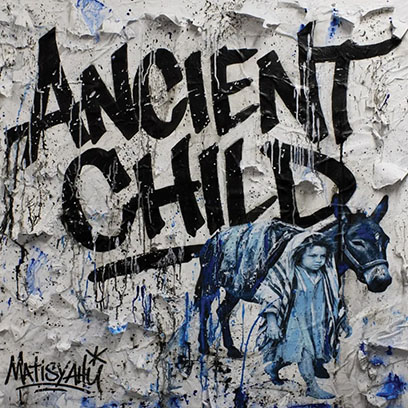
‘Ancient Child’ Finds Matisyahu in a Reflective Mood

Don’t come to “Ancient Child” expecting the anthemic lift of “One Day” or “King Without a Crown.” This is a quieter, more meditative album, his first since the Oct. 7 attacks. 

Matisyahu, now 46, said when he wrote the song “Rockets,” he’s “never been this happy” — which sums up the headspace of the album aptly:

“Stand and deliver with an anthem

Hold up now keep ya pants on

All these thoughts so random and you cannot fathom

All these scars I bandage

Now I’m going on a rampage

Words they flow like champagne.”

When The Journal met him at last month’s Jewish American Summit, Matisyahu just finished performing a stripped-down set with guitarist Adam Weinberg. Sitting in an empty playground at Sephardic Temple, joint in hand, he described the record as a product of a world transformed. “I would say the album is more focused on being Jewish post Oct. 7,” he said. “It’s like all everywhere is Israel. Everywhere. Everything is connected. So it’s like a paradigm shift post Oct. 7, where before there was Israel — it was a thing for a lot of people — but it wasn’t the main thing. For the majority of Jews … after Oct. 7, literally the entire focus of the entire world is Israel.”

That shift, he said, is what led him to name the album “Ancient Child.” “That paradigm shift,” he said, “is the reason why I called the album ‘Ancient Child,’ because the ancient child is above nature. It’s the process of how we get there. The impetus for that might be a really negative thing or a strange thing, but the question is not what the cause is. The question is what happens next.”

Where earlier albums surged with  uplifting reggae rhythms, Ancient Child carries a slower pulse. “Sun Come Up” was written during the pandemic on a back deck in Teaneck, New Jersey. He described it as his “stage” when there were no real ones left. “It was still COVID. I was living in Teaneck … I was sitting on my back deck, and that’s the first line of the new album: ‘This is my stage, this is my place, deck of my ship where I cruise over waves.’ It was like no shows during COVID. So it was like, this is my stage — the deck. I’m in my bathrobe with a mimosa at 10 o’clock in the morning, smoking a joint, just rapping to myself.” That image captures where his mind is these days — more grounded, while being cognizant of having balance. What could have been a bouncing arena anthem on a previous album, “Sun Come Up” is a more groovy, mellow sunrise ritual sound.

“I think that morning the baby had woken up at five, and I was walking down the street with a baby at five o’clock in the morning in Teaneck, watching the sun come up and thinking of the metaphor with my son and then writing that.”

In performance, “Sun Come Up” sounded even more fierce accompanied by only Weinberg’s acoustic guitar. In fact, the entire album would carry a punch even if every track was just his vocals and an acoustic guitar.  “As we were putting it together, it was not necessarily lush, pretty chords behind it,” Matisyahu said. “It felt very power-chord, rapid-fire kind of vibe — choppy and fierce. It felt kind of punky.” Still, the electronic arrangements on the album have a meditative, reverb-heavy approach that also works. And his vocals are as sharp as ever.  

“Wake Up” is the album’s most perilous song. It’s about losing faith as the “world keeps burning.” It opens with an arpeggiated acoustic guitar riff. It’s another one of the tracks that, with a touch of distortion, would fit on an early 1990s punk album about balancing apathy with angst. 

The day of the summit, he connected this creative shift directly to the trauma and self-examination that followed Oct. 7. There was a “clear shift for me back into the role of saying, ‘I myself want to reconnect to my Judaism – not for anybody else or for any other reason.’ It’s not for religious reasons, but for the empowerment of knowing who I am and what my truth is. When there’s opposition and there’s a feeling that we have to unite, there is something that happens to all Jewish souls — except for the ones who run the other way.”

The only featured artists on “Ancient Child” are Florida rapper BLP Kosher and his two sons, Shalom and Lavy. He didn’t plan to include his family. “It wasn’t like, ‘Oh, I want to get a bunch of features.’ It just kind of naturally happened as I was recording my record. My sons were in the house, so whoever was around on that day would come to the studio with me … They would just come hang out in the session.”

He encouraged his sons to write their own lines in case inspiration struck: “If you come with me to the studio, write — because when you’re in the studio, if you’re inspired by the track, sit and write, because you never know when you’re going to get called in.”

Their friendship with BLP Kosher led to his appearance on the track “Anxiety,” which Matisyahu considers one of the album’s most revealing songs. “He could have kind of done anything he wanted on it, but he specifically wrote about the real things in his life that create anxiety  – and also real-world things going on right now. He took it very seriously. It’s a very serious verse. Lyrically, he’s kind of a genius in the way that he uses wordplay and stuff. His swagger … is off the charts.”

Much of “Ancient Child” resists easy classification. Some tracks lean on hip-hop phrasing; others unfold like improvised prayers.  He sees that fluidity as the album’s essence: “Different people based on their experience will sense the genre differently. You could listen and think punk rock, someone else might hear hip hop. It’s not categorizable; it’s above nature, which is what music is supposed to be.”

For all its calm, “Ancient Child” has an undercurrent balancing restlessness with presence as the days seem to go by quicker than ever before. “If I allow myself to get into it a little bit, it feels like right now is the time period that something massive in the world is going to change. And I feel like we are living through that period of time.”

That awareness gives the record its gravity. It’s not protest music or celebration; it’s a field recording of spiritual weather. Matisyahu isn’t trying to lift his audience this time — he’s inviting them to sit with him in stillness, to recognize what’s shifting, and to listen for what comes next. 

‘Ancient Child’ Finds Matisyahu in a Reflective Mood Read More »

Dennis Holt: Tribute to a Mensch

Welcome to the Skirball Cultural Center. When I first met Dennis Holt in the late 1980s there was no Skirball Cultural Center. There was only an arid 15-acre site filled with trash, weeds and snakes. Dennis asked me, “What are you planning to do with this piece of land?” I answered that I was planning to build an oasis featuring the story of the American Jewish experience. He immediately responded, “Tell me how I might be helpful.” With these words he began to give me unwavering support throughout the years. And so began a personal friendship that has warmed my heart for over four decades and will dwell there forevermore. 

When the Skirball was first preparing to actually open to the public in the early 1990s, Dennis, by now a Skirball founding Board member, had at his own expense purchased billboards throughout the city to introduce us to the world.  The image he chose was the torch of Lady Liberty with the caption on each billboard “Freedom Celebrated Daily.” This caption was textually originated by our mutual friend David Suissa, who today is the publisher and editor-in-chief of Tribe Media/Jewish Journal. Who could forget that image and those words? Just like that we were on the map, mission-forward.  How fortunate that Dennis’ gifts of imagination and generosity helped to launch us into the future. 

Dennis was concerned that the public might think of us as screwball rather than Skirball. 

As a board member of Westwood One he was able to give us an in-kind gift in the amount of $1 million to assure that every newscast helicopter that happened to report on the traffic conditions on the 405 at Mulholland would mention that we’re now flying over the future home of the Skirball Cultural Center, emphasizing the name and pronunciation was Skirball.

Memories of Dennis’ generous and loving deeds still crowd my mind.  On his every visit to our campus, he would bring gifts for the staff.  He so enjoyed their company, and they did his. And he thought of gifts that occurred to no one else. One day he arrived at the Skirball in the midst of a Los Angeles rainstorm, and right away he noticed that some of our hospitality and security staff were drenched. He immediately went out and purchased extra large umbrellas and had them imprinted with the Skirball logo for the entire staff — and shortly afterward, still more umbrellas for any Skirball guest who might need one.  Our now familiar blue and white umbrellas were entirely Dennis’ gift and inspiration. It was the way he operated — spontaneously, heart to heart and heart to hand.

On the morning of this past March 14, I received a call from my friend Dennis. He asked if I had plans for lunch on my 84th birthday that day. I said no. “Well then, I’ll be joining you for lunch today.” His first question to me as we sat down was, “How are your Israeli son Gideon and your granddaughter coping during this horrific war with  Hamas?” I shared with Dennis that my son was a tank commander reservist waiting to be called up if needed. In fact, Gideon had asked me if I could help raise funds to establish a memorial learning and healing center for the families of fallen soldiers. He told me that he had a dear friend from his tank core unit who lost his son on his 21st birthday. His son was himself an IDF tank commander on the front lines. Before I could continue my narrative Dennis took out his checkbook and wrote an incredibly generous check to support the establishment of such a memorial. In response I said to Dennis, “At this moment you have become a mourner from afar.” He thanked me for allowing him to participate in such a righteous deed. I’m hopeful, he said, that the parents of this fallen soldier will know that someone from afar had wished to share his own pain for someone he had never met. Wow, an expression of empathy that I had not experienced from anyone who indeed was a stranger! 

Just four months ago, my wife Myna and I were with Dennis and his beloved wife Brooks in Charleston, South Carolina, where we had been invited to their home to spend a few days of vacation. I am so grateful to have had this time with Dennis. He and I had a three-hour conversation during which he told me how grateful he was for his life’s journey and for his love for Brooks and his children and grandchildren. Then as always, Dennis punctuated his words with the expression, “Thank God.” Yes, Dennis was a man of faith. I once shared with him the teachings of our rabbis that the greatest accomplishment in life was to be a partner with God, caring for the world, caring for each other. On this last visit, just three weeks prior to his death, Dennis recalled that conversation. He said to me, “Uri, I’d like to think I have been a worthy partner with God.” I replied — and I am so glad I had the chance to say it to him face to face — that God had surely found one in Dennis Holt.

The ultimate accolade, in Jewish tradition, is a humble yet profound word:  mensch. The literal meaning is “human being,” but the word means so much more.  Mensch means kindness. It means goodness.  It means integrity. It means compassion.  It means generosity. It means gentleness.  It means heart. It means soul. And it will always mean Dennis Holt.


Rabbi Uri D. Herscher is Founder, Skirball Cultural Center.

Dennis Holt: Tribute to a Mensch Read More »

What SJP’s Applause for Hamas Street Executions Tells Us

It’s a moment that should shake every anti-Israel protester of the past two years to their moral core — if they still have one.

In Gaza, Hamas is executing Palestinians in the street. No trials. No charges. No due process. Just masked gunmen — sometimes teenagers themselves — dragging other young Palestinians into intersections and shooting them in the back of the head.

Their “crime”? Alleged “collaboration.” No courts. No evidence. Just rumor, grudges, or political motives. A vendetta broadcast to the world as a warning.

And how did Students for Justice in Palestine (SJP) — a group with over 350 college campus chapters across North America that claims to fight for Palestinian rights —respond?

With celebration.

“Death to the occupation. Death to Zionism. Death to all collaborators,” they posted. No distinction between Israeli soldiers and Gazan teens accused of helping Jews survive. No concern for due process. No objection to Palestinians being slaughtered in the street.

SJP didn’t condemn the executions. They endorsed them.

This wasn’t a rogue chapter. It was the movement speaking with one voice. And it demands a serious reckoning — not only for the universities that host them but for the political culture they increasingly influence.

A Hate Cult Wearing A Human Rights Mask

For years, SJP cloaked itself in the language of justice and human rights. But it marched behind the slogan “Globalize the Intifada” — a call for mass-murder masquerading as activism. The mask began to slip long ago.

It fully fell on Oct. 7, 2023, when SJP chapters across the country glorified the massacre of Israeli civilians, waving Hamas flags and chanting “resistance” just hours after Jewish women were raped, babies were burned alive and entire families were slaughtered.

And now, it’s fallen further.

The same movement that claims to champion Palestinian rights is cheering while Palestinians are gunned down by the terror group that claims to rule them.

This isn’t fringe activism. It’s an ideology infecting the loudest corners of elite academia — and echoing in the halls of political power.

In the U.K., Members of Parliament have parroted Hamas rhetoric and moved to bar Jewish fans from attending soccer matches under the guise of “security.” In Canada, elected officials have marched beside banners calling for Israel’s destruction.

In the U.S., from city councils in Dearborn to congressional offices, slogans once confined to SJP flyers now appear in speeches, op-eds, and policy debates.

From Campus to City Hall

Nowhere is this trajectory clearer than in New York City, where Zohran Mamdani — a co-founder of SJP’s Bowdoin College chapter and current New York State Assemblyman — is leading in polls to be the next mayor of the city with the largest Jewish population outside of Israel.

Just days ago, Mamdani appeared on national television and couldn’t bring himself to say that Hamas — a U.S.-designated terrorist organization — should disarm, even after it posted footage of its own execution squads shooting Palestinian teenagers in the streets.

He didn’t condemn the killings. Not the violence. Not the killers. Not even the glorification of those murders by a group he helped build.

Mamdani has yet to disavow or condemn SJP. He’s offered no apology for its support of Hamas. He hasn’t even said clearly that Hamas should have no role in governing Gaza.

Like SJP, Mamdani openly rejects the idea of Israel as a Jewish state — not just in Judea and Samaria (the “West Bank”), but anywhere. He rails against Israel’s Jewish identity — despite its full civil rights for all citizens — while ignoring the dozens of explicitly Muslim states where minorities have no rights and civil liberties are nonexistent.

The Moral Inversion

If SJP cared about Palestinians, it would have protested when Bashar al-Assad killed more than 5,000 Palestinians during Syria’s civil war. Or Lebanon barring Palestinians — who’ve lived there for decades — from dozens of professions. Or denounced Kuwait’s expulsion of 250,000 Palestinians in the 1990s.

But they don’t. Because those atrocities didn’t serve SJP’s one consistent goal: the delegitimization and destruction of the world’s only Jewish state.

Let’s be clear: This isn’t about Israeli policy or disputed borders. It’s about Jewish sovereignty — anywhere in Israel. That’s why their ideology not only endangers Jews but also dehumanizes Palestinians who don’t conform to their extremist agenda.

What could be more dehumanizing than being executed in the street by a fascist regime—while Western activists cheer from afar?

What could be more revealing than SJP’s silence—or worse, its applause?

This Is Not Just a Campus Problem

SJP is not a scrappy protest group. It is a well-funded, well-organized pipeline to political power. Its alumni are now shaping the discourse on Israel, Gaza and the Jewish right to self-determination.

Some, like Mamdani, are already in power. And barring a major shift, he may soon lead one of the world’s most influential cities.

So, we must ask:

What does it mean when a movement that celebrates public executions has its alumni holding public office?

What does it say about our political discourse when so many can’t even say the obvious: Hamas is a jihadist terrorist group that must be disarmed and dismantled?

Draw the Line

Jewish tradition teaches: Ohev hamas, sonei nefesh — a lover of violence is an enemy of life. And yes, in Biblical Hebrew, “hamas” literally means “violence.”

SJP is not a movement for peace. It is a movement in love with hamas — in every sense of the word.

If we cannot draw the line here — at the glorification of terrorism, the executions of teenagers and the moral collapse of public discourse — then that line may no longer exist.

The time to act isn’t after the next atrocity or campus riot. It’s now — before slogans that celebrate murder become policies that excuse it.

Americans don’t have to agree on every aspect of the Arab-Israeli conflict. But they should agree on this: Those who support terrorism and terrorists shouldn’t be anywhere near public office.

Because the cost of silence isn’t just political. It’s moral.


Micha Danzig served in the Israeli Army and is a former police officer with the NYPD. He is currently an attorney and is very active with numerous Jewish and pro-Israel organizations, including Stand With Us and the FIDF, and is a national board member of Herut North America.

What SJP’s Applause for Hamas Street Executions Tells Us Read More »

‘Unspoken’ Confronts the Hidden Lives of LGBTQ Teens in Orthodox Communities

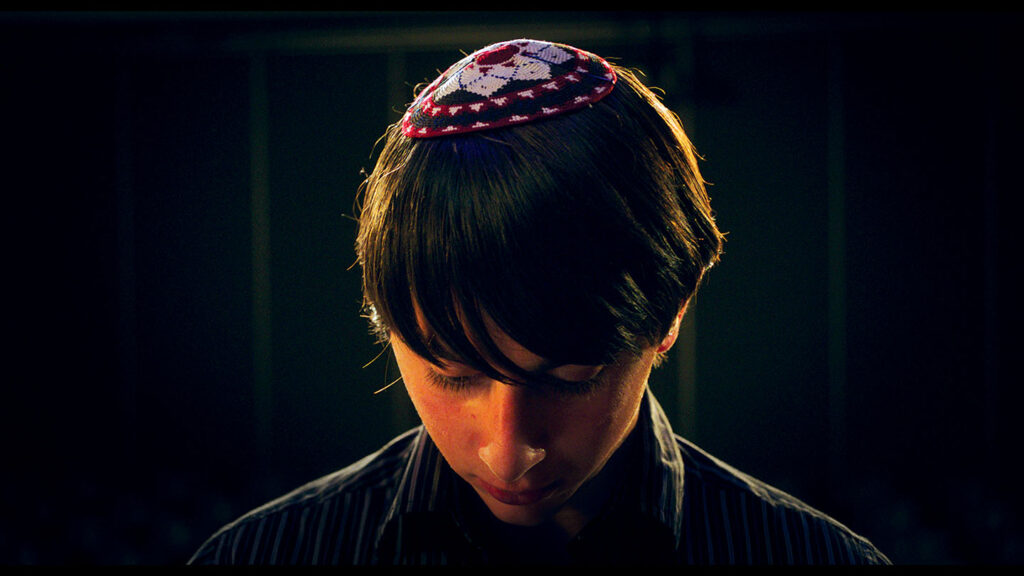
In “Unspoken,” director and  producer Jeremy Borison tells the story of Noam (Charlie Korman), a closeted teenager growing up in a modern Orthodox community. After his grandfather, a Holocaust survivor, dies, Noam finds a love letter and a photograph of his grandfather, Heinrich, with a man, sitting on the grass in Germany before the war. Suspecting the two were lovers, Noam sets out to uncover the truth about the mysterious man in the photo. Meanwhile, we witness Noam’s growing crush on his classmate Jonah (Michael Zapesotsky). He keeps stealing glances at him, and you can almost hear his thoughts: Is he into me as well?

The opportunity to get closer to Jonah arises during a class discussion about the 6 million Jews murdered in the Holocaust. Jonah asks why they aren’t also learning about the other groups who were murdered, including gay men. The two begin collaborating on a class project about these persecuted gay men, and as they spend more time together, Noam confides in Jonah about what he discovered regarding his grandfather. Together, they decide to track down the man from the photograph and uncover the truth about Heinrich’s past.

Jeremy Borison

This is Borison’s directorial debut and he does a beautiful job illustrating how difficult it is to be gay within a religious community. Borison knows the subject matter personally — he was once a closeted teenager in an Orthodox community himself. “I was 19 when I came out. I knew I was gay in high school, but I waited until I went to college because I knew I needed to sort of get out of my community in order to find that space and feel comfortable to do so,” he said. 

“I think a lot of the time when people hear from LGBT members of their community or formerly part of their community, those people, myself included, are only comfortable speaking once you’ve fully come out and fully accepted who you are. For me personally, when I was a closeted teenager I was not comfortable talking about it at all, so nobody heard from me.”

“I think a lot of people who don’t have that support often don’t necessarily remain in the Orthodox community but also don’t feel a sense of safety or the kind of love they need in their lives and in their communities.“

Borison told The Journal that his family and friends were very supportive, but he knows that is not the case for many young gay people, especially in religious communities, whether Jewish or Christian. “I think a lot of people who don’t have that support often don’t necessarily remain in the Orthodox community but also don’t feel a sense of safety or the kind of love they need in their lives and in their communities. I feel very grateful that I have a family to support me so that I can go and speak on behalf of people who don’t necessarily feel comfortable doing that,” he said.

After graduating from the University of Michigan, where he studied film, Borison produced a few short films, so directing his first feature — while also writing and producing it — was quite a challenge. To fund the project, he launched a Kickstarter campaign and, within about a week, raised $50,000.

“It went viral in an amazing way and spread throughout the Jewish community and also Orthodox community,” he said.

Eventually, he raised a total of $300,000, which is considered modest for a full-length feature film, but it doesn’t feel that way when watching the final result. The acting across the cast is impressive. Rita Zohar, who portrays Mrs. Helfgott, a Holocaust survivor and friend of Noam’s family, is herself a Holocaust survivor. Korman, 21, who previously had guest roles on series such as “Barry” and “Hacks,” submitted himself through a casting website. Going from small parts to a leading role in a feature film is no small task, but Korman, a student at USC, delivers a compelling performance. “We spent about seven months casting because it was really important for us not only to find really good actors but to find good actors who looked their age and understood the parts,” Borison said. “All of the Jewish characters were played by Jewish actors. When Charlie showed up we knew immediately that he’s Noam. He just conveyed so much without speaking, which is really what Noam’s role is, just showing all the internal struggle.”

The film has been screened at 50 festivals, including Jewish and queer film festivals. After completing its festival run, Borison began bringing the film to synagogues and schools in the Orthodox Jewish community. About six of these schools, in states such as New York, New Jersey and Ohio, included it as part of their curriculum.

He admitted that he also received rejections from some schools he approached, but said that any reservations about the subject matter are usually resolved once the school board and principal watch the film. “They see that it’s not as controversial as they thought it will be,” Borison said. “One of my goals was to make a story that really focused the experience of closeted children. I didn’t want it to be controversial, I wanted to focus on the pain and isolation of what it’s like to be closeted in the religious community, which has nothing to do with Halacha or shul policies or marriage. It just has to do with these kids who are alone and need help.”

Borison, who is married to his partner and has lived in Los Angeles for the past 10 years, said he was moved to hear how the film had touched so many people. At several screenings, viewers approached him to share how the film brought them back to their own childhood experiences of being Orthodox and closeted. Some were so emotional they were in tears and could hardly speak. The young director said he hopes the film will help young gays feel less alone. He also hopes it will help the community understand the struggles closeted Orthodox teens face before and when coming out. 

‘Unspoken’ will open at the Laemmle Royal Theater on Oct. 30, at 7:30 p.m. Q & A with director Jeremy Borison will follow the screening.

‘Unspoken’ Confronts the Hidden Lives of LGBTQ Teens in Orthodox Communities Read More »

Local Jewish Flotilla Participant Speaks Out

David Adler spent one month at sea and a weekend in Israeli detention as a participant in the Gaza-bound flotilla intercepted earlier this month by Israel.

Adler, 33, is a self-described “second-generation [San Fernando] Valley boy” and one of the “few Jews on this mission,” he said, referring to the recent Global Sumud Flotilla, a civilian-led maritime initiative of some 42 vessels carrying 500 participants that attempted to break Israel’s blockade of the Gaza Strip over the past several months but each time was stopped by Israel’s naval forces.

After the news broke in early October of Adler’s brief detainment by Israel — and after it was revealed in a Los Angeles Times story that Adler was a local Jewish boy — The Journal reached out to him. Talking from New York, Adler said the flotilla’s participants were “ordinary citizens”— doctors, nurses and journalists, among them — “all united by a common moral conviction.”

Having grown up in the Southern California Jewish community, where he attended Hebrew school and Jewish summer camp, he saw his time on the flotilla as representing “Jews of conscience,” being a delegate of a large segment of the Jewish community troubled by Israel’s actions during its two-year war with Gaza whose voices are largely drowned out by the more vocal pro-Israel contingent of the Jewish community.

Adler was interviewed approximately two days after the first set of the remaining Israeli hostages were released by Hamas. He was asked about media reports that there wasn’t any aid on the Gaza-bound ships in the flotilla, despite the flotilla’s participants claims that they were on a humanitarian mission, reinforcing the view that the flotilla, whose participants included Swedish climate activist Greta Thurnberg, was little more than a publicity stunt. He said that while the ships were modest-sized and therefore not carrying a significant amount of aid, he himself loaded items such as lentils and baby formula onto the ships and could attest to there being supplies intended for the Gazans onboard the ships.

Asked for his reaction to the news of the hostages being freed and to the ceasefire, he described feeling “jubilation and joy to see steps toward a more lasting peace,” albeit one he called a “fragile peace.”

Asked for his reaction to the news of the hostages being freed and to the ceasefire, he described feeling “jubilation and joy to see steps toward a more lasting peace,” albeit one he called a “fragile peace.”

Discussing his detainment, he spoke of mistreatment by Israeli authorities — though Israel has denied reports that detainees were abused, calling such claims “brazen lies” — and likened the Israeli site where he was held, Ketziot prison, to an “internment camp.” 

Adler’s mission began with three days spent in Barcelona doing nonviolence training before departing from Tunisia. After his ship was intercepted and following his detainment, Adler was deported to Jordan. He did not receive any assistance from the U.S. or Israel with returning home, he said. He was left to figure out a way back on his own. 

The 42 vessels in the Global Sumud Flotilla — “Sumud” is Arabic for “steadfastness” — embarked for Gaza from countries including Italy, Greece and Tunisia. The first ships began setting sail for Gaza in late August. By Oct. 3, Israel had intercepted all of the ships in the flotilla.

Adler posted about his journey on the flotilla on X. In a post that was republished by progressive magazine The Nation, he wrote about how his grandfather fought against the Nazis as part of the Parisian resistance and how he saw his activism on behalf of Gazans as an extension of that legacy.

Adler graduated from Brown University and is the co-founder of the group Progressive International. He splits his time, he said, between Mexico City and Paris. 

Asked about his plans going forward, he said he wants to build awareness for causes close to his heart. That includes  emphasizing “the link between Palestine and what’s happening in California,” in reference to the detentions here by the U.S. Immigration and Customs Enforcement.

Adler’s Encino-based parents did not reply to The Journal’s requests. Earlier this month, they spoke to The Los Angeles Times, saying that while they attempted to dissuade their son from participating in the flotilla, they ultimately were proud of him. 

“The anxiety level has been very high, absolutely,” Adler’s father, Paul, added.

Local Jewish Flotilla Participant Speaks Out Read More »

Sinai’s Simchat Torah Party Celebrates Hostages’ Homecoming

When Sinai Temple’s Simchat Torah Festival took place on Oct. 14, there was plenty to rejoice.

The festivities kicked off at 5 p.m. with a block party held on a closed down Holmby Avenue, a residential street bordering Sinai’s Westwood campus. It was all joyous vibes as the synagogue’s clergy, Co-Senior Rabbis Erez Sherman and Nicole Guzik, led the hundreds of partygoers in hakafot — dances performed on Simchat Torah that see people circling the bimah while carrying Torah scrolls.

“Don’t lose steam — don’t lose steam,” Guzik implored the crowd. “We’re only at the third hakafah.”

Everyone obliged. On Holmby, children waved Israeli flags while Sinai Temple Cantor Marcus Feldman led a four-piece klezmer band in upbeat Jewish tunes. Sinai Emeritus Rabbi David Wolpe and Rabbis Avi Taff and Gavriella Kornsgold also turned out, as did community members from Kehillat Israel, the Pacific Palisades-based community that was uprooted from its physical campus by the Palisades fire earlier this year. They were all in celebratory spirits.

It wasn’t just Simchat Torah — which marks the completion of the annual Torah reading cycle — that everyone was celebrating; just one day prior, Hamas had released all 20 of the remaining living hostages, a moment the Sinai community had been eagerly anticipating for more than two years.

The event was dubbed “the Sinai Temple Niv Raviv z’l Simchat Torah Festival,” named after a woman who was murdered on Oct. 7. Niv’s cousins are members of Sinai.

On Holmby, Wolpe dedicated the program’s sixth hakafah — traditionally, seven hakafot are performed on Simchat Torah — to all Sinai members who refused to give up hope for the return of the hostages.

Around 6 p.m., everyone in attendance began marching onto the Sinai campus, where they found seats inside the temple’s sanctuary. Marking the hostages’ return, the Sinai leadership then ordered taken down a 20-foot-by-20-foot banner that featured photos of all the hostages — along with the text, “Keep Their Names Alive” — that had been hanging prominently on Sinai’s wall for the past two years. 

Those in the pews cheered as the banner was removed. The recitation of the Shehecheyanu — a Jewish blessing of gratitude — followed. 

“I didn’t think they’d come home and that we’d able to take the banner down by the time this event was happening,” Sherman told The Journal before Tuesday’s event.

But they did.

Acknowledging the joy surrounding the return of the hostages, along with the concern over the deceased hostages who’ve yet to be returned, Sherman and Guzik — who are husband and wife — described the gathering as “Mar v’ Matok,” Hebrew for “The bitter and the sweet.”

Immediately following Oct. 7, 251 seats in the Sinai sanctuary were sectioned off to commemorate the approximately 251 hostages abducted by Hamas. But on Tuesday, the roped-off seats were for each of the deceased hostages still in Gaza.

Sinai felt the tragedy of Oct. 7 on a personal level — it isn’t only Niv Raviv who has relatives at Sinai. Amiram Cooper, who was abducted by Hamas on Oct. 7 and died in captivity, had a niece who is a Sinai congregant. As of press time, Cooper’s remains were still in Gaza.

Those in attendance danced with two Torah scrolls that were dedicated to Raviv’s family and to Cooper. 

But it was an evening of mixed emotions — a rejoicing occasion tinged with sadness because of those whose bodies have yet to come home. After everyone came together in the sanctuary, Rabbi Taff read the names of each of the deceased still being held in Gaza, and in response to each name, everyone in the sanctuary said “Achshav” — Hebrew for “now.” 

The singing of Naomi Shemer’s “Jerusalem of Gold” followed.

By the end of the event, there was a giant blank space on the Sinai sanctuary wall where the hostages banner had previously been. The blank space symbolized joy, hope and the return everyone had been waiting on for far too long.

Sinai’s Simchat Torah Party Celebrates Hostages’ Homecoming Read More »

Rock Legends and Executives Take the Stage at Ambassadors of Peace Gala

As he presented his longtime colleague Bruce Resnikoff with Creative Community for Peace’s (CCFP) Ambassadors of Peace award, singer/songwriter John Mellencamp had a message to antisemites: “And to the Jewish haters, I say, f— you!” Mellencamp told the crowd of over 500 people.  “Yeah, you need to open your eyes and remember the Golden Rule: What is hateful to you, do not do to others, and try to learn that ignorance is not a virtue.” The crowd erupted in cheers and laughs of affirmation. 

It was CCFP’s seventh annual Ambassadors of Peace gala, honoring figures in entertainment who have been influential in opposing antisemitism and creating dialogue about peace and understanding through art. This year’s event, held at the Beverly Hills home of Haim Saban, honored Resnikoff (President/CEO of Universal Music Enterprises), actor Jerry O’Connell, David Kohan (showrunner and executive producer, “Will & Grace”), his wife Blair Kohan (partner and board member at United Talent Agency) and Jonathan Strauss (CEO of Create Music Group).

David Renzer, CCFP co-founder, framed the night around education and dialogue. “We have to educate, we believe in coexistence, we believe in the power of music and arts and culture to help build bridges and that it should not be shut down,” Renzer said in his opening remarks. “Thousands of people, I think, aren’t getting the whole story, because by the way, the boycott movement does not believe in coexistence.” 

Renzer shared a quote from the Founder of Palestinian Campaign for the Academic and Cultural Boycott of Israel, Omar Barghouti: “‘We oppose a Jewish state in any part of Palestine. Only a sellout Palestinian would accept the Jewish state in Palestine.’” Renzer responded, “I’m sorry, but we do not believe that. We believe in coexistence, and that is our message.”

David Renzer

CCFP was founded in 2012, after musical artists began facing pressure not to perform in Israel and has since built a global advisory network with roughly 150 members in the U.S., Canada, the United Kingdom, Spain and Israel. CCFP has expanded year after year — but most notably in the last two years since the Oct. 7 attack on Israel. There was a bit more of a jovial mood amongst the crowd, likely having to do with the living hostages remaining in Gaza being returned to Israel less than two weeks ago. Still, many in attendance wore dog tags and yellow ribbons. And the CCFP’s executive director’s speech sounded just as fiery as it would have been three weeks ago.

“Creative Community for Peace really punches far above its weight,” CCFP executive director Ari Ingel said. “We literally have Turkey’s state-run news agency, TRT News, putting out articles about us that we are secretly pulling the strings behind the scenes throughout the entertainment industry. We’ve become the BDS movement’s sort of cultural boycott bogeyman, and you know what? We’ll take that all day. We’re proud to take that on.” 

It was by far the largest of the CCFP’s Ambassadors of Peace galas. Among the over 30 honorees since 2018 are actress Mayim Bialik, actor Liev Schreiber, Recording Academy CEO Harvey Mason Jr., actor Eugene Levy and musician Ziggy Marley. 

Entrepreneur and music producer Kenny Hamilton, representing the Black-Jewish Entertainment Alliance — a partner of CCFP — spoke about the power of conversation. “One thing about the Black and Jewish Entertainment Alliance is that it’s been steered in a way of getting people together that are non-Jews, that are Jews,” he said. “I converted about 10 years ago. I actually grew up right outside of Atlanta, Georgia, in a place called Stone Mountain, Georgia, which is just outside of the city. We could be better together as one. If we start having real conversations, getting people together for fellowship around food, around drinks, to really talk about the things that are bothering us, it brings us a little closer together.”

Although he was not an honoree, KISS founder and bassist Gene Simmons sat in the front row. Simmons, born in Haifa as Chaim Witz, spoke to reporters about what concerns him most today about the rise in antisemitism in the last two years. 

“Jewish self-hatred is at an all-time high, which is astonishing,” Simmons told reporters. “And I fully support the ‘they/them’ community, the Queers for Gaza, but that they’re not informed. “If you’re queer in Gaza you’re going to be ‘was/were.’ You’re going to be thrown off a building. Education is important. When a mother loses her child, it doesn’t matter what religion or nationality you are, it hurts just as much. So yes, we can validate Israel — which I am — war is war; don’t attack us, we’ll take out your whole family. Yes, that’s terrible. On the other side, a mother loses her child and it hurts just as much despite the politics and the religion and all that. We’ve got to figure this out.” 

Actor O’Connell, who is not Jewish, said in his acceptance speech that two years earlier he attended a Simon Wiesenthal Center screening — at the request of a friend who didn’t want to go alone — of raw Oct. 7 footage. Watching it, he realized “it’s happening again” and promised himself he would take action if it ever did. After that, he reached out to CCFP.

Before Mellencamp’s appearance, Ringo Starr and Def Leppard appeared in separate pretaped tributes congratulating Resnikoff on his award. Starr thanked him “for being a very peaceful, loving human being” and for his long support of the Peace and Love campaign. The members of Def Leppard added, “We know how much the arts mean to you and what you can do to spread the word.”

Mellencamp performed acoustic renditions of “Pink Houses” and “Jack & Diane” before introducing Resnikoff. In his speech, Resnikoff singled out another music legend in attendance, Motown Records’ founder Berry Gordy. “Berry Gordy, I’ve idolized you my whole career. The fact that you would come here for me, the fact that you’ve made me part of your extended Motown family is one of the greatest thrills and joys of my life. Thank you for being here,” 

Resnikoff’s closing remarks are exactly what CCFP has aimed to do over the past 13 years. 

“The music and entertainment industry has been at the forefront of every rights movement in this country and around the world,” Resnikoff said. “Earlier in this speech, I said, ‘sometimes we need to get out of our comfort zone.’ Well, right now, we need the entire industry — our creators, our performers, our business partners — to get out of their comfort zone and embrace the fight against antisemitism. We need more people like all of you and more people like my friend John Mellencamp to speak out and help change the world for good.”

Rock Legends and Executives Take the Stage at Ambassadors of Peace Gala Read More »