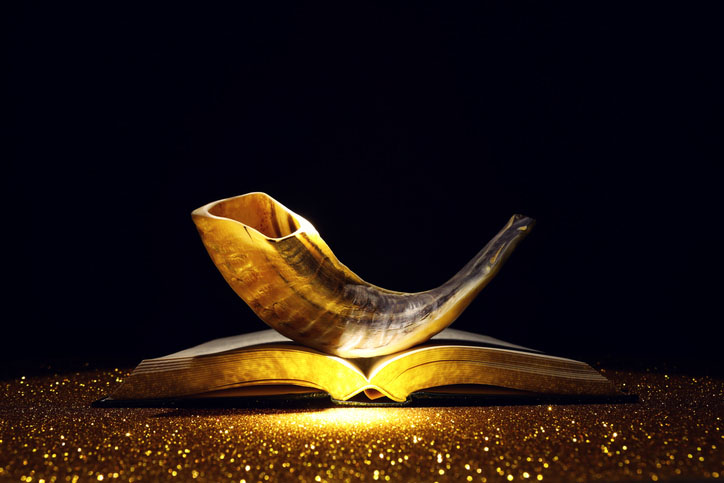

My synagogue seems to be making a bigger deal about Elul this year. The rabbis are sending out daily emails reminding us that during this month of introspection, we’re supposed to delve deeply into our individual souls and, well, fix them.
“We all have a ‘best self’ who has become unfamiliar to us in the year gone by,” writes Rabbi Elliot Cosgrove of Park Avenue Synagogue. “These holy days call on us to identify that person whom we seek to be but are not, and then close the gap.”
Maybe I’m just noticing the Elul attention more this year because the underlying assumption — that we are unique individuals who can remake ourselves — is now nearly entirely lost from the prevailing culture. Indeed, the subtext of identity politics is: Individuals have no power. Groups have all the power. We are nothing compared with the group. We must submit to the will of the group.
By contrast, Judaism, as my Journal colleague Rabbi Eli Fink puts it, offers a healthy balance between individuality and group identity: “Judaism balances individualism and group identity so that they are both prominent. When balanced, they are beneficial; when one dominates, it can be detrimental.”
Although our identity as Jews is profoundly significant, our primary relationship is still our relationship with God, as individuals. We pray as a community; we speak to God directly from our hearts.
The delicate balance between individuality and group identity can, of course, be found throughout nature. Like the leaves on a tree, we are part of the larger species of humanity and also part of the smaller groups that have become so hyper-magnified today: race, ethnicity, gender. But if you remove every leaf from a tree, you will find that no leaf is the same: from far away, they look like leaves; up close, you can see every unique idiosyncrasy.
The loss of individuality from our culture is ironically counterproductive to both the advancement of the various groups and the betterment of humanity as a whole. In most cases, the personal is not political. The personal is personal. And what we can’t change about ourselves, we have to learn to accept. We are not perfect; we are human.
And when we accept that we are not perfect, we can accept that others are not perfect, either. Acceptance breeds compassion, tolerance … and bravery.
Why should we ever be told not to think for ourselves?
“I believe I can fly … I believe I can touch the sky,” my 9-year-old son sings offhandedly. I have always felt that the three greatest lessons I can teach him are: 1) We are the artists of our lives. We are unique and can shape our individual destinies. 2) Resist conformity of all kinds. Look deep inside: Find your soul and never let it go. 3) Seek truth and beauty, not what’s popular.
But there is a fourth lesson that follows the others more than I’ve realized. Find your inner, unique strength to be brave. As Professor Dumbledore puts it in Harry Potter: “We must all face the choice between what is right and what is easy.”
It is a gift to us, as Jews, that our religion, our ethnicity, represents this exquisite balance between individualism and group identity. In the Talmud it is written that all of Israel is responsible for one another, but however important that responsibility is, it in no way undermines our individuality.
In this time of great disunity in the Diaspora, perhaps we should use this month of Elul to reflect on both this shared responsibility and this shared freedom to be ourselves. Perhaps we need to relearn to respect and tolerate our differences; to show more compassion for our imperfections. The truth is, we’ve always argued. But we did so respectfully.
We are Jews, yes. But it is our Judaism that teaches us never to prioritize groupthink over individuality. Why should we ever be confined by any other group’s orthodoxy? Why should we ever be told not to think for ourselves?
The irony is that to become our best selves, we must marry that self to the soul of our people. Elul is as good a time as any to work on that marriage.
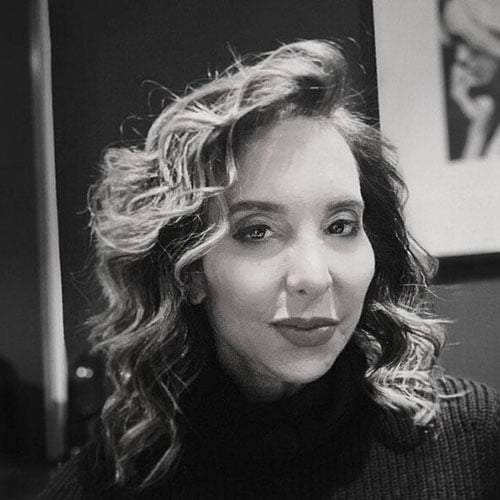
Karen Lehrman Bloch is an author and cultural critic living in New York.