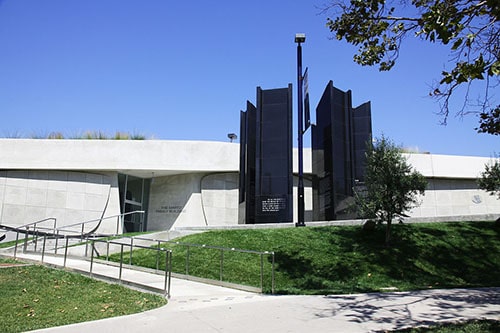
Every week my daughter welcomes Shabbat with a group of survivors as part of her participation on the Holocaust Museum LA’s teen advisory board. Ten survivors and five high school students gather on Zoom Friday afternoons to talk about their week, share stories of their lives, and light the Shabbat candles. She often joins the Zoom call in our kitchen while I’m braiding the dough for our family challah and so I sometimes get to be part of the conversation.
Throughout the pandemic, the voices of these survivors have given our entire family hope. No matter how dark our situation has been, their stories have provided a much-needed perspective. At the beginning of the pandemic, during the stay-at-home orders, one of the survivors reminded us that it wasn’t nearly as bad as being a hidden child during the war. When there were shortages of toilet paper and flour, we knew from their first-hand experiences that it could be much, much worse.
Throughout the pandemic, the voices of these survivors have given our entire family hope.
It’s hard sometimes to achieve this sense of perspective — and the strength and even gratitude that often comes with it — through the stories of another. Knowing that another person has been through far greater challenges doesn’t always make the one you’re going through any easier.
Mel Brooks famously taught that tragedy is when I cut my finger; comedy is when you fall into an open sewer. It’s a dark commentary on the challenge of true empathy. I experience the world through the prism of the self. Hearing or reading about the pain of another is never quite the same as cutting my own finger. We cannot ever fully escape our own perspective or fully understand the experience of another. For some, tragedy during the pandemic has meant not finding toilet paper at the market or experiencing the pain and frustration of a canceled prom or family vacation. For others, it has meant serious illness, the loss of income or a business, or even the death of a loved one. Still, knowing that others around the world are experiencing far worse doesn’t always make us feel any better about our own misery. We are, ultimately, incapable of fully transcending the self.
And yet in last week’s Torah portion we’re asked to do just that. We are told that every year in the springtime we are to commemorate our going forth from Egypt by refraining from eating leavened bread for seven days. We are commanded throughout the generations to explain to our children the purpose of this practice: “It is because of what the ETERNAL did for me when I went free from Egypt” (Exodus 13:8).
But there was only one generation of our ancestors who experienced this going forth from slavery to freedom. All those who came later—including of course our grandparents, parents, and us—are instructed to say those words knowing full well that we ourselves weren’t literally freed from Egyptian bondage.
The rabbis of the Mishnah, writing a thousand years later, take this commandment one step further:
“In each and every generation a person must view himself as though he personally left Egypt … Therefore we are obligated to thank, praise, glorify, extol, exalt, honor, bless, revere, and laud the One who performed for our ancestors and for us all these miracles: God took us out from slavery to freedom, from sorrow to joy, from mourning to a Festival, from darkness to a great light, and from enslavement to redemption” (Mishnah Pesachim 10:5).
Knowing that once, long ago, those who came before us were slaves to Pharaoh in Egypt and that we today, despite the many very real challenges we face, are relatively free is reason enough to give thanks and praise to God for the many blessings we experience each day. We have collectively if not personally gone from slavery to freedom, from sorrow to joy, from darkness to light and therefore day by day we give thanks for the miracle of our very existence.
While it’s not possible to fully know the experience of another, we can gain a sense of perspective and benefit significantly through an awareness of the struggles of others, particularly through stories of their perseverance. Hearing the calm voices of those survivors reminding the teenagers (and each other and me as well) that as bad as this moment is, we’ve been through far worse, gives me hope and strength.
We have gone from sorrow to joy before and we shall do so again. With grit, determination, and, yes, perspective gained at times through the eyes of another, we will go from mourning all that we have lost to celebration, from darkness to an or gadol: to a very great light.
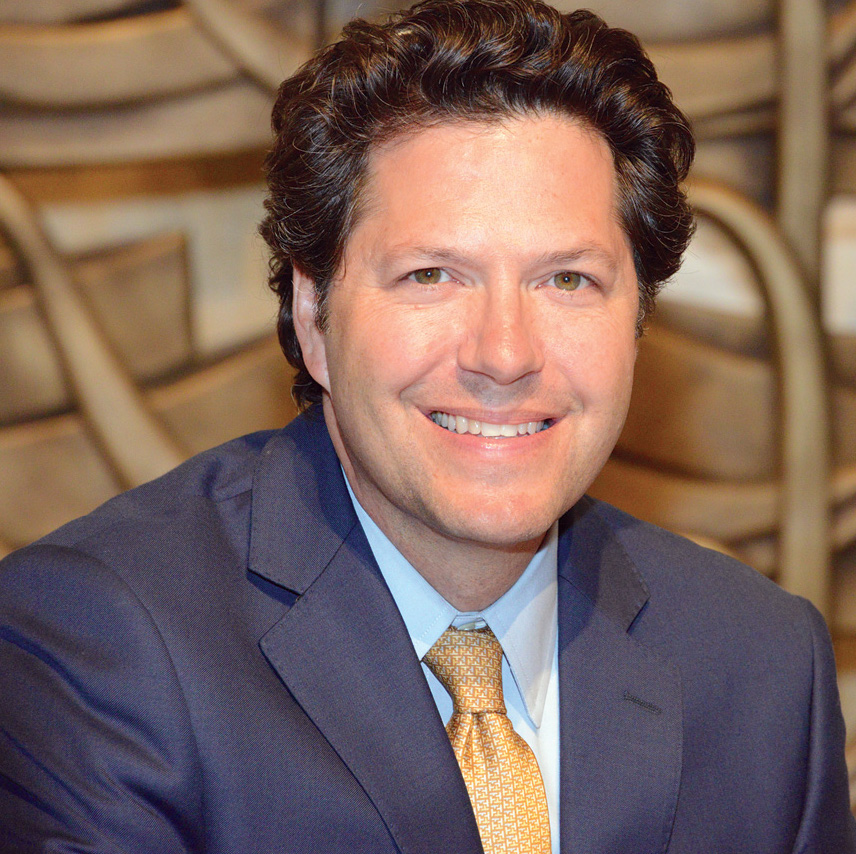
Rabbi Yoshi Zweiback is the Senior Rabbi of Stephen Wise Temple in Los Angeles, California.