Let’s admit Southern California’s long-guarded secret:
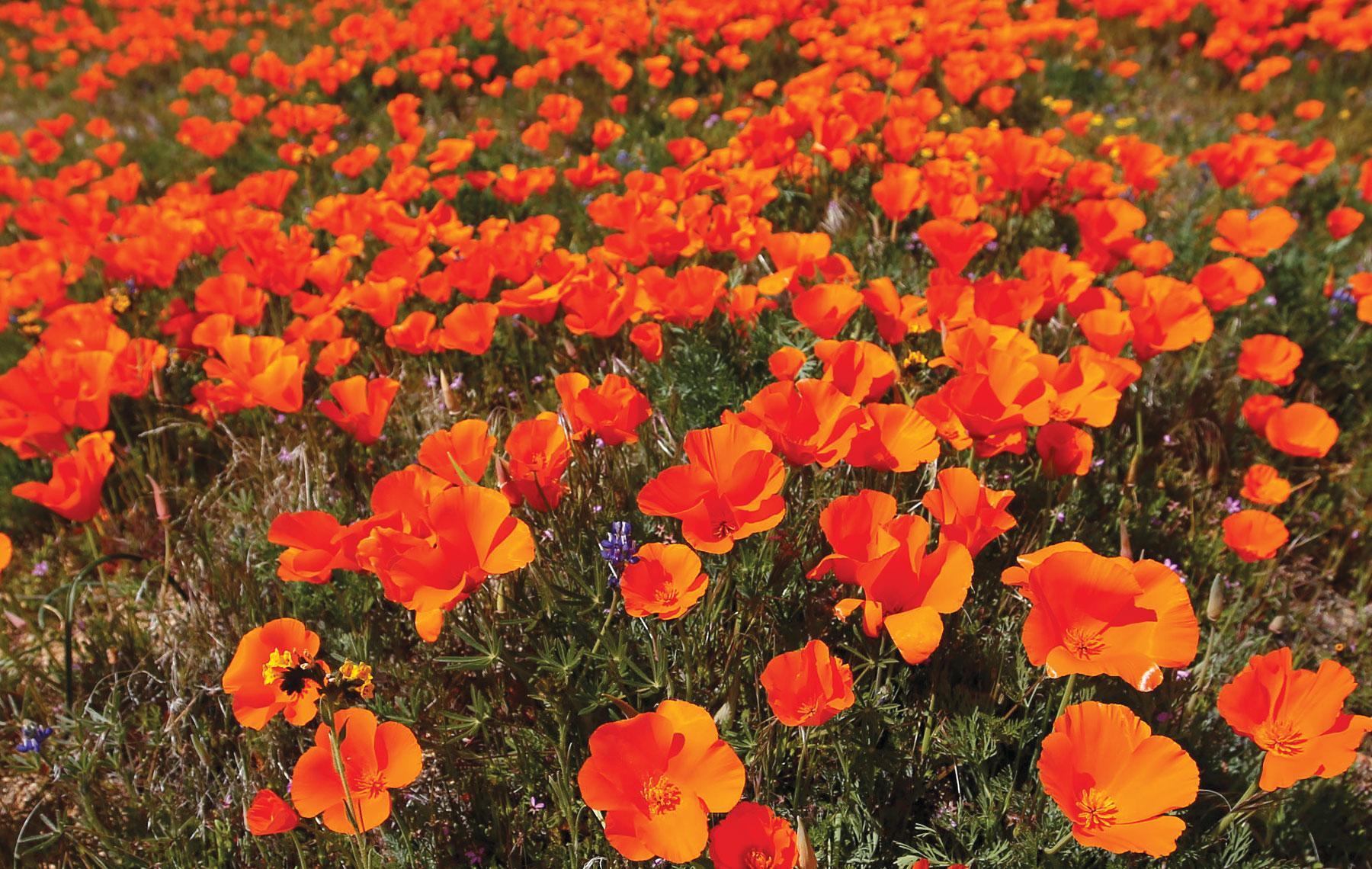
There are actually seasons here. Perhaps not as drastically distinct as the seasons of the Northeast, nonetheless, Los Angeles erupts in raucous bloom in springtime, green bowers bake into brown under the summer sun, trees and shrubs constrict into the fall, and the chill of winter nourishes the region back into bloom.
Which brings me to today and its springtime blessing.
This morning, walking through the backyard toward my car, I passed our resurgent orange tree, in full bloom. If you’ve never caught a whiff of a newly blossoming citrus tree, you haven’t smelled paradise. Delicate white petals swirl in symmetric circles of beauty, and the perfume they produce is sweet, pungent and inspiring. A strong citrus scent, distillation of orange, hit me suddenly, grabbing my attention and infusing the yard with its whiff of bliss.
Smell, the Zohar teaches, is the most spiritual of the senses. Touch is tactile and physical, as is taste. Sight is light bouncing off of physical objects. But scent wafts on the wind and seems ethereal and otherworldly. Memories unlock because of smells’ connection to particular occasions (recall the smell of turkey on Thanksgiving, or the scents that unlock memories of seders long forgotten, of kitchens laden with the smells of Shabbat).
It turns out that Judaism recognizes the elevated spirituality of springtime blooms. There is a blessing the Talmud instructs us to recite not more than once a year, in the season when flowers bloom. In honor of my garden’s orange tree (and, I suppose, also in honor of the region’s extraordinary super bloom!), I stood in the yard, under the beckoning sunlight of a springtime morning, and recited these ancient words of mindfulness and gratitude:
We praise you, Holy One our God, Majesty of Space/Time, Who withholds nothing from the world, and who created goodly creations and beautiful trees in order to provide pleasure to humanity.
What a wondrous tradition that bids us to notice the resurgence of life and light in the spring! How marvelous that Judaism understands that pleasure is itself a gift from God, and that nature’s exuberance and beauty isn’t just a practical, functional response. There is such a thing as beauty for its own sake, pleasure for its own sake, raucous delight as a value in and of itself.
Life is a gift. Pleasure, beauty and joy emerge in its wake.
It is deeply Jewish to breathe deeply, savor the scents, and to then give thanks.
Rabbi Bradley Shavit Artson holds the Abner and Roslyn Goldstine Dean’s Chair of the Ziegler School of Rabbinic Studies at American Jewish University and is the Dean of the Zacharias Frankel College at the University of Potsdam, training Masorti rabbis for Europe.