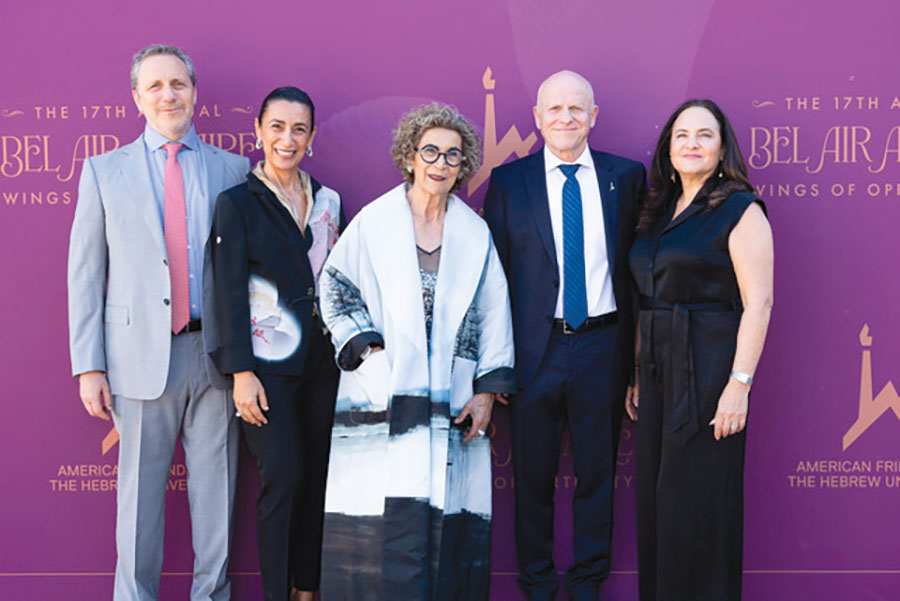
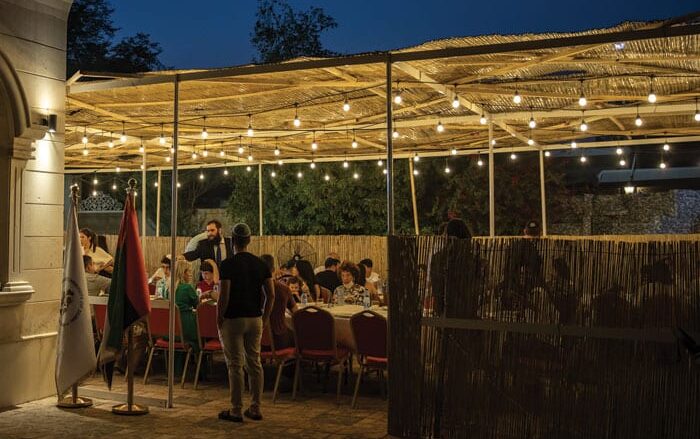
An annual dinner several years ago at the Blue Gargoyle, a nonprofit organization at which Rabbi Capers C. Funnye Jr. was executive director. U.S. Senator Richard (Dick) Durbin, fourth from right, was the guest speaker, and State Senator Barack Obama, far left, was a guest. Photo courtesy Rabbi Capers C. Funnye Jr.
Capers Funnye has a lot in common with his cousin-in-law, Barack Obama: They have both shattered longstanding barriers and are both committed to reaching across traditional divides.
But there is a major difference, Funnye said.
“Barack is a much better fundraiser than I am!”
Michelle Obama and Funnye are first cousins once removed — Michelle’s grandfather and Funnye’s mother were brother and sister, though it was Michelle’s father who was closer in age to Funnye’s mother. All have passed away in the last 15 years.
Barack and Michelle have a standing invitation to visit Funnye’s Chicago congregation of multiethnic Jews — “and when I see them, I’m going to remind them,” Funnye said.
Funnye is also counting on an invitation to the White House, where his Aunt Marian, Michelle’s mother, will be living with the family. Funnye and his wife visited the White House last year, when they were invited to a Chanukah reception.
“If I can visit the White House when George W. Bush is president, I will surely visit when Barack Obama is president,” he said.
Funnye still finds it surreal — “magnified 100 times” — that the skinny kid with big ears who interned at his cousin’s law firm is president-elect of the United States. He hasn’t talked with Michelle yet, but did leave a message with her chief of staff — again, surreal — and hopes to talk to her soon.
Funnye and his wife are planning to attend the inauguration Jan. 20.
Meanwhile, he is taking pride in Obama’s ability to unify a country and break down barriers.
“I think President-elect Obama has demonstrated his willingness to reach out across the aisle,” Funnye said. “I think it’s going to work. The stakes before us are going to take everyone. It can’t be done in a partisan way; it has to be dealt with in a unified way. Everyone has got to be on the same side of whatever vehicle it is we’re pushing.”
And meanwhile, like any family, Funnye is reaping the nachas (pride).
“We could not be happier. I told Michelle’s mom that Wednesday evening, when I called, how happy we were, and we started crying together,” he said.
They remembered the parents, grandparents and siblings no longer with them and thought, “All of them are up there crying with us now and just savoring this moment.”