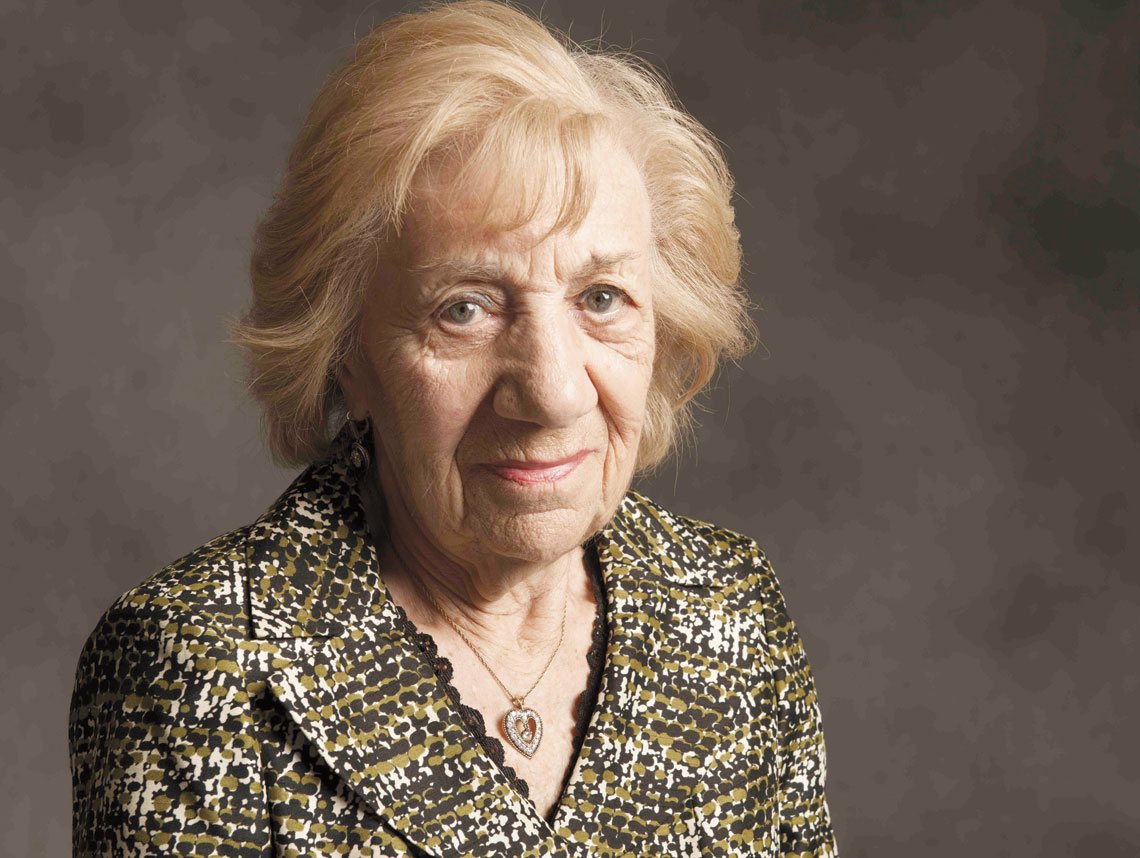
Miriam Bell, a Holocaust survivor who played a role in establishing the Los Angeles Museum of the Holocaust (LAMOTH) in Pan Pacific Park, the nation’s oldest survivor-founded museum, died Jan. 6 of cancer. She was 86.
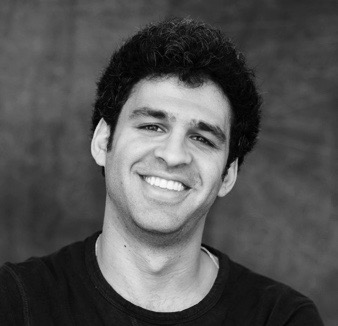
“She gave so much of her life to making sure that this building would be here and this museum would be able to teach people about the Holocaust,” LAMOTH Special Projects Coordinator Michael Morgenstern, who was among those who spoke at Bell’s Jan. 10 funeral at Mount Sinai Hollywood Hills, told the Journal.
She is survived by her husband of 66 years, Sam; daughters Frances Zelig and Helen Radin, and four grandchildren.
Born Oct. 10, 1930, in Kovno (Kaunas), Lithuania, Bell was the fourth-oldest of seven siblings in a middle-class home. Her childhood ended on June 22, 1941, when Nazi soldiers attacked her native city and murdered her father, Chaim. Over the next three years, Bell would endure the Stutthof concentration camp in Poland; a slave labor camp near Hamburg, where she worked 12-hour shifts in a munitions factory; and Bergen-Belsen.
Her devotion to her family showed even during the darkest of times. For example, while imprisoned in a labor camp, she demanded that the Nazis send her brother, Simon, to a hospital so that he would not contract typhus like many of the other prisoners had.
When British troops liberated Bergen-Belsen on April 15, 1945, Bell was 14 years old, weighed 50 pounds and had lost several family members, including three siblings and both of her parents. After the war, she spent time in Ukraine, Berlin and Munich, before settling in Toronto, where she met her husband, Sam, and worked in a hospital. The couple had two daughters; Frances was born in 1953, and Helen in 1957.
Upon moving to Los Angeles in 1964, Bell immediately became involved with other survivors.Helen recalled her mother hosting events in their home with other survivors, particularly those who were also Lithuanian.
“My mother used to have meetings in our house, I remember all the time. … These were survivors who found each other. … Those were all the people who came to our weddings, baby showers and bridal showers,” she said in a phone interview from New York. “These were my mother’s core friends.”
Bell was active in helping to transition LAMOTH, a survivor-founded museum, from a rented space at the headquarters of The Jewish Federation of Greater Los Angeles — it was then known as the Martyr’s Museum — to its current home in Pan Pacific Park, where it opened in 2010.
“She would go to all the City Hall meetings … [and] every discussion we had about putting this museum in Pan Pacific Park,” Morgenstern said. “She specifically said that it was very important to her that the world would never forget what happened.”
She served on the museum’s executive board. Additionally, she was a teacher there, sharing her story with students visiting the museum.
“She was soft-spoken, but very determined. Just because her voice might have been soft by the time I knew her, she still had a tremendous passion and a tremendous strength about her,” Morgenstern said. “She was just such a strong-willed woman.”
LAMOTH is accepting donations in Bell’s memory. For information, contact Victoria Lonberg at LAMOTH at (323) 456-5078.