The Nazis never saw it coming.
They thought so little of the Jewish prisoners at Sobibor that bringing in 30 Russian Jewish P.O.W’s, who knew how to shoot would make no difference.
They were wrong.
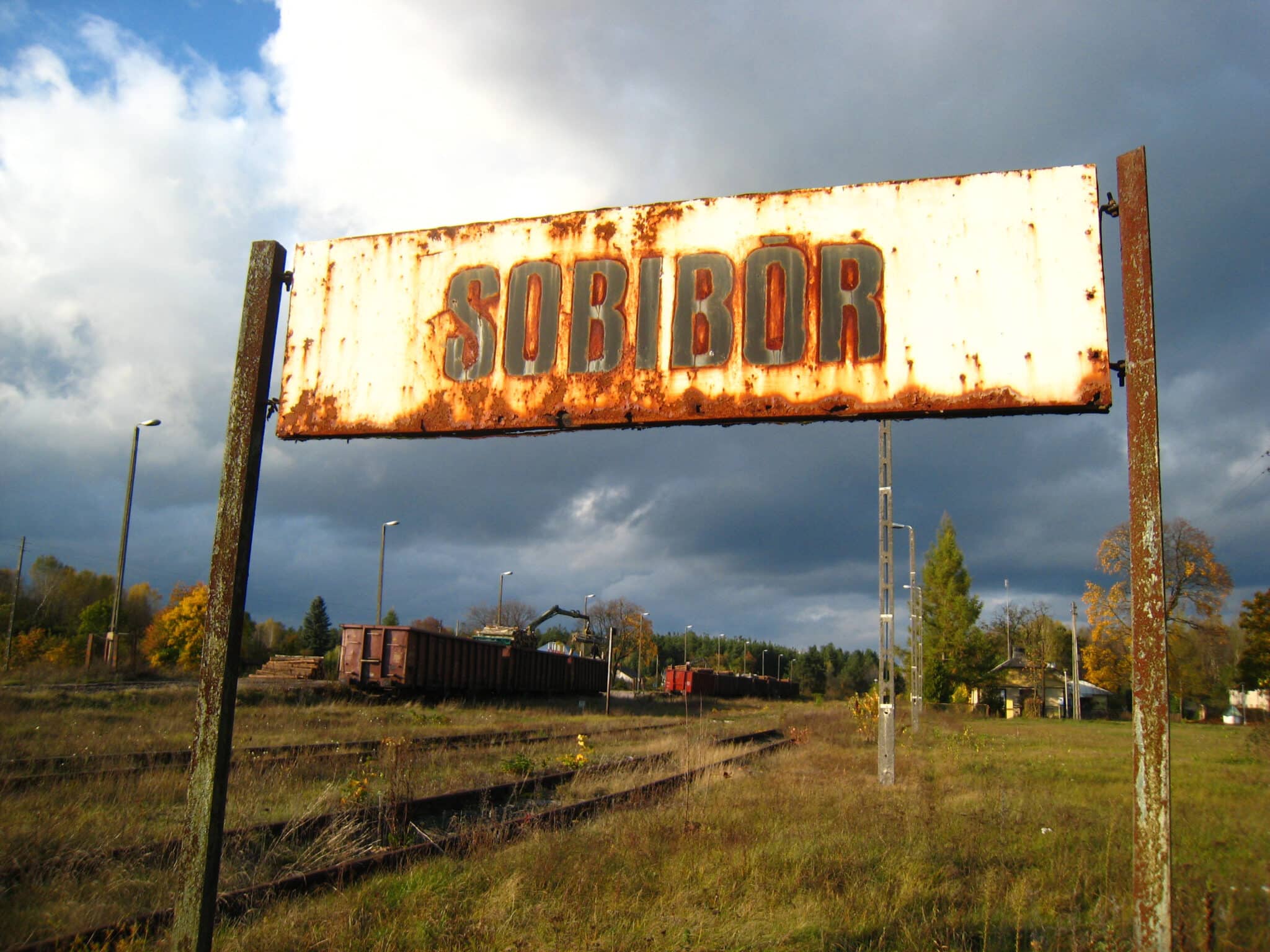
Leon Feldhendler took his knowledge of the camp and combined it with the military knowhow of Alexander “Sasha” Pechersky to plan a revolt at the camp. It took place when the diabolical Gustav Wagner was on vacation and relied upon German punctuality; SS men would be told there were shoes or a coat waiting for them and they were killed one at a time and in a way it could be kept quiet — for a time. The phone lines were cut so reinforcements could not be called. On October 14, 1943, 300 Jews escaped into the woods, overcoming bullets and landmines. Only 52 would survive.
In 1987, “Escape from Sobibor,” a TV film starring famed Jewish actor Alan Arkin as Feldhendler and Rutger Hauer as Pechersky. And now a new documentary, “Deadly Deception at Sobibor,” chronicles the more than a decade project to excavate the ground and see what would turn up.
In the most affecting moment in the film, Sobibor survivor Philip Bialowitz, met Klaus Vallaster, whose father was a sergeant at the camp and was killed during the revolt.
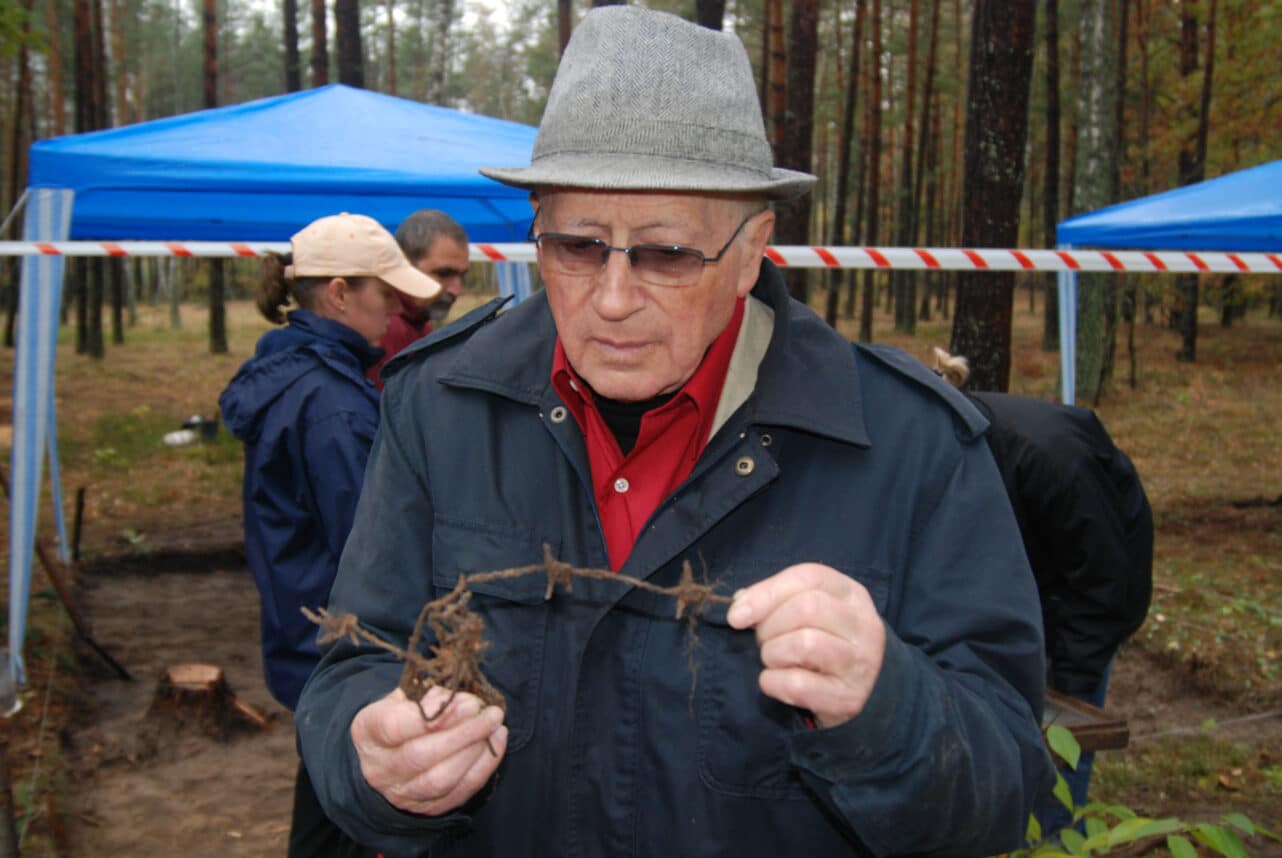
Vallaster says he knows his father was guilty.
“You’re not responsible for the genocide of your father,” Bialowitz tells him during their emotional conversation.
Enother emotionally charged moment occurs when Bialowitz says Kaddish for those murdered at Sobibor. Bialowitz says that he knew his days were numbered and that was a catalyst for the revolt. The author of “Sobibor: The Plan, The Revolt, The Escape,” Bialowitz died in 2016.
Directed by Gary Hochman, the film spends time with Israeli archaeologist Yoram Haimi, who tirelessly worked on the excavations.
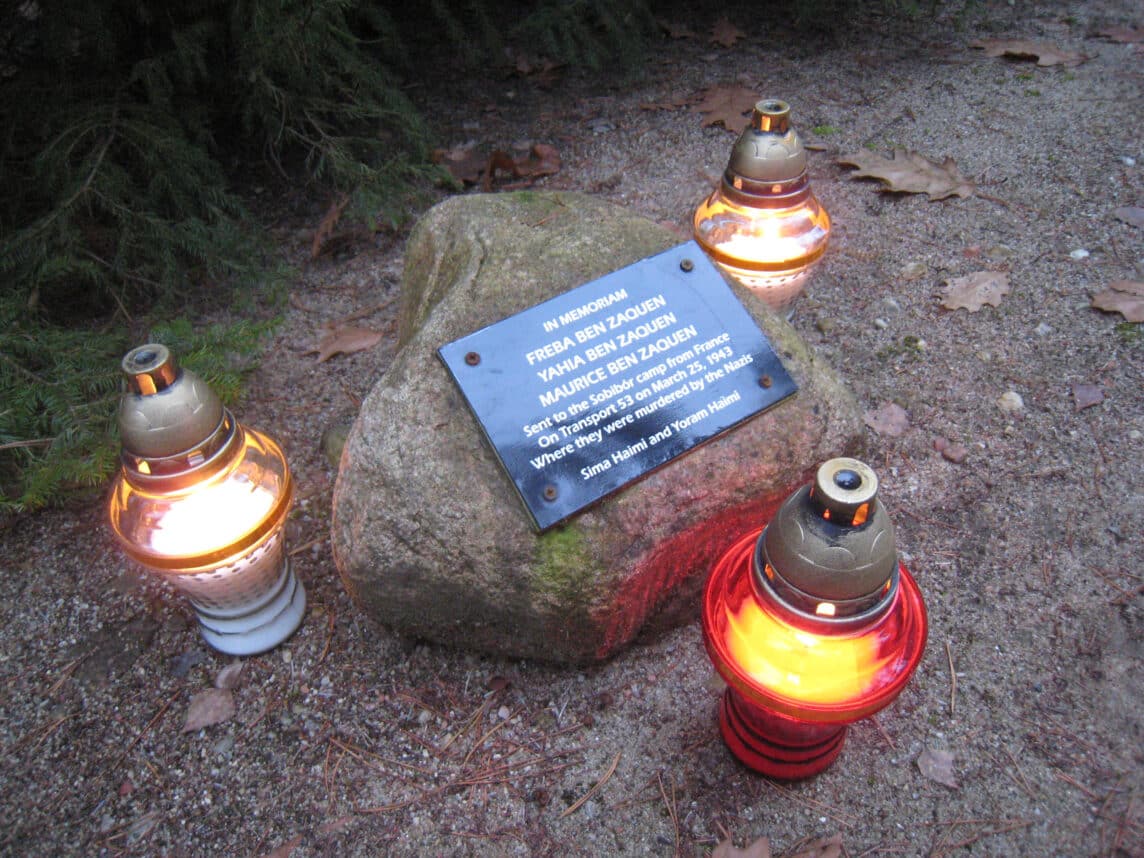
“Three of my family members were killed here,” Haimi told the Journal. “We do not forget. The Nazis wanted to erase everything, they built a forest and all when found when we came was the statue, a monument, the train station and a house that was used by the commander.”
He lights a candle by the stone that mark the deaths of Freba, Yahia and Maurice Ben Zaquen, Moroccan Jews who were transported to the camp on March 25,1943.
“This is what’s left of my family,” he says in the film. “Only stone.”
Haimi worked alongside a team with Polish archaeologist Wojtek Mazurek, who says that what took place must not be forgotten, to search for the gas chambers, as well as the meaning of numerous artifacts.
Director Gary Hochman said the film was extremely important to him.
“The story of the revolt of Sobibor is an important and I wanted to give honor to that, but that story has already been told in film,” Hochman told the Journal. “I wanted to show the cover-up. Germany may have thought they would win the war but either way, while they always took copious notes of other things, they didn’t want anyone to know what was going on here and there are not many documents to be found. While many people know about the Warsaw Ghetto uprising, far too few know about Sobibor. We want to reveal the crimes they so desperately sought to hide.”
The film is beautifully narrated by Tovah Feldshuh. The team uses the latest technology and mark different places and uncover what was buried beneath the ground as well as efforts to destroy much of the evidence.
As part of the 3,000 square feet excavation, shoes jewelry and other personal items are found, including keys that they believe were from the suitcases brought to the camp by Jews, and a bread knife as well as gambling chips they believed were used by Nazis to play poker.
The Nazis sickly called the road where Jews walked naked to the gas chambers “The Road To Heaven” At least 250,000 victims would walk on that specific corridor which was protected by barbed wire and bushes so people could not see what was going on.
Jews were told they were to start their new lives and were told they were going to the showers.
“It was so sick” Haimi says in the film. “To think, they go naked. It’s a shame. You took all the honor from the people before you killed them. It’s unbelievable.”
Haimi told the Journal the lies told by Nazis were so insane, had he been transported from France as his relatives were, he said he thinks he would have believed the lie.
The film shows the crews looking for evidence of eight gas chambers. At one point, Haimi finds a wedding ring, with the Hebrew words “Harei At Mekudeseht Li” a message of betrothal said by the groom during the marriage ceremony.
“It’s important to show the physical truth of what happened including artifacts and even the bones that we found,” Haimi told the Journal. “There are mass graves here.”
Rabbi Michael Schudrich, Poland’s Chief Rabbi, appears in the film and says it is important to locate mass graves and have them permanently covered with stones.
At times, about 300 Jewish prisoners were forced to burn bodies in the open air, putting the fatter people on the bottom and the thinner people on top, according to the documentary. They had to endure inhuman smells as well as the obvious psychological trauma. There were said to be crematoria and mass graves.
“Ash of one body is one glass,” Haimi says in the film.
Finding tags of children who were burn to death, Haimi asks how humans could do this.
They read the names of those murder on the anniversary of the revolt. We also hear from relatives of children that were killed in Sobibor.
With fewer and fewer survivors left, Hochman said “it is important to document the physical evidence that shows the truth of what took place,” adding that the excavations costed more than $750,000.
Already screened at some film festivals, “Deadly Deception at Sobibor” is a film that no doubt should be shown to educate students around the world. It is a testament to the fact that the Nazis thought they could hide the atrocities they had done.
Haimi notes that the majority of the victims were from Poland, with 4,000 from France, 34,000 from Holland and 27,000 from Czechoslovakia.
Incredibly, Haimi says, some did not know they were going to their deaths and thought they might have a house in Ukraine.
A telegram from Adolf Eichmann asking how many Jews were murdered up until December 31, 1942 is answered, listing 101,370 murdered at Sobibor and 713,555 at Treblinka. The exterminations would continue for 10 more months.
Bialowitz, who was taken to Sobibor, plainly states in the film: “I came here in April after the Warsaw ghetto uprising took place … I was a young boy and I wanted to live. I hoped that someday we’d able to escape and take revenge.”
Without the Russian P.O.W’s, Bialowitz believes there would not have been a successful rebellion.
“We didn’t know how to shoot,” he said.
Toward the end of the film, we see a place where Jewish men were forced to cut the hair of Jewish women, and on pain of death, they could not reveal that the women were going to the gas chambers and not a regular shower.
A grandchild of Holocaust survivors, Chaim Motzen is passionate about genealogy and Jewish history. The renewable energy entrepreneur had read about the discovery of a pendant belonging to a child and the search for relatives. Motzen said he examined hundreds of documents over the course of months.
The efforts of the film have had a ripple effect, Hochman said, and he hopes the documentary will be an integral piece of Holocaust education.
“We owe it to those who were murdered to do all we can to honor them and educate the next generation who will no longer be able to speak to survivors.”