Tu b’Shvat is known as the holiday of the trees. It is focused on environmentalism, planting trees and celebrating Israel’s agricultural bounty.
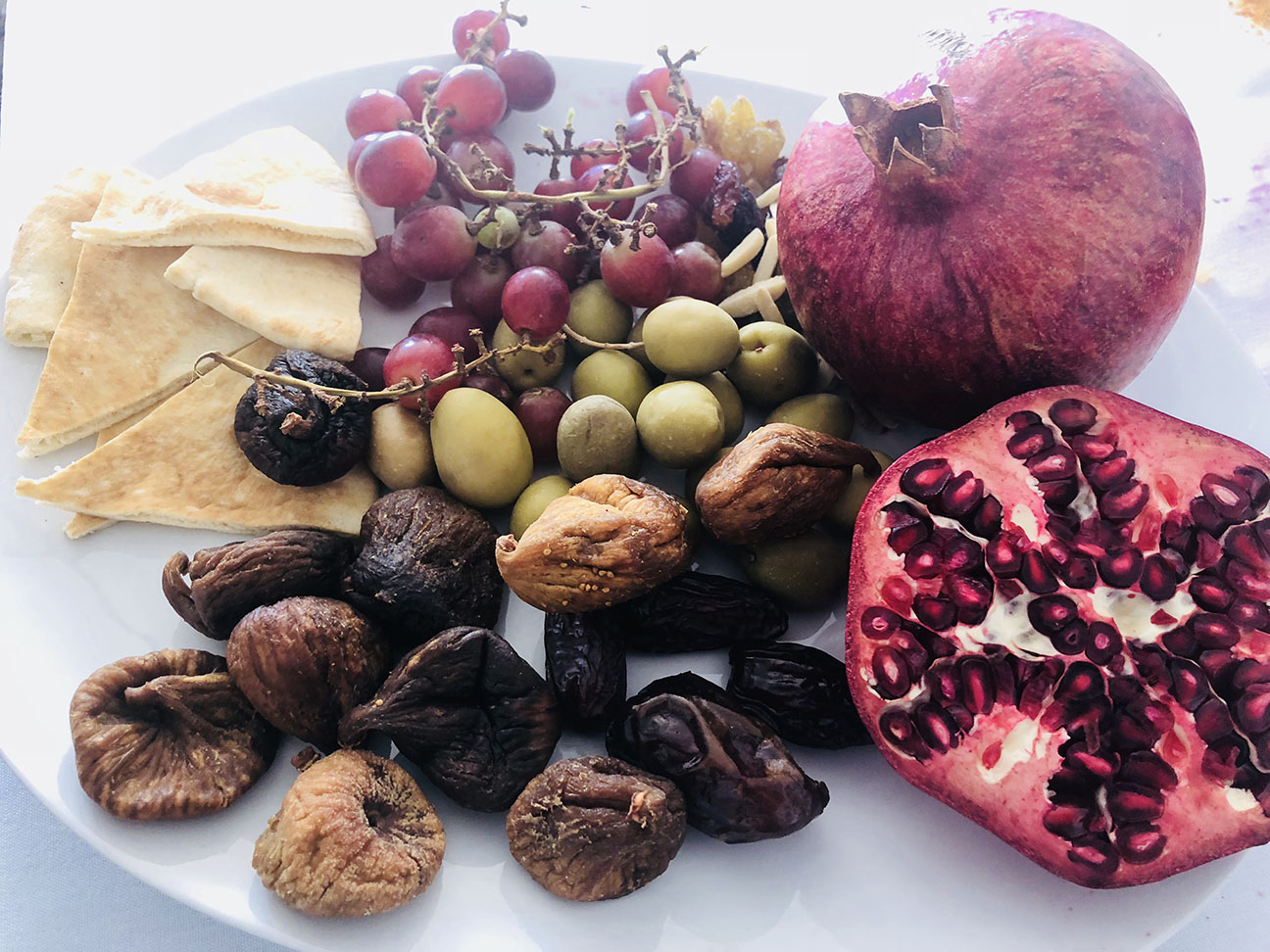
“Tu b’Shvat is one of my favorite holidays,” Debbie Kornberg, founder of Spice + Leaf, told the Journal. “There are seven species mentioned in the bible – pomegranate, fig, olive, date, grapes, wheat and barley – and each one has a really cool symbolic meaning behind it.”
For instance, pomegranates represent prosperity. It is believed that if you count the seeds of the pomegranate, you will find 613, the number of mitzvot in the Torah.
Grapes grow in clusters in the same way you need community in Judaism. The fig tree can produce fruit over a long period of time, from Shavuot to Sukkot. Olive trees grow anywhere, even under the most difficult weather conditions. Wheat and barley represent the staples of life. During the time of ancient Israel, honey was made from date palm, and not taken from bees. Almonds are also significant.
“The almond, which needs little water, is the first fruit tree in Israel to wake from its dormancy and bursts into bloom when the other trees are still bare and ‘asleep,’” she said.
In the same way you would do a Passover seder, Kornberg explained that you can do a Tu b’Shvat seder, incorporating symbolic foods.
Here are some of Kornberg’s favorite recipes for the holiday, which starts the evening of Feb. 1.
Green Salad with Dates, Za’atar Croutons and Pomegranate Fig Vinaigrette
By Debbie Kornberg
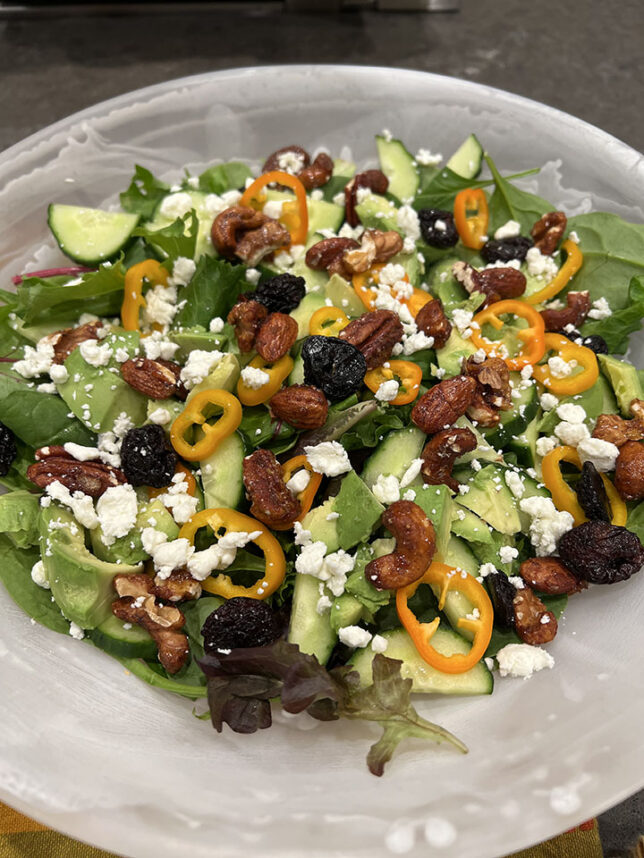
Ingredients for Tu b’Shvat Green Salad:
1 bag of arugula
1/2 English cucumber or 2 Persian cucumbers, sliced in half circles
1 red or yellow bell pepper, chopped
10 cherry tomatoes, sliced in half
6 dates, chopped, Medjool ideally
1 cup SPICE + LEAF Za’atar Croutons
½ Avocado, chopped
4 oz. goat cheese, crumbled
¼ cup toasted pistachios
½ cup pomegranate seeds
*Optional: 1/3 cup toasted pistachios
Ingredients for Za’atar Croutons
2-3 Tbsp SPICE + LEAF Israeli Galili Olive Oil
2 pita breads
1 tsp SPICE + LEAF Sumac
1 Tbsp SPICE + LEAF Authentic Za’atar
Pinch of Salt
Instructions for Za’atar Croutons:
Cut pita bread into medium size cubes. In a bowl, mix cubed pita with approx. 2 tablespoons. olive oil, za’atar, onion dip mix, sumac and salt so they are coated with olive oil spice blend. Place on a baking sheet, spread out evenly for cooking and place in the oven for 10 – 20 minutes at 400°F.
Cook until dried up and toasty brown. Toss into salad when ready to serve.
Fig and Pomegranate Vinaigrette
1 garlic clove
¼ cup vegetable oil
¼ cup SPICE + LEAF Fig Infused Balsamic Vinegar
3 Tbsp pomegranate juice
¼ cup Honey
Pinch of salt
Instructions for Vinaigrette
Prepare vinaigrette in the food processor. First mince garlic clove; then add remaining ingredients. Mix well.
Putting the Salad Together
In a bowl, add arugula, cucumbers, bell peppers and dates. Toss this part of the salad in pomegranate vinaigrette. Try not to overdress it. Then add croutons, pistachios, avocado, goat cheese and pomegranate seeds on top of tossed salad. You can drizzle a little extra dressing on top of salad to finish it off.
Moroccan Ras El Hanout Couscous with Almonds, Dates and Pomegranate
By Debbie Kornberg

This Moroccan spiced couscous makes for a perfect side dish and highlights some of the native ingredients in Israel. The secret ingredient to this dish is the Ras El Hanout, which is considered the crown jewel spice of any Moroccan cooking. See for yourself how this warm spice blend makes any dish feel hearty and complete.
Ingredients
1/4 cup slivered almonds
1 onion, chopped finely, sautéed
1 1/3 cups water
4 Tbsp SPICE + LEAF Premium Israeli Galili Barnea Olive Oil
1 tsp sea salt
1 cup Moroccan couscous (Moroccan couscous is very small and granular in size and different from Israeli couscous.)
2 tsp SPICE + LEAF Ras El Hanout
1/2 cup golden raisins, plumped in warm water and drained
6-8 pitted dates, coarsely chopped
3 Tbsp fresh parsley, chopped finely
2 Tbsp pomegranate seeds
In a medium skillet, toast almonds, stirring occasionally, until they turn a light golden/brown color, 5 to 6 minutes. Set aside in a glass bowl so they do not continue to cook.
In the same skillet, sauté onion in 2 tablespoon olive oil until onions become slightly caramelized with a light brown color.
In a medium saucepan add water, salt and olive oil. Over medium heat, bring it to a boil. Once water is boiling, turn off heat and add Ras El Hanout spice and stir into water. Then add Moroccan couscous and still again. Cover pot with lid and cook couscous until tender, about 5 minutes. Transfer couscous to a bowl. Allow it to cool slightly and gently, comb through the couscous to loosen and break up the individual couscous grains.
Combine Ras El Hanout couscous with almonds, onions, raisins, dates and parsley. Add additional salt for taste. Sprinkle pomegranate seeds on top. Ready to serve – enjoy!
Pomegranate Mint Iced Tea
By Debbie Kornberg
Ingredients
6 cups hot water (not quite boiling)
3 tsp green tea (loose leaf ideal, can also use decaffeinated green tea)
1 bunch fresh mint
1/4 cup granulated sugar (or to taste)
1/2 cup 100% pomegranate juice (no sugar)
Squeeze of one lemon plus lemon slices for garnish
Ice, if desired
Steep green tea in 2 cups of hot water for 2 to 3 minutes.
Discard tea leaves.
Add the remaining 4 cups of hot water, fresh mint and sugar. Mix well.
Steep for an additional 5 minutes.
Add pomegranate juice and mix well. I like to leave the mint leaves in the tea but it’s totally up to you. Refrigerate until chilled as desired. You can also add ice to chill it faster.
Sweeten to taste and serve with a lemon slice.