fbpx

January 29, 2026

Misty Egypt Colored Memories – A poem for Parsha Beshalach

Beshalach — When he sent (Exodus 13:17–17:16)

When he sent us out of Egypt
and I couldn’t mean the word us
more sincerely…

As they keep digging, they’re
starting to recognize our footprints.
Fairy tales are becoming

primary sources. When you
think you know something
so definitively for centuries

and then the shovels come
and prove it’s something else
your memories start to change.

I’ve always remembered the walls
of water, and who was standing
next to me at the mountain.

But now I’m having visions of the
road we took out of the narrow place.
It was the long way, but They

didn’t want our physical bodies
tainting up the holy land
just our memory.

When he sent us out of Egypt
we went quickly. I left a
pot roast in the oven.

I became a vegetarian
three thousand years later
in memory of that pot roast.

It’s all about memory. When he
sent us out of Egypt, I took
everything I knew. I still have it.


Rick Lupert, a poet, songleader and graphic designer, is the author of 29 books including “God Wrestler: A Poem for Every Torah Portion.” Visit him at www.JewishPoetry.net

Misty Egypt Colored Memories – A poem for Parsha Beshalach Read More »

Arson In a Fire That Badly Damaged Beth Israel Congregation in Jackson, Miss., Early Saturday Morning

Arson In a Fire That Badly Damaged Beth Israel Congregation in Jackson, Miss., Early Saturday Morning 

Another poem about a fire
that burns a synagogue
that burned before
in Mississippi,
then the KKK,
who today?

And the article says “no one was hurt”
And the article says “two Torahs burned”

Then it was 1967, which the article calls
“The Civil Rights Era”
Now is 2026, which we will call
what? exactly?

Then the synagogue
burned along with the home
of the rabbi, who the article wants
me to know “spoke out against
racism and segregation” not
that he was a rabbi and
the Synagogue was a Synagogue.

The article assures me “No one
was hurt in the civil rights-era
bombings or Saturday’s fire.”

No one was hurt
No one was hurt

The article says the fire destroyed two
Torahs and damaged five others.

The article notes that a Torah that survived
the Holocaust was protected by a glass
display case and was not damaged.

The article mentions “The synagogue’s Tree
of Life plaque honoring congregants’
meaningful occasions was destroyed.”

Surveillance video shows a man wearing a hoodie
and a mask pouring liquid from a can inside the synagogue.

The article assures me “Beth Israel is planning
to immediately move forward.”


Avi Killip is a poet and rabbi who serves as the Executive Vice President at Hadar. Avi is host of the Responsa Radio podcast. 

Arson In a Fire That Badly Damaged Beth Israel Congregation in Jackson, Miss., Early Saturday Morning Read More »

Israeli Comic Guy Hochman’s Beverly Hills Show Cancellation Sparks Outcry, Antisemitism Debate

A scheduled comedy appearance by Israeli comedian Guy Hochman in Beverly Hills has ignited a heated debate over free speech, antisemitism and the cultural fallout of the Israel-Hamas war, after a local theater canceled his show over political pressure — then reversed course and apologized.

On Jan. 26, Jewish Federation Los Angeles issued a statement saying it had met with Beverly Hills Mayor Sharona Nazarian as well as with the theater’s leadership “to discuss the impact of their actions on Jewish and Israeli artists and the broader Jewish community.” Organizations that signed off on the L.A. Federation’s letter include StandWithUs, Holocaust Museum LA and Israeli American Council. 

Hochman, a popular Israeli stand-up comic and social media personality known for satirical videos and on-the-street interviews, was set to perform at the Fine Arts Theatre in Beverly Hills on Jan. 27. But days before the event, the venue abruptly canceled the show, citing complaints about the performer and asking him to issue a public statement denouncing alleged Israeli actions in Gaza.

According to the Jewish Federation Los Angeles statement, “the Fine Arts Theatre now welcomes Mr. Hochman to its stage, affirms their commitment to work with Jewish and Israeli artists moving forward and promises to engage the Jewish community in meaningful ways in the future.”

The controversy started with a statement from Screening Services Group President Michael Hall, which said the theater requested Hochman publicly declare that he did not support “genocide, rape, starvation and torture of Palestinian civilians” as a condition for performing. Hochman declined, calling the request a political “loyalty test,” and the show was canceled amid what the theater said were numerous messages and threats.

The decision quickly drew backlash from Jewish organizations, free-speech advocates and prominent figures in the entertainment world, including Saban Entertainment Founder Haim Saban and comedian Amy Schumer, who argued that the venue unfairly singled out an Israeli Jewish performer and demanded compelled political speech. Critics said the move amounted to discrimination by holding Hochman personally responsible for the actions of a foreign government.

Within days, Hall issued a public apology, acknowledging that canceling the show and demanding a political declaration was a mistake. He said the theater acted hastily under pressure, “without giving the matter the careful thought and judgement it required,” and pledged to work with local Jewish leaders to rebuild trust, adding that it was wrong to require ideological statements as a condition for appearing.

Hochman rejected the apology and said he would not return to the venue, stating that he preferred to stand by his beliefs rather than compromise for a performance opportunity. 

“I’m not a politician. I’m a comedian. A very Zionist comedian,” he told The Hollywood Reporter in a Jan. 24 interview.

Hochman is reportedly seeking alternative venues in Los Angeles as he continues his North American tour. Speaking with the Hollywood Reporter, Hochman said the Israeli American Council, an umbrella group for Israeli life in the U.S., was helping in trying to identify a new venue for his performance, though he was only going to be in Los Angeles for a brief amount of time.

The Beverly Hills controversy is the latest in a series of incidents surrounding Hochman’s tour. He has faced protests at shows, the cancellation of a planned New York appearance and even a six-hour detention by Canadian border officials following complaints filed by a pro-Palestinian advocacy group, the Hind Rajab Foundation, though no charges were filed.

Supporters of Hochman argue that the backlash reflects a broader climate where Israeli artists and Jewish public figures are targeted over the Gaza war.

The episode has underscored the increasingly polarized cultural environment, where differing views over Israel have spilled into entertainment. For many Jewish community leaders, the incident raised alarms about antisemitism and double standards applied to Israeli Jews. And for Jewish Angelenos, particularly in Beverly Hills and surrounding communities with significant Jewish populations, the incident has become emblematic of growing tensions over Israel, identity and public discourse.

Hochman performs mostly in Hebrew. Since the Hamas-led Oct. 7 attack on Israel, he has performed for Israeli reserve soldiers as well as civilians.

Israeli Comic Guy Hochman’s Beverly Hills Show Cancellation Sparks Outcry, Antisemitism Debate Read More »

A Bisl Torah – Beshalach: From One War to Another

Rabbi Guzik is on sabbatical. Please enjoy A Bisl Torah from our Rabbinic Intern, Moe Howard.

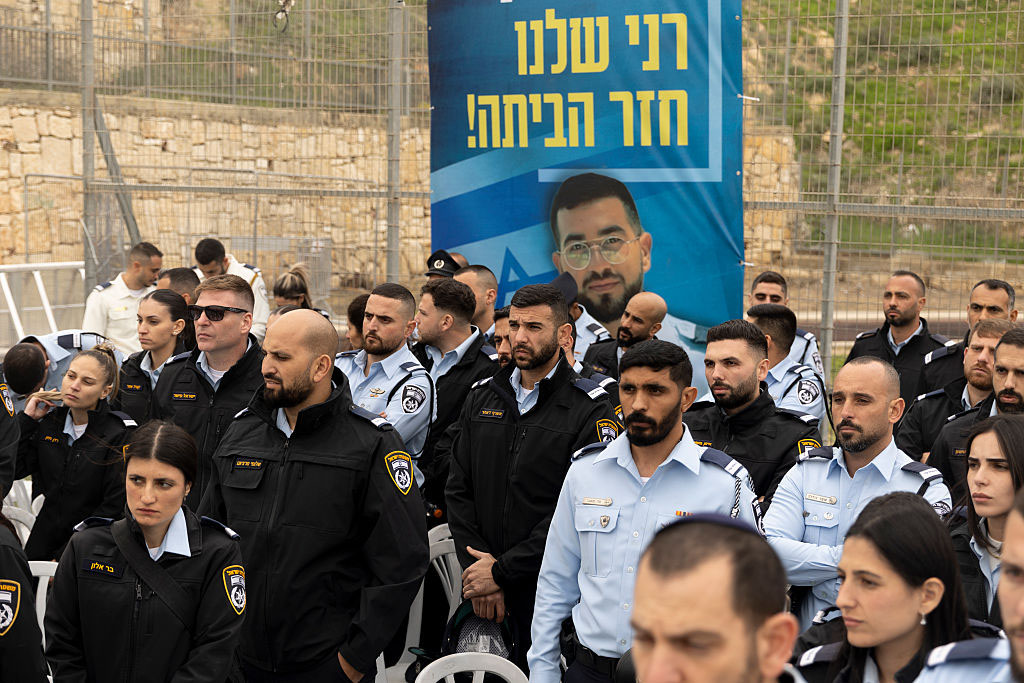
This past Monday marked the end of what has felt like an era, as the body of slain hostage Ran Gvili was finally brought back to Israel for proper burial after more than two years of waiting, praying, and protesting.

Though this moment ought to have come much sooner, its arrival seems as if predestined. For it is in this week’s Torah portion that we read of a momentous era’s end marked by as momentous a return:

“And Moses took with him the bones of Joseph, who had exacted an oath from the children of Israel, saying, ‘God will be sure to take notice of you: then you shall carry up my bones from here with you.’” (Exodus 13:19)

Joseph was first to be brought into Egypt, sold by his brothers into slavery against his will. Now he is last to be brought out, redeemed by his descendants’ generations hence. His homecoming, while not yet complete, is the closure of a saga and the fulfillment of a dual promise: that God does not abandon His people, and that they do not abandon each other.

So too, Ran’s homecoming is a saga closed and a promise fulfilled. And so too, there remains a journey ahead. With Egypt behind them and Sinai before them, the Israelites face the even greater challenge of redefinition. As former captive Rom Braslavski spoke from the stage of what was once Hostages Square in Tel Aviv: “We now go from one war to another war, which will be much more difficult—the war of rehabilitation.”

Together, we will win.

Shabbat Shalom.

A Bisl Torah – Beshalach: From One War to Another Read More »

A Moment in Time: “God, Am I Listening?”

Dear all,

We often assume that a theological crisis comes when God does not answer our prayers. After all, how many times have we wondered—quietly or aloud—whether God is listening at all?

But last week, as I was flying to Washington, DC—accompanying our teens as they prepared to speak truth to power before our elected leaders—I was struck by something entirely different. I was overwhelmed because God did answer my prayer.

In the stillness of the flight, I entered a moment of meditation. My words were not wrapped in the familiar liturgy of “Baruch Atah Adonai / Blessed are You, God.” Instead, I simply closed my eyes and asked for guidance—asking God to lead me through the coming months with peace.

When I opened my eyes, there it was: a remarkable rainbow, shaped almost like an eye, gazing back at me from the heavens.

It felt unmistakable.

Sometimes God does not whisper. Sometimes God answers plainly—visibly—even boldly. The question, then, is not whether God is speaking. The question is whether we are willing to notice.

May we keep our hearts open enough, and our spirits quiet enough, to recognize any given moment in time when we can say:

God is speaking.

And then ask ourselves—are we listening?

With love and Shalom,

Rabbi Zachary R. Shapiro

A Moment in Time: “God, Am I Listening?” Read More »

Art is Incomplete Confession

Art is confession, and because of this it is the secret told,

Thornton Wilder once explained, but he’s not quite correct.

It’s a confession, as he said but also is a riddle rolled

in an enigma. We can’t tell what’s told, and only can suspect,

since at the same time that it’s told, as Thornton added, it keeps hidden

the very secrets that allegedly it will expose

but doesn’t, so whatever’s painted by the artist or is written

is a rose that has a name, but isn’t what you might suppose.

Regarding the relationship between the earth and heaven is

a riddle that Shoshani told Elie Wiesel and Emmanuel Levinas.


Charles Isherwood reviews Thornton Wilder: A Life, by Penelope Niven (“A Life Captured With Luster,” NYT, 11/1/12):

“Art is confession; art is the secret told,” Thornton Wilder wrote shortly after fame and the first of his three Pulitzer Prizes had come to him in his early 30s. “But art is not only the desire to tell one’s secret; it is the desire to tell it and hide it at the same time.” That suggestive formulation is as evocative today as it was when Wilder penned it in 1928. But now we are more likely to associate specific literary genres with the heart’s hidden truths: the ever-billowing genre of memoir is confession, we might say, and biography is the secret told.

In “The Riddler,”, Jewish Review of Books, Winter 2026, reviewing The Shoshani Riddle, directed by Michael Grynszpan, Sarah Rindner writes:

Amid the chaos and trauma of October 7, 2023, one of the innumerable cultural events deferred was the release of a unique documentary about the elusive Monsieur Shoshani. Shoshani’s mysterious persona, brilliance, and iconoclastic disposition have been the stuff of legend since he emerged from Europe after the Holocaust (he is depicted on the movie poster as a hunched-over figure carrying a suitcase). Shoshani was purportedly a master of Jewish tradition, Western philosophy, mathematics, science, and as many as thirty languages. He taught Torah everywhere he went—France, Morocco, Israel, and Uruguay—though what, exactly, he taught and where he came from remain a mystery. His students ranged from scholars and physicists to farmers and Holocaust orphans.

After he met Shoshani, the great French Jewish philosopher Emmanuel Levinas famously said, “I cannot tell what he knows; all I can say is that all that I know, he knows.” His gravestone in Montevideo, Uruguay, reportedly paid for by Elie Wiesel, reads, “His birth and life were sealed in a riddle.”

Although Shoshani’s life remains shrouded in mystery, the curtain seems to be drawing back, at least a bit. In 2021, the National Library of Israel announced Shoshani, whom Levinas once called “the Oral Torah in his entirety,” had left dozens of notebooks behind. Some of these cryptic notes, which Yoel Finkelman explored in these pages (“Think Over My Lesson and Try to Destroy It,” Fall 2022), had been preserved in a secretive trust by four of his students since 1969. Another trove was donated to the National Library by Professor Shalom Rosenberg, an Argentinian-born scholar of Jewish thought at Hebrew University who became close with Shoshani toward the end of his life. For the last fifteen years, French Israeli director Michael Grynszpan has toiled and puzzled over the notebooks and the life of their author. His result is The Shoshani Riddle, which chronicles Grynszpan’s hunt for Shoshani and his attempts to piece together the master’s life story.


Gershon Hepner is a poet who has written over 25,000 poems on subjects ranging from music to literature, politics to Torah. He grew up in England and moved to Los Angeles in 1976. Using his varied interests and experiences, he has authored dozens of papers in medical and academic journals, and authored “Legal Friction: Law, Narrative, and Identity Politics in Biblical Israel.” He can be reached at gershonhepner@gmail.com.

Art is Incomplete Confession Read More »

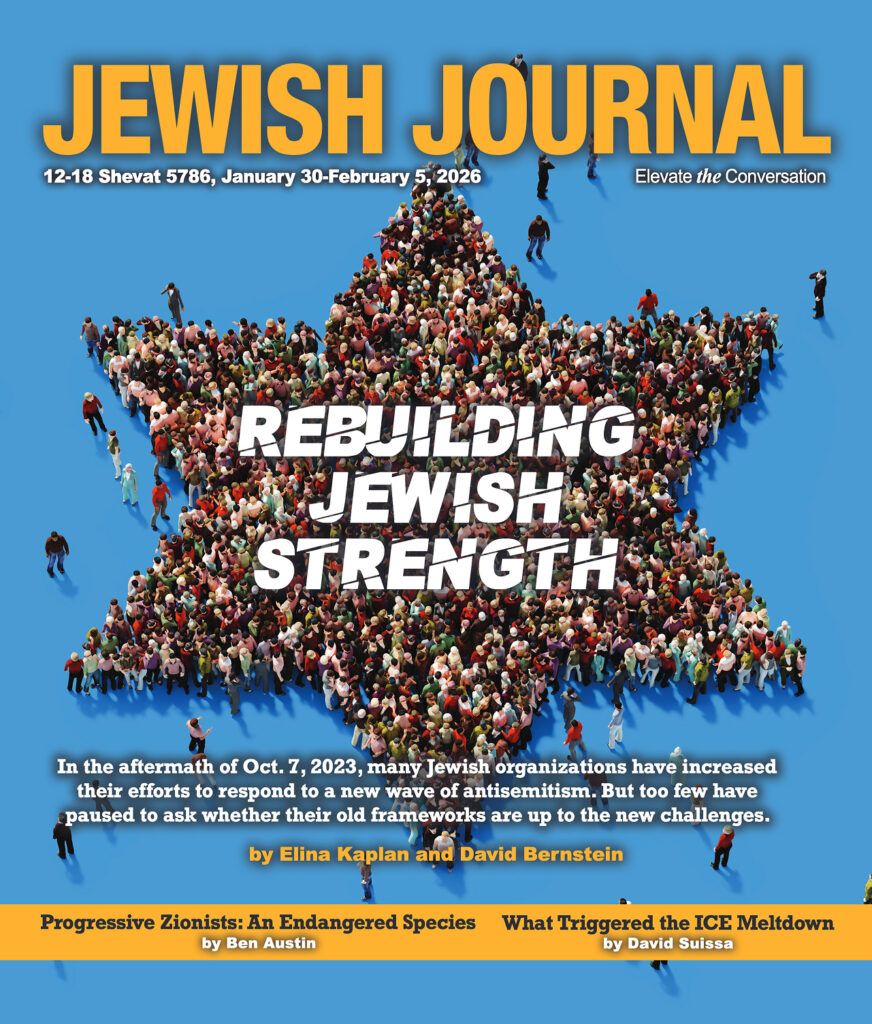
Print Issue: Rebuilding Jewish Strength | January 30, 2026

CLICK HERE FOR FULLSCREEN VERSION

Print Issue: Rebuilding Jewish Strength | January 30, 2026 Read More »

Why We Could Not Rest: The Return Of Ran Gvili

The return of Ran Gvili, the last Israeli hostage, has raised questions for many people: What’s the big deal? Why write about this now, when there are so many other urgent things happening in the world? Why keep returning to October 7, to one man, to one body? I’ve been asked these very questions by readers and acquaintances.

I understand their questions. I do. And I understand the spirit behind it. If you’re someone who claims to care for all people “equally,” this can appear to be a narrowing of vision, a kind of tribal fixation. You see suffering everywhere and wonder why this particular suffering draws such attention.

Let me explain it this way.

If your sister had been taken, if her body were being held somewhere unknown, would you be able to think of anything else until she was returned? If your brother were missing, would you say there were more important things going on? Of course not. You would ache. You wouldn’t sleep a full night until he came home. You would do everything in your power to bring him back. And yet, you might answer that this is different—that this man was not your brother, that he was a stranger, someone you never knew, a mere abstraction.

This is where the gap lies.

The Jewish people are a small people, just fifteen million in the entire world. We are not a nation in any modern sense, but a family: argumentative, fractious, beautiful, and inseparable. When one of us is taken, it is not one of countless others. It is a single face, a single life.

When Ran came home, it was a brother who arrived. And if anyone has ever wondered how Jews have endured so many catastrophes and accomplished things so disproportionate to our numbers, here is the answer: not power, not influence, but interrelatedness—a bond nurtured, insisted upon, and renewed for four thousand years.

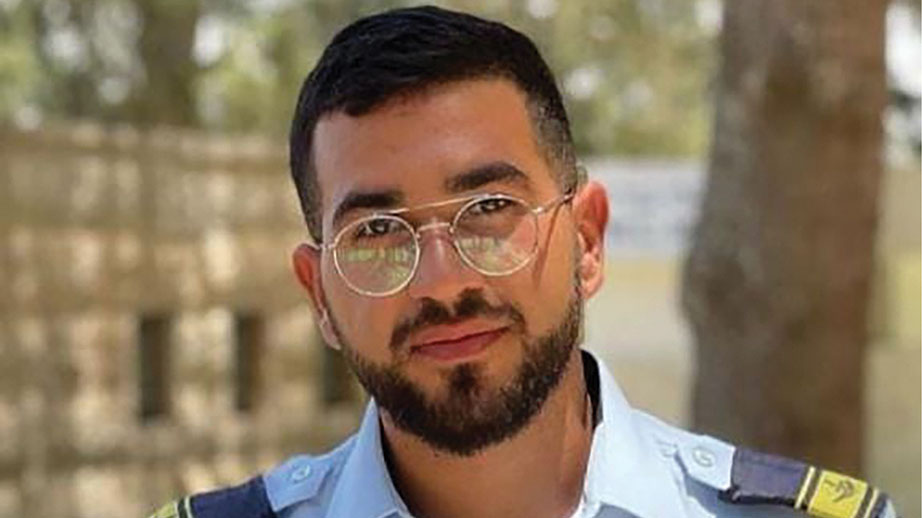
Ran was twenty-four years old on October 7, 2023. He was on medical leave from his unit, his shoulder broken, surgery scheduled. When the attack began, he didn’t stay home. He ignored the pain, put on his uniform, and drove toward the fighting.

Near Kibbutz Alumim, as Hamas pogromists slaughtered civilians fleeing the Nova music festival, Ran evacuated survivors, pulling people to safety under fire, saving dozens of lives. He continued fighting even after being wounded, until his ammunition ran out. A hero in every sense of the word, he was murdered and his body taken into Gaza.

For nearly two and a half years, his remains were held there, His parents, Itzik and Talik, his sister and his brother, waited. The entire Jewish nation waited with them. He was spoken of in the language of family. “We see the relief in the eyes of families who have been able to bury their children,” his sister said during the long months of waiting. “We want to be able to move on with our lives and remember Rani.”

In January 2026, after a painstaking military operation, Ran Gvili’s body was recovered in Gaza City and returned to Israel. His mother said simply, “It’s a relief, even though we hoped for a different ending.” His father recalled the words Ran had said before leaving home: I’m not going to leave my friends to fight alone. Even in death, his final act remained an act of loyalty.

Our people believe in miracles. But we do not believe in coincidence. And here is where something ancient enters the present moment.

This Shabbat, in synagogues across the world, Jews will read these words from the Torah: “Moses took the bones of Joseph with him, for Joseph had bound the children of Israel by an oath, saying: God will surely remember you, and you must take up my bones from here with you.” Joseph makes his descendants swear not to leave him behind. Generations pass. Slavery hardens. And still, when redemption comes, Moses carries the bones out from the midst of the enslavers.

In Judaism, redemption is incomplete if even one life is missing. Freedom is unfinished if even one body is abandoned. Memory then, is not only an idea. It is an action, necessitating a concerted and collective effort.

When Ran Gvili came home, it was an ancient promise kept again. Joseph’s bones lifted once more from the ground of exile.

That is why we could not rest. That is why we still speak of it. Not because one life matters more than others, but because to value life is to refuse the disappearance of even one soul.


Peter Himmelman is a Grammy and Emmy nominated performer, songwriter, film composer, visual artist and award-winning author.

Why We Could Not Rest: The Return Of Ran Gvili Read More »

Fruitful – A Jeweled Couscous Salad

Twenty years ago, I was watching Bobby Flay make tabbouleh on the Food Network and that inspired me. I had leftover couscous sitting in my fridge and I thought maybe that could work just as well as the wheat bulgur traditionally used in tabbouleh. Bobby’s version included parsley, tomatoes and cucumbers, but I upped the flavor by keeping those veggies and adding mint and dill, as well as colorful bell peppers and fresh green onions. Then I took it a step further, throwing in finely diced preserved lemons, Kalamata olives and toasted pistachios, dressing it with extra virgin olive oil and freshly squeezed lemon juice. My couscous salad was a hit, bright and briny, herby and fresh and completely addictive!

My friends and family loved it. So much so, that I made it for every social gathering. It was simply a perfect make-ahead salad, colorful, satisfying and always totally devoured.

Whenever friends asked for the recipe, I happily shared. One day, our friend Mona called, excited to prepare the salad for a family party. I walked her through the recipe, step by step, listing every ingredient. The next day, she reported that it was a hit, but that her sister-in-law Hayley had remarked, “This doesn’t really taste like Rachel’s salad.”

When I asked why, Mona explained that she had added broccoli and skipped all the herbs except for the parsley. She also left out the preserved lemon, olives and pistachios.

Dear reader, I love Mona dearly, but I had to take a deep breath. I said, “Please keep making the salad. It makes me very happy. But if you change all the ingredients, please don’t tell anyone it’s my recipe!”

To this day, we still laugh about her revised couscous salad. Sometimes she will tell me proudly, “I made the salad, but I didn’t say it was yours.”

A few years later, Mona was the one who suggested making the salad with quinoa. Also delicious, and I made it for a while. But now I have returned to couscous. I am no longer fearful of carbohydrates, especially when they are paired with fresh herbs, crispy veggies and dried fruits. Fiber and carbs just go together.

Growing up Moroccan, there was always a bowl of dried fruits and nuts on the coffee table. The Moroccan Arabic word for the mixture of dried fruit and nuts is fakya. We didn’t speak Arabic, but we took great pleasure in saying fakya when we moved to America. It made us laugh uncontrollably because it sounded like a very bad English word. My brothers and cousins still love saying it. Fakya.

When Sharon and I discussed our Tu b’Shvat recipe, I knew we had to reimagine my couscous salad with all the fruits of the land. Traditionally, the holiday is marked by eating fruits and nuts, honoring what grows and sustains us. Adding the dried fruits and nuts gave the salad a seasonal context and a deeper connection to the holiday.

—Rachel

True confession. I have an unreasonable obsession with dried fruits and nuts. I have a big pantry and three refrigerators and a lot of that space is devoted to the storage of all the nuts and dried fruits that I purchase at Costco, Trader Joe’s and the Persian markets.

Not to be overly dramatic, but my relationship with dried nuts and fruits is partly a way to hold onto my childhood memories and the Middle Eastern traditions of my mother and grandmother. A beautiful dish filled with an assortment of nuts and dried fruits is a family tradition.

I love including these ingredients in my recipes. Every Shabbat, I love imagining which pairings of nuts and/or dried fruits will enhance my salads.

In one of my favorite commentaries on Sefer Bereshit (Genesis 43:11), it says that Jacob instructed his sons to bring pistachios, almonds and other delicacies native to the Land as gifts to the Viceroy of Egypt (Joseph). How relatable is that? Every Middle Eastern or North African Jew has given or received nuts as a hostess gift.

As you can imagine, I love the tradition of the Tu b’Shvat Seder, a mystical 16th-century Kabbalist tradition. The “New Year for Trees,” which is celebrated on the 15th of Shevat, falls on the evening of Sunday, Feb. 1 this year. The holiday honors nature and the Land of Israel. Like Passover, there is a Hagaddah and it involves drinking four cups of wine. There is also an emphasis on eating fruits, especially the Seven Species native to Israel.

I love that our Jeweled Couscous Salad includes so many of the symbolic foods—wheat (couscous), green grapes, dried figs, ruby red pomegranate arils, salty kalamata olives and rich fleshy medjool dates. We included roasted slivered almonds, tart dried apricots and cool mint. We made a dressing of extra virgin olive oil, lemon juice, salt, pepper and garlic powder.

This salad is a feast for the eyes and so fresh and lovely to eat. What a wonderful way to express our gratitude to the Creator of the Universe for his gifts of incredible, healthful bounty.

—Sharon

Jeweled Couscous Salad

Dressing

1/3 cup extra-virgin olive oil

2 lemons, juiced

2 tsp kosher salt

1/2 tsp ground black pepper

1 tsp granulated garlic powder

In a jar or a small bowl, whisk together the oil, lemon juice, salt, pepper and garlic powder. Set aside.

2 cups cooked couscous

1/2 cup dates, finely diced

1/2 cup figs, finely diced

1/2 cup dried apricots, finely diced

1 cup green grapes, halved

1/2 cup pistachios

1/2 cup slivered almonds

1 small bunch mint, chopped

1/2 cup pomegranate, for garnish

Place the couscous, dates, figs, apricots, grapes, pistachios, almonds and mint in a serving bowl.

Pour the dressing over the salad and toss well.

Garnish with pomegranate.

Note: Store leftovers in an airtight container in the refrigerator for up to 3 days.


Sharon Gomperts and Rachel Emquies Sheff have been friends since high school. The Sephardic Spice Girls project has grown from their collaboration on events for the Sephardic Educational Center in Jerusalem. Follow them
on Instagram @sephardicspicegirls and on Facebook at Sephardic Spice SEC Food. Website sephardicspicegirls.com/full-recipes.

Fruitful – A Jeweled Couscous Salad Read More »

Bounty of Recipes for Tu b’Shvat

Tu b’Shvat is known as the holiday of the trees. It is focused on environmentalism, planting trees and celebrating Israel’s agricultural bounty. 

“Tu b’Shvat is one of my favorite holidays,” Debbie Kornberg, founder of Spice + Leaf, told the Journal. “There are seven species mentioned in the bible – pomegranate, fig, olive, date, grapes, wheat and barley – and each one has a really cool symbolic meaning behind it.”

For instance, pomegranates represent prosperity. It is believed that if you count the seeds of the pomegranate, you will find 613, the number of mitzvot in the Torah. 

Grapes grow in clusters in the same way you need community in Judaism. The fig tree can produce fruit over a long period of time, from Shavuot to Sukkot. Olive trees grow anywhere, even under the most difficult weather conditions. Wheat and barley represent the staples of life. During the time of ancient Israel, honey was made from date palm, and not taken from bees. Almonds are also significant.

“The almond, which needs little water, is the first fruit tree in Israel to wake from its dormancy and bursts into bloom when the other trees are still bare and ‘asleep,’” she said. 

In the same way you would do a Passover seder, Kornberg explained that you can do a Tu b’Shvat seder, incorporating symbolic foods. 

Here are some of Kornberg’s favorite recipes for the holiday, which starts the evening of Feb. 1.

Green Salad with Dates, Za’atar Croutons and Pomegranate Fig Vinaigrette

By Debbie Kornberg
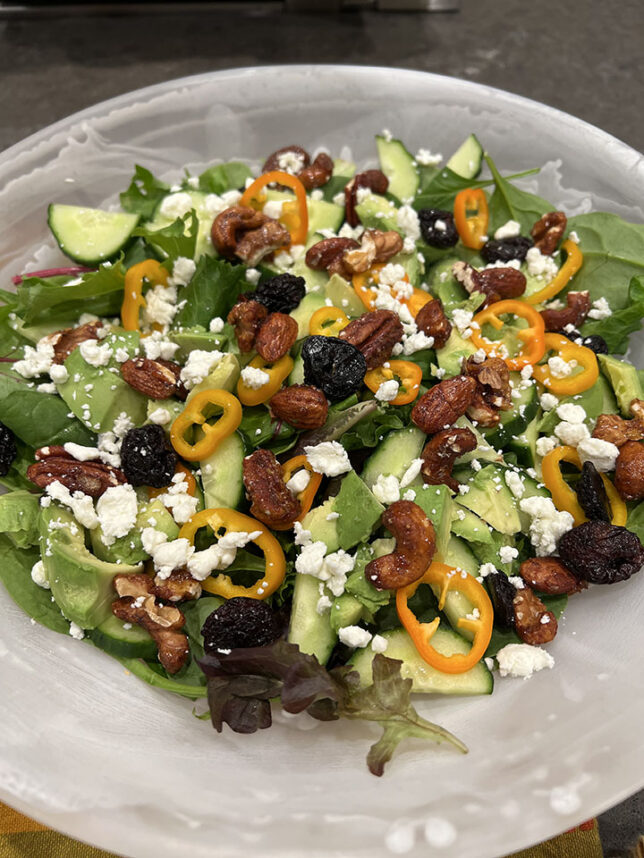
Ingredients for Tu b’Shvat Green Salad:

1 bag of arugula

1/2 English cucumber or 2 Persian cucumbers, sliced in half circles

1 red or yellow bell pepper, chopped

10 cherry tomatoes, sliced in half

6 dates, chopped, Medjool ideally

1 cup SPICE + LEAF Za’atar Croutons

½ Avocado, chopped

4 oz. goat cheese, crumbled

¼ cup toasted pistachios

½ cup pomegranate seeds

*Optional: 1/3 cup toasted pistachios

Ingredients for Za’atar Croutons

2-3 Tbsp SPICE + LEAF Israeli Galili Olive Oil

2 pita breads

1 tsp SPICE + LEAF Sumac

1 Tbsp SPICE + LEAF Authentic Za’atar

Pinch of Salt

Instructions for Za’atar Croutons:

Cut pita bread into medium size cubes. In a bowl, mix cubed pita with approx. 2 tablespoons. olive oil, za’atar, onion dip mix, sumac and salt so they are coated with olive oil spice blend. Place on a baking sheet, spread out evenly for cooking and place in the oven for 10 – 20 minutes at 400°F.   

Cook until dried up and toasty brown. Toss into salad when ready to serve. 

Fig and Pomegranate Vinaigrette

1 garlic clove

¼ cup vegetable oil

¼ cup SPICE + LEAF Fig Infused Balsamic Vinegar

3 Tbsp pomegranate juice

¼ cup Honey 

Pinch of salt

Instructions for Vinaigrette

Prepare vinaigrette in the food processor. First mince garlic clove; then add remaining ingredients. Mix well.

Putting the Salad Together

In a bowl, add arugula, cucumbers, bell peppers and dates. Toss this part of the salad in pomegranate vinaigrette. Try not to overdress it. Then add croutons, pistachios, avocado, goat cheese and pomegranate seeds on top of tossed salad. You can drizzle a little extra dressing on top of salad to finish it off. 

Moroccan Ras El Hanout Couscous with Almonds, Dates and Pomegranate

By Debbie Kornberg

This Moroccan spiced couscous makes for a perfect side dish and highlights some of the native ingredients in Israel. The secret ingredient to this dish is the Ras El Hanout, which is considered the crown jewel spice of any Moroccan cooking. See for yourself how this warm spice blend makes any dish feel hearty and complete.

Ingredients

1/4 cup slivered almonds

1 onion, chopped finely, sautéed

1 1/3 cups water

4 Tbsp SPICE + LEAF Premium Israeli Galili Barnea Olive Oil 

1 tsp sea salt

1 cup Moroccan couscous (Moroccan couscous is very small and granular in size and different from Israeli couscous.)

2 tsp SPICE + LEAF Ras El Hanout

1/2 cup golden raisins, plumped in warm water and drained

6-8 pitted dates, coarsely chopped 

3 Tbsp fresh parsley, chopped finely 

2 Tbsp pomegranate seeds


In a medium skillet, toast almonds, stirring occasionally, until they turn a light golden/brown color, 5 to 6 minutes. Set aside in a glass bowl so they do not continue to cook.

In the same skillet, sauté onion in 2 tablespoon olive oil until onions become slightly caramelized with a light brown color. 

In a medium saucepan add water, salt and olive oil. Over medium heat, bring it to a boil. Once water is boiling, turn off heat and add Ras El Hanout spice and stir into water. Then add Moroccan couscous and still again. Cover pot with lid and cook couscous until tender, about 5 minutes. Transfer couscous to a bowl. Allow it to cool slightly and gently, comb through the couscous to loosen and break up the individual couscous grains.

Combine Ras El Hanout couscous with almonds, onions, raisins, dates and parsley. Add additional salt for taste. Sprinkle pomegranate seeds on top. Ready to serve – enjoy!

Pomegranate Mint Iced Tea

By Debbie Kornberg

Ingredients

6 cups hot water (not quite boiling)

3 tsp green tea (loose leaf ideal, can also use decaffeinated green tea)

1 bunch fresh mint

1/4 cup granulated sugar (or to taste)

1/2 cup 100% pomegranate juice (no sugar)

Squeeze of one lemon plus lemon slices for garnish

Ice, if desired


Steep green tea in 2 cups of hot water for 2 to 3 minutes. 

Discard tea leaves. 

Add the remaining 4 cups of hot water, fresh mint and sugar. Mix well. 

Steep for an additional 5 minutes. 

Add pomegranate juice and mix well. I like to leave the mint leaves in the tea but it’s totally up to you. Refrigerate until chilled as desired. You can also add ice to chill it faster. 

Sweeten to taste and serve with a lemon slice.

Bounty of Recipes for Tu b’Shvat Read More »