The saying that best encapsulates the American soul is sourced in Scripture. “We hold these truths to be self-evident, that all men are created equal, that they are endowed by their Creator with certain unalienable Rights, that among these are Life, Liberty and the pursuit of Happiness,” states the Declaration of Independence.
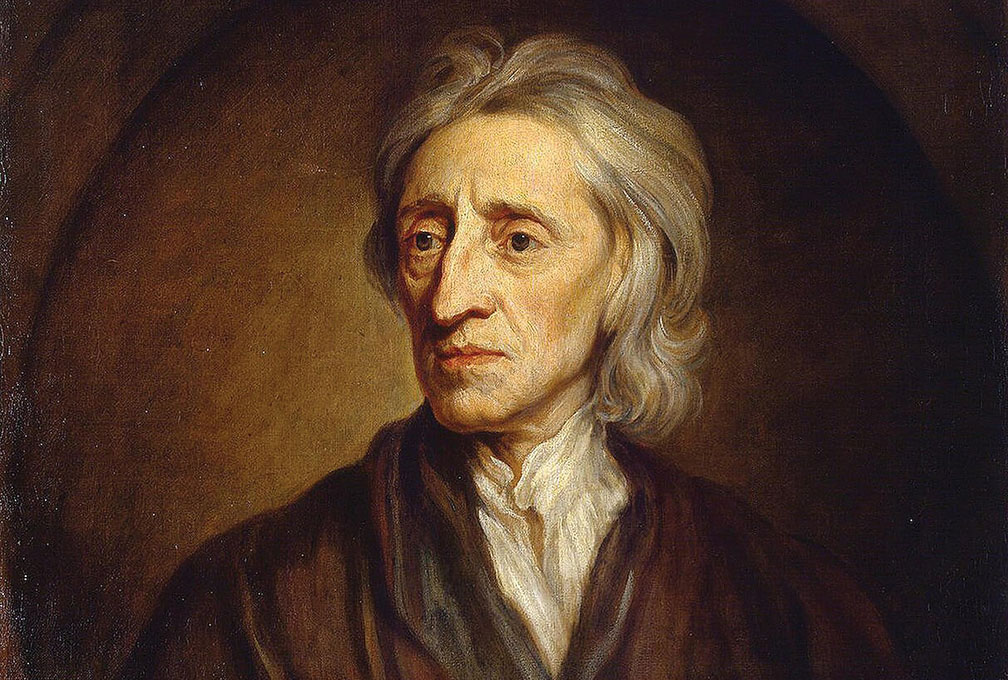
The assertion references both the story of God’s creation of the world in Genesis, in which the Lord creates the first male and female in His image (Gen. 1:27), and paraphrases the 17th-century British philosopher John Locke. Locke himself drew deeply from the Hebrew Bible in articulating his politics.
 As the noted historian (now serving as Israel’s Ambassador to America) Dr. Yechiel Leiter documents in his “John Locke’s Political Philosophy and the Hebrew Bible,” Locke’s “Two Treatises of Government,” so foundational to the American project, is laden with Biblical references. And the fact that these quotes are specifically and almost exclusively taken from the Hebrew Bible as opposed to the New Testament, despite Locke of course not being Jewish, has largely been ignored by many scholars.
The eminent English philosopher, historians have discovered, owned dozens of books on the Bible, including Hebrew versions of the Old Testament, numerous commentaries on it, several books on the Hebrew language, and even a few books about Kabbalah.
As Leiter summarizes:
 “For Locke, humankind’s state of nature is an anarchic state that is ruled by the laws of nature, but because these laws cannot ensure a person’s protection in the state of nature, humanity must enter into a compact state in which these laws of nature remain intact. If creation of the state by compact results in the violation of the laws of nature, then the compact state loses its legitimacy and its right to exist, resulting in the obligation to form a new governmental system in which the laws of nature are honored. Clearly Locke’s theory of civil government, which includes the right to rebel against uncivil government, is predicated on his understanding of natural law, hence the requisite introduction of the Second Treatise with a discussion of natural law.”
Where does Locke turn to analyze the concept of natural law? To the story of Cain and Abel. After all, Cain is punished by God for murdering Abel, despite there not having existed a prior commandment not to do so. Thereby Locke, as Leiter writes, uses “Scripture itself, the very revelation that would seem to obviate reason, to prove the existence of a ubiquitous reason-based natural law, installed and relevant from the time of creation”
Locke also sees human reason as emerging from the Bible. “God makes him in his own Image after his own Likeness, makes him an intellectual Creature, and so capable of Dominion,” he writes, citing Genesis again. To Locke, Genesis 1:28’s commandment “Be fertile and increase, fill the earth and master it” was the “great and primary Blessing of God Almighty,” a reflection of His “great design” in creating humans whose “intellectual nature” allows them to partner with God in creation.
Ideally, Locke believed, mankind would balance reason and revelation. As he puts it in another work, “The Reasonableness of Christianity,” “The belief and worship of one God, was the national religion of the Israelites alone; and, if we will consider it, it was introduced and supported amongst that people by revelation. They were in Goshen, and had light, whilst the rest of the world were in almost Egyptian darkness, without God in the world.”
“Love thy neighbor as thyself” (Leviticus 19:18) was another crucial source for Locke’s theory of natural law. If, as Locke understood, there is a basic natural law of self-preservation, and the Bible instructs us to treat others as one would treat oneself, it emerges that each individual has an obligation to preserve humankind as a whole. How is that preservation to be maintained? “The state of nature has a law of nature to govern it, which obliges every one: and reason, which is that law, teaches all mankind, who will but consult it, that being all equal and independent, no one ought to harm another in his life, health, liberty or possessions.” It is this articulation that was paraphrased by Thomas Jefferson in the Declaration’s most famous statement.
Referencing the late British Chief Rabbi’s “The Home We Build Together,” my colleague Rabbi Meir Soloveichik has reflected, “America is unique because it joins Lockean social-contract theory and biblical covenantal concepts, which allows for both a language of individual freedom and collective national purpose. The covenantal conception of the United States, Sacks suggests, allows for ‘integration without assimilation,’ both individual freedom and collective destiny.” The American experiment, inspired by Locke’s writings, would function in the model of Biblical Israel, balancing the gift of human rationality with belief in the grace of Heaven.
“We, therefore, the Representatives of the United States of America, in General Congress, Assembled, appealing to the Supreme Judge of the world for the rectitude of our intentions, do, in the Name, and by Authority of the good People of these Colonies, solemnly publish and declare, That these United Colonies are, and of Right ought to be Free and Independent States,” the Founders wrote. “… And for the support of this Declaration, with a firm reliance on the protection of divine Providence, we mutually pledge to each other our Lives, our Fortunes and our sacred Honor.”
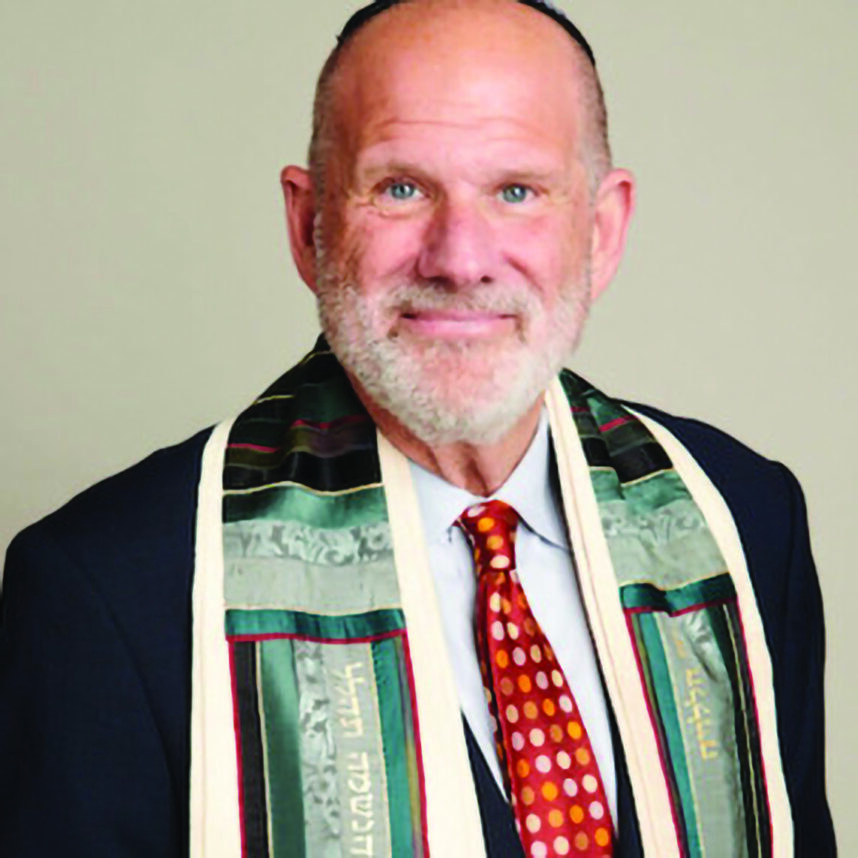
Rabbi Dr. Stuart Halpern is Senior Adviser to the Provost of Yeshiva University and Deputy Director of Y.U.’s Straus Center for Torah and Western Thought. His books include the newly released “Jewish Roots of American Liberty,” “The Promise of Liberty: A Passover Haggada,” “Esther in America,” “Gleanings: Reflections on Ruth” and “Proclaim Liberty Throughout the Land: The Hebrew Bible in the United States.”