Rabbi Eliezer of Worms describes a dramatic Shavuot morning ritual from the 1100s:
“The custom of our ancestors is for young children to begin their studies in Torah on Shavuot, for it is the day on which the Torah was given … At dawn on the day of Shavuot, they bring the children … and they cover the child under a cloak from his house, and bring him to the synagogue or to the Rabbi’s house … They then bring a slate upon which the alphabet is written, forward and backward … The Rabbi reads every single letter of the alphabet, and the child repeats after him; then every word of the backward alphabet, and the child repeats after him … The Rabbi then places a bit of honey on the slate, and the youth licks the honey off the letters with his tongue.”
This colorful custom is just one of many colorful Shavuot customs.
It is common practice to stay up all night on Shavuot and study Torah. This originated in the Zohar, which offers a mystical rationale: Shavuot is the night before the wedding of the Shekhinah, the divine presence, with God. The Torah studied that night became “adornments” for the bride.
Students of Kabbalah popularized all-night study on Shavuot and introduced a special program of study for the evening called Tikkun Leil Shavuot.
This custom eventually went mainstream, and the Magen Avraham offered a simpler rationale for it. He explained that “because the Israelites slept throughout the night, and the Holy One, blessed be He, had to awaken them, as is stated in the Midrash. Therefore, we must rectify this [i.e. by not sleeping].” We stay up all night on Shavuot to express how excited we are to receive the Torah.
More controversial is the practice of placing flowers and tree branches in homes and the synagogue. This custom first appeared in the 1400s. Synagogues would spread aromatic grasses on the floor and weave flowers on the Ark and branches surrounding the bimah.
Here, too, several reasons are given. Shavuot is, according to the Mishnah, the day when the fruits of the tree are judged; the Magen Avraham explains that the branches are a reminder of this judgment. The Levush cites a midrash stating that when God gave the Torah, the desert near the mountain bloomed; the grass is a reminder of this. Others say that the sweet fragrance of the flowers allows everyone to better rejoice in the giving of the Torah.
But this practice met with harsh opposition from the Vilna Gaon, who argued that it was an imitation of Christian practices. In Germany and Poland, people decorated homes and churches with birch branches and spring flowers to celebrate the Christian holiday of Pentecost. The Vilna Gaon declared that it was forbidden for Jews to adopt this foreign custom.
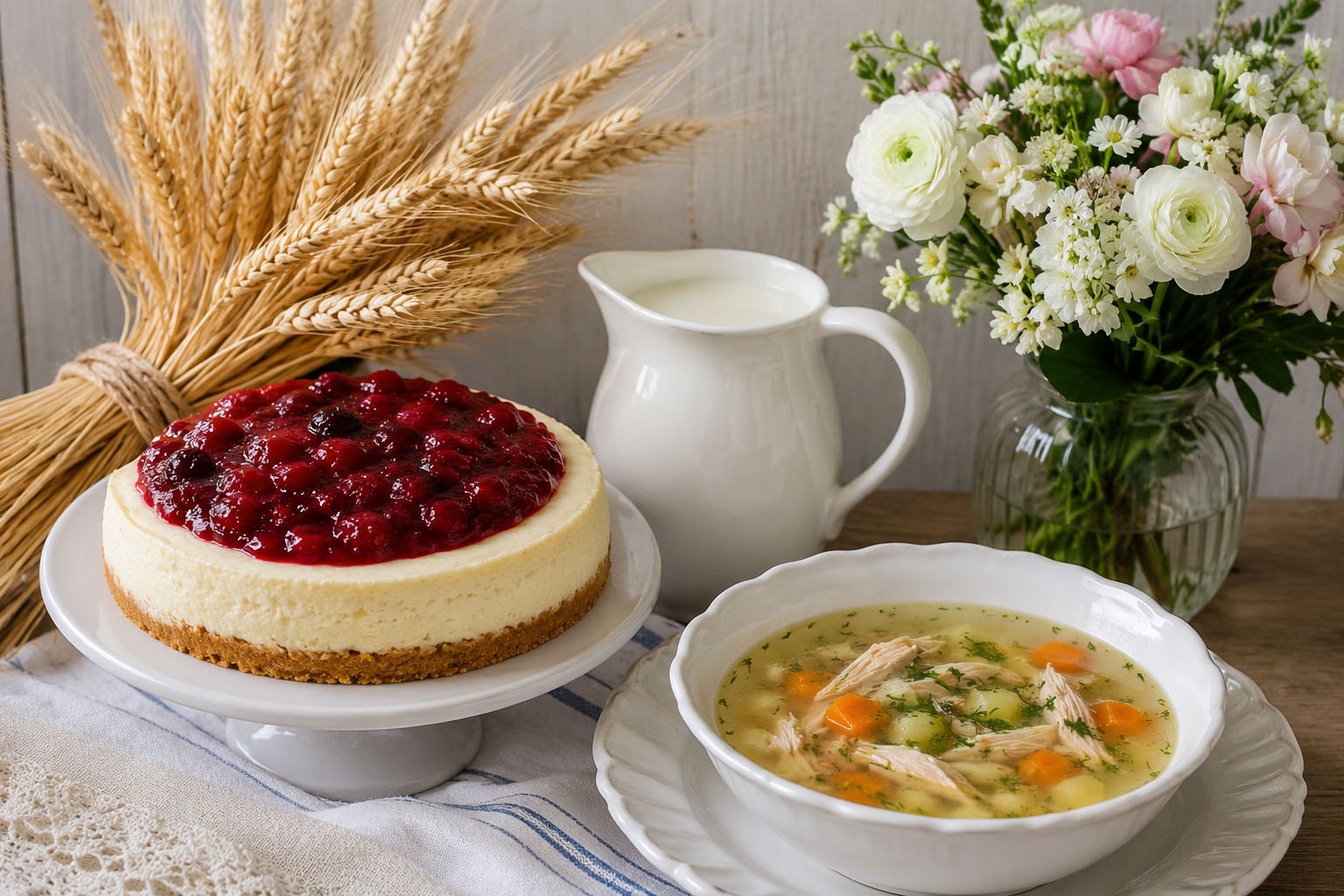
The tradition of eating dairy on Shavuot is the most enigmatic. It is first mentioned in the 1200s, but the reason is obscure. Some early sources say that the midrash compares the Torah to milk and honey, and so we eat dairy foods, but it’s unclear then why there are no honey dishes as well. The difficulty of finding a clear reason for this custom has inspired multiple theories, to the point that one rabbi, Moshe Dinin, published an essay that collected no less than 159 reasons for this custom.
There are many other customs as well. In some Sephardic communities, they pour water on the chazzanim and other dignitaries. There are unique additions to the liturgy, such as reading a “Ketubah” about the marriage between God and the Jewish people, or the well-known poems of Akdamut and Azharot.
Shavuot has an endless variety of customs.
This stands in stark contrast to the biblical description of Shavuot, which is the only holiday that has no ritual. And it would seem that precisely because of this vacuum, the customs of Shavuot emerged.
But that only deepens the question. Why didn’t the Torah provide any rituals for Shavuot? And why was it so important for Jews to create their own customs?
On the question as to why Shavuot has no ritual, Rabbi David Zvi Hoffmann explains it is because Shavuot commemorates the giving of the Torah. He writes:
“No symbolic ritual was established for the festival of Shavuot to commemorate the revelation at Sinai. And there is a good reason for this: the revelation at Sinai cannot be captured in any physical symbol. Rather, the people of Israel are meant to take to heart that they saw ‘no form on the day the Lord spoke to you at Horeb from the midst of the fire,’ lest they fall into the illusion of making an idol or image of God.”
Any ritual that attempts to recreate the revelation at Sinai would verge on idolatry.
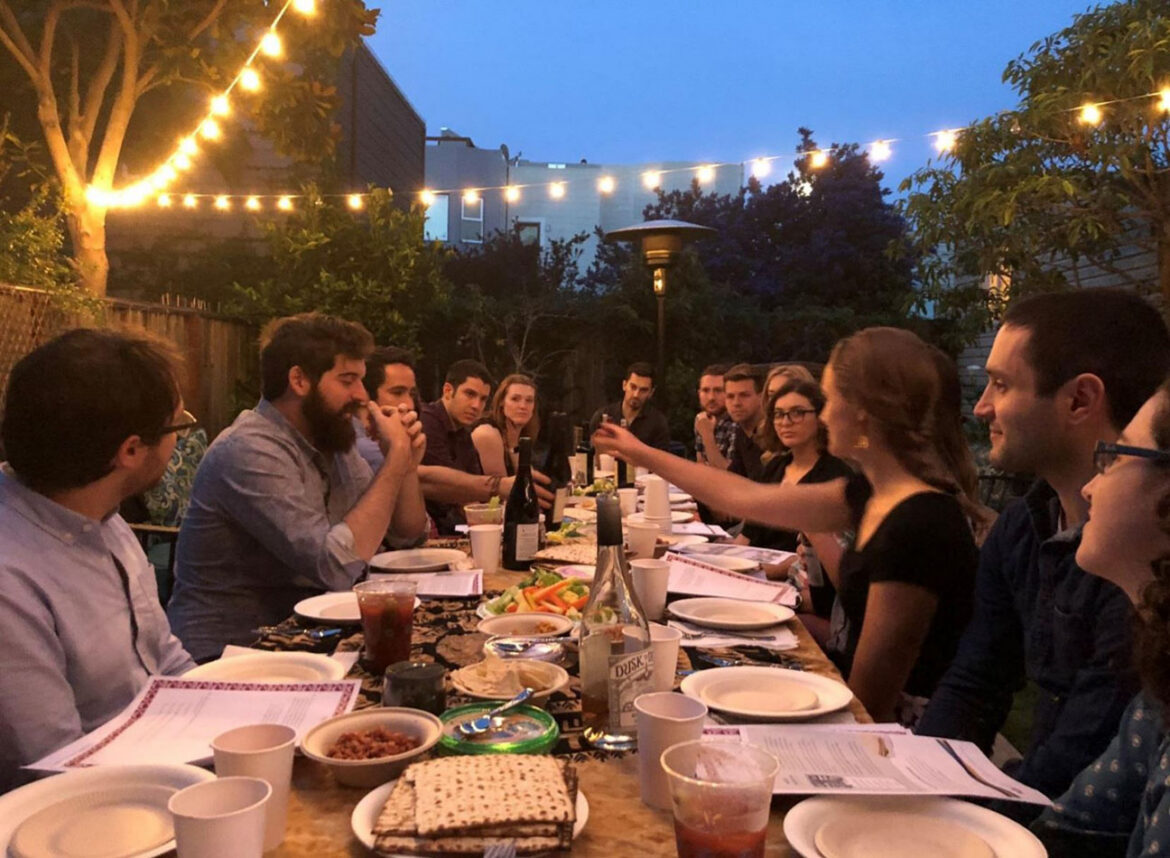
But Jews couldn’t leave the silence of Shavuot alone. Instead, they created minhagim, customs, to celebrate receiving the Torah. Even when the Torah omits, perhaps intentionally, any ritual for Shavuot, the Jews stepped forward with cheesecakes and flowers, ready to bring joy and inspiration to this holiday.
And nothing could be more fitting. Intellectually, the revelation at Sinai is too pristine and pure to be recreated. But the Torah cannot be relegated to a transcendent world of ideas; it must speak to real people made of flesh and blood. God gave the Torah on Sinai, but it was never meant to remain there, surrounded by fire and thunder, beyond human reach. It must be translated into a human language, and only then does it become the Torah that the Jews accepted at Sinai.
Minhag speaks to the passion with which the Jews accepted the Torah. Some are dramatic customs, such as Kol Nidrei; and some are halakhically controversial, such as Kol Nidrei. And as the Vilna Gaon pointed out about tree branches on Shavuot, some minhagim seem very similar to non-Jewish practices. But even trivial minhagim deserve our attention. Rabbi Maimon, the father of Maimonides, wrote about the importance of eating donuts (sfenj) on Chanukah. Minhagim are memorable and inspiring, the small touches that bring a large impact.
The Torah is a lived tradition that is transmitted from person to person and generation to generation. As Professor Haym Soloveitchik pointed out, “a way of life is not learned but rather absorbed. Its transmission is mimetic, imbibed from parents and friends.”
Minhagim are central to the lived tradition of Judaism.
The lived tradition of Judaism is often associated with the Jewish mother. Rabbi Joseph Soloveitchik offers a powerful description of her role. He explains that there are two aspects of the Jewish tradition: mussar avikha, the instruction of the father, and torat imekha, the teaching of the mother. He offers an example to explain the difference between the two:
“The laws of Shabbat, for instance, were passed on to me by my father; they are a part of mussar avikha. The Shabbat as a living entity, as a queen, was revealed to me by my mother; it is a part of torat imekha. The fathers knew much about the Shabbat; the mothers lived the Shabbat, experienced her presence, and perceived her beauty and splendor.
“The fathers taught generations how to observe the Shabbat; mothers taught generations how to greet the Shabbat and how to enjoy her twenty-four-hour presence.”
The source for every minhag is in torat imekha. They too add beauty and splendor to every observance. And Shavuot, with all of its customs, is a celebration of torat imekha.
A rabbi once quipped that “I learned more from my mother’s chicken soup than all my years in rabbinical school.”
He wasn’t deprecating rabbinical school. He meant to highlight the importance of torat imekha, how small touches of joy and love are critical in transmitting a grand intellectual and spiritual tradition.
And on Shavuot, as we prepare to stand again at the foot of Mount Sinai, let’s not forget the cheesecake or the flowers, or, for that matter, the chicken soup. They teach us lessons that cannot be learned in rabbinical school.
And without them, the Torah would have disappeared.
Rabbi Chaim Steinmetz is the Senior Rabbi of Congregation Kehilath Jeshurun in New York.