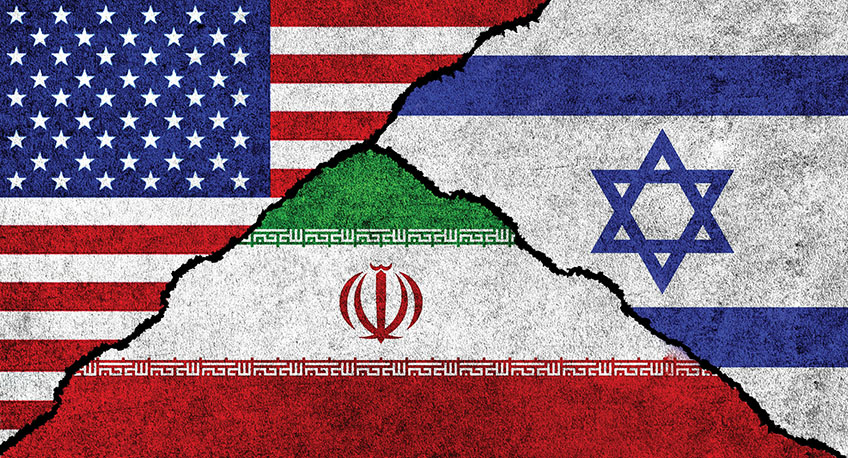
We have reached an awkward phase of the ceasefire when it is no longer clear if we are coming or going. All triumphalist press releases stopped working. A tense anticipation is our daily diet. And in the meantime, one has to look at the ledger and attempt a cold, unsentimental assessment. For the past few weeks, I’ve been chatting with policy makers, reading briefs. What follows is a synthesis of their best judgment as I understand it. The cynical framing is almost inevitable, as other obvious choices would include despair, or panic.
A military enterprise requires objectives. Preferably – clear objectives. The war with Iran had three, not all clear: changing the regime in Tehran was the most ambitious and yet undeclared objective; permanently destroying Iran’s nuclear capabilities was a second objective, and remains Israel’s main target; destroying Iran’s conventional teeth, including missiles, proxies, terror networks, was a third goal, but not one that would merit a sense of great victory.
Decapitating Ali Khamenei in the opening salvo of the war was a sure sign that installing a new management – regime change – was an objective. Stories about a plan involving Kurdish proxies invading Iran fit perfectly with Trump’s characteristic boasting that the war would be wrapped up in a few days. Of course, “creating the conditions for regime change” sounds somewhat less definitive than simply saying “we aim for regime change.” But if a war was launched to create such conditions – namely, conditions that presumably did not exist prior to the war – it would not be unfair to say that yes – a change was an objective.
It would also not be unfair to say that thus far such objective remains elusive. A democratic awakening did not materialize. Tehran responded to the campaign of bombs and assasination first with what seemed like panic, then with an impressive, if disappointing, stabilization. Mojtaba Khamenei was tapped to succeed his father. The system kept functioning. The people did not feel safe enough, bold enough, desperate enough, to risk anything akin to revolution.
Was there a plan for bringing about a revolution, or more a hope than a plan? Whatever the case, if Iran had its regime changed, it was changed from an Islamic theocracy to a militarized dictatorship run by the Revolutionary Guard. The regime seems stable. It seems adaptable. In fact, Trump and Netanyahu deserve some credit for realizing quickly that there’s a need for them to tone down the expectation for dramatic achievement such as the one supposedly achieved in Venezuela.
Did they give up on what they were hoping to achieve? I suspect not. I suspect that they still entertain a yearning for what currently seems beyond their ability to manipulate future outcomes. An acerbic commentator wrote last week something along the lines of: “The ‘conditions’ for a coup exist in half a dozen Middle Eastern capitals on any given Tuesday.”
Well, why not Iran?
Getting off the high horse of revolution, the picture of the nuclear front is sobering. Last June, a limited 12-day operation halted Iran’s momentum of nuclear production. This March, the bombings didn’t have much to add on the nuclear front. Iran retained its coveted 450 kilograms of highly enriched uranium (60%). They seem to be able to keep building their underground safehaven enrichment facility. They retain their know-how. They retain their ambition.
More than one commentator noticed Netanyahu’s admission on “60 Minutes”: “It doesn’t mean they cannot produce a device … if they planned … arsenal … that’s gone.” Namely, while the war – or two wars – may have delayed their ability to stock mass inventory, it still left Iran with a capability to build a first “device” – the euphemism for a bomb. If bombing is renewed before or after this column gets published, the elimination of the “device” would be Israel’s main target, and also main theme of prayer for the guiding God that holds the key to Trump’s psyche.
As for Iran’s conventional power – intelligence reports show that the majority of Iran’s ballistic launchers are already operational. So yes, the meager Iranian airforce is gone. Iran’s barely existing naval force is not completely gone. To be honest: no one truly cares. Neither Iran’s leaders, nor Iran’s enemies. Iran relied on asymmetric tools as its main strategic assets, and its missiles, drones, mines proved efficient enough to halt an attack by the world’s superpower. Tehran is capable of choking global shipping and threatening the world’s supply of oil. Twenty-five percent of global energy passes through the Strait of Hormuz. Launching a war without an operational answer to Iran’s simple and predictable use of its least costly option is proof that Trump never thought the regime would make it as far.
So what can the U.S. and Israel do now? By the time you’re reading this column, maybe the leaders have decided to have another go at using hard power. In fact, that’s their only viable choice – as the alternative is almost a guarantee that Iran would expedite its plan for completing a “device” (wouldn’t you not rush it, if you’re sitting in their place?). And then what? Best-case scenario is a delayed regime change, or, as a temporary remedy, a forced evacuation of nuclear material out of Iran. Worst-case scenario is a delicate status quo of postponement. That’s also euphemism for a threat of a bomb more acute than at any point in the past.
Something I wrote in Hebrew
Writing about Likud 2022 voters who now say they’d vote for the opposition, I wrote this:
Those who leave Likud for the center differ in very many ways from the Likud supporters who have remained loyal to the party. They are less satisfied with the budget, they are less enthusiastic about ideas of annexation in Judea and Samaria, they support civil marriage and they are less connected to the core of the “fully-right” camp. They are not that numerous, but in a close election, their departure – if it holds – could carry immense significance. If all the defectors do not return, Likud’s 32 seats will shrink, perhaps to 25. Some will vote for Otzma or Shas, which might not change the overall picture. However, about a quarter have left for centrist parties, undecided status, or the opposition. This amounts to around eight seats that could absolutely decide an election. In either direction.
A week’s numbers
How dangerous to the world is global warming? Here’s what Israelis think (JPPI numbers).

A reader’s response
A. Rosenthal writes: “You must finish Iran before Trump is leaving office.” My response: Grand strategy is the alignment of a state’s capabilities (means) with its core interests (ends). Israel’s “ends” are clear, its “means” is something to wonder about.
Shmuel Rosner is senior political editor. For more analysis of Israeli and international politics, visit Rosner’s Domain at jewishjournal.com/rosnersdomain.