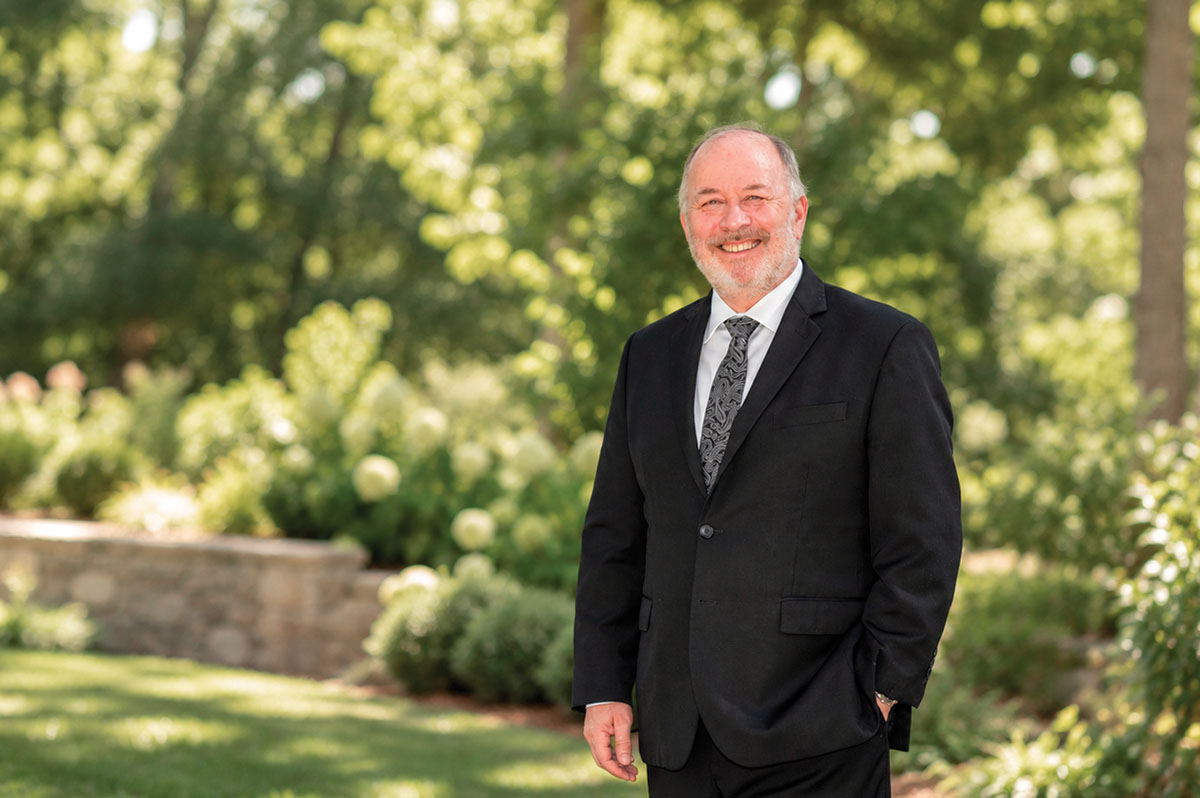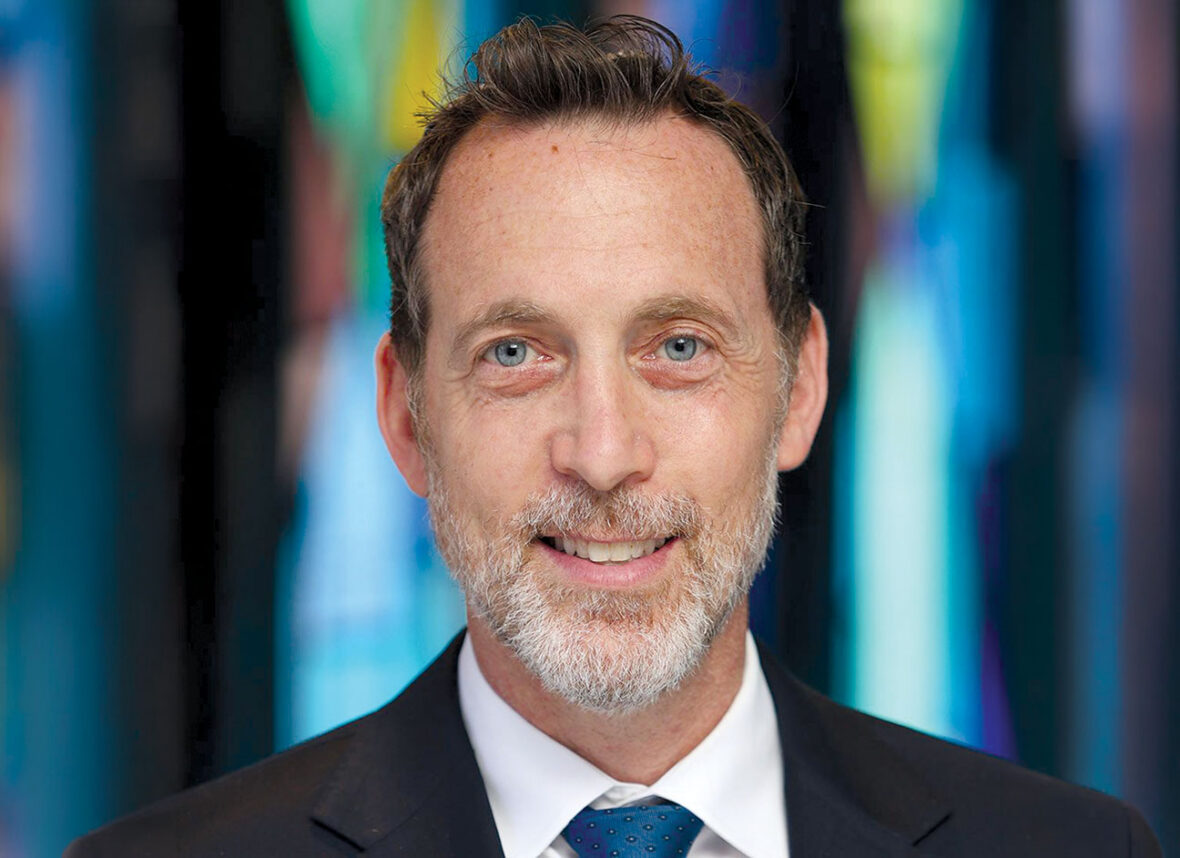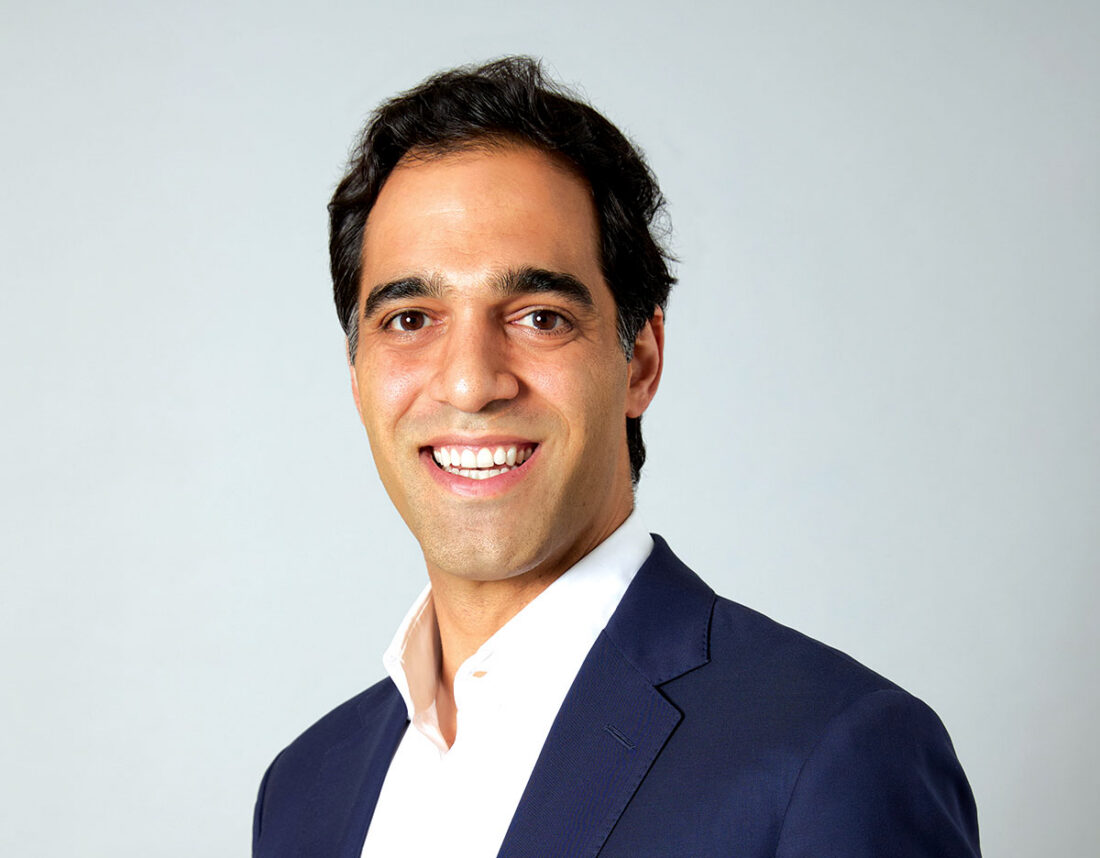
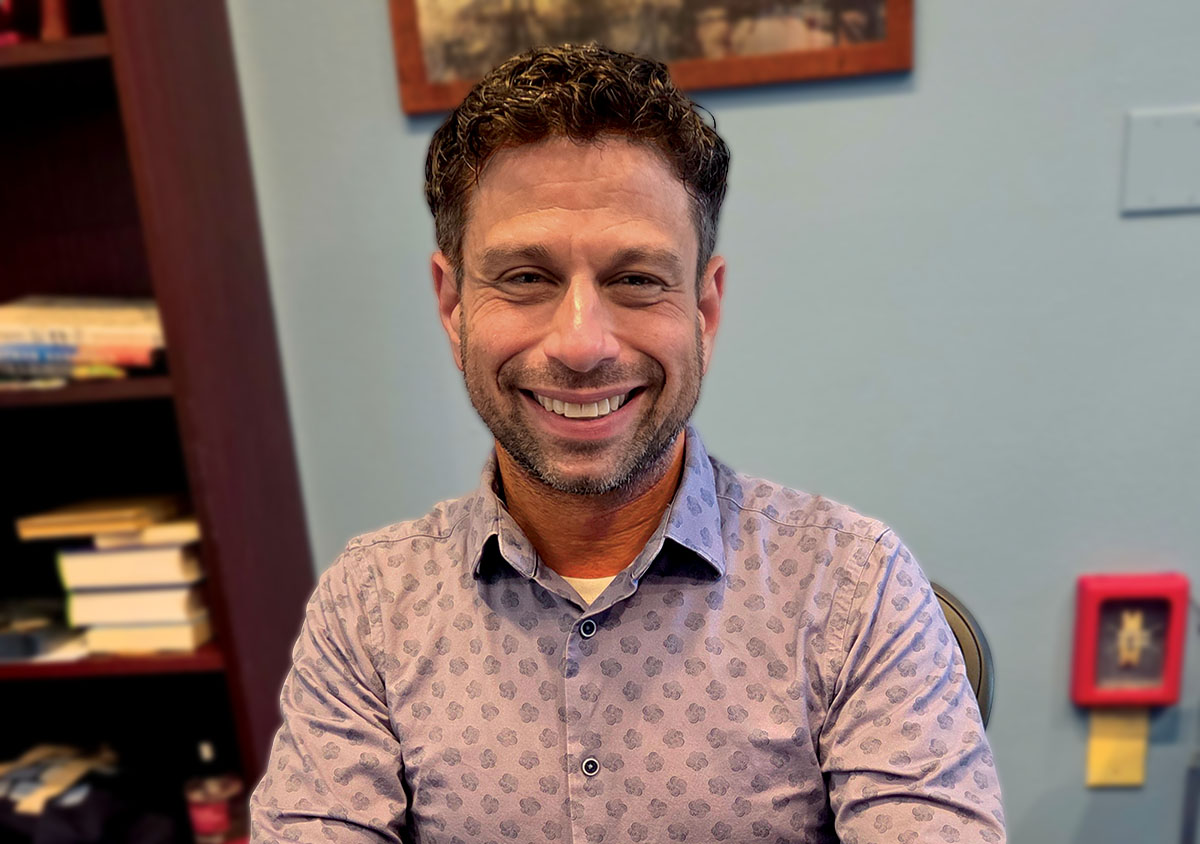
Rabbi Daniel Cotzin Burg, the new leader of Hamakom in West Hills succeeded retiring co-senior Rabbis Richard Camras and Stewart Vogel just one month ago. But talking to The Journal on the Conservative congregation’s hilltop campus, he sounded and looked as if he had come home.
In a way he had. Rabbi Burg was ordained here a couple decades ago when American Jewish University still was known as the University of Judaism (UJ). Los Angeles was where the Chicago native met his wife, Miriam, a native of Ann Arbor, Michigan. He chuckles at the memory “Two Midwesterners who met here in Los Angeles. She was at Hebrew Union College. We were one of the earlier intra-religious couples. She’s Reform and I’m Conservative.”
But after his 16-year tenure at Beth Am Synagogue in Baltimore, Maryland, what would come next? He had told shul leaders that the three-year contract he signed in 2023 would be his last. “We were really open to different possibilities,” he said. “My wife Miriam and I – she also is a rabbi – we sat down and laid out various strengths and weaknesses. We were open to different possibilities. Bigger shul, smaller shul, nonsynagogue work, big city, more suburban. Or maybe more places where there was nature and a lot of beauty.”
How did they happen to circle back to the West Coast? “Because of Hamakom,” Rabbi Burg said. “I had heard about the community, and we have known Rabbi Camras and Rabbi Vogel for many years. Rabbi Camras had been my teacher at the UJ once upon a time for a Practical Rabbinics class when he was relatively new to California. Rabbi Vogel I knew through his leadership with the Rabbinical Assembly.”
There is another link. “Rabbi Camras and my wife have been working collaboratively,” he said, “on support of the Jewish community in Uganda. They have co-created, along with others, the American Friends of the Abayudaya.
And the personalities and shuls of Los Angeles “have been in our orbit for a long time,” Rabbi Burg said. “Having been a rabbinical student here, we knew of Temple Aliyah and Shomrei Torah. I was familiar with this place.” He had looked at other possibilities, but “this certainly seemed like an interesting one. We knew fairly early on [that both rabbis were planning to step back].”
Since Rabbi Burg had grown up Reform, how did he land at a Conservative seminary? He recalled growing increasingly observant through his teen years. Once he settled on the rabbinate as a career, he hungered to dive deeper and longer into the Mishnah and the Talmud. At the time, Hebrew Union College offered neither. “Their focus at the time was much more on prophets and rabbinics,” Rabbi Burg said.
“I am 50. I was applying to rabbinic school in the late ‘90s. I graduated from the University of Wisconsin in 1998, and I spent a year at the University of Chicago working as a Jewish Campus Corps fellow, Hyde Park. That was really fun. I applied to a Masters of Jewish Education program.”
He was not certain he wanted to be a rabbi, but had a sense that he did. “I knew that rabbis are meant to be educators, and I also knew that rabbinical schools did not necessarily train teachers. They train scholars, learners. I wanted a Masters in Jewish Ed. At the time, the UJ had a strong Education School, the Jewish Theological Seminary did not. HUC had a strong program. But if I were going to pursue rabbinic ordination, I wanted to be in a place focused more on Rabbinics, a Beit Midrash approach to study.”
Rabbi Burg also was becoming more observant. What was the reason? “I am not sure exactly,” he said. “I think it was an interest in a serious engagement with halacha in making the totality of Jewish living more a part of my own personal practice.”
What about the road to Baltimore? “It was a bit circuitous,” he began.
After college while working for the University of Chicago, the future rabbi encountered the University of Judaism’s Fingerhut School of Education. Soon he became “inspired” by Rabbi Bradley Shavit Artson. He decided I was going to apply to the Rabbinical School here, spent six years at the UJ, including a year in Jerusalem. Then I got my first job on the north side of Chicago at (1300-family) Anshe Emet Synagogue.”
The setting was sprawling for his five-year term. Rabbi Burg was one of three rabbis and two cantors. When it came time to lead his own synagogue, he would spend 16 years (2010-26) at Beth Am Synagogue, based in a majority Black neighborhood that is historically Jewish.
Fast Takes with Rabbi Burg
Jewish Journal: Favorite family vacation destination?
Rabbi Burg: Curaçao, home of the oldest synagogue in the Western Hemisphere.
J.J.: Best book you ever read?
R.B: So many books I love. I am a big fan of Jill Lepore’s “These Truths.”
J.J.: Your favorite Shabbat moment?
R.B: It’s an aggregate of a number of Friday nights during Covid when our children, my wife and I are at the table – since we couldn’t have guests, we developed a practice of singing z’mirot.