fbpx

July 11, 2023

Unknown Story of Silent Era Superstar Comes to Stage

When playwright and performer Romy Nordlinger learned the story of Alla Nazimova, she wondered why so few people know her name. But now that Nordlinger has written and starred in a one-woman show about Nazimova, that is certain to change. The show, titled, “Garden of Alla: The Alla Nazimova Story” has been seen all over the country and is now making its West Coast debut at Theatre West near Universal City, where it runs through July 23.

“Nazimova is one of the greatest Jewish artists of all time, and yet her story is unsung,” Nordlinger told the Journal. “Although she fled Czarist Russia, it is unheard of that this exotic ‘other,’ in a sense, to America would become a superstar.”

To call Nazimova ahead of her time is an understatement. As a bisexual woman, she had to live under the radar while staying married to her British ne’er-do-well husband. She wrote her screenplays under the pseudonym Peter M. Winters. Born in 1879 in the Russian city of Yalta, by the turn of the 20th century, Nazimova was a well-known actress throughout Europe. She moved to New York’s Lower East Side in 1905, becoming a star in Yiddish theater and performing to  sold out houses on Broadway. Famed producer Lee Shubert even built a theater on West 39th Street and named it after Nazimova.

When she moved to Hollywood, Nazimova became a massive force in silent films, with starring roles in “Camille” and “The Lantern.” Later in her career starred in “Blood and Sand” alongside Rita Hayworth.

The title of the stage show refers to the building Nazimova bought in 1919 at the corner of what is now Crescent Heights and Sunset Boulevard. Over the next six years, Nazimova converted the property into the Garden of Allah Hotel. It was a celebrity hangout, with the likes of F. Scott Fitzgerald, Humphrey Bogart and Frank Sinatra amongst its guests and performers before the building was demolished in 1959.

“She was a superstar like Madonna or Lady Gaga,” Nordlinger said. Though it hasn’t been confirmed, many people (including Nordlinger) suspect that Lady Gaga’s blonde wig [on the album cover ‘The Fame Monster’], was modeled after Nazimova hairstyle in 1923’s “Salomé.”

“Nazimova was certainly one of the earliest a Jewish superstars,” Nordlinger said. “And whether or not she was religious, she certainly was Jewish, and she did flee the Czarists and she was coming from the Pale of Settlement to Stanislavsky’s Moscow Art Theater and having to do a lot of hiding of her Jewishness in order to work. And then finally, establishing herself in the Lower East Side in Vaudeville and doing Jewish theater at a place called the Chosen People. So she didn’t have to hide that she was a Jew anymore.”

“I Googled Alla, started to read about her and thought, how in the heck did this woman exist? And how have I not heard of her? And wow, she’s also a Russian Jew like I am.” — Romy Nordlinger

Nordlinger spoke to the Journal about the “Garden of Alla.” This conversation was edited for length and clarity.

Jewish Journal: How did you first learn of Alla Nazimova?

Romy Nordlinger: One of my mentors asked me to write for a showcase where she’s trying to draw attention to actresses in history that people should have heard of. She suggested different people to me, I would start to read about them, and I thought that they just didn’t feel simpatico. They all seemed sort of blonde and consumptive. And then she said, “I know: Alla Nazimova!” I went down the rabbit hole, Googled Alla, started to read about her and thought, how in the heck did this woman exist? And how have I not heard of her? And wow, she’s also a Russian Jew like I am. Her story defies all stories. It really does. I read her biography by Gavin Lambert and it’s fascinating. I read a lot of her journals and fell in love with her story.

JJ: Why do you think that even today, there’s such a romanization of the culture of the 1920s?

RN: I always admired the 1920s, I’ve always liked F. Scott Fitzgerald and Zelda. It was such a great time of shaking up things and liking the look, liking Art Deco. When you think about it, there was a great deal of freedom. There were things that people were fighting for which were achieving more popularity in a covert way.  Then there’s the pendulum that is always swinging. My mother was a famous feminist in Richmond, Virginia, of all places. She was just sort of into fighting and being the underdog. And Nazimova was too. But she always would say, “when things go too far in one direction, the pendulum will swing back.” And they went very far in one direction in the 1920s, with cutting hair, and parties, and norms feeling looser. We’re now in this new age of staunch conservatism in many ways. Fascism coming back into style — that’s not the kind of 20’s we want — but it’s happening worldwide. Isn’t it terrifying?

What can the audience of “Garden of Alla” expect?

RN: We wanted the show to be like a live silent film. So video is a constant backdrop. It never stops, which sounds like it could get sort of confusing when you’re watching a film and a piece of theater, but it’s been really carefully honed. It’s taken much calibration to make it a seamless piece where the performer works with the background and it just becomes one. Could Alla’s story be told without this media behind me? Yes. It’s such a rich story, and it’s absolutely beyond unspeakable. People who see the show say, ‘how have I not heard of this person?’ Not just because of LGBTQIA history, but because of theater history, Jewish history, women’s history and film history.

JJ: Without revealing the end of the story, how would you describe the journey that Nazimova goes on?

RN: Many people who have seen this show relate to her story. She was one of the first female writers, directors and producers in Hollywood, yet she was an underdog. It was when I read the biography and then her journal letters where I saw this is a story of a survivor. What interests me more than just that success is how she believed so much in her inner life and herself. Even when she found herself as a guest inside the Garden of Allah — which was perhaps the greatest party of any of our time — she said, “Life is what you make of it. If you can’t bend, you will break.” This woman is a force to be reckoned with. This is a human being that inspires. It’s through her adversity that I know I can continue, because it ain’t easy to be in the performing arts or to follow the arts, or to even try to be your own person, particularly in a world where everything is bought and sold. She really inspired me and I really feel that’s why her story is so important. It’s not just that, oh, hey, this was somebody who was the first woman to do this or that — yeah, it’s who she is at the very essence. It gives me the courage to keep on going, even when I’m terribly frightened to get up on stage and do a solo show, because that ain’t easy.


“Garden of Alla: The Alla Nazimova Story” plays Fridays, Saturdays and Sundays through July 23rd at Theatre West 3333 Cahuenga Blvd. West Los Angeles, CA (across the street from Universal CityWalk, between Barham and Lankershim).

Unknown Story of Silent Era Superstar Comes to Stage Read More »

The Good, The Bad, and The Idol

In the finale of  “The Idol,” one of the most talked about shows of the year, Eli Roth’s Andrew Finkelstein, who is a Live Nation exec, turns to Hank Azaria, who plays Chaim, an Israeli manager of superstar Jocelyn (Lily-Rose Depp) and says “tov meod” or “very good” in Hebrew.

While there were some good moments and good performances, poor writing harmed a show that had the building blocks of potential greatness.

Jocelyn is a hot recording artist whose last tour was cancelled when she had a nervous breakdown, is still grappling with the death of her physically abusive mother.

In the opening scene, a borderline pornographic picture is posted online and Chaim says he will shoot whoever is responsible.

At the same time, during a photoshoot, an intimacy coordinator — a person whose job is to make sure the actors feel comfortable and heard during nude/sex scenes — informs Jocelyn’s reps that the photos are too revealing and not in accordance with the rider.  Chaim, after Jocelyn demands the coordinator leave the set, locks him in the bathroom. (Depp has stated she was cool with her nude scenes and she had agency.)

The show centers around Jocelyn’s efforts to make it to a successful tour including a show at Sofi Stadium, if she isn’t derailed by a chaotic relationship with Tedros (Abel Tesfaye, aka The Weeknd, who also co-created the series) who is manipulative and has a troubling past.

The Good:

Azaria brings some humor to the show and his acting chops are so fierce that we can believe him in any situation and any character.

Roth (a great director who famously played Donny “The Bear Jew” Donowitz is “Inglourious Basterds” brings high energy to the show and while his role is small, he is on point as well. Another Jewish actor, Troye Sivan, is excellent as Xander, a creative director who claims he doesn’t sing anymore due to vocal problems although Tedros hears him sing and tells him he should.

Sennott, who is not Jewish but expertly played the Jewish lead in “Shiva Baby” is likewise impressive as Leia, someone who knows Tedros is messed up and tries to fight his power grab. But she is momentarily distracted by her lust, for Izaak, played by Moses Sumney, who excels in his role as a muscle-bound man who is also a gifted singer. Da’Vine Joy Randolph also provides a charming performance as Chaim’s partner in managing Jocelyn.

Depp brings some great intensity, and her acting is decent when the writing makes sense. Her singing voice is pleasant. Hari Nef, who is Jewish, does well as Vanity Fair reporter Talia Hirsch, who seems sympathetic to Jocelyn, but may be duping her for details.

The cinematography is well done as we see the fashion and glamour of Los Angeles.

The Bad:

The Weeknd, is a gifted singer who had a small role in “Uncut Gems,” created the show with Sam Levinson (“Euphoria”) and Reza Fahim, but his acting is not yet at the level where he could give a credible performance in this specific role. A scene where he is supposed to be tough and threatening a guy at a clothing store on Rodeo Drive is laughable. And it’s not supposed to be.

Intimate scenes should be done tastefully and in a fashion that enhances the story. While a few are, the majority are not and it hurts the show.

Much of the writing is intended to shock the audience rather than make any sense. That’s a shame. A 10-episode show that gave characters time to breathe as tension grew would make sense. Instead, there are five episodes (with one reportedly cut) Jocelyn and Tedros are together too fast. There is simply no way to buy she would fall for a guy with a rat tail who dances terribly.

As horribly written as it was, a twist at the end of the fourth episode deserved an episode to see ramifications. Instead, it’s dealt with as a momentary afterthought.

We are to understand that Tedros can perform a sexual act on Jocelyn in front of many other people in a recording studio, to get her to sing a lyric in a genuine orgasmic tone, as Destiny, who is supposed to protect her, stands and does nothing? I don’t think so.

How does Tedros snag a gorgeous pop star?

“You’re dangerous,” he says to her.

Yep, that’s the line no woman can resist!

Of course, this is supposed to be an adult soap opera, and that could be cool. But with the co-lead not believable in any scene, it sends this train off the rails as soon as it leaves the station.

Sennott is super talented, and in the scenes she shared with The Weeknd, she managed to elevate his game somewhat.

The writers set up possibility of a feud between the two characters, but that isn’t explored enough.

We are supposed to believe that Jocelyn’s career is worth mega-millions but her handlers don’t do any background checks until Tedros is embedded in Jocelyn’s life. Oh my, he assaulted his ex and went to jail for a few years. Let’s sit on our hands and see how this plays out. Again, we are in bizarro-land. We need more genuine conflict. K-Pop star Jennie Kim, who plays Dianne, is set up as a potential threat and rival to Jocelyn if she falls. But that subplot also goes nowhere.

A key decision Jocelyn makes in the final episode is simply not plausible given what a character has done.

The Idol

We know sex sells. It’s literally a line in the show, as if we needed to hear it.

If the point is that people bow down to the idol of sexual desire, we know that already as well.

We are supposed to believe that Teodros is super controlling but he lets Jocelyn’s ex come up, be alone wither and lock the door. This doesn’t make any sense.

Prince is mentioned in the show. The Weeknd may see himself as a modern-day version of the icon, who surprised people with a decent performance in the film, “Purple Rain.” The Weeknd obviously has charisma but should have taken some acting classes in preparation for the role.

Let The Music Play

The process of making a record and the pressures on musicians to deliver a hit are explored sufficiently until the fifth episode, when a a kitchen sink of performances is thrown at you.

The show is worth watching for some of Depp’s performance, as well as those of Azaria, Sennott, Roth, and others. But The Weeknd is so miscast, and the scenes aimed at turning you on will likely turn you off.

The sad thing is we are at a point where showrunners may prefer a show that is controversial than one that is written well.

The premise of the show is not the problem; the writing and execution are. A 10-episode series that didn’t feel the need for shock value at every turn, (including a scene where a character is  literally shocked as punishment)  that gave its characters time to have an impact and had a different co-lead could have been a stunner. I’m sure Depp will have other roles and may even have a career in music as well. I wouldn’t write The Weeknd off either, as it may be this specific role was out of his league, but other ones might not be.

It’s important to realize the show is about flawed characters, but the writing needed to be better and when you are introducing so many characters, you need more than five episodes.

The Good, The Bad, and The Idol Read More »

Jewish Actors Help Feed “The Bear”

You’re only as strong as your weakest ingredient.

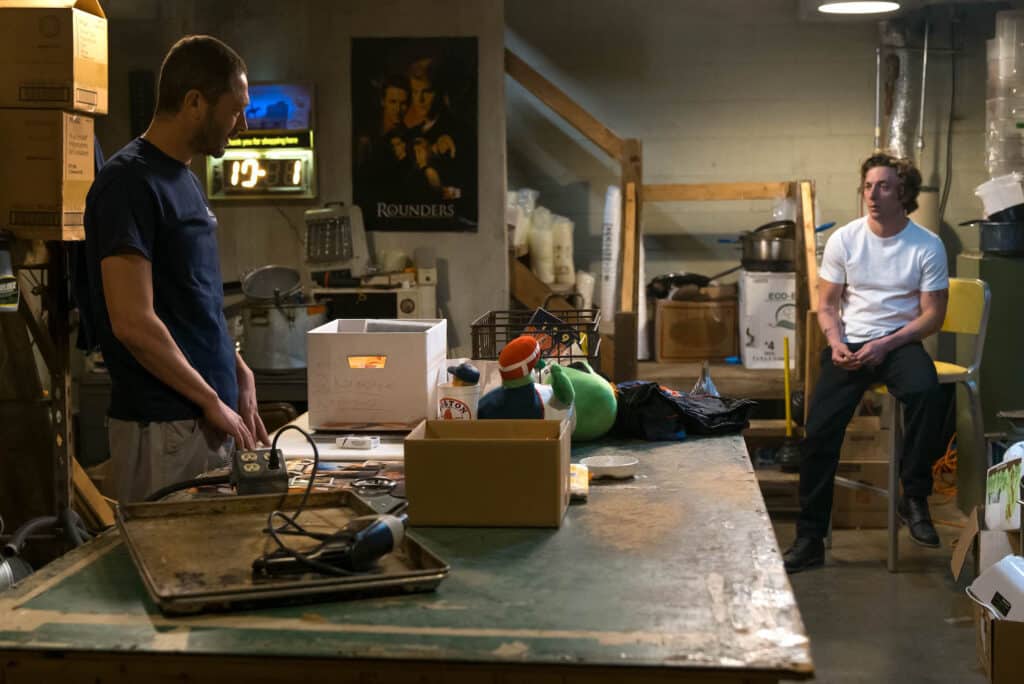
Even if you’re not a foodie, you’ll taste no flaws in “The Bear.” The FX production, streaming on Hulu, is  the second-best TV show of the year, bested only by “Succession.”

The driving force is the outrageously good performance of Jeremy Allen White, who stars as Carmen, known as “Carmy.” The former “Shameless” star plays a man who takes  over The Original Beef of Chicagoland, a failing restaurant owned by his brother, who committed suicide. In the second season, Carmy wants to create a fine dining restaurant in Chicago. One second, he is kind, the next he is exploding in anger and depressed.

White has some Brando-esque machismo, charm and muscles. But in the first season he had no love interest. Enter Molly Gordon who was excellent as one of the few people who told the truth in the film “Shiva Baby,” as Claire. With her angelic face, and delivering her dialogue in a near whisper, she is almost too good to be true. When Claire and Carmy lock lips, it’s the best TV kiss of the year. And Claire also has the best line of the whole show. When Carmy is afraid to become involved with her, she realizes he is afraid the other shoes will drop.

“Want to know a secret?” she asks. “Nobody’s keeping track of shoes.”

It’s a saucy line in the eighth episode, aptly titled “Bolognese.” Even without much screen time, Gordon shows the makings of a superstar. Her chemistry with White is mesmerizing. It’s impossible not to love either character. But while Carmy and Claire hit it off, will Carmy self-sabotage as he often does or make it work?

Ebon Moss-Bachrach, who can currently be seen opposite Jennifer Lawrence in “No Hard Feelings,” is Ritchie, his brother’s best friend and the manager of  The Original Beef of Chicagoland.  He’s jealous of Carmy and thinks he’s been sent to clean forks in another restaurant as a punishment. Bachrach nails the role as an everyman who is quick tempered, uses humor to distract from low self-esteem and wants to take care of his daughter, even as his wife is no longer with him and has moved on. Getting a ton of screen time, Bachrach knows how to take the hearts of the audience in his hand.

Ayo Edebiri is a revelation as Sydney, a young woman who is a trained young chef and perhaps hopes it gets hot in the kitchen with her and Carmy. Edebiri doesn’t strike a single false note, even when she throws up in front of her father.

Oliver Platt stars as Uncle Jimmy, who is a major investor in the restaurant, tells a story about Steve Bartman, the young fan whoreached into the field to grab a foul ball that many thought left fielder Moises Alou could have caught. The Cubs, who were aheard 3-0 in the game, wound up losing.

Jamie Lee Curtis plays Carmy’s chain smoking and verbally abusive mother, who may have a personality disorder. She loves her son, but she is quite crazy, screaming and being mean for no reason. Her scenes on the show are painfully chaotic.

Creator Christopher Storer, who writes or directs the majority of the episodes, is an absolute genius. That a scene about whether or not the restaurant passes a fire suppression inspection had me on the edge of my seat exemplifies the quality of the writing.

The food is also beautifully shot and the stress of making mistakes or wrong decisions is palpable.

We see that working in a kitchen isn’t easy and it can drive people to depression or drugs. Carmy, who is affectionately referred to as ‘The Bear” or “Bear” is a man on a mission. As for this show, it’s a mission accomplished because it fuses the tensions of the kitchen, the beauty of the food and the things that make these interesting characters tick or get annoyed.

I also learned something new: you can put sour and onion potato chips on an omelet. You won’t find another series that can at one moment be extremely relaxing, and the next, wholeheartedly unnerving. I nearly got verklempt watching a character waiting to see if her mashed potatoes were good enough.

“The Bear” is a tasty treat of a show that you will love and tell your friends about. Once you’ve had seconds, you’ll want thirds.

Jewish Actors Help Feed “The Bear” Read More »

“Deadly Deception” Is a Powerful Documentary On The Effort To Excavate What Nazis Tried To Hide at Sobibor

The Nazis never saw it coming.

They thought so little of the Jewish prisoners at Sobibor that bringing in 30 Russian Jewish P.O.W’s, who knew how to shoot would make no difference.

They were wrong.

Leon Feldhendler took his knowledge of the camp and combined it with the military knowhow of Alexander “Sasha” Pechersky to plan a revolt at the camp. It took place when the diabolical Gustav Wagner was on vacation and relied upon German punctuality; SS men would be told there were shoes or a coat waiting for them and they were killed one at a time and in a way it could be kept quiet — for a time. The phone lines were cut so reinforcements could not be called. On October 14, 1943, 300 Jews escaped into the woods, overcoming bullets and landmines. Only 52 would survive.

In 1987, “Escape from Sobibor,” a TV film starring famed Jewish actor Alan Arkin as Feldhendler and Rutger Hauer as Pechersky. And now a new documentary, “Deadly Deception at Sobibor,” chronicles the more than a decade project to excavate the ground and see what would turn up.

In the most affecting moment in the film, Sobibor survivor Philip Bialowitz, met Klaus Vallaster, whose father was a sergeant at the camp and was killed during the revolt.

Philip Bialowitz, who was one of the last Sobibor survivors, appears in the film “Deadly Decepion at Sobibor.”

Vallaster says he knows his father was guilty.

“You’re not responsible for the genocide of your father,” Bialowitz tells him during their emotional conversation.

Enother emotionally charged moment occurs when Bialowitz says Kaddish for those murdered at Sobibor. Bialowitz says that he knew his days were numbered and that was a catalyst for the revolt. The author of “Sobibor: The Plan, The Revolt, The Escape,” Bialowitz died in 2016.

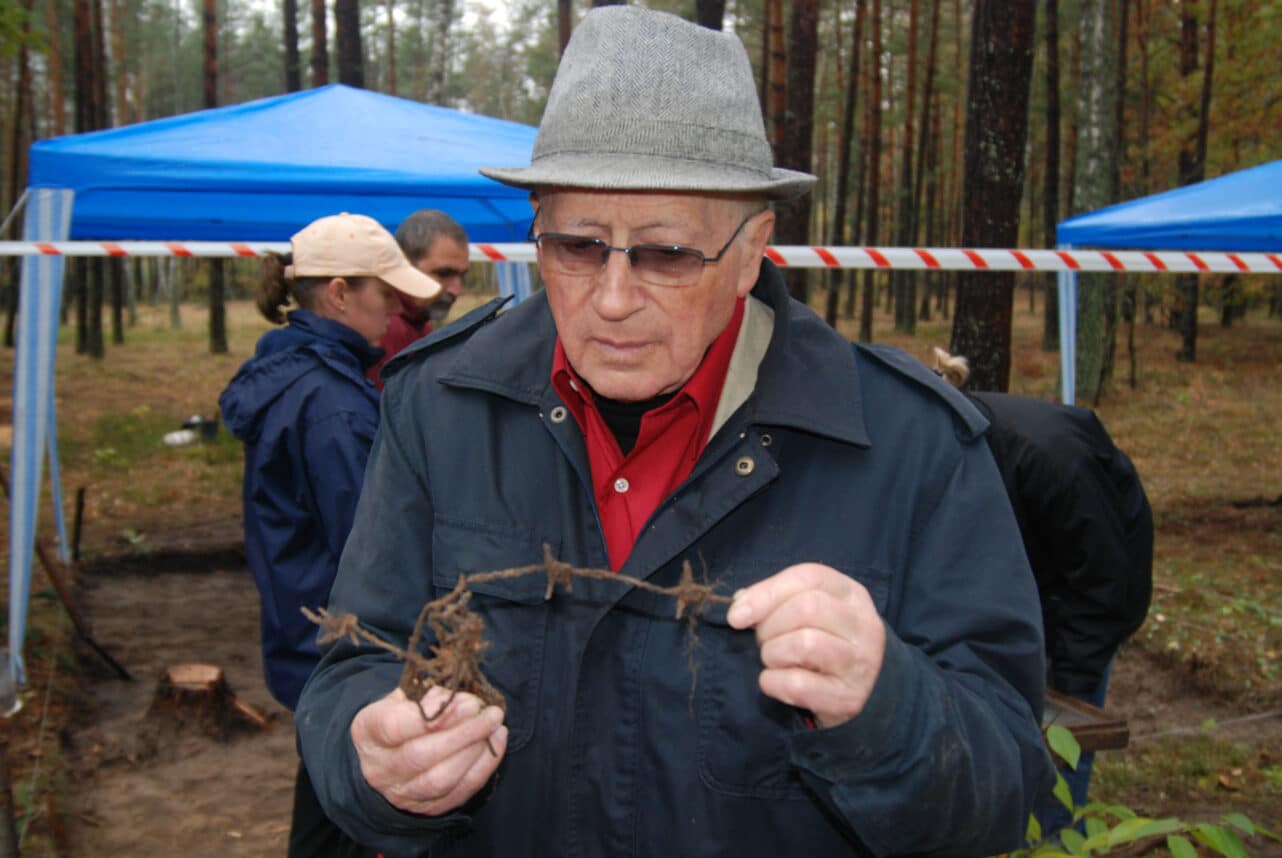
Directed by Gary Hochman, the film spends time with Israeli archaeologist Yoram Haimi, who tirelessly worked on the excavations.

“Three of my family members were killed here,” Haimi told the Journal. “We do not forget. The Nazis wanted to erase everything, they built a forest and all when found when we came was the statue, a monument, the train station and a house that was used by the commander.”

He lights a candle by the stone that mark the deaths of Freba, Yahia and Maurice Ben Zaquen, Moroccan Jews who were transported to the camp on March 25,1943.

“This is what’s left of my family,” he says in the film. “Only stone.”

A plaque on a stone marking the three relatives of Israeli archeologist Yoram Haimi were murdered.

Haimi worked alongside a team with Polish archaeologist Wojtek Mazurek, who says that what took place must not be forgotten, to search for the gas chambers, as well as the meaning of numerous artifacts.

Director Gary Hochman said the film was extremely important to him.

“The story of the revolt of Sobibor is an important and I wanted to give honor to that, but that story has already been told in film,” Hochman told the Journal. “I wanted to show the cover-up. Germany may have thought they would win the war but either way, while they always took copious notes of other things, they didn’t want anyone to know what was going on here and there are not many documents to be found. While many people know about the Warsaw Ghetto uprising, far too few know about Sobibor. We want to reveal the crimes they so desperately sought to hide.”

The film is beautifully narrated by Tovah Feldshuh. The team uses the latest technology and mark different places and uncover what was buried beneath the ground as well as efforts to destroy much of the evidence.

As part of the 3,000 square feet excavation, shoes jewelry and other personal items are found, including keys that they believe were from the suitcases brought to the camp by Jews, and a bread knife as well as gambling chips they believed were used by Nazis to play poker.

The Nazis sickly called  the road where Jews walked naked to the gas chambers “The Road To Heaven” At least 250,000 victims would walk on that specific corridor which was protected by barbed wire and bushes so people could not see what was going on.

Jews were told they were to start their new lives and were told they were going to the showers.

“It was so sick” Haimi says in the film. “To think, they go naked. It’s a shame. You took all the honor from the people before you killed them. It’s unbelievable.”

Haimi told the Journal the lies told by Nazis were so insane, had he been transported from France as his relatives were, he said he thinks he would have believed the lie.

The film shows the crews looking for evidence of eight gas chambers. At one point, Haimi finds a wedding ring, with the Hebrew words “Harei At Mekudeseht Li” a message of betrothal said by the groom during the marriage ceremony.

“It’s important to show the physical truth of what happened including artifacts and even the bones that we found,” Haimi told the Journal. “There are mass graves here.”

Rabbi Michael Schudrich, Poland’s Chief Rabbi, appears in the film and says it is important to locate mass graves and have them permanently covered with stones.

At times, about 300 Jewish prisoners were forced to burn bodies in the open air, putting the fatter people on the bottom and the thinner people on top, according to the documentary. They had to endure inhuman smells as well as the obvious psychological trauma. There were said to be crematoria and mass graves.

“Ash of one body is one glass,” Haimi says in the film.

Finding tags of children who were burn to death, Haimi asks how humans could do this.

They read the names of those murder on the anniversary of the revolt. We also hear from relatives of children that were killed in Sobibor.

With fewer and fewer survivors left, Hochman said “it is important to document the physical evidence that shows the truth of what took place,” adding that the excavations costed more than $750,000.

Already screened at some film festivals, “Deadly Deception at Sobibor” is a film that no doubt should be shown to educate students around the world. It is a testament to the fact that the Nazis thought they could hide the atrocities they had done.

Haimi notes that the majority of the victims were from Poland, with 4,000 from France, 34,000 from Holland and 27,000 from Czechoslovakia.

Incredibly, Haimi says, some did not know they were going to their deaths and thought they might have a house in Ukraine.

A telegram from Adolf Eichmann asking how many Jews were murdered up until December 31, 1942 is answered, listing 101,370 murdered at Sobibor and 713,555 at Treblinka. The exterminations would continue for 10 more months.

Bialowitz, who was taken to Sobibor, plainly states in the film: “I came here in April after the Warsaw ghetto uprising took place … I was a young boy and I wanted to live. I hoped that someday we’d able to escape and take revenge.”

Without the Russian P.O.W’s, Bialowitz  believes there would not have been a successful rebellion.

“We didn’t know how to shoot,” he said.

Toward the end of the film, we see a place where Jewish men were forced to cut the hair of Jewish women, and on pain of death, they could not reveal that the women were going to the gas chambers and not a regular shower.

A grandchild of Holocaust survivors, Chaim Motzen is passionate about genealogy and Jewish history. The renewable energy entrepreneur had read about the discovery of a pendant belonging to a child and the search for relatives. Motzen said he examined hundreds of documents over the course of months.

The efforts of the film have had a ripple effect, Hochman said, and he hopes the documentary will be an integral piece of Holocaust education.

“We owe it to those who were murdered to do all we can to honor them and educate the next generation who will no longer be able to speak to survivors.”

“Deadly Deception” Is a Powerful Documentary On The Effort To Excavate What Nazis Tried To Hide at Sobibor Read More »

Fifth Circuit Court Dismisses Lawsuit Challenging Texas Anti-BDS Law

The Fifth Circuit Court of Appeals dismissed a lawsuit on July 10 challenging Texas’ state law barring state contracts with businesses that engage in boycotts of Israel.

The lawsuit, A&R Engineering v. Scott, was filed in 2021 after the City of Houston offered A&R Engineering a renewal contract that included a provision barring boycotts of Israel. The city rebuffed A&R’s demand that the provision be removed, thus prompting the lawsuit and an injunction from a district court. Texas appealed the injunction. The city and A&R then agreed to a new contract without the provision. The Fifth Circuit sided with the Texas state government in the appeal, concluding that A&R did not have standing to sue and the district court lacked jurisdiction with the injunction because the law in question has “textually unenforceable language” and that “the Attorney General hasn’t taken any action to suggest he might enforce the provision even if he has such power.”

“There is not a single state that has adopted an anti-BDS [Boycott, Divestment and Sanctions] law that does not have that law up and running in full effect today. Challenges to state anti-BDS laws have not succeeded in a single instance,” Israeli-American Coalition for Action Executive Director Joseph Sabag said in a statement. “This particular case represented some of the last gasps of the BDS hate movement’s effort to attack these laws in the federal courts. The forces of BDS are running out of plaintiffs, and their legal arguments have proven lacking through every case they’ve lost.” Sabag aided in the drafting of Texas’ anti-BDS law.

StandWithUs CEO and Co-Founder Roz Rothstein similarly said in a statement, “This last month has been monumental for the fight against BDS and national-origin discrimination. Parties who sought to defend their states’ anti-BDS laws have prevailed victoriously in both the Fifth and the Eleventh Circuit Court of Appeals. And on July 6, New Hampshire became the newest state to adopt anti-BDS as state policy. Let the record reflect that anti-BDS laws are here to stay.” StandWithUs had arranged an amicus brief defending Texas’ anti-BDS law in the A&R lawsuit.

George Mason Law Professor Eugene Kontorovich tweeted that the Fifth Circuit’s ruling was a “common outcome” on cases challenging anti-BDS laws. “The suits are manufactured,” Kontorovich wrote. “Strategic plaintiffs trying to throw themselves in front of the law to challenge it, rather than actually being harmed.”

Last week, New Hampshire Governor Chris Sununu (R) signed an anti-BDS executive order; according to StandWithUs, “36 states now have binding anti-BDS laws” while another “has a non-binding resolution.”


Fifth Circuit Court Dismisses Lawsuit Challenging Texas Anti-BDS Law Read More »

As Specter of Nuclear Disaster Rises, Israeli Innovator Inks Partnership with Pentagon, NIH

With nuclear tension rising in Eastern Europe, the global community finds itself in a precarious position: Medical responses to nuclear fallout have not kept pace with weapons that have grown far more powerful since World War II.

Now the U.S. government is turning to one of Israel’s most innovative companies to develop next generation treatments for soldiers and civilians affected by a nuclear war or accident.

The Biden administration signed a new $4.2 million research and funding agreement this month with Pluri Inc., an Israeli biotechnology leader, to develop the company’s potential breakthrough treatment for Hematopoietic Acute Radiation Syndrome (H-ARS) – a deadly disease that can result from prolonged exposure to ionizing radiation, as in the wake of a nuclear strike.

Pluri (NASDAQ: PLUR) will collaborate with the U.S. Defense Department’s Armed Forces Radiobiology Research Institute in Bethesda, Md., with funding from the National Institute of Allergy and Infectious Diseases, the Haifa-based company announced on Tuesday.

The contract marks a major step toward developing an H-ARS treatment that is cost-efficient and effective in the event of a wide-scale disaster. Current options on the market are not feasible or scalable responses to such an event. If Pluri’s novel PLX-R18 cell therapy ultimately receives market approval, it would be eligible for the U.S. government to purchase as part of the Strategic National Stockpile.

Notably, Pluri’s potential treatment could also be administered 24 hours in advance for people who are at risk of exposure to nuclear radiation.

The partnership comes as Russian President Vladimir Putin increasingly threatens to use nuclear force, as Russia’s prolonged invasion of Ukraine drags on. Putin last month deployed short-range missiles into Belarus, and U.S. officials have deemed his threats of a potential nuclear attack to be credible.

Fighting between Russian and Ukrainian troops has also spilled closer to nuclear power plants in the region.

“The current time calls for us to accelerate the development and accessibility of radiation treatments, especially as geopolitical instability rises, and nuclear power plants face the threat of warfare,” Pluri President and CEO Yaky Yanay said on Tuesday. “Through this strategic contract with NIAID, we believe that we can realize our mission of making PLX-R18 readily available for emergency preparedness.”

Commonly referred to as radiation poisoning, H-ARS stems from radiation that can damage the exposed person’s stomach, intestines, blood vessels and bone marrow, the company noted. It can lead to cancer and other potentially fatal diseases.

Vijay Singh, head of the AFRRI laboratory in Bethesda, said he has “high expectations for results” from Pluri and the Pentagon’s collaborative effort.

“PLX-R18’s potential as a medical countermeasure for H-ARS is supported by robust human and animal data, making it a unique asset for further investigation,” Singh said in the press release.

The collaboration represents a somewhat unusual partnership between the U.S. military and a foreign pharmaceutical contractor, as well as a high-profile example of Israeli ingenuity meeting a critical need for the global community.

Pluri is an established pioneer in cell replication technology, initially focusing on medical treatments before recently expanding to other life sciences sectors including cultivated foods, biologics and agri-tech. For example, the company last year launched a groundbreaking partnership with Tnuva Group, Israel’s largest food producer, to develop cultivated meat products.

The company received a major biotech industry award last year, when its patented cell expansion platform with wide-ranging capabilities across sectors was recognized as the industry’s 2022 cell technology innovation of the year.

As Specter of Nuclear Disaster Rises, Israeli Innovator Inks Partnership with Pentagon, NIH Read More »

Zibby Owens, Book Messenger Extraordinaire, Igniting Literary Enthusiasm

Igniting Literary Enthusiasm: Zibby Owens, the Unstoppable Book Messenger Extraordinaire, Author, Publisher, and Advocate


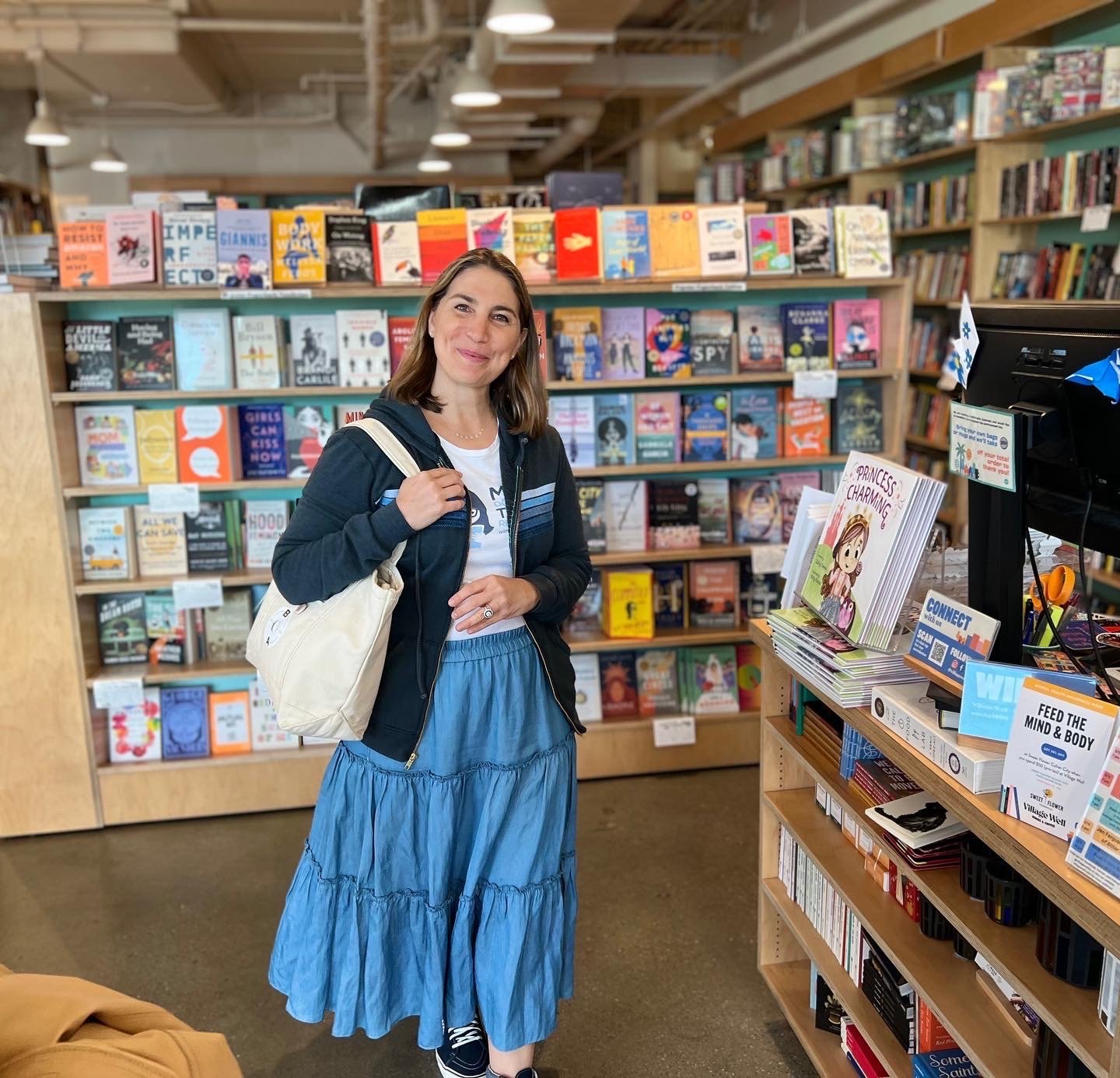
Zibby Owens is a champion of books, authors, and the joy of reading. As a book messenger, her multifaceted roles include author, publisher, podcast host, book store owner, magazine editor and Good Morning America television book correspondent. Owens has built an impressive book empire that continues to captivate readers worldwide and you can now join her for both retreats and classes! Stop by her bookstore on Montana in Santa Monica to find your next favorite read.


Lisa Niver:

Good morning. This is Lisa Niver from We Said Go Travel and I am beyond thrilled and excited to be bringing you the New York publishing powerhouse Zibby Owens. Hi, Zibby.

Zibby Owens:

Hi, how are you?

Lisa Niver:

I am so honored to be here with you. You have really changed publishing and I just, I can’t thank you enough for being so committed to memoir and women’s books and being an incredible ambassador and book messenger.

Zibby Owens:

Oh, thank you so much. I really appreciate it. I have fun.

Lisa Niver:

You definitely do. And I know there is so much going on in your life, so thank you for taking this time. You’re in the middle of writing a new novel, Blank, right?

Zibby Owens:

Yes. It’s almost done but now we’ve been editing, copyediting, so very close to the finish line.

Lisa Niver:

Blank is coming out next year early 2024?

Zibby Owens:

It comes out March 5th.

Lisa Niver:

I love that it’s coming out during Women’s History Month.

Zibby Owens:

This year for Women’s History Month, our book, Women are the Fiercest Creatures, was timed to International Women’s Day.

Lisa Niver:

You are so much about empowerment, exercise and creating your own path. You decided== “I’m going to have a book publishing company.” And now you do! Tell us about Zibby Books.

Zibby Owens:

The industry itself is tricky to navigate as a new player, but we are a publishing company. Anne Messitte is our publisher and she used to run Viking and Anchor Books. She knows all the ins and outs of the business, and we have a great team. I started Zibby Books, because of my love of authors. I idolized authors my whole life as a huge reader. I’m still a huge reader and this business comes from a place of passion and fun. I read books all the time.

I read if I’m in a bad mood, in a good mood-it’s my go-to thing. Being able to publish other people’s books after I talked to so many authors on my podcast, Moms Don’t Have Time to Read Books. I’ve had over 1,600 episodes. After talking to so many people, I realized everybody keeps complaining about all these things about publishing. And I thought–someone needs to do something about it and who is going to do it? So, I waited and waited and I thought could I be the one to do something? So, I decided to try.

Lisa Niver:

That’s very Jewish. We say that the person that saves one life saves a whole world. And I love that you talk about being a book messenger and that you’re bringing books to life is incredible.

READ THE FULL INTERVIEW ON WE SAID GO TRAVEL or your favorite podcast platform  

Zibby Owens, Book Messenger Extraordinaire, Igniting Literary Enthusiasm Read More »

you-dont-know-schiff

David Fuhrer

This week’s esteemed guest of the podcast “You Don’t Know Schiff Podcast” is David Fuhrer.

David is recognized as one of the leading innovators in the worldwide toy industry. A combination inventor, consultant and agent, he has been responsible for licensing more than 300 toys (including the Aqua Doodle, Nerf Vortex Football, and Twisty Pets) which have generated more than $1 Billion in sales! David is the Founder/Managing Director of BlueSquare Innovations which invests in and develops new product inventions.

And, as if that’s not enough, David is the Guinness World Record holder for being the world’s fastest backwards talker. In connection with his backward talking, he’s been on the Tonight Show Starring Johnny Carson and was on David Letterman several times.

Be sure to check out David and his company BlueSquare Innovations on their website: bluesquareinnovations.com:   bluesquareinnovations.com

Your hosts:
markschiff.com
Twitter: @markschiff
Instagram: markschiff1

Lowell Benjamin
Twitter: @lowellcbenjamin
Instagram: @lowellcbenjamin

David Fuhrer Read More »