West Coast Jewish Theatre often stages works that spotlight underrepresented aspects of Jewish history and culture. Its plays have broached subjects such as Jewish soldiers fighting for the Confederacy in the Civil War, and Japanese government officials who saved thousands of lives during World War II.
But there are times that call for a good laugh.
That’s what the company’s artistic director Howard Teichman said he was thinking when he chose the newest offering, “New York Water,” an absurdist love story that he’s confident will deliver the comedic goods.
“We’re living in a period of time in our history where uncertainty is everywhere,” Teichman said. “Unfortunately, politics is creating a lot of anxiety and fear in people’s lives. I felt that we should invite people to come in and laugh.”
Teichman, who is directing this production, which will make its West Coast premiere at the Pico Playhouse in West Los Angeles on Oct. 21 and is scheduled to run through Dec. 17.
The play follows Linda, a shy receptionist, and Albert, a neurotic accountant, who quickly bond over their shared disdain for New York, conceding only that the city has “the best drinking water in the country.”
The screwball romance spans years and locales, as the characters leave New York for, as Albert puts it, “a place where we might actually have a chance to blossom.” They try life in the Midwest before a stint in Los Angeles — a section rife with searing Hollywood commentary.
When the characters reach the play’s end, the only thing clear is that whatever they were searching for may have mostly eluded them.
“This is a play about making connection, trying to find love in a world that can feel loveless, and desperately wanting to become something,” Teichman said. “We all think that we should be better off than we are, and we are never satisfied with who we are inside. Even though it’s a comedy and an absurdist piece, it resonates with the idea that people think the grass is greener on the other side.”
“We all think we should be better off than we are.” – Howard Teichman
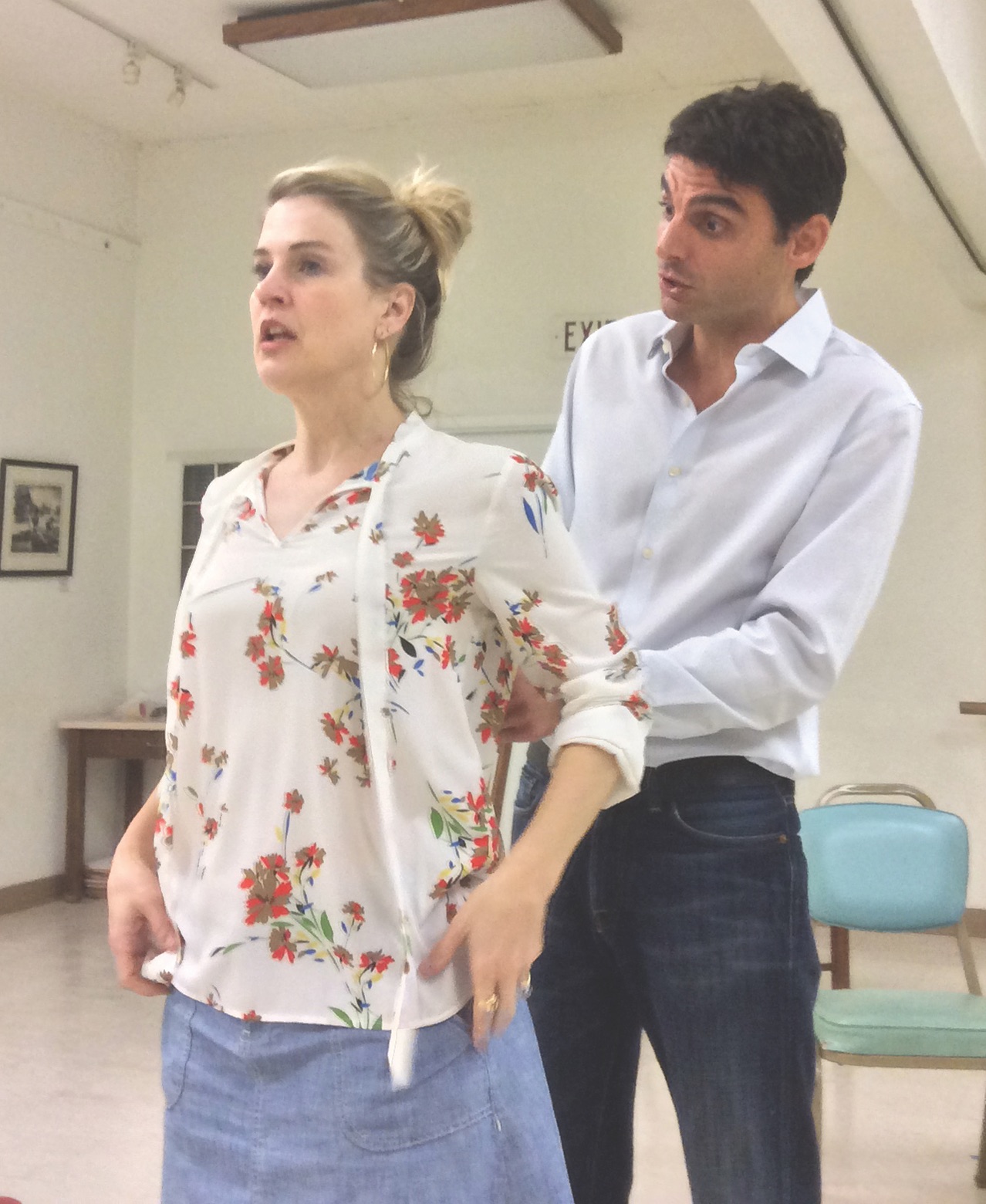
Two years ago, Teichman directed a reading of the play at West Coast Jewish Theatre with actors Ross Benjamin and Bridget Flanery, who reprise the roles in the upcoming production. Teichman knew then he wanted to stage the play, but wasn’t sure he would get the chance.
“We’re always on the brink of losing the theater,” Teichman said. “We try our best through donations from outside sources, subscribers, audience members, but … we struggle to get money.”
The company has two more productions slated for this season, but the funding for each is still up in the air, he said. “Here in Los Angeles, we have the second-largest Jewish population in the country, but I don’t know how much we value theater anymore,” Teichman said.
Although “New York Water” isn’t composed of explicit Jewish themes or values, Teichman said that part of his company’s mission is to present insightful works that feature Jewish creative talent — like Sam Bobrick, the piece’s Jewish playwright.
Bobrick, who has written more than 30 plays and enjoyed a long career writing for iconic television shows such as “Get Smart” and “The Andy Griffith Show,” said he couldn’t be happier with how this play is shaping up.
“I really think it’s going to be a wonderful production. I’ve already invited all my friends,” Bobrick said with a chuckle. “Sometimes I have productions where I don’t want anyone to see. This isn’t one of those.”
“New York Water” opens Oct. 21 and runs through Dec. 17 at the Pico Playhouse, 10508 W. Pico Blvd., Los Angeles. 8 p.m. Fridays and Saturdays; 3 p.m. Sundays. For more information, call (323) 821-2449 or visit wcjt.org.