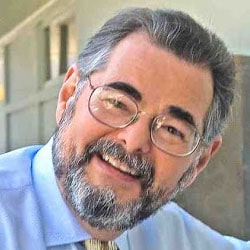

In “Jewish Comedy: A Serious History” (Norton), author Jeremy Dauber makes it clear that — at least in his opinion — Jewish jokes are no laughing matter.
“The story of Jewish comedy was almost as massive in scope, as meaningful in substance, as Jewish history itself,” Dauber writes about what he discovered when he started teaching a course on Jewish humor at Columbia University, where he is the Atran Professor of Yiddish Language, Literature and Culture. “The story of Jewish comedy — what Jewish humor did and meant for the Jews at different times and places, as well as how, and why, it was so entertaining — is, if you tell it the right way, the story of American popular culture; it’s the story of Jewish civilization; it’s a guide to an essential aspect of human behavior.”
I hasten to add that the book is always lively and sometimes laugh-out-loud funny. Dauber’s sources range from the Preacher of Dubno (an 18th-century Chasidic rabbi) to Sholem Aleichem (“the man who invented Tevye”), from Mort Sahl and Lenny Bruce to Howard Stern and Amy Schumer. Indeed, although Dauber proposes that roots of Jewish comedy go all the way back to the Bible — he uses the Book of Esther as a touchstone of Jewish humor — he also argues that America is the place where Jewish humor reached its highest expression, with Yiddish literature its seedbed.
“As the lingua franca of Eastern European Jewry, Yiddish was the vehicle for the most somber eulogies as well as the earthiest jokes, lyrical poetry along with shaggy doggerel or comments about gastrointestinal distress,” he explains. After Jews carried Yiddish to America, it became an ethnic marker for American comics such as Lenny Bruce, who once described his banter as a mixture of “the jargon of the hipster, the argot of the underworld, and Yiddish.”
Dauber finds a weighty subtext in every variety of Jewish humor.
Most impressive of all is Dauber’s ability to create a sky chart in which every Jewish comedy star can be fixed in place, not only Jerry Lewis and Danny Kaye — both of whom were tummlers in the Borscht Belt — but also such highly sophisticated comics as Mike Nichols and Elaine May. He includes not only practitioners of low comedy like Mel Brooks and Sid Caesar but also such elevated humorists as Jules Feiffer and Joseph Heller. And he reminds us of fading or wholly forgotten personalities like Mickey Katz and Belle Barth, while pointing out that the Jewish founders of Mad magazine “created that seminal countercultural satire by framing it Jewishly, through Yiddishized parody.”
Dauber repudiates what he calls “the lachrymose theory of Jewish history” and reminds us that Jewish humor always has sustained Jewish life, even at the grimmest moments. Writing shortly after the end of World War II, Irving Kristol argued that “Jewish humor died with its humorists when the Nazis killed off the Jews of Eastern Europe.” But Dauber proves that Kristol was wrong. Larry David, Sarah Silverman and Sacha Baron Cohen, all of whom have dared to tell jokes about the Holocaust, “mark the position of confidence and strength Jews have in American culture,” he writes.
Dauber finds a weighty subtext in every variety of Jewish humor. He describes Philip Roth, for example, as “our great comic cosmic writer of the modern period, the one who understands that telling jokes is in no small part a way of trying to deal with staring into the void, of grappling with the crisis of meaning.” Even Tony Kushner’s play about AIDS and homosexuality, “Angels in America,” he insists, “has its share of Jewish comic elements: the stereotypical Jewish male jokes, the use of Yiddish as punch line, and the transformation of the God-arguing tradition into something mixing the sublime and the ridiculous.”
“Jewish Comedy: A Serious History” is intended to be a work of scholarship. Dauber, however, never takes himself or his subject too seriously.
Jonathan Kirsch, author and publishing attorney, is the Jewish Journal’s book editor.