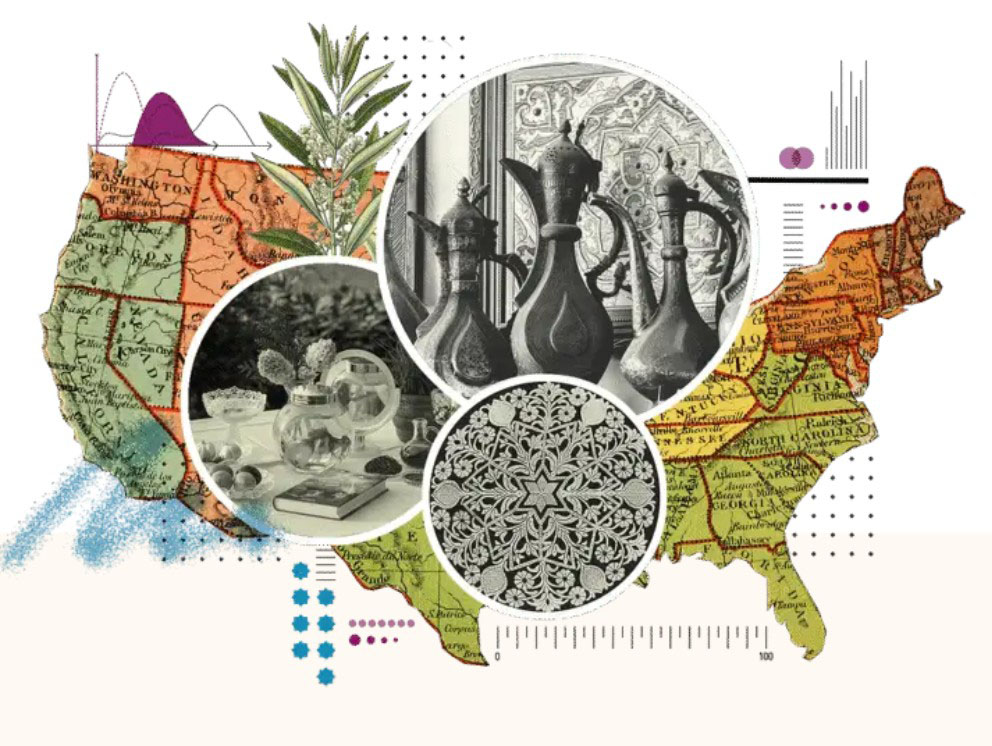
Did you know that Sephardic and Mizrahi Jews in the United States, who make up 10 percent of the American Jewish population, have higher rates of Jewish communal participation? They also have a stronger connection to Israel and are more likely to report that being Jewish is somewhat or very much a part of their daily life compared to Ashkenazi Jews.
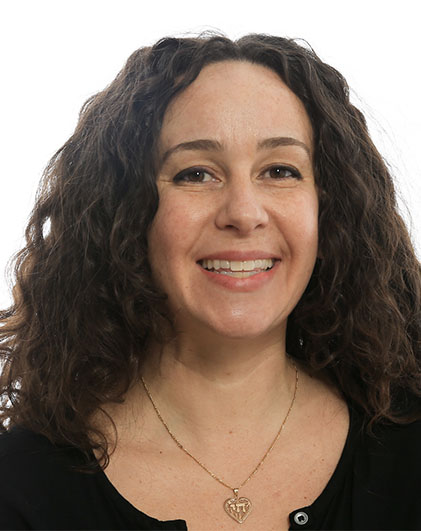
These findings were revealed in the first-ever national demographic study on Sephardic and Mizrahi Jews in the U.S called, “Sephardic & Mizrahi Jews in the United States: Identities, Experiences, and Communities.” It was commissioned by JIMENA (Jews Indigenous to the Middle East and North Africa), a California-based organization. Sarah Levin, executive director at JIMENA, said they decided to conduct this study because, “We didn’t have any reliable rigorous data on Sephardic-Mizrahi Jewish Americans. It was really important for us to have this data and share it as widely as we could with the broader Jewish community. Then, we could understand who Sephardic-Mizrahi Jewish Americans are today.”
Conducted at New York University under the direction of Dr. Mijal Bitton, the survey includes data analysis and information from interviews and community roundtables. The report also features national population estimates, migration patterns, age distribution, and denominational affiliations.
“In order to understand the contemporary Jewish story, and American story, we have to learn the basic facts about who Sephardic and Mizrahi Jews are,” said Levin.
“In order to understand the contemporary Jewish story, and American story, we have to learn the basic facts about who Sephardic and Mizrahi Jews are.”
-Sarah Levin
The report focuses on distinct communities like the Bukharian Jews in Queens, Syrian Jews in Brooklyn, Latin Sephardic Jews in South Florida, and the Persian Jews in Los Angeles.
According to the survey, LA’s Persian Jewish community is made up of between 22,500 and 70,000 people – the exact number is unknown, but it is estimated to fall somewhere in that range. Persian Jews in LA describe themselves as “traditional” when it comes to their religious observance, like other Middle Eastern Jews, and they have strong familial bonds.
Professor Saba Soomekh, who is involved in JIMENA and currently serves as the director of training and education at American Jewish Committee, has been writing about her Persian Jewish community for two decades.
“What I find interesting is how much the Sephardic and Mizrahi community in LA – for example, the Iranian Jewish community – has maintained its insularity, traditions, and ideologies four decades after the Iranian Revolution,” she said. “We have maintained our insularity by marrying fellow Iranian Jews and living very close to each other.”
In the younger generations, things have shifted a bit recently.
“You are seeing women going away to school, which you didn’t see in the past,” Soomekh said. “Some people marry outside of the Iranian Jewish community. Women are not getting married and are having children on their own. More people are being vocal, loud, and proud of their LGBTQ Iranian identities, as they should, and families are accepting it a lot more.”
The Persian Jewish influence on LA is clear, especially in neighborhoods like Beverly Hills, Westwood, and Pico-Robertson, where many Persian Jews live, go to synagogue, and conduct business.
“We are a major part of LA, and we will continue to be a major part because we are not moving,” Soomekh said.
The report comes at a time when antisemites all around the world are telling Jews in Israel to “go back to Poland” or the other European countries “where they came from” while ignoring three key facts: Israel is the Jewish homeland, many European countries ethnically cleansed Jews, and Sephardic-Mizrahi Jews never lived in those places. They were in the Middle East, where they were ethnically cleansed from places like Iran, Syria, Iraq, Lebanon, and Afghanistan.
“There has been this weaponization and appropriation of Sephardic and Mizrahi experiences in academia,” Soomekh said. “They say we have it worse in Israel than the countries where we were from, and they tell us living as dhimis (second-class citizens in Muslim states) was better. We all know that’s historically inaccurate.”
Despite this attack, Sephardic and Mizrahi Jews are going to continue speaking up and living with Jewish pride. JIMENA hopes to educate the Jewish community at large about Sephardic and Mizrahi Jews, making recommendations within the report to spread awareness and inclusivity. They include avoiding centering Judaism in the U.S. exclusively around European Jewish experiences and Ashkenazi cultural norms as the dominant narrative; avoiding viewing diversity in Jewish spaces solely through U.S. racial and ethnic categories; and avoiding seeing Sephardic and Mizrahi Jews only through the lens of exclusion, marginalization, and victimhood narratives.
“I really hope that the recommendations report within the study will be closely examined in the institutions while working independently with Sephardic and Mizrahi organizations like JIMENA to integrate the recommendations,” said Levin. “The larger Jewish community can learn from Sephardic and Mizrahi Jews in terms of building more engagement with Israel and the Middle East.”
JIMENA not only put out this study; the organization also hosts a wide range of programs that promote advocacy, education, and engagement. They have a Sephardic Toolkit for Educators, Shabbat and holiday guides, a JIMENA fellowship featuring sessions with prominent Sephardic and Mizrahi teachers, writers, and community members, and Distinctions Journal, a publication featuring Sephardic and Mizrahi voices.
“I am proud of our work in all those categories,” said Levin. “We are an educational institution that’s adding content, connections, and resources to the larger Jewish communal system. We are filling a vacuum that’s existed for a long time.”
She continued, “I want the Sephardic and Mizrahi heritage, experiences, and stories to be incorporated into everyone’s Jewish identity and experiences.”