fbpx

September 9, 2025

Who Am I, Really?

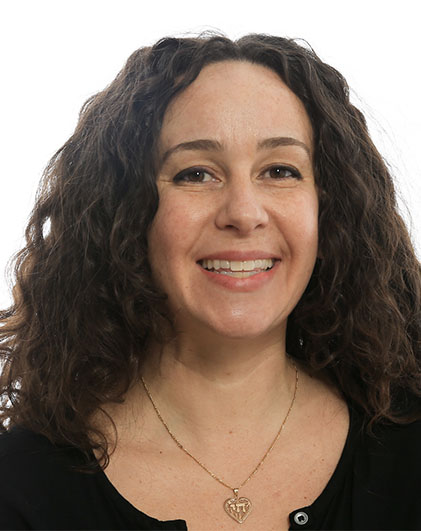
As an economist who made a career out of analyzing data, I am always on the lookout for an interesting study.  And I just found one, summarized in “Performative Virtue-Signaling Has Become a Threat to Higher Ed,” published on August 12 in The Hill. 

Over the past three years, researchers conducted almost 1,500 interviews with undergraduates enrolled at two highly selective schools, Northwestern University and the University of Michigan. Their aim was to examine dissonance between how students feel about current issues, and what they say publicly.

The findings are unlikely to shock anyone familiar with higher education today.  Seventy-eight percent said that they self-censor with regard to their beliefs around gender identity; 72% with regard to politics; 68% with regard to family values. And, most disturbingly to this veteran teacher, 80% said that they misrepresented their views in an effort to better align with those of their professor. As you might expect, the students weren’t trying to ingratiate themselves with the faculty by posing as conservatives!

The primary takeaway from the study was that 88% of undergraduates pretended to hold more progressive views than they actually do. They did this in order to succeed socially and academically. The authors praised the students for being adaptive, but lamented that rather than develop a true sense of themselves, they conform, learning to “rehearse what is safe,” with potential long-term negative consequences for their personal growth.

And imagine how challenging it is for Jewish students, when a litmus test for fitting in is how vocally you denounce Israel.

According to the authors, “Authenticity, once considered a psychological good, has become a social liability.” We are creating “a generation confident in self-righteousness, but uncertain in self.”

I suspect that what the authors refer to as an “instinct for academic and professional self-preservation” is prevalent well beyond America’s campuses.  

How many times have you self-censored in a social or work setting? When you are with pro-Trump friends and colleagues, do you speak somewhat differently than when you are with those who are proud to label themselves “progressives”? I bet most of us do.

Sociologists and psychologists inform us that friendships are in historically short supply.  And with all the economic uncertainty, why risk alienating business associates or clients? Perhaps that is why we temper what we say and do.  Or maybe during an age of extreme polarization, we recognize that there isn’t much chance of convincing anybody to reexamine his or her views, so we don’t even bother trying.

Being “diplomatic” is thought to be a positive, but if you expend so much time and effort accommodating others, there may come a point when you lose sight of what you actually believe.  “Who am I, really?” you may ask.

The Torah shows us that it isn’t always easy to determine a person’s motivation in shading the truth. In Deuteronomy 1:22, Moses praises the people for coming up with the idea to send out scouts to explore the promised land.  However, an earlier passage, Numbers 13:1, makes it very clear that it was G-d – not the Israelites – who told Moses to send emissaries into Canaan. Was Moses trying to make his audience feel good about themselves? Was he telling a relatively harmless falsehood in order to curry favor?  Perhaps Moses, like the undergraduates in the study, was so eager to ingratiate himself that he became “uncertain in self.”

As millions of students embark on their higher education journeys, I implore them not to allow the understandable desire to be accepted to hinder their personal development. Of course, they should be careful to avoid being cancelled – nobody wants that.  But they should also be careful that in their effort to conform to the prevailing campus culture, they don’t lose who they are.  

The authors conclude that higher education “must give back to students what it has taken from them: the right to believe, and the space to become.”

Don’t all of us deserve as much?

And let’s not forget that while business associates may come and go, true friends are there for you regardless of whether or not your views always align with theirs. And if they reject you due to your beliefs, ask yourself, were they friends in the first place?

 Morton Schapiro served for more than 22 years as President of Northwestern University and Williams College.  He taught almost 7,000 undergraduates over his more than 40 years as an economics professor.

Who Am I, Really? Read More »

Three Jews Walk into a Club in Reno

Recently, a rare occurrence took place at the Laugh Factory Comedy Club in Reno, Nevada.  I was booked alongside Avi Liberman and Howard Nave — a three-man lineup of funny Jews. In the late 1960s and ’70s, this was anything but rare. Time Magazine once estimated that 80% of stand-up comics back then were Jewish. Today, that number is down to maybe 30–40% — but still well above the 2–3% of Jews in the general U.S. population.

One significant difference I’ve noticed, though, is that Jewish comics of that earlier era often discussed being Jewish on stage. Today, that’s a rarity. Most of the old guard were secular, but they still seemed to know more about being Jewish than many of today’s comics. 

Today, comedians born in the U.S. — or who come from India, Russia or Muslim countries — often discuss their cultural backgrounds and what it’s like living in America. Black comics, Asian comics and LGBTQ+ comics share their experiences openly. But unless the comics are from Israel and have an accent, most Jewish American comics stay quiet about being Jewish.

If the silence is about fitting in, we don’t need to go back far to see where fitting in got us. Europe didn’t exactly roll out the welcome mat when we attempted to fit in. And look what’s happening today at colleges like Columbia and Harvard — schools where many Jews try to blend in, only to find out they never really will.

So off I went to Reno for six shows with Howard and Avi. The day before Avi arrived, he had already prepared his chicken for Shabbos. After I got there, we walked to a nearby supermarket to pick up a few remaining supplies. That’s when Avi asked if I wanted to walk to Chabad on Shabbat morning. “We can have lunch with the rabbi and his family,” he said.

“How far is it?” I asked.

“About an hour each way.”

Now, it was in the mid-90s in Reno, and most of the walk would be in direct sunlight. I declined faster than if he’d asked to borrow 10 grand until he got his memory back. I had no interest in ending up like one of those desert carcasses with the bones picked clean. I said, “Since God is everywhere, I’ll see him in the casino.”

I asked if he was at least going to carry water. “Can’t,” he said. “There’s no eruv.”

That night, I asked how the walk went.

He said one word: “Brutal.”

Later that night, thanks to Avi, I found that even a comedy club can become a holy place. On Saturday night, after Shabbos, Avi asked if I wanted to do Havdalah at the club. I said yes. We invited Howard, and he agreed, too.

While Avi went to retrieve his Havdalah kit, I was approached by an elderly woman using a walker. (No, I didn’t ask her out — I’m married.) She came over to say how much she’d enjoyed the show. Her speech was a little slurred, like someone who might’ve had a stroke. Then I noticed she was wearing a kippah.

“What’s with the kippah?” I asked.

“I always wear it,” she said. “I wear it everywhere I go.”

She was a proud Jew.

Then I heard a voice — God’s, I’m pretty sure — telling me to invite her to the front of the stage for Havdalah. The moment I suggested it she— excuse the expression — lit up like a Christmas tree. She called over her non-Jewish caretaker and another man who was Jewish. When she told him about Havdalah, he lit up too.


Standing at the front of the stage, we handed her the candle to hold. When Avi took out a little bottle of grape juice and began pouring, the man asked, “Is that just grape juice? I don’t drink.”

“You sober?” I asked.

“Yeah, 26 years.”

“Forty for me,” I told him.

After Havdalah, the woman said how meaningful it was to her, and the man agreed. “This made the trip extra special,” they said. We all hugged goodbye. I later wondered if, when they went back to gamble, God had a little extra mercy on them. 


Mark Schiff is a comedian, actor and writer, and hosts, along with Danny Lobell, the “We Think It’s Funny” podcast. His new book is “Why Not? Lessons on Comedy, Courage and Chutzpah.”

Three Jews Walk into a Club in Reno Read More »

Jews Squeezed from Both Sides

It’s been said that the worst number of political parties to have in a country is one. But the second worst number of parties to have is two. As we see every day, the unnatural binary nature of a two-party system forces false choices, extremism, tribalism and a growing necessity for both parties to kowtow to their most ideologically extreme members. The result is increased polarization, continued gridlock and a growing populist anger and resentment from voters toward the entire political system.

But while the Democrats and Republicans are not very effective at most things, they have demonstrated an immense talent for protecting their mutually beneficial duopoly. Their primary elections and conventions are held at taxpayer expense, reforms such as open primaries and ranked choice voting that would increase voters’ options are strongly discouraged, and the legal and financial barriers to a new party are stultifying. In spite of these obstacles, support for new political options continues to grow, especially among the youngest generation of voters.

It would be understandable if Jewish Americans were to decide to lead the battle for new political options, especially given the way we are being treated by the two major parties. The situation has gravely deteriorated over the 23 months since the Hamas terrorist attacks on Israel, but the increasing animosity toward Israel and Jews has been swelling among the most ardent loyalists in both parties’ bases for years.

Gaza has unquestionably made a bad situation far worse. The recent Democratic National Committee annual meetings were the scene of nasty internal warfare over a resolution that called for a suspension of all military aid to Israel and the immediate recognition of a Palestinian state. Efforts by party leaders to make the resolution less harsh by limiting the arms prohibition to only offensive weapons, calling for a release of the remaining Israeli hostages, and emphasizing the need for a two-state solution that specifically mentioned Israel were unsuccessful.

The symbolic measure was defeated and beleaguered party leaders scrambled to pass a more subdued alternative, which combined the call for the hostages’ release and a two-state solution with an immediate ceasefire and increased humanitarian aid for Gaza. But after that compromise was passed, angry opponents confronted DNC chair Ken Martin, who then actually withdrew his own resolution and instead promised to appoint a task force to study the issue further.

The result was an unavoidable reminder of how the historical political home of most Jewish voters was turning away from them. The question is no longer whether younger progressives will ultimately steer the party even further from its longtime support of Israel, but rather how much longer the dwindling cohort of older Democrats can forestall the inevitable.

But if one were to think that the Republican Party was positioned to take advantage of this opportunity to attract large numbers of American Jews into their tent, one would be gravely mistaken. While Democrats were tearing each other into pieces over Gaza last month, Republicans continue to display a peculiar ambivalence toward Jewish voters that prevents their ostensible  Zionism from having more of an impact. 

Last week, the Republican-controlled House Appropriations Committee proposed cutting off funding for colleges and universities that fail to address campus antisemitism and requiring schools to specifically implement anti-discrimination policies regarding antisemitism as a precondition of federal funding. But the federal budget they passed earlier this year cut hundreds of millions of dollars for security grants for nonprofit organizations, money which synagogues, schools and Jewish community centers heavily rely on to protect their members from antisemitic violence. This fuels the suspicion of many Jewish leaders that the Trump administration’s crackdown against antisemitism on college campuses is actually cover for unrelated efforts to force universities to make unrelated changes in student admissions and faculty hiring.

One party is compromising Israel’s safety and security. The other is putting American Jews at risk. The Jewish community has a decision to make: do we continue to put habitual partisan allegiance over our safety and welfare? Or do we begin to explore other alternatives altogether?


Dan Schnur is the U.S. Politics Editor for the Jewish Journal. He teaches courses in politics, communications, and leadership at UC Berkeley, USC and Pepperdine. He hosts the monthly webinar “The Dan Schnur Political Report” for the Los Angeles World Affairs Council & Town Hall. Follow Dan’s work at www.danschnurpolitics.com.

Jews Squeezed from Both Sides Read More »

We’re Choosing Scrolling Over Life Itself

There’s a story I remember reading as a kid. In it, a boy is given a silver ball with a magic thread inside. Whenever he pulls on the thread, time leaps forward. A little pull and suddenly the bell rings and math class is over. Waiting in line? Pull the thread and your wait is over. Monday blues? A slightly more forceful tug will whisk you to the start of the next weekend. Want winter to end and spring to arrive? Pull the thread. 

By the end of the story, the boy is an old man. He’s raced through his childhood, adolescence and adulthood in what felt to him like a matter of weeks. Somewhere, hidden in all those unpleasant and tedious moments, was life itself.

Much of the allure of smartphones is that they give us the power of the magic thread. Life is filled with tedious moments: waiting for the bus, washing dishes, walking to the store, waiting for your dinner companion to come back from the restroom. Turning to our phones allows us to opt out of experiencing these moments by hitting our brains with a wave of endlessly novel and momentarily captivating images and sounds. 

It feels harmless enough. I’m not talking about ignoring your kids on a rare vacation or scrolling through dinner with friends. Those are life’s best moments, and it’s obvious why trading them for a dopamine hit is a bad bargain.

But what about the forgettable moments — the ones that barely register. What do we miss if we scroll instead of staring out a bus window? What do we gain by thinking while we do the dishes instead of listening to another podcaster drone on? Are our thoughts really that profound?

Most often, they aren’t. But that’s not the point. The point is that, like the little boy from the story, we will eventually discover that checking out of life’s tedious moments means checking out of life itself. 

Research shows that people who have regular small interactions with strangers — chatting with the store clerk, holding a door — are happier than those who don’t. We think our happiness comes only from our closest relationships, but these brief connections with strangers make us feel seen.

Maybe our ultimate satisfaction depends just as much on the moments we dismiss as pointless and dull — the ones that most tempt us to pull the thread.

This, increasingly, is my suspicion. As a hopeless phone addict, who regularly scrolls through these moments, I feel that something vital is being lost — that my life is less rich than it could be — than it used to be. 

I also sense that there is a dangerous feedback loop at work. The more I scroll through dull moments, the less tolerance I have for boredom, and the more moments seem intolerably dull. The more you pull the thread, the more you want to pull it and the faster you pull. 

For years now, I have been wondering what I can do to escape this cycle. Mostly, I have tried to pursue a policy of moderation. This policy has largely failed. 

Back when I smoked cigarettes, I had a fantasy that if I could only manage to become a light smoker, I would never have to quit. This fantasy kept me trapped in addiction far longer than I needed to be. I only became free when I realized that moderation with an inherently addictive substance is impossible. 

This realization is slowly dawning on me again in regards to smartphones. A technology that is designed to keep us hooked is not one that most people will succeed in using moderately. But with smartphones, the situation is perhaps worse. In the course of about two decades, we have remade our world into a place where it is nearly impossible to function without this technology. 

Smartphones once promised us convenience if we used them. They now threaten isolation and irrelevance if we desist from them. I don’t have a tidy solution. But I am not giving up. I don’t want to be that boy with the silver ball, tugging at the thread until nothing is left. I’ve already let too much of this one irreplaceable life slip through my fingers. We all have.

In the coming weeks, I’ll devote these columns to trying to break free — while still living in a world where smartphones are nearly compulsory. I’ll share what works, what doesn’t, and whatever small moments I manage to reclaim, in the hope others might reclaim them too.


Matthew Schultz is a Jewish Journal columnist and rabbinical student at Hebrew College. He is the author of the essay collection “What Came Before” (Tupelo, 2020) and lives in Boston and Jerusalem.  

We’re Choosing Scrolling Over Life Itself Read More »

Up-Close Killers, Then and Now

What kind of human being is capable of walking up to another person — an innocent, defenseless, unarmed civilian — and, at close range, shooting him or her?

That question must be on the minds of many who are reading about the Palestinian Arab terrorist attack on bus passengers in Jerusalem this week. The killers were within a few feet of their victims.

Prof. Daniel Goldhagen considered this question in his famous book, “Hitler’s Willing Executioners.” There are those who dislike comparisons between contemporary terrorists and the Nazis. Let’s take a closer look at Goldhagen’s analysis and consider whether it’s valid to compare up-close killers, then and now.

Goldhagen focused on a particular German police unit, Reserve Police Battalion 101, which carried out up-close shootings. That segment of the genocide, which historians today call “the Holocaust by bullets,” took place before gas chambers became the Germans’ primary means of mass murder.

In June 1942, 500 battalion members were assigned to the town of Jozefow, in German-occupied southern Poland. They were instructed to force local Jews out of their homes, take them to a nearby forest, and shoot them point-blank.

When a truck unloaded its Jewish prisoners at the edge of the Józefów forest, each of the waiting policemen selected a victim. The two then walked together to the nearby execution site. Many of the captives were children. The walk “afforded each perpetrator an opportunity for reflection,” Goldhagen noted. “It is highly likely that, back in Germany, these men had previously walked through woods with their own children by their sides. … In these moments, each killer had a personalized, face-to-face relationship to his victims.”

Goldhagen wondered if the typical killer ever “asked himself why he was about to kill this little, delicate human being who, if seen as a little girl by him, would normally have received his compassion, protection and nurturing.” Or perhaps it was that the killer could only “see a Jew, a young one, but a Jew nonetheless,” and therefore accepted “the reasonableness of the order, the necessity of nipping the believed-in Jewish blight in the bud.”

The killing mechanics were necessarily “a gruesome affair,” Goldhagen noted. “Each of the Germans had to raise his gun to the back of the head, now face down on the ground, that had bobbed along beside him, [and] pull the trigger.” They had to “remain hardened to the crying of the victims, to the crying of women, to the whimpering of children,” and to the bloody corpses at their feet. The reserve police officers slaughtered defenseless Jews in this manner for hours on end.

Goldhagen emphasized the formative role of antisemitic ideology in facilitating the deeds of these killers. The German government-controlled news media and schools dehumanized Jews, depicting them as rats, spiders, or lice that needed to be destroyed. The only solution to the “Jewish problem” was the “final solution,” death.

The atrocities of Oct. 7 echoed the savagery of the Jozefow forest. Shooting disabled children and elderly people at close range, binding and executing entire families together, beheading infants. Until just a few years ago, the Oct. 7 perpetrators, like this week’s killers in Jerusalem, were all students in schools run by the Palestinian Authority (PA) or Hamas, where they were taught to hate Jews and glorify violence.

The Jerusalem terrorists, Muthanna Amro, 20, and Mohammad Taha, 21, came from the towns of Qubeiba and Qatanna, respectively. Since 1995, those towns have been governed by the PA. As they were growing up, the boys’ teachers, religious authorities and news media taught them to view Jews as less than human, and to idolize perpetrators of anti-Jewish violence.

Only such indoctrination can explain how terrorists were capable of murdering the two youngest Israeli hostages in Gaza, four-year-old Ariel Bibas and his nine-month-old brother, Kfir, “in cold blood, with their bare hands,” as the pathologist reported. Or how other terrorists could walk up to defenseless bus passengers in Jerusalem and shoot them point-blank.

Just two weeks ago, official PA Television aired a sermon in a mosque by a PA-salaried Shariah judge named Abdallah Harb. He proclaimed: “O Allah, strengthen our stance and grant us victory over the infidels … count them one by one, kill them one by one, and do not leave even one …” PA TV has aired the sermon at least seven times in the past year, Palestinian Media Watch reports.

The Jerusalem bus killers heard such rhetoric every day of their lives. And then they acted on it.


Dr. Medoff is founding director of The David S. Wyman Institute for Holocaust Studies and author of more than 20 books about Jewish history and the Holocaust. His book “The Road to October 7: Hamas, the Holocaust, and the Eternal War Against the Jews” will be published on October 1, 2025, by The Jewish Publication Society / University of Nebraska Press.

Up-Close Killers, Then and Now Read More »

Old Libel in a ‘Newish’ Outfit: Demonizing Lobbying for Israel—U.S. Relationship

A disturbing chorus is echoing across America’s fringes—and increasingly into its mainstream. From far-left activists to right-wing “manosphere” influencers, the refrain is the same: U.S. support for Israel isn’t about shared democratic values, overlapping interests, or decades of alliance. It’s because AIPAC and “Jewish billionaires” have supposedly “bought” Washington.

This message is as lazy as it is dangerous. It claims American leaders couldn’t possibly support Israel on the merits. No, they must be bribed or blackmailed. At its core, this narrative is nothing new. It’s the recycling of one of the oldest antisemitic tropes: that Jews secretly pull the strings of governments.

Antisemitism in the Manosphere

The “manosphere”—a loose web of influencers from Andrew Tate to “red pill” podcasters—has become fertile ground for this narrative. On Tate’s channels, conspiracies about Jewish “control” of banks and governments are repackaged for millions of young followers. Nick Fuentes—though openly extreme—links AIPAC and “Jewish billionaires” to U.S. “corruption.” Even in less extremist podcaster spaces, claims that “Zionist money controls Washington” circulate as if they were common sense.

This isn’t foreign policy critique. It’s the old blood libel of Jewish manipulation, dressed up as anti-elite populism and fed to audiences without the historical grounding to recognize it.

The Far Left’s Mirror Image

On the far-left, the script is almost identical. Progressive coalitions like “Reject AIPAC” accuse the pro-Israel lobby of “buying elections” and undermining democracy. “Justice Democrats,” a progressive PAC founded by leaders of Bernie Sanders’ 2016 presidential campaign cast AIPAC as a sinister force of corruption. After his 2024 defeat, Rep. Jamaal Bowman blamed “AIPAC’s dark money.” Alexandria Ocasio-Cortez joined in, blaming Democratic losses on “AIPAC spending” rather than on campaign failures.

This rhetoric is rarely, if ever, applied to other lobbies. Cuban-Americans shape U.S. policy toward Cuba. Armenian-Americans push for genocide recognition. The NAR (National Association of Realtors) and AARP spend many multiples of AIPAC. Big Tech and Big Oil dwarf its resources. Yet almost no one mutters they secretly control Washington. When Jews advocate for their views on the shared interests of the US and Israel, suddenly then it’s conspiratorial treachery.

AIPAC’s Actual Role

AIPAC is influential, but hardly unique. In the 2022–23 cycle, it spent nearly $80 million—a large figure, but far below the NAR, AARP, or Big Pharma. What AIPAC does is not sorcery: it organizes, educates, and mobilizes voters around an issue millions of Americans—Jews and non-Jews alike—care about.

That’s not corruption. That’s democracy.

Yet AIPAC is uniquely singled out. Why? Because conspiracy theories about Jewish influence have centuries of traction, while conspiracies about oil companies, Silicon Valley, or other foreign states don’t scratch the same ancient itch.

Take Qatar. Doha has spent lavishly to shape U.S. universities, think tanks, and media coverage, funneling hundreds of millions into lobbying and PR. The Gulf monarchy bankrolls Al Jazeera, funds Hamas, and sponsors Islamist movements worldwide. Its lobbying dwarfs AIPAC’s. Northwestern University even recently admitted that nearly $1 billion in Qatari donations came with conditions silencing criticism of Qatar. And yet, there are no viral posts warning that “Qataris secretly control America.” But when Jews and their allies advocate for survival in their indigenous homeland, far too many treat it as a global plot.

Why U.S.–Israel Support Exists

The narrative also collapses under scrutiny. U.S. support for Israel long predates AIPAC. In 1948, President Truman made the U.S. the first country to recognize the Jewish state. Ronald Reagan called Israel a “loyal friend” while forging an alliance against Soviet influence. Barack Obama expanded military cooperation even while sparring over policy with Benjamin Netanyahu.

Why? Because Israel’s interests align with America’s. Iran’s proxies—Hamas, Hezbollah, and the Houthis—attack both Israel and U.S. forces. The Houthis fire at U.S. Navy ships. Iranian-backed militias target American troops in Syria and Iraq. Beyond that: Israel shares intelligence that saves American lives; its cyber and missile-defense innovations underpin U.S. security; its battlefield experience informs U.S. doctrine; and as the region’s only liberal democracy, Israel is America’s natural ally against authoritarian powers—Iran, Russia, and China—that seek to dominate one of the world’s most vital regions.

To pretend otherwise is to ignore geopolitical reality.

The Hypocrisy Laid Bare

The claim that “AIPAC bought Washington” isn’t just false; it’s hypocritical. Politicians routinely respond to constituents, donors, and activists—on Cuba, Ukraine, gun rights, climate, you name it. Only when it comes to Jews and Israel is this advocacy regularly depicted as sinister.

That’s not coincidence. It’s antisemitism.

The Real Cost of Lazy Conspiracies

This rhetoric isn’t harmless. It mainstreams the idea that Jews cannot advocate without corrupting. It delegitimizes an alliance rooted in shared interests by reducing it to shadowy manipulation. And it tells young Americans—left and right—that antisemitic tropes are “common sense.”

Worse, it fuels the fantasy that Israel is a foreign project that can be dismantled like French Algeria. Anti-Zionists cling to this analogy: Jews, like French colonists in North Africa, are outsiders who must manipulate America to survive, otherwise they could be terrorized into leaving. But Jews are not outsiders. They are indigenous to Israel. Unlike the French in Algeria, Jews did not come from a metropole across the sea—they returned to join Jews who had never left.

This false framework, encouraged by “AIPAC controls Congress”-style conspiracies, gives extremists a dangerous sense of inevitability—that Israel can be undone through violence. That delusion has fueled a century of wars, terrorism, and rejectionism. Feeding it—under the guise of anti-corruption populism or progressive purity—further condemns Israelis and Palestinians alike to bloodshed.

And in the U.S., these conspiracies bleed into harassment and violence against Jews. If Jews are portrayed as a disloyal, corrupting force, then ordinary Jews in the U.S. become fair game. We already see it: Jewish students targeted on campus, synagogues vandalized, professionals smeared as disloyal, and Jews from LA to NY physically attacked and even murdered. The costs are not abstract. They are immediate and dangerous.

America’s support for Israel isn’t based on bribery. It isn’t corruption. It isn’t AIPAC puppet mastery. It is recognition of shared values, interests, and threats, consistent across Democratic and Republican administrations for 75 years.

The claim that it’s all about AIPAC or “Jewish money” is not clever analysis or radical “red-pill” truth-telling. It’s the laziest dishonesty, rooted in antisemitic tropes that have justified pogroms, expulsions, and genocide for centuries. Whether those parroting it know it or not, they are trafficking in one of history’s oldest and deadliest libels. That makes this rhetoric not only wrong but dangerous—for Jews and for anyone who values truth and democratic debate.


Micha Danzig served in the Israeli Army and is a former police officer with the NYPD. He is currently an attorney and is very active with numerous Jewish and pro-Israel organizations, including Stand With Us and the FIDF, and is a national board member of Herut North America.

Old Libel in a ‘Newish’ Outfit: Demonizing Lobbying for Israel—U.S. Relationship Read More »

NCSY’s Bryan Borenstein on His Homerun Work with West Coast Jewish Students

Growing up, Rabbi Bryan Borenstein loved baseball. He would play hours of catch each day with his dad and brothers, working on his pitching in the front yard and spending summers at the Baseball Development Center (the BDC). There, he was coached by college, minor league, and major league players. Dodgers players would drop by every week, and the team’s pitching coaches, Dave Wallace and Rick Honeycutt, personally showed him how to improve his pitching.

Eventually, Borenstein earned a scholarship to pitch at Occidental College, and it looked like he had the chance to make it to the big time. However, he decided to defer to study at yeshiva in Israel for a year. And when he came home, he was a changed man.

“When the time came, I turned down the scholarship,” he said. “Observing Shabbat had become central to my life, and I chose Torah over baseball.”

“Observing Shabbat had become central to my life, and I chose Torah over baseball.”

Though Borenstein gave up the possibility of a career in sports, he doesn’t regret it. Today, he is in the meaningful role as the Regional Director of West Coast NCSY, a youth group for Jewish high schoolers run by the Orthodox Union. He comes into the role after years of working with Jewish college students at OU-JLIC, where he was supporting students in the San Fernando Valley.

“The timing felt perfect,” said Borenstein, who is now in his second year with NCSY. “After years of working with college students, I now had the chance to serve the high school community—not directly, but by overseeing the West Coast region.”

Through his work, the rabbi will travel the West Coast region, visiting school campuses, joining Latte and Learns, spending Shabbats at Shabbatonim, and meeting the communities the local NCSY directors serve. The organization’s programs include Shabbat and holiday gatherings; leadership development courses and conferences; trips to Israel; and community fellowships. The teens can learn, make friends, build their skills for their future careers, and engage with their Judaism in a fun and significant way.

“My goal at NCSY is simple: to make Judaism accessible and relatable to all Jewish high school students,” Borenstein said. “I want each teen to build a personal, meaningful relationship with Judaism, and I see my role as empowering our chapter directors to be the best educators and role models they can be.”

At NCSY, Borenstein witnesses incredible interactions all the time. One student lost his father as a young boy and, this year, he also lost his mother. With no siblings and a grandmother living out of state, he was alone. NCSY’s San Diego Chapter Director, Yoni Wilks, immediately wanted to help.

“We spoke often about how best to support him, and Yoni was at his side every step of the way,” said Borenstein. “He even worked with community members to help this teen learn how to manage a home and pay bills—skills he suddenly needed.”

Borenstein continued, “Stories like this are everywhere in NCSY. Yes, we teach Torah. But more than that, through relationships, mentorship, role modeling, and community, we live Torah.”

NCSY’s Bryan Borenstein on His Homerun Work with West Coast Jewish Students Read More »

JIMENA Commissions Groundbreaking Report on Sephardic and Mizrahi Jews in America

Did you know that Sephardic and Mizrahi Jews in the United States, who make up 10 percent of the American Jewish population, have higher rates of Jewish communal participation? They also have a stronger connection to Israel and are more likely to report that being Jewish is somewhat or very much a part of their daily life compared to Ashkenazi Jews.

Sarah Levin

These findings were revealed in the first-ever national demographic study on Sephardic and Mizrahi Jews in the U.S called, “Sephardic & Mizrahi Jews in the United States: Identities, Experiences, and Communities.” It was commissioned by JIMENA (Jews Indigenous to the Middle East and North Africa), a California-based organization. Sarah Levin, executive director at JIMENA, said they decided to conduct this study because, “We didn’t have any reliable rigorous data on Sephardic-Mizrahi Jewish Americans. It was really important for us to have this data and share it as widely as we could with the broader Jewish community. Then, we could understand who Sephardic-Mizrahi Jewish Americans are today.”

Conducted at New York University under the direction of Dr. Mijal Bitton, the survey includes data analysis and information from interviews and community roundtables. The report also features national population estimates, migration patterns, age distribution, and denominational affiliations.

“In order to understand the contemporary Jewish story, and American story, we have to learn the basic facts about who Sephardic and Mizrahi Jews are,” said Levin.

“In order to understand the contemporary Jewish story, and American story, we have to learn the basic facts about who Sephardic and Mizrahi Jews are.”
-Sarah Levin

The report focuses on distinct communities like the Bukharian Jews in Queens, Syrian Jews in Brooklyn, Latin Sephardic Jews in South Florida, and the Persian Jews in Los Angeles.

According to the survey, LA’s Persian Jewish community is made up of between 22,500 and 70,000 people – the exact number is unknown, but it is estimated to fall somewhere in that range. Persian Jews in LA describe themselves as “traditional” when it comes to their religious observance, like other Middle Eastern Jews, and they have strong familial bonds.

Professor Saba Soomekh, who is involved in JIMENA and currently serves as the director of training and education at American Jewish Committee, has been writing about her Persian Jewish community for two decades.

“What I find interesting is how much the Sephardic and Mizrahi community in LA – for example, the Iranian Jewish community – has maintained its insularity, traditions, and ideologies four decades after the Iranian Revolution,” she said. “We have maintained our insularity by marrying fellow Iranian Jews and living very close to each other.”

In the younger generations, things have shifted a bit recently.

“You are seeing women going away to school, which you didn’t see in the past,” Soomekh said. “Some people marry outside of the Iranian Jewish community. Women are not getting married and are having children on their own. More people are being vocal, loud, and proud of their LGBTQ Iranian identities, as they should, and families are accepting it a lot more.”

The Persian Jewish influence on LA is clear, especially in neighborhoods like Beverly Hills, Westwood, and Pico-Robertson, where many Persian Jews live, go to synagogue, and conduct business.

“We are a major part of LA, and we will continue to be a major part because we are not moving,” Soomekh said.

The report comes at a time when antisemites all around the world are telling Jews in Israel to “go back to Poland” or the other European countries “where they came from” while ignoring three key facts: Israel is the Jewish homeland, many European countries ethnically cleansed Jews, and Sephardic-Mizrahi Jews never lived in those places. They were in the Middle East, where they were ethnically cleansed from places like Iran, Syria, Iraq, Lebanon, and Afghanistan.

“There has been this weaponization and appropriation of Sephardic and Mizrahi experiences in academia,” Soomekh said. “They say we have it worse in Israel than the countries where we were from, and they tell us living as dhimis (second-class citizens in Muslim states) was better. We all know that’s historically inaccurate.”

Despite this attack, Sephardic and Mizrahi Jews are going to continue speaking up and living with Jewish pride. JIMENA hopes to educate the Jewish community at large about Sephardic and Mizrahi Jews, making recommendations within the report to spread awareness and inclusivity. They include avoiding centering Judaism in the U.S. exclusively around European Jewish experiences and Ashkenazi cultural norms as the dominant narrative; avoiding viewing diversity in Jewish spaces solely through U.S. racial and ethnic categories; and avoiding seeing Sephardic and Mizrahi Jews only through the lens of exclusion, marginalization, and victimhood narratives.

“I really hope that the recommendations report within the study will be closely examined in the institutions while working independently with Sephardic and Mizrahi organizations like JIMENA to integrate the recommendations,” said Levin. “The larger Jewish community can learn from Sephardic and Mizrahi Jews in terms of building more engagement with Israel and the Middle East.”

JIMENA not only put out this study; the organization also hosts a wide range of programs that promote advocacy, education, and engagement. They have a Sephardic Toolkit for Educators, Shabbat and holiday guides, a JIMENA fellowship featuring sessions with prominent Sephardic and Mizrahi teachers, writers, and community members, and Distinctions Journal, a publication featuring Sephardic and Mizrahi voices.

“I am proud of our work in all those categories,” said Levin. “We are an educational institution that’s adding content, connections, and resources to the larger Jewish communal system. We are filling a vacuum that’s existed for a long time.”

She continued, “I want the Sephardic and Mizrahi heritage, experiences, and stories to be incorporated into everyone’s Jewish identity and experiences.”

JIMENA Commissions Groundbreaking Report on Sephardic and Mizrahi Jews in America Read More »