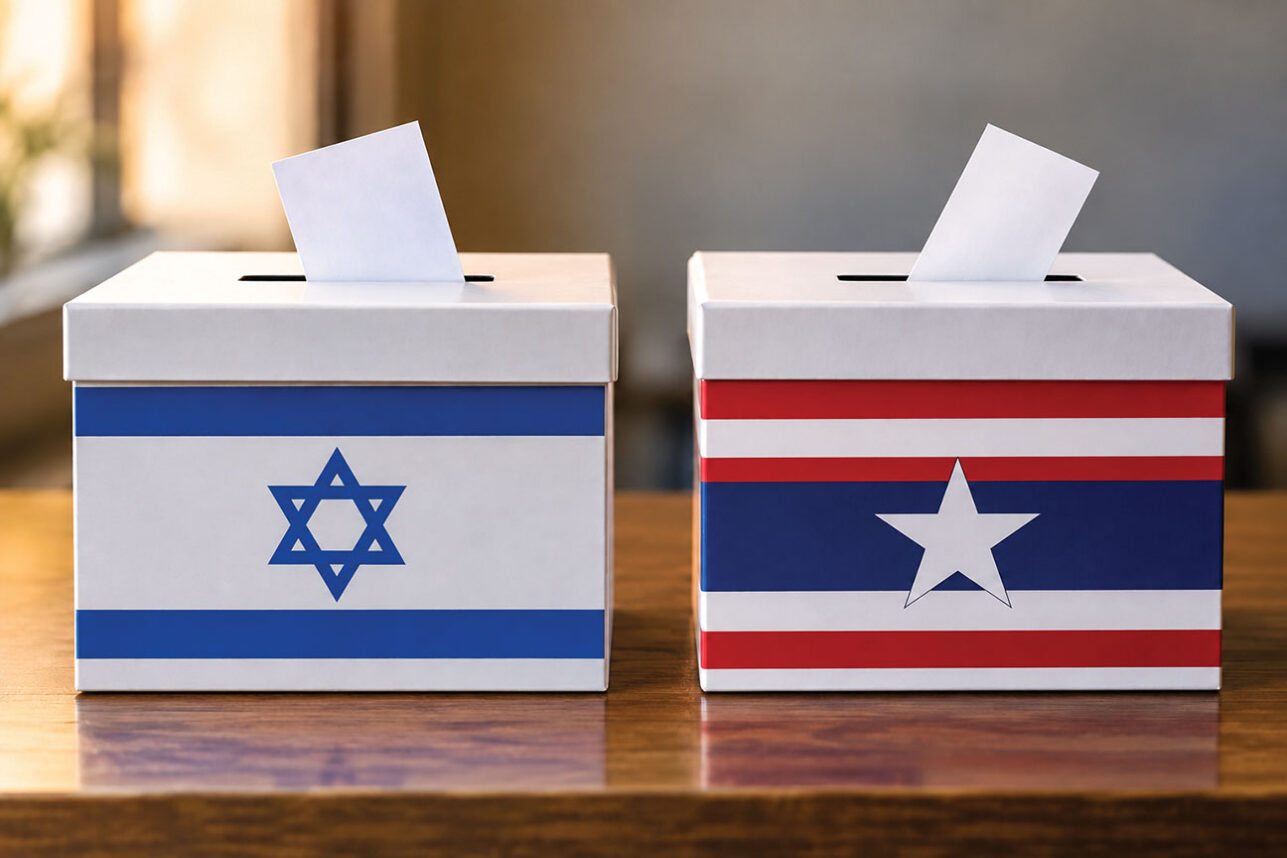

In America, there are 40 days between Memorial Day and Independence Day.
In Israel, zero.
Israel’s Memorial Day (Yom HaZikaron) begins at sundown on April 21, followed immediately by Independence Day (Yom HaAtzmaut).
For those who have experienced it, the contrast is mesmerizing. A nation wallows in tragedy and then jumps right into ecstasy.
It sounds jarring, and it is.
On their Memorial Day, Israelis mourn their fallen soldiers and victims of terror, halting everything (cars stop, pedestrians stop, everything stops) during two national sirens. Given that Israeli sirens these days are prompts to rush to bomb shelters, one can only imagine the angst should one of those sirens coincide with a memorial siren.
In Israel, though, angst is a way of life, what my friend Yossi Klein Halevi calls “neurotic zen.”
So, after a long, solemn day of ceremonies throughout the country, including visits to cemeteries and special services at schools and public institutions, by nightfall the nation is unleashed in a burst of joy.
I saw it one year while staying in Tel Aviv. It’s quite the “before and after” — streets and public squares that were somber are suddenly filled with revelers who have only party in their hearts.
One day they cry over tragedies, the next they dance over independence, as if both extremes are somehow connected.
“Tragedy requires the finest appreciation by the writer of cause and effect,” Arthur Miller wrote in a 1949 essay when his play “Death of a Salesman” was published. “No tragedy can therefore come about when its author fears to question absolutely everything, when he regards any institution, habit or custom as being either everlasting, immutable or inevitable.”
Miller was contemplating a view of tragedy in which “the need of man to wholly realize himself is the only fixed star.” He was going against the convention that tragedy is of necessity allied to pessimism, arguing instead that “the possibility of victory must be there in tragedy.”
But what kind of victory?
“If it is true to say that in essence the tragic hero is intent upon claiming his whole due as a personality, and if this struggle must be total and without reservation, then it automatically demonstrates the indestructible will of man to achieve his humanity,” Miller wrote.
Achieving one’s humanity is how one of our great playwrights expresses the redeeming quality of tragedy.
In that spirit, the back-to-back nature of Yom HaZikaron and Yom HaAtzmaut offers a kind of public theater where Israel’s emotional extremes are on full display, a nation of tragic heroes with the “indestructible will” to achieve its humanity.
And if indeed the “possibility of victory must be there in tragedy,” then Yom HaZikaron and Yom HaAtzmaut are not just adjacent but also integrated. When Israelis mourn those who have given their lives for their country, they know that past victories allow them the freedom to rejoice the following day.
Similarly, tragedy must hover over Independence Day, but not the one-dimensional tragedy we’re used to. This is the tragedy of Miller’s essay, one that requires a balance “between what is possible and what is impossible.”
The marriage of Yom HaZikaron and Yom HaAtzmaut lives in that twilight of aspiration.
“It is curious, although edifying, that the plays we revere, century after century, are the tragedies,” Miller wrote. “In them, and in them alone, lies the belief-optimistic, if you will, in the perfectibility of man.”
There’s little twilight, or possibility of victory, in how Jews of the Diaspora have memorialized their ultimate tragedy. Holocaust museums have been so focused on conveying tragedy that expressions of victory have been limited to essential but obvious slogans such as “never again.”
To fulfill their own sense of possibility, museums would do well to hint at deeper victories, not least those connected to that indestructible Jewish will to achieve our humanity.
Proximity counts.
Just as the special power of Yom HaZikaron and Yom HaAtzmaut lies in their proximity, Holocaust memorials, while they engage with the darkest of all tragedies, ought to include their version of Yom HaAtzmaut. Museums, for example, could add a concluding exhibit titled, “How Jews Live Now.” Visitors would then see examples of how descendants of the six million honor the victims by reclaiming the eternal Jewish drive to thrive.
We memorialize tragedies, even those as bewildering as the Shoah and Oct. 7, by remembering the promise of victory.
That lesson cannot wait 40 days. It must be immediate, as it will be next week in Israel.