
Those of us who have supported a two-state solution over the years, whether we consider ourselves liberal or conservative, have always recognized this unfortunate but necessary reality: Israel cannot maintain itself as both a Jewish state and a democratic state unless it is bordered by a Palestinian state. The demographic makeup of a post-1967 Israel evenly divided between Jews and Arabs will eventually force a wrenching choice between the election of an Arab-controlled government that could eradicate the Jewish principles on which the country was founded, or prohibit full voting rights for 50% of their population. Given the fundamental transformation – and diminishment – of Israel that would result from giving up Judaism or democracy, many of us believe that either sacrifice would be too great.
But our numbers are shrinking. A potential two-state solution has been dormant for years with both the Israeli and U.S. governments. Unsurprisingly, only 15% of Israeli Jews would accept a Palestinian state in the aftermath of Oct. 7, 2023. And new polling from the well-regarded Jewish Voters Resource Center shows that an increasing number of American Jews not only reject Palestinian statehood but seem to be deciding that either democracy or Judaism is no longer a necessary aspect of Israel’s identity.
The JVRC poll asked respondents to choose between three possible options to resolve the Israeli-Palestinian conflict: one nation with a government elected by Jews and Palestinians (which threatens the continued existence of a Jewish state), one nation that does not permit Palestinians to vote in national elections (de facto annexation, which would eliminate Israel’s democracy) and the establishment of two separate countries each with their own government. Barely half of American Jews now support a two-state solution, the rest dividing almost evenly between the other two alternatives.
Younger Jews are even less committed. More Jews under age 35 (44%) now support a one-state solution that could sacrifice Israel’s Jewish identity than support two side-by-side countries (39%). We have known for some time that younger Jews feel less connected to Israel than their parents and grandparents. But the fact that almost half no longer prioritize the existence of Israel as a Jewish state is jarring.
The numbers among older Jews on this question are only somewhat more reassuring. Twenty-four percent of the American Jewish community supports a one-state (potentially non-Jewish) solution, but that figure has almost doubled in just two years. This is roughly the same number who prefer annexation, even given the severe democratic compromises that would be required.
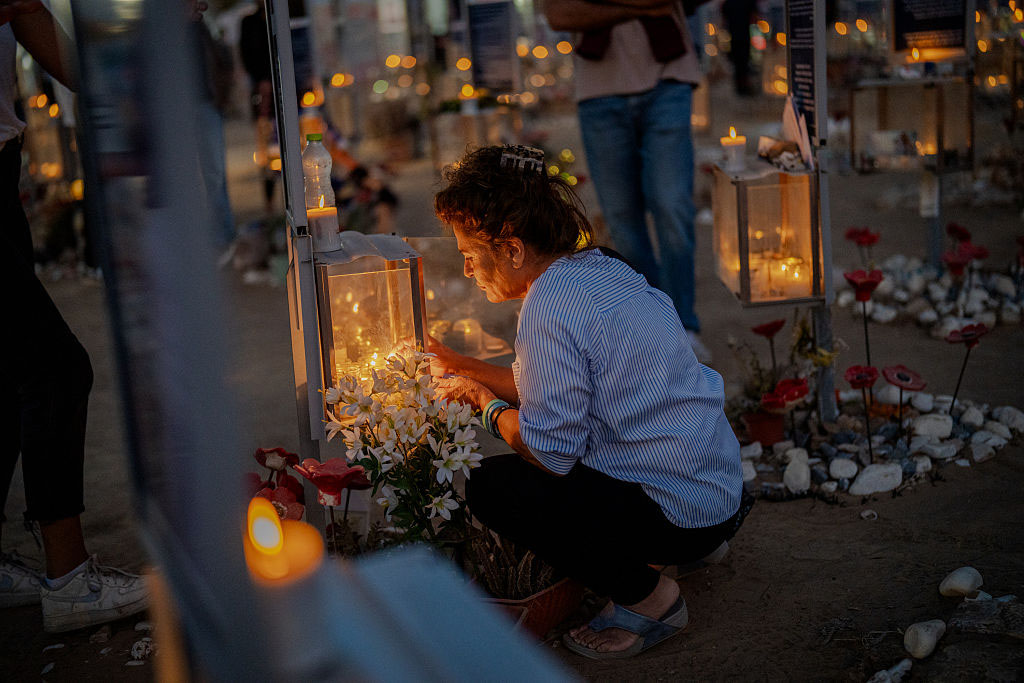
The one-state solution has considerable flaws as well, most notably the indisputable security hazard posed by a Palestinian nation. Memories of the Gaza Disengagement, the subsequent launch of terror rockets and the rise of Hamas still haunt us. And every Diaspora Jew must acknowledge that the danger that is largely theoretical for most of us has a direct and horrific impact on the life of every Israeli every day. The 1,200 men, women and children who perished at the hands of Hamas terrorists will always be a stark reminder of the menace that will always lurk.
But none of us – Israeli or American – can predict whether that menace would be greater or lesser under side-by-side nations. And we are reminded regularly that Israel’s ability to normalize relationships with Saudi Arabia and other regional powers – and the prospect of a new era in the Middle East – will also require steps toward a Palestinian state.
Granted, these are easier risks to take in Santa Monica than Sderot. So while I continue to personally believe that a two-state solution is preferable to sacrificing Israel’s Jewish or democratic foundations, I would never attempt to impose my priorities from 7,500 miles away.
But these twin pillars of what makes Israel so special should not be sacrificed so quickly and casually. I believe in Judaism. I believe in democracy. And I believe strongly in a nation that honors both principles. But I worry that so many of us are now willing to cast aside those defining characteristics. Once we relinquish such treasures, it will be exceedingly difficult to get them back.
Dan Schnur is the U.S. Politics Editor for the Jewish Journal. He teaches courses in politics, communications, and leadership at UC Berkeley, USC and Pepperdine. He hosts the monthly webinar “The Dan Schnur Political Report” for the Los Angeles World Affairs Council & Town Hall. Follow Dan’s work at www.danschnurpolitics.com,