fbpx

June 3, 2026

‘Playmakers’: A Jewish Toyland

When you were a kid, you probably had a Teddy Bear. If you were a girl, you probably had a Betsy Wetsy, a Chatty Cathy, more dolls. Boys would play cops and robbers, cowboy and Indians. A few years go by and toddlers have probably graduated to Barbie dolls and G.I. Joe “action figures” and electric trains.

Those toys have a connection that goes beyond department store shelves: They were all made by companies started by Eastern European and Russian Jewish immigrants: Morris Michtom, Louis Marx, Ruth Handler (née Moskowitz), the Hassenfeld brothers (Henry, Hillel and Herman) and Joshua Lionel Cohen and their companies, Ideal, Marx, Mattel, Hasbro and Lionel trains.

That’s the subject of Michael Kimmel’s entertaining history, “Playmakers: The Jewish Entrepreneurs Who Created the Toy Industry in America.” His provocative thesis is that not only did this group of Eastern European and Russian Jews create toys (many still manufactured and loved after nearly a century) — they created the modern idea of “childhood.”

In fact, the entire toy industry in America was largely Jewish, from the company founders and executives to the designers and factory workers, from the wholesale distributors and the army of salesmen, to the retail outlets and the large department stores that sold them.

As immigrants or first-generation Jewish Americans – many of them raised on New York’s Lower East Side – the toymakers did not have easy childhoods. Among other indignities, Kimmel notes that in early 20th-century New York public schools, “Jewish children who were disobedient or spoke Yiddish were punished by having their mouths washed out with nonkosher soap,” while noting that kosher soap was not even made in America until 1914. But he writes that they “remade America – and in particular, American childhood – not in their own image, but in the image of what they wanted it to be.”

Kimmel describes this as a “near-perfect assimilationist fantasy, the hermetically sealed, impenetrable claim to revered membership in the American social world.” This, even though they remained fenced out of that world; not even the Jewish owners of the department stores where the toymakers wholesaled their goods fully accepted them. The Jews who owned the stores were German Jews who came to America in the mid-1800s; educated and assimilated, they looked down on the more outwardly Jewish, Yiddish-speaking manufacturers as “Ostjuden.” Even as they became more successful and affluent by mid-century, Jewish toymakers were still viewed as alien. “The harder they worked to gain full acceptance into the mainstream of American society,” he writes, “the more they were reminded they really didn’t belong.”

But these early 20th-century Jews held onto their “near-perfect assimilationist fantasy,” he writes. “Yiddish Jews created the toys and dolls and manufactured them … all to ensure that the Christmas season would be at least as happy for Jews as it was for gentiles.” (One misbegotten attempt to cater to the gentile market was Ideal’s marketing of a baby Jesus doll. Ideal even got Pope Pius XII to bless the idea, but the toy was a bomb, Kimmel writes, because as Jews, “they didn’t understand that no one was going to have their children playing with the Christ child.”)

Kimmel, the great-grandnephew of Morris Mitchom, Ideal’s founder, started the book as a family history, and Ideal does get the greatest amount of attention. It’s a fascinating story. While he tries to give the full history of the industry, Morris, and his son, Benjamin Franklin Mitchom are the main characters of Kimmel’s story. And they have a great story to tell. He follows Morris (né Moshe) and his wife Rose, recently arrived in America, from the Brooklyn candy store where they made the first “teddy bear” (who coined the name is in dispute) after seeing an editorial cartoon of Theodore (Teddy) Roosevelt sparing a young bear to starting Ideal Toys which became the industry leader.

Morris starts out with the same liberal/socialist politics as many Jewish immigrants, and was a proud supporter of labor unions … at least until 1907, when his employees joined the Teddy Bearmakers Union and went on strike. The union prevailed, Kimmel claims, because of their skill in sewing the Mitchom bear’s “inscrutable, half-human smile,” a feature Kimmel – with one eyebrow ironically arched – claims makes the Mitchom bear look “more Jewish” than his competitors’ bears. After the strike, Morris switched his charitable donations from labor unions to Zionist organizations.

Morris was an innovator, creating dolls who cried, wet themselves and talked; his dolls used the new wonder material, plastic. Before the American toy industry, most dolls were either home-made rag dolls or German-made porcelain; making a doll “indestructible” he was told, would depress sales. He brushed them off: “You can’t give [an expensive and fragile porcelain doll] to a baby!” The embargo of German goods during World War I helped American toys gain a foothold.

Morris and the other early toymakers might have been “poor and terribly unhappy young men,” but they “took childish pleasure in the joy they brought to millions of children.” These serious men “retained the ‘inner child’ who had never been given free rein when they themselves were children.” It was a talent that was passed to the second generation of Mitchoms, as Morris’ son, Ben entered the business. Ben, Kimmel writes, “understood something essential about the minds of children and the ways dolls might engage them. He believed that what children wanted in a doll was the opportunity to play adult.”

Kimmel is a companionable guide to this story. “Playmakers” is filled with short anecdotes and asides. In the original telling of “Goldilocks and the Three Bears,” she breaks into the home of three bachelor bears … and let’s just say it does not end well for her. The association of girls with pink and boys with blue might feel ancient and immutable, but Kimmel writes that as late as the 1930s, a Parent’s magazine advised red – the color of courage and zeal – represented male attributes while blue stood for the feminine traits of faith and constancy. He makes a fair case that Popeye and Olive Oyl – created by the Jewish artist Elzie Crisler Segar and animated by the Jewish cartoonist Max Fliescher – are Jewish, and that the 1960s Beatles trading cards were only licensed after a Topps executive made a comment to the band’s Jewish manager, Brian Epstein in Yiddish.

It’s so much fun to read, you wish it had been more tightly edited. It’s a deeply researched book, sometimes too much so. Kimmel dedicates some 40 pages to the stories of Jewish comic book artists and writers. It’s an interesting story, and it makes sense to include them (they were going after the same audience), but it’s one that’s been told before in greater detail (and can be seen in the “Inventing America: The Comic Book Revolution” exhibit currently at the Skirball). The fact that the toymakers pretty much recede from the narrative make it feel like it was wedged into the book. The factchecking is also a little dodgy; he calls “Horse Feathers” the Marx Brothers first feature (it’s their third). More concerning is his claim that Whittaker Chambers, the English translator of “Bambi” was better known for “hounding some Jewish leftists named Rosenberg,” when he obviously meant Alger Hiss, who was not even Jewish.

But the book picks up toward the end, as the baby boom creates an even bigger market for toys. In his concluding chapter, Kimmel notes the irony that “Sesame Street,” created by the half-Jewish Joan Ganz Cooney, with its inner city setting of tenements and garbage cans, brought childhood back to the world the toy industry’s creators were trying to leave behind. 

‘Playmakers’: A Jewish Toyland Read More »

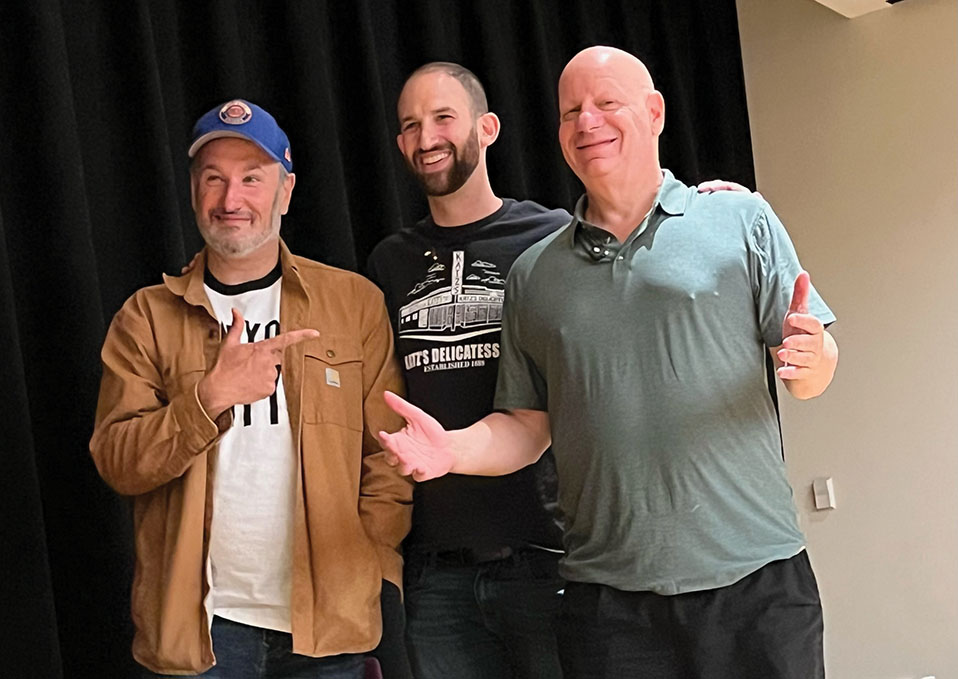
Comedian Jeff Ross Talks Pastrami in the Big Apple

Fresh off the Kevin Hart roast for Netflix and his “Take a Banana for the Ride” Broadway run (also streaming on Netflix), comedian Jeff Ross popped into New York City last weekend to discuss the most sensual of all the cured meats — pastrami.

The Museum of the City of New York welcomed “The Roastmaster General” along with Katz’s Deli owner Jake Dell for a meaty talk on the Jewish deli’s legacy. With delis disappearing across the country at an alarming rate, Katz’s remains at the top of its game with long lines, fueled by Tik Tok and nostalgia.

Its legendary status went viral (before viral was a thing) after starring in Rob Reiner’s 1989 romantic comedy, “When Harry Met Sally.” Orgasm this – orgasm that. Until you’ve actually had Katz’s fresh piping hot pastrami on rye with mustard (hold the mayo) you don’t know from pleasure.

Ross, who these days looks like the poster child for least hungry comic, knows a thing or two about Jewish delicacies. Raised in Newark, New Jersey, the now-mostly Los Angeles resident grew up in a catering family whose bread-and-butter business was weddings, bar mitzvahs and meats. Ross’ repeated exposure and ingestion of all those juicy meats may or may not have led to his colon cancer diagnosis last year — from which, thankfully, he’s now fully recovered, his love for pastrami still very much intact. Ross joked that it’s OK to still eat Katz’s savory pastrami, as long as you get that annual colonoscopy check-up.

Part of what makes the pastrami at Katz’s Deli so exceptional is the entire experience. First-hand, I can assure you- it’s real and it’s spectacular! Beyond its mouth-watering silky smooth deliciousness, Katz’s offers up a freshly cut slice to each customer, prior to fulfilling each order. Ross proclaimed it was “like a good drug dealer” allowing “a taste” from the counter. Ross says he adopted that practice to his adorable German Shepherd at feeding time. Katz’s takes such care and pride in its slicing, that cutters don’t touch a knife until year 10!

Dell added how “humbling it is to be in a position to share [Jewish] culture and food from years ago to people from around the world.” When I asked Ross what separates Katz’s from other delis like Canter’s or Nate and Al’s in Los Angeles, he just smiled and stated, “C’mon, it’s New York.”

Katz’s ships nationwide – and Ross revealed he once sent Jimmy Kimmel a salami. In keeping with his good friend’s roasting sensibilities, Kimmel wrote him back, “Thanks for the salami –  it fit perfectly.”

While Katz’s is very much a traditional Jewish style deli, they’re willing to take unorthodox requests. Someone in the audience asked Dell what’s the weirdest combination sandwich someone’s ordered. His answer did not disappoint. Chopped Liver and Tuna Fish. As you can imagine, the crowd groaned. Ross quickly sniped, “I’ve never heard an audience so grossed out. What a noise.”

“Well done,” Dell added. “I’m horrified by that sandwich.”

Ross did give a shout-out to a new Las Vegas spot that’s quickly becoming a desert favorite- Siegel’s Bagelmania. Ross proclaimed this expansive full-service modern Jewish deli with all the trimmings to be “Bagelicious.”

After covering bananas and pastrami, perhaps Ross’s next great culinary conquest will be bagels (and Elvis).


Steve Matoren is currently directing “Bagels & Elvis,” a documentary that focuses on why everyone’s so obsessed with who’s Jewish.

Comedian Jeff Ross Talks Pastrami in the Big Apple Read More »

AFHU Western Region Names President, Jewish American Heritage Month Exhibit, Moishe House Shabbat

American Friends of the Hebrew University (AFHU) Western Region has appointed Michael Cypers as its new board president.

An attorney and longtime community leader, Cypers succeeds Dr. Barbara Natterson-Horowitz, who will continue serving as president emerita. A longtime supporter of AFHU, Cypers currently serves on the AFHU National Executive Committee and national board.

“I am honored to become the next president of AFHU’s Western Region and deeply appreciate the leadership and dedication that Dr. Natterson-Horowitz has demonstrated during her tenure,” Cypers said. “I look forward to expanding awareness of the Hebrew University, its missions of excellence and tolerance and advancing initiatives that help make the world a better place through the best of Israeli creativity and practical ingenuity.”

AFHU raises funds and awareness for the Hebrew University of Jerusalem, one of Israel’s leading institutions of higher learning.


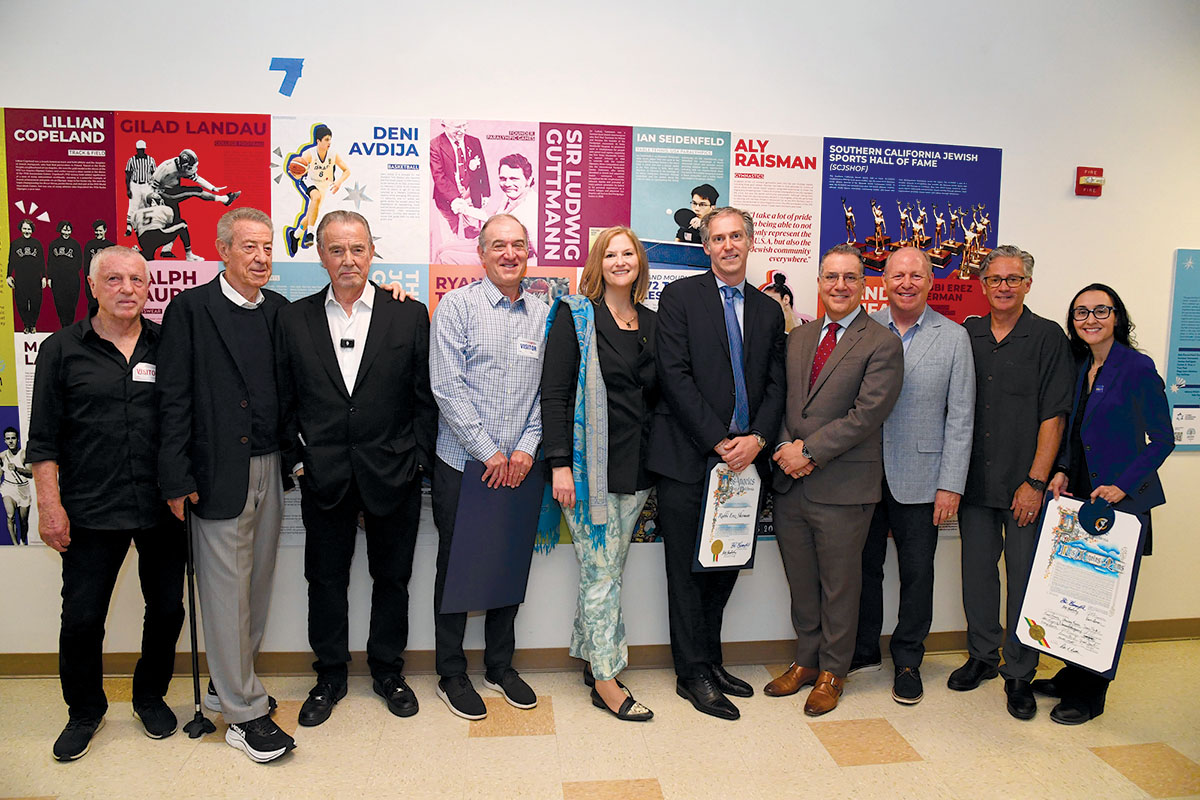
Avraham Cohen, Eli Marmur, Eric Braeden, Danny Goldberg, Adeena Bleich, Rabbi Erez Sherman, Councilmember Bob Blumenfield, Stephen Sass, Mitch Gaylord and Maria Camacho gather for a Jewish American Heritage Month celebration at L.A. City Hall. Courtesy of Jewish American Heritage Month

A new exhibit celebrating Jewish contributions to sports was unveiled at Los Angeles City Hall as part of Jewish American Heritage Month-Los Angeles (JAHM-LA).

The exhibit, “Playing it Forward: Championing Jewish Values in Sport,” highlights athletes, institutions and changemakers who have helped shape sports in Los Angeles and beyond. The display features figures ranging from baseball legend Sandy Koufax to Olympic champions Mark Spitz and Aly Raisman.

Community leaders, athletes and elected officials gathered at City Hall on May 15 to mark the opening of the exhibit. “The program launches our JAHM-LA ‘Light the Path’ initiative promoting cross-cultural local heritage and learning across neighborhoods by activating transit as shared civic space,” said Mary Kohav, a member of the JAHM-LA advisory board.

Stephen Sass, president of the Jewish Historical Society of Southern California, emphasized the importance of public storytelling. “Ongoing education and highlighting personal and community stories are essential to building understanding and combating hate,” Sass said. “’Playing It Forward’ does exactly that by showing how Jewish history and values are not abstract – they are lived every day through sport.”


Moishe House Venice’s outdoor neighborhood Shabbat celebration. Courtesy of Mem Global

Moishe House Venice recently took Shabbat outside the walls of its home and into the neighborhood.

Instead of hosting its traditional Friday-night gathering indoors, residents and guests walked to The Penmar restaurant, where they welcomed Shabbat with kiddush, food and conversation before settling in for an evening of live music under the Venice sky.

The event reflected Moishe House’s mission of creating accessible Jewish experiences for young adults in the places where they already live, socialize and build community.

“It was such a joy to welcome Shabbat outdoors at this gorgeous Venice venue with Jewish young adults dancing, singing and connecting,” Moishe House Venice resident Lisa Friedman said.

As the sun set, attendees enjoyed performances ranging from jazz to Latin music while connecting with fellow young Jewish Angelenos.

AFHU Western Region Names President, Jewish American Heritage Month Exhibit, Moishe House Shabbat Read More »

Tourism Chief Says Israel Remains Open, Safe, and Ready for You

It is no surprise that tourism in Israel has taken a significant hit amid the war with Iran. Ongoing uncertainty about the near future has led many travelers to remove Israel from their vacation plans. After all, few people are willing to spend their holiday running to bomb shelters or worrying about incoming missiles.

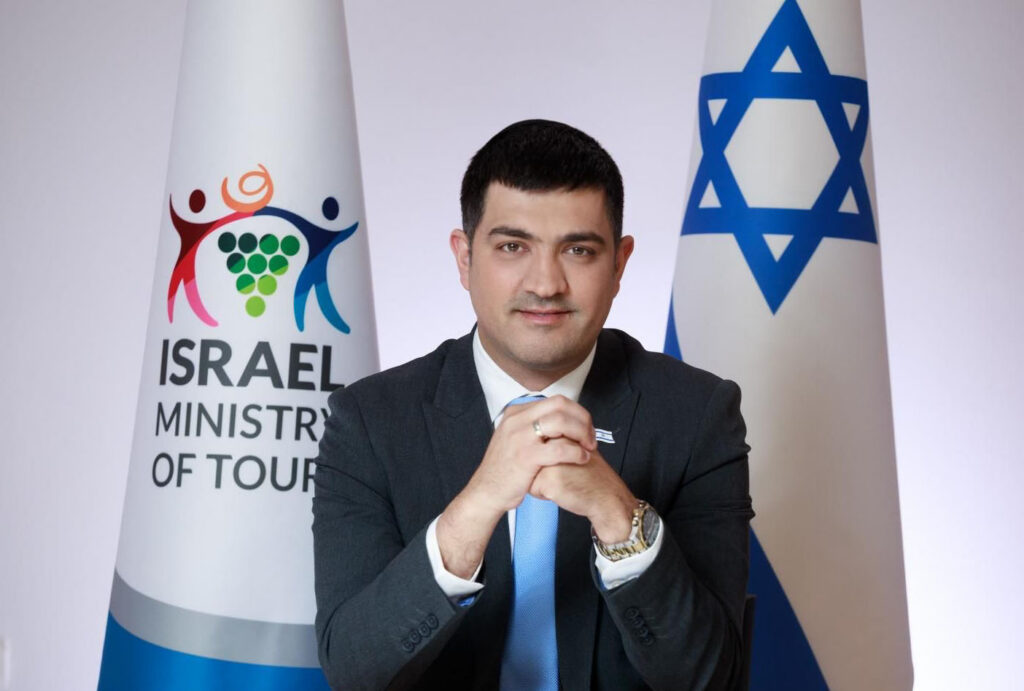
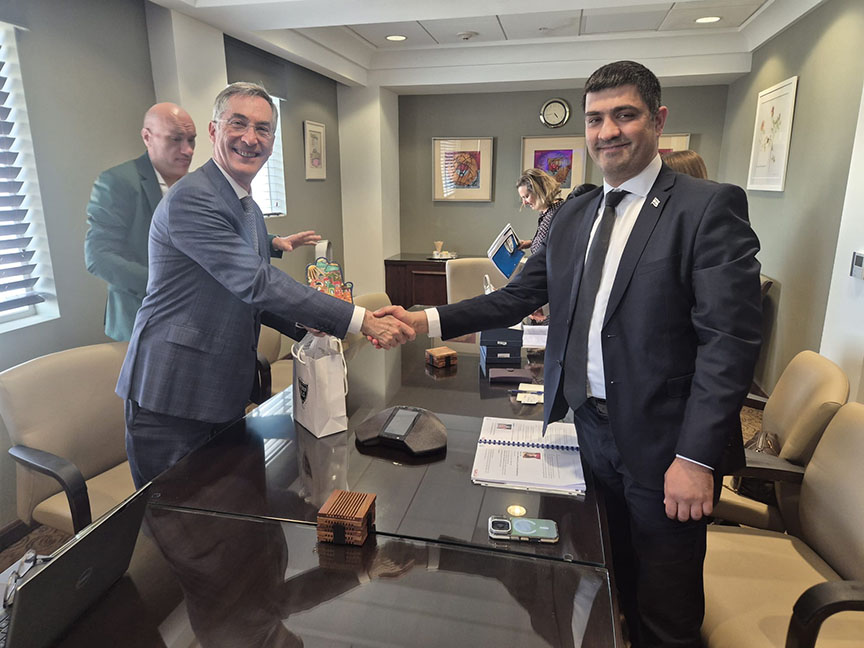
However, according to the Director General of Israel’s Ministry of Tourism, Michael Izhakov, this perception does not reflect the reality on the ground. Speaking during a recent visit to Los Angeles, Itzhakov said Israel is, in fact, safer than many other destinations.

Izhakov, 38, assumed his position last year at a particularly challenging moment for the country’s tourism industry. Since Oct. 7, 2023, the number of visitors has dropped by approximately 30%, impacting a wide range of businesses, including hotels, restaurants and tourist attractions.

It is difficult to persuade people to visit Israel when it is consistently portrayed in the news as a conflict zone. The images and reports emerging from the region — including the brutality of Hamas, hostage accounts, and missile attacks from Iran that have damaged buildings and caused civilian casualties — are often enough to deter potential travelers, even when things have finally calmed down.

“Do you know how many tourists were killed in Israel over the past two and a half years? None,” Izhakov said. “Thank God, not one tourist was harmed. We are one of the safest places for tourists, safer than parts of Europe or South America. A woman can walk alone in the middle of the night and nothing would happen to her; I’m not sure that’s the case everywhere else.”

Los Angeles is the first stop on Izhakov’s U.S. visit. He plans to meet with pastors, heads of major studios, the mayor of Beverly Hills, as well as leaders in the Jewish community. “I can talk about it all I want, and say it’s calm and safe here, but it’s not the same as witnessing it firsthand. People need to come and see that the country is full of life. There are restaurants, activities and a vibrant everyday reality. I believe in hosting them — you have to connect people to the country in a real way. It can’t be done through words alone,” he said.

Michael Izhakov with Beverly Hills mayor Craig Corman
(Israel Ministry of Tourism)

His goal is not to bring tourists this summer; he understands that Americans tend to plan trips well in advance and is instead focusing on next winter. “They aren’t as spontaneous as Israelis, who can, on a spur of the moment, book a flight to Greece or Rome. They like to plan ahead of time. We know that, and that’s why we act now, or we risk losing the entire next season.”

Speaking with The Journal, Izhakov said he also intends to focus on the Jewish community in the U.S., not only the Christian communities that have traditionally been a central focus of outreach efforts. “For years, Jews were somewhat overlooked by the Ministry of Tourism. When I stepped into the role, I asked: Why are we only talking about non-Jewish tourists? There are about five million Jews worldwide, and two-thirds of them have never even set foot in Israel.”

During the early days of the war, Izhakov said the Ministry of Tourism established a dedicated operations center to manage the evacuation of tourists, among them Birthright students.

“We set up a command center for evacuating tourists,” he said. “We transported them to the borders in Aqaba and Egypt by buses, communicated with them in multiple languages, and ran a virtual operations hub so that whenever there was a question no one could answer, the Ministry was there to respond. It was all free of charge,” he said. “We didn’t think about costs. It was simply the right thing to do.”

In total, arrangements were made for the departure of approximately 4,000 tourists by air out of Israel.

He added that the scale of coordination was significant, and that international recognition quickly followed. “We understood how successful it was when the U.S. ambassador, the British officials, and other ministers sent us letters of thanks. The Greek and Filipino governments also expressed appreciation. It’s not simple — we took responsibility and we did it because in an event like this, you cannot leave tourists behind.”

Surprisingly enough, many of the 37,000 tourists who were in Israel during the war chose to stay. “It was unbelievable. I was sure that within 72 hours there would be no tourists left in Israel, but they didn’t want to leave. Missiles were falling, people were running to shelters and they still didn’t want to go,” Itzhakov said.

He recalled how he met a group of American tourists at the Leonardo Plaza in Jerusalem while the war with Iran was ongoing. He asked one of them what he was still doing in Israel. The man replied, “I’m on my way to Tel Aviv to celebrate Passover on April First.”

War or no war, he wasn’t about to miss the Seder night.

He also recalled how an evangelical group arrived at the border of Israel and Egypt by bus and asked to enter. “They weren’t deterred by the war at all. I believe it was the first time ever the Director General of the Ministry of Tourism was actually trying to convince people not to enter,” he laughed.

During his visit to Los Angeles, Izhakov also met with producers in an effort to attract film and television productions to Israel. The goal, he said, is not only economic, but also reputational — to bring international productions to the country and challenge the way Israel is often portrayed in global media.

Alongside cultural outreach, the Ministry is also focusing on investors and infrastructure. Izhakov said Israel is actively encouraging tourism-related investment through targeted meetings and investor conferences. “We are holding investor conferences because we want to show entrepreneurs that we are with them,” he said. “We have marketing channels, and we are speaking directly with investors.”

According to Izhakov, the Ministry has been working to ease regulatory and financial barriers for developers. He noted that approximately 17 new hotels are expected to open this year across the country. Traditionally, the government has provided grants of up to 20% for hotel construction, but he said new mechanisms are being developed to support projects more flexibly, offering investors higher levels of financing, including planning reforms and alternative land-use arrangements to help developers unlock financing. The Ministry will also help structure projects so that residential components can be used to finance hotel construction, allowing developers to raise capital through early housing sales while still expanding tourism capacity.

At the same time, Izhakov addressed the ongoing challenges in air connectivity. He said that some airlines, including the Lufthansa Group, are expected to gradually resume flights to Israel after suspending service during the conflict. However, he acknowledged that limited competition has led to high airfare prices.

Israeli airline El Al had taken advantage of the situation, charging higher prices on flights. He is also going to participate in three conventions and launch a new campaign: “I Am Israel.”

He emphasized that restoring flights is critical to the recovery of Israel’s tourism sector. “Air travel is the Achilles’ heel of bringing tourism back to Israel,” he said. “Without it, everything becomes more difficult.”

This month, the ministry is also going to launch a new campaign: “I Am Israel.”

“We are not ashamed of our country,” he said. “There is criticism in the world, but also a great deal of love. We cannot win everyone over, but there are many who do want to come — and our job is to reach them.” 

Tourism Chief Says Israel Remains Open, Safe, and Ready for You Read More »

Former Hostage Bar Kupershtein Finds Moments of Joy in Los Angeles

Less than a year ago, he did not know if he would live or die. While working as a security guard and paramedic at the Nova music festival, Bar Kupershtein stayed behind under fire to evacuate the wounded and save lives. He was then abducted by Hamas militants and endured 738 days of captivity marked by violence, starvation and psychological abuse. Now, Bar Kupershtein finds himself in a very different place.

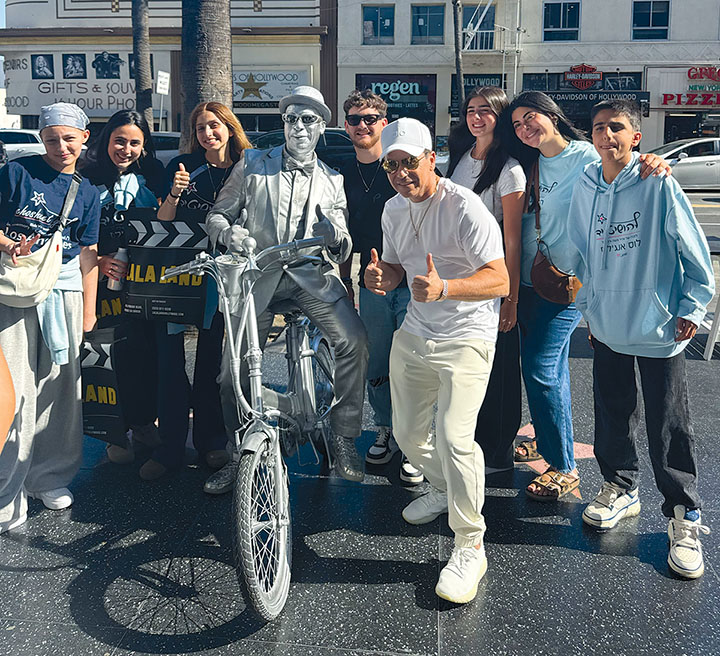
On a recent afternoon at Magic Mountain, he was laughing on a roller coaster, surrounded by children battling cancer — all of them screaming with joy as the ride twisted through the air. Hamas tunnels in Gaza had never felt so distant.

Kupershtein, 24, who was released from captivity on Oct. 13, 2025, joined the group as part of a trip organized by Lehosheet Yad, an organization that brings Israeli children battling cancer from Israel to Los Angeles for a brief escape from hospitals and treatments.

The contrast was almost impossible to grasp. Just months earlier, survival was uncertain. Now, he and the children, each carrying their own unimaginable burden, were simply kids and young adults, chasing a moment of normalcy, their laughter free, real and contagious.

Bar Kupershtein (in a black shirt and glasses) with the children and volunteers of Lehoshit Yad on The Hollywood Walk of Fame. Courtesy of Lehoshit Yad

Kupershtein had originally come to the United States as part of a speaking tour, sharing his story with students, synagogues, churches and anyone willing to listen. Avraham Atar, the founder of the nonprofit organization, invited Kupershtein to join the children in Los Angeles. At first, he declined because of his speaking tour engagement, but when he learned the children would be in Los Angeles at the same time, he decided to join them.

“It felt like it was meant to be,” Kupershtein told The Journal. “We want to give them a moment to disconnect from everything they’re going through, just to be happy, to feel free.”

Dressed in a simple shirt with his tzitzit visible, Kupershtein said how much the experience of being with the children had meant to him. “Every day here is an experience,” he said. “It doesn’t matter if we’re at an amusement park or just riding the bus singing together, the goal is to bring joy. That’s the most important thing.”

In many ways, the connection between Kupershtein and the children felt unspoken. Both had faced moments where life hung in the balance, where uncertainty was constant and survival was not guaranteed. Yet neither defined themselves by those experiences.

Drawing on this parallel, Kupershtein said, “It’s not the same. Being sick is something very difficult to deal with, but when you’re taken hostage, there is also the constant uncertainty of whether you will come back alive.”

Since arriving in the United States, he has spoken before Jewish and Christian communities and visited Indiana University. He said he hopes to raise awareness of what Israel is facing, and to share what he endured during two years of captivity. Faith, he said, is what kept him going. While trying to put the past behind him, the need to tell the story time and time again keeps it alive for him.

“It stays with me. You can’t forget it,” he said. “You can’t really erase it, but you learn how to live with it.”

He said that while revisiting what he endured is difficult, he feels a strong sense of purpose in telling his story. “It takes me back a little each time, but it also gives hope to the people who hear it, because people can endure the most difficult things and come out strong. It gives me a sense of meaning.”

After every lecture, people donate money and tell him how grateful they are to see him alive and well. He said his hope is to buy a house one day. “Their words give me strength to continue, especially now with all the antisemitism in the world. It’s terrible,” he said.

His schedule is intense. After the trip with the children, he is set to join an IDF delegation, then fly to New York for more lectures, return to Los Angeles and eventually head back to Israel. One question he is frequently asked is whether there were any “good ones” among his captors. His answer is simple: “No, there were none.”

Kupershtein often hands out bracelets inscribed with: “I am in the hands of the Creator of the world.” People tell him, “I’m never taking this off.” They say that because of what he went through, he gave them strength and they want to be proud Jews. “I feel like I have a mission, and that’s the direction I’m going in.”

Behind the scenes, the trip is the result of 17 years of dedication by David and Esther Vered, Kobi and Lilach Shirazi, along with Rabbi Nachman and Elkie Abend. They have been organizing, funding and hosting this 10-day “dream vacation” for Israeli children battling cancer, many of whom have spent months — sometimes years — moving between hospitals and treatments. What began as a small initiative has grown into a carefully orchestrated annual journey, with every detail planned to give the children not just a break, but an experience filled with joy, dignity and a sense of being truly seen.

During the evening’s gala at Chabad House, a Torah scroll was completed and dedicated in memory of the children who had passed away after their battles with cancer, as well as Adir Vered, who was killed in a car accident 16 years ago. As it was brought into the hall, volunteers, supporters and the children stood together in a circle, dancing and singing as music filled the room. In that moment, it was almost impossible to tell what each of them had endured — they were simply joyful, laughing and embracing the chance to be children again, if only for a while.

Former Hostage Bar Kupershtein Finds Moments of Joy in Los Angeles Read More »

A Diploma and A Fava Bean Spring Pasta Dish

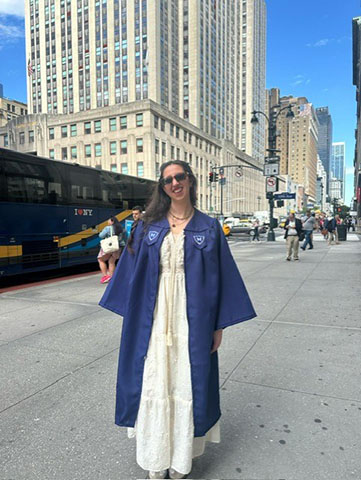
Last week, I flew to New York to attend my eldest daughter’s graduation from my alma mater, Yeshiva University.

Gabriella Gomperts

Of course, every trip to NYC is just an excuse to eat at as many kosher restaurants as you can. We started the celebrations with Gabriella’s friends with Sunday lunch at Tiberius, a dairy restaurant in Midtown. The eating continued with a fun dinner with her friends at Le Marais, a classic French steakhouse. She and I ate twice at Spicy Moon, an inexpensive kosher vegan Chinese joint. We had a memorable lunch at Libbi’s, an upscale dairy restaurant on the Upper East Side. And a celebratory meal with my brother Rafi, my niece Devorah and her husband Daniel at Malka, Israeli chef Eyal Shani’s extremely popular restaurant on the Upper West Side. His mashed potato stuffed schnitzel, smashed potato carpet, focaccia and hummus are not to be missed.

We shared a fun sushi lunch with my cousin Rachel. I even received a delivery to the hotel of an incredible hors d’oeuvres platter from Mazza and More. I couldn’t resist sampling their delicious, classic Syrian mezze of meat sambusak, kibbe and lahmajin, with homemade tahini.

The culmination of our trip was seeing our daughter and her friends in their navy blue cap and gown enjoying every moment of graduation. It was truly memorable with great speeches by Rabbi Dr. Ari Berman and the American Ambassador to Israel Governor Mike Huckabee, followed by singing from Joey Newcombe and the Thank You Hashem band, accompanied by “Brother Mike” on the bass guitar.

Can it be a Jewish event if there is no hora dancing? There was hora dancing.

The whole thing was very emotional and the tears streaming down my face washed away any trace of makeup. Alan said allergies were responsible for his tears.

Aren’t vacations fun? I loved visiting my favorite NYC landmarks: Fifth Avenue, Central Park, the Frick Collection and the Metropolitan Museum of Art.

I especially loved not having to cook (and shop and clean). And the best part is that I can claim it as research for my role as a Sephardic Spice Girl.

It is in this vein that we offer you this recipe for a fabulous dish I ate in Manhattan, Asparagus, Fava Bean and Pea Orecchiette. To be honest, this dish is the opposite of what I normally cook for my family. I rarely make pasta, I never cook with cream and I never, ever serve fava beans (my grandmother Nana Aziza always forbade them because my uncle Menashe suffers from an enzyme deficiency called favism).But this dish was so, so good that I had to faithfully recreate it for my family when I came home.

Interestingly enough, some historians trace the birth of the orecchiette pasta to the Norman-Swabian period in Sannicandro di Bari, where there was a fusion between local culinary traditions and the Jewish community, who made a concave pastry known as “Haman’s ears.”

This creamy, saucy pasta is a perfect way to showcase the delicate green vegetables of spring — fresh asparagus, green peas and fava beans.

—Sharon

Early in our marriage, Neil and I were sitting for dinner at my parents’ table and my mother served fava beans. Neil reacted with genuine alarm, stating “I don’t eat fava beans. They’re dangerous. I could die!”

I was completely stunned. I had never heard anything so dramatic about the humble fava bean.

In our Sephardic Moroccan home, fava beans found their way into Friday night fish dishes, salads and countless family meals. Every Passover, my mother’s fava bean soup was a cherished tradition. Fava beans were part of the flavors of my childhood and remained a favorite into adulthood.

In my family, fava beans were beloved. For Neil’s family, they spelled danger.

For years afterward, Neil never touched any dish with fava beans. He avoided them so completely that I rarely cooked them at home.

This strict warning about the dangers had been passed down through generations. Whether or not anyone fully understood the medical explanation, the message was clear: fava beans were not to be eaten.

Several years ago, I was craving my mother’s Passover fava bean soup. I decided to make a huge pot. True to form, Neil declined, while the rest of my extended family happily scraped every last drop from their bowls. Since then, the soup has resumed its place as a Passover tradition.

This year, I decided it was time for a small experiment. Convinced that nothing would happen, I completely blended the fava beans into the soup and served Neil a bowl. He couldn’t see them and he couldn’t pick them out. He tasted the soup and declared it delicious.

Then we waited. Nothing happened. He enjoyed every spoonful, suffered no ill effects and, most importantly, lived to tell the tale.

This experience made me reflect on the fascinating history behind what many Sephardic families call the “fava bean disease.” It is an acute form of hemolytic anemia triggered by eating fava beans or inhaling the pollen of the fava bean plant. It affects populations originating in the Mediterranean, the Middle East and Africa and it mostly affects males.

In communities stretching from Morocco to Rhodes, Persia to Iraq, stories about the dangers of fava beans were passed down long before anyone understood genetics or knew about G6PD deficiency. Some families had real medical reasons for avoiding them; others inherited the warning without ever knowing whether they carried the condition themselves.

What struck me most was how differently two Sephardic communities viewed the same food. In Morocco, fava beans were cherished and celebrated. In Neil’s Rhodesli family, they were treated with suspicion and fear. The same bean carried entirely different meanings depending on the memories and experiences that had been handed down.

Sometimes family traditions preserve important medical knowledge. Other times they preserve caution long after the original reason has been forgotten. Either way, those traditions become part of who we are.

And in our family, after one bowl of blended Passover soup, the fava bean may finally have won.

—Rachel

Asparagus, Fava Bean and Pea Orecchiette

16 oz orecchiette pasta, cooked according to package directions, reserve 1/2 cup pasta water

1 cup fresh peas

1 cup frozen fava beans

12 oz asparagus, cut into 1 inch pieces

4 Tbsp butter

6 large garlic cloves, minced

1 cup heavy whipping cream

1 lemon, juiced

2 tsp salt

1/2 tsp ground black pepper

1 cup grated Parmesan, plus more for serving

Place peas in a small pot and cover with water and bring to a boil. Cook for 5 minutes, then drain and set aside.

Blanch fava beans in boiling water, then drain and set aside.

Blanch asparagus in boiling water, then drain and set aside.

In a large skillet, melt butter over medium heat. Add garlic and sauté until soft and golden. Add the cream, lemon juice, salt and pepper, pasta water and Parmesan cheese. Stir well to form a creamy sauce. Add the peas, fava beans and asparagus and pasta and stir well to coat with sauce.

Serve immediately with freshly grated Parmesan.


Sharon Gomperts and Rachel Emquies Sheff have been friends since high school. The Sephardic Spice Girls project has grown from their collaboration on events for the Sephardic Educational Center in Jerusalem. Follow them
on Instagram @sephardicspicegirls and on Facebook at Sephardic Spice SEC Food. Website sephardicspicegirls.com/full-recipes.

A Diploma and A Fava Bean Spring Pasta Dish Read More »

Celebrate Spice Day on June 10

National Herbs and Spices Day is celebrated every year on June 10. It’s a reminder to embrace the joy of herbs and spices, while exploring and creating new recipes.

“Spices and herbs are my secret weapon,” Debbie Kornberg, founder of Spice + Leaf and SpiceItUpwithDeb.com, told The Journal. “They [are] always just steps away in my pantry, ready to transform even the simplest ingredients into something layered, vibrant and memorable.”

Spices and herbs are incredibly versatile. Plus, Kornberg said, their power extends beyond seasoning food. “Through their aroma, they can recall a memory; through their flavors, they can tell a story about a culture, a place or a family tradition,” she said. “And with just a pinch or two, they can elevate a dish with a punch of flavor.”

As a general rule of thumb, Kornberg said that spices should only remain in your pantry for about 12 to 16 months. The best way to check for freshness is with your nose. You can also taste them. “Do they still have a strong aroma?” she said. “Do the flavors linger on your tongue?” If yes, they’re good. If not, it is time to toss them and purchase some new ones.

Whether she is preparing a family dinner or expecting company, Kornberg often looks to spices to guide her when deciding what to cook. “A pinch of cumin can add warmth and depth, while a pinch of citrusy sumac can brighten an entire plate,” she said. “What I love most is the flexibility they provide, allowing me to create balance between heat, sweetness, earthiness and acidity, so I never get bored with my food.”

Below are two of her favorite recipes, ones she makes frequently. They are easy to prepare and can be made in small or large quantities; for a weeknight family meal or as a Shabbat crowd-pleaser.

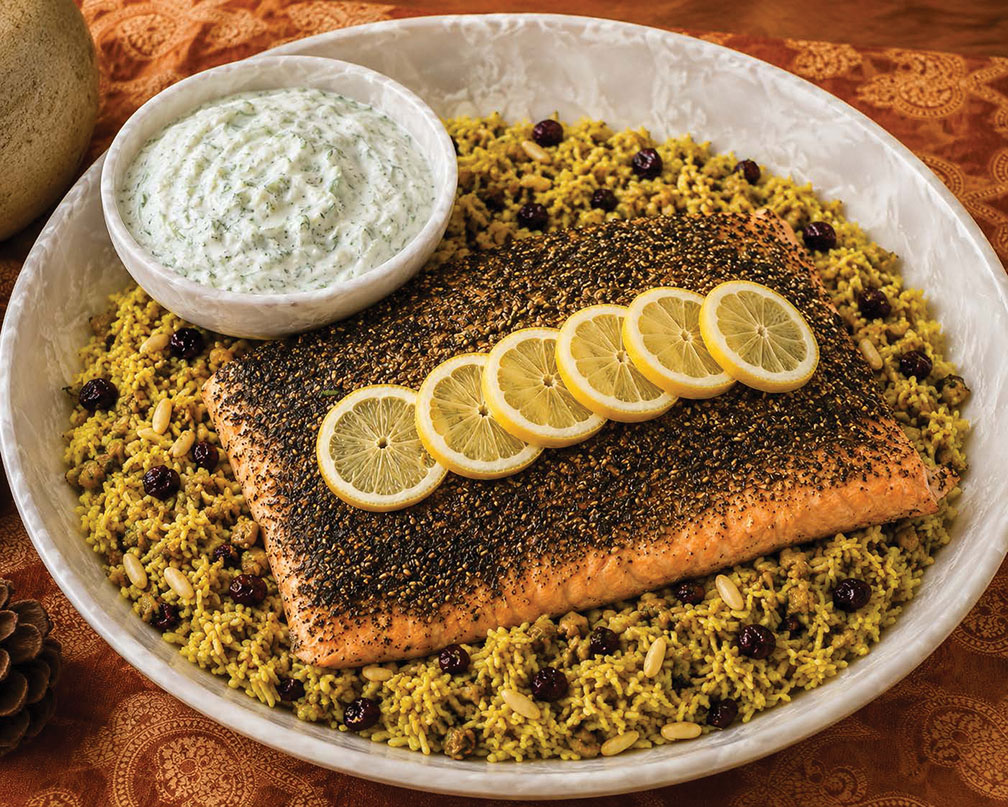
“The za’atar blend pairs beautifully with salmon,” Kornberg said. “Made with hyssop, sumac and sesame seed seeds, it combines the aromatic, earthy notes of herbs from the oregano family, a bright citrusy lift and the buttery nuttiness of sesame. With a kiss of salt, and often some olive oil, this blend is super versatile,” she continued. “The tzatziki sauce adds a delicious creaminess and a refreshing brightness that keeps the dish fresh and balanced.”

Packed with flavor, her pistachio rice dish is inspired by the rice mixes you can find in Israel when walking through the shuk. “You can use something as simple turmeric or something more complex like using a shawarma spice,” she said. This is a great dish to make ahead of time and reheat. It also pairs perfectly with the za’atar salmon.

“Spices should help make your cooking just a bit easier, lifting up your food and adding layers of flavor,” Kornberg said.

Za’atar Baked Salmon with Lemon and Tzatziki Dip

Serves 4

1 ½ pounds salmon, preferably with skin removed from the bottom

2 Tbsp SPICE + LEAF Authentic Za’atar

½ tsp salt

2 Tbsp SPICE + LEAF Barnea Olive Oil

1 lemon, ½ in thin slices, ½ in quarters

2 Tbsp SPICE + LEAF Tzatziki Dip Mix (to make your own, combine 2 tablespoons minced garlic, 1 Tbsp onion powder, 2 tablespoons dried dill and ½ teaspoon kosher salt)

1 cup labne or plain Greek yogurt

1 cucumber, shredded or diced finely

1. Preheat oven to 350°F.

2. Place salmon in a baking dish or pan. (If skin is still on bottom, use cooking spray for base of pan or parchment paper so it does not stick.)

3. Sprinkle za’atar and salt on top of fish, and rub it in. Drizzle olive oil and then place sliced lemons around and on top of fish.

4. Bake for approximately 15 minutes. Fish is cooked when it has an internal temperature of 140 to 145°F. If testing with a fork to see if done, fish should be flakey on the inside. Remove fish from oven; squeeze remaining half of lemon on top.

5. In a medium-sized bowl, combine labne or Greek yogurt, tzatziki mix and shredded cucumber. Mix well.

6. Serve either on top of salmon or as a side sauce.

Pistachio Rice with Sautéed Onions, Toasted Almonds, Fresh Dill and Cranberries

Serves 4 – 6

1 cup uncooked basmati rice (will yield two cups cooked)

2 cups water in pot or 1 ½ cups water in a rice maker

1 tsp SPICE + LEAF Shawarma Blend

4 Tbsp SPICE + LEAF Barnea Olive Oil, divided

¼ cup slivered almonds, toasted

¼ cup pistachios, toasted, chopped

1 onion, finely diced

¾ tsp kosher salt

2 Tbsp sesame seeds, toasted

¼ cup fresh dill (1 bunch)

¼ cup dried cranberries

1. Clean rice: place rice into a medium size bowl and cover with water. Gently mix rice in water and drain water from bowl, while keeping all of the rice in the bowl. Repeat this 5 to 7 times. Each time the water should look decreasingly cloudy from the starch being removed from the rice. This will give you very clean and intact rice grains.

2. Cook rice either in a pot or rice maker.

– In a pot: Place 2 cups water in pot and bring to a boil. Add rice and shawarma blend. Mix well. Cover pot and cook on simmer for about 18 minutes or until water is fully absorbed into rice.

– In a rice maker: If using a rice maker, put 1 ½ cups of water, rice and Shawarma blend in rice maker. Mix everything well and set rice maker to cook.

3. In a dry (no oil) sauté pan, toast almonds over medium high heat for about 2 to 4 minutes, until nice and toasty brown. Remove from pan, place into a small bowl and set aside. Repeat these steps with pistachios. Omit this step if you purchase pre-roasted almonds and pistachios.

4. Using the same sauté pan, heat with 2 tablespoons olive oil. Add onions and sauté on medium low heat until onions turn golden brown in color. When done, set aside.

5. Once rice is cooked, place it in a large bowl and fluff it a little. Next combine with sauteed onions and remaining 2 tablespoons olive oil. Mix everything well. Next add kosher salt and mix. Add remaining ingredients: pistachios, almonds, sesame seeds, fresh dill and cranberries. Mix everything very well. Taste rice, if it seems a little dry, add a little more olive oil. If flavors are not popping, add a little extra salt.

Celebrate Spice Day on June 10 Read More »

Table for Five: Behaalotecha

One verse, five voices. Edited by Nina Litvak and Salvador Litvak, the Accidental Talmudist

“And on the days of your rejoicing, on your festivals and on your new-moon celebrations, you shall blow on the trumpets for your ascent-offerings and your peace sacrifices, and it shall be a remembrance before your God; I am the Lord your God.”

– Numbers 10:10


Miriam Mill-Kreisman

Tzaddik Foundation

The verse in Book of Numbers 10:10 paints a beautiful picture of Jewish celebration. On festivals, new moons and other joyful occasions, the Torah commands that trumpets be blown over the sacrifices. At first glance, the trumpets sound like musical instruments adding excitement to the festivities. But they seem to represent something much deeper. They were spiritual alarms.

Happy moments can easily distract people. Food, guests, laughter, music and celebration can pull a person into the moment so completely that they forget where the blessing came from in the first place. The blasts of the trumpets cut through all of that and reminded everyone: “Do not forget Who gave you this joy.”

The phrase “and it shall be a remembrance before your God” is especially striking. God does not forget. Judaism is built on the belief that God sees and knows everything. So why speak of remembrance? Perhaps the Torah is teaching that the trumpet blasts turn the celebration into something eternal. The moment becomes spiritually engraved both in our memory and in our relationship with God.

It reminds me of the shofar on Rosh Hashanah. The shofar awakens us during serious moments of judgment and reflection. But here, the trumpet blast sanctifies happiness itself.

Maybe God is saying: “When life is good, remember that I am here with you too.”


Rabbi Chaim Singer-Frankes

Multifaith Chaplain, Kaiser Panorama City Medical Center

God commands Moshe to fashion two trumpets. These trumpets are to be sounded as alarms to gather Israel for sacred purposes; as distinct calls summoning each flank of the camp, for warfare against enemies, and to beckon days of gladness and festival seasons. Throughout the chapter, the text repeats this reference to pairs of trumpets. The Avodat Yisrael, a late 18th/early 19th-century Hasidic master, employs wordplay and draws from the mystical tradition to elucidate a deeper meaning in this doubling. “Hatzotzrot,” he states, alludes to two words; “hatzi-tzurot, suggesting two distinct forms or halves. Using a classic mystical device of the “remez” (the hinted meaning of the Divine text), this signifies the People Israel traveling side-by-side with our Divine Partner. When at odds, both yearn to unite in soul, spirit and mind; Israel in harmony with The Creator, the Blessed One. When unified, the will of God can be achieved. The Avodat Yisrael brings more pairs than the trumpets. There is “ha’yihud v’hadibur” i.e. the Unification and the Speech, describing how God brings the universe into being through Divine speech and utterance, connecting the Infinite and finite worlds. He cites the mitzvah of Lulav and Etrog, held together to show the Divine as a melding of two complexions; splendor and majesty. Our mystics call these “Tarei Palgei Gufa” two sacred entities with their full purpose realized only in correspondence, one with the other. May these trumpets herald our people’s unity, both internally and with the Divine!


Rabbi Eliot Malomet

Host of “Parasha Talk” on YouTube

Ted was a Navy veteran, and when we buried him recently, his family requested a Navy Honor Guard to play “Taps” at his grave. The trumpeter lifted the stirring melody to the heavens. The flag was gently removed from his pine casket, meticulously folded and reverentially smoothed 13 times, and then respectfully handed to his widow in perfect perpetual isoscolesity.

A ritual going back to the 18th century, “Taps” lights up the Lite Brites of our souls in a dazzling mosaic of emotional hues: Patriotism. Camaraderie. Sacrifice. Loss. Longing. Its melancholic melody chills our spines. Music will do that.

So why did they sound the silver trumpets at the sacrifices? To instill awe? To inspire joy? Or to distract from the terrifying liminality between life and death, blood and fire, smoke and sizzle? Was it a long wailing siren or a string of arresting staccatos? Did the trumpet-duo sound one note in unison or two notes in harmony? Beam us back so we can hear it!

Alas, Torah flashes an enigmatic hint: the trumpet sounding over the sacrifices”shall be a remembrance before your God.” Remembrance of what? My suggestion: Sinai – the time we stood before God totally enveloped in sound.

Like “Taps” at the grave, the dual-trumpeted tekiah accompaniment of sacred-day sacrifices stirs a complex set of emotions in our souls: Awe. Fear. Love. Joy. Gratitude. And perhaps, in the post-blast silent stillness, we will detect a faint echo of God’s stirring words: I am the Lord your God …


Eilon Presman

Director, Actor, Producer | Assistant at accidentaltalmudist.org

Trumpets? Why trumpets? I’m sure there is an answer which I will look into, but I wanted to give you my thoughts about the verse before any of that happens.

There are special moments in life that arrive so fully. A child’s laughter, an unexpected reunion, a view that stops you midstep. What’s special about these moments is that they almost hurt. The feeling of joy, at its peak, has an ache to it. As if some part of us knows it won’t last, and we’re already grieving it while we’re in it.

We need a disruption. Something that will tell us, “Hey! Wake up, live this moment.” Maybe that’s why God commanded the trumpets.

The trumpets are commanded not as background noise, but as punctuation. As if joy, left unmarked, risks becoming just another thing that happened.

I’ve had too many of these to count. Milestone moments that passed through me before I could fully feel them. A trumpet blast would act as an interruption. A holy one. It would say: “Stop. Feel this. Mark this.”

“It shall be a remembrance before your God.” Now this isn’t just a note in God’s ledger, but an engraving in your own soul. The blast wasn’t for God’s benefit. It was for ours. A reminder to be present before the present was gone. Some of us need to hear that most when life is actually good.


Rabbi Brett Kopin

Executive Director, The Six11 Project

Twelve years ago, I attended a Shabbaton in Monsey, NY featuring a prominent South African rabbi as the Scholar-in-Residence. This rabbi had helped many Jews find their way into Judaism through his books and lectures. That Shabbaton took place on Parsha Behaalotecha, and at one of the events over the weekend, the host introduced the rabbi by saying: “This rabbi is the silver trumpets of this generation, bringing all of Klal Yisrael back together.” The rabbi chuckled at this introduction, quipping that no one had ever called him a trumpet before!

Those words, however, stayed with me as a powerful image of what it means to be a leader in the Jewish world today. Aside from politics and denominational labels, a Jewish leader’s true role is to be the call that gathers Klal Yisrael together, or at least those within reach. Rabbi Nachman of Breslov once taught that in Hebrew, Rabbi is an acronym for “Rosh Bnei Yisrael,” head of the Children of Israel. The head, or leader, gathers the people together. Meeting and being in relationship with other Jews, especially those outside of one’s immediate community, is a cause for celebration. It is a momentous and joyous reunion, a remembrance of what it must have felt like to gather during the festivals in ancient times. Our prayer now is to be granted the strength not only as leaders to deliver the call, but to hear it when it sounds.

Table for Five: Behaalotecha Read More »

Batya’s Moment

On May 21, 2025, Sarah Milgrim left an event for Jewish professionals, as many of you have done. She had barely made it out before she was allegedly shot by Elias Rodriguez, who has admitted to the murders of Milgrim and Yaron Lichinksy, her boyfriend, who was planning to propose to Milgrim in Israel. But there will be no wedding; instead there were funerals.
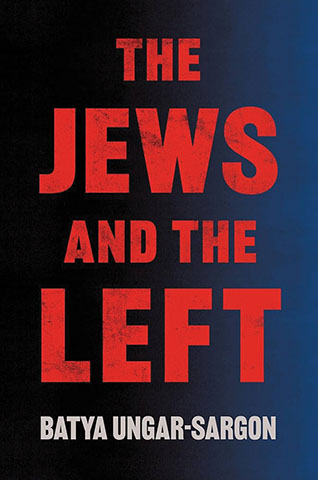
Batya Ungar-Sargon begins her powerful new book “The Jews and The Left” (out June 2) with this story, explaining that Rodriguez, 33 and a Chicago resident, wanted to kill the couple “for no other reason than his belief that they were Jews.” In his manifesto, Rodriguez wrote that “Those of us against the genocide take satisfaction in arguing that the perpetrators and abettors have forfeited their humanity.”

“To normal people, this sounds insane, the homicidal claptrap of a serial killer,” Ungar-Sargon writes. But rather than being surprised, she considers the murder the logical culmination of rallies calling for people to “globalize the Intifada.”

Failure to Attack the Genocide Libel and the Great Betrayal

Ungar-Sargon, the host of the engaging weekly TV show “Batya!” on NewsNation, told The Journal that many American Jews and Israelis appreciated that shortly after Oct. 7, 2023, President Joe Biden went to Israel and proclaimed that he was a Zionist. But on social media, where the word “genocide” gets kicked around like a hacky sack, Biden was quickly dubbed “Genocide Joe.”  Biden, or anyone working for him could have made it a priority to sufficiently explain why Israel’s military response did not constitute a genocide. Why didn’t that happen?

“They all kind of felt there was a lot of energy in the base against Israel and they all thought ‘Well, Biden is a sinking ship but we all have to win elections in the future, and we don’t know which way the wind is going to turn,’” Ungar-Sargon told The Journal. “It’s the same reason why [then Vice President] Kamala [Harris] did not choose Josh Shapiro [D-Pa.] [for vice president]. There was this feeling that the base would not accept that.”

In “Betrayal,” the book’s seventh chapter, in it she notes that many on the Left, and most women’s rights groups were silent for about a year regarding rapes against Israeli women on Oct. 7, 2023. There was no outrage. The New York Times wrote an extensive story about how Hamas used rape as a weapon of war, but its podcast was shelved, reportedly due to complaints from staffers. Then, she notes, the Gray Lady and numerous other major outlets wrote that Israel had bombed a Gazan hospital, destroying it, and killing 500 people. While Hamas claimed this, likely to derail a meeting between Biden and other Arab leaders, it turned out the hospital was still standing, the bomb was not from Israel but from Hamas or Islamic Jihad and a much smaller number of people were killed. Ungar-Sargon remarks that mainstream media became stenographers for terrorists.

She explains how antisemitism exploded on college campuses. The Left narrative was one of oppressor vs. oppressed where Israelis and Jews were coded as White Oppressor. There were a few violent incidents, and Jewish students experienced harassment at elite colleges.

“The universities sided with the protesters against their Jewish victims, clearly discriminating against Jewish students in a way these universities wouldn’t have in the case of any other minority group,” she writes.

She comments on the Left’s claim that antizionism is not antisemitism, and that Zohran Mamdani won the New York City’s mayoral race openly saying Israel does not have a right to exist in its current state.

Most Jews on the Left supported Black Lives Matter and joined protests against the killing of George Floyd, only to see a Chicago BLM branch post a silhouette of a Hamas paraglider who attacked Israel on Oct. 7, she notes.

Why She Is Not a Weak-Kneed Jew

Ungar-Sargon wears a Magen David necklace. She said she made a habit of this to show she is proud of her identity and drew attention for wearing it on high-profile appearances like “Real Time with Bill Maher” and “Piers Morgan Uncensored” where anti-Israel debater Scott Horton thought he could intimidate her by calling her “lady.” It did not work.

When she was getting her Ph.D. in English at the University of California, Berkely, she never expected to be a journalist. She thought she’d be an academic. But things change. She was the opinion editor for the Forward, a deputy opinion editor at Newsweek and has written for most major publications, including The Free Press. Ungar-Sargon, who is Orthodox and the granddaughter of a rabbi, said she hopes fellow Jews take pride and don’t hide, and hopes fellow Americans take pride in their country as it reaches its 250th birthday.

She is a fearless debater who never yells. In the middle of a 2024 debate alongside Dennis Prager against anti-Israel commentators Cenk Uygur and Dave Smith, she asked what combatant-civilian ratio they could have accepted, viewing it as a war and not a genocide. They were unable to provide any answer. In addition to her show “Batya!” she hosts an online show called “Prove It With Batya!” While her debates can get a bit heated, they are always respectful and don’t result in ad hominem attacks. On one episode, hours before Congressman Thomas Massie (R-Ky.) lost his primary election, she said Massie had developed the mindset of a podcaster obsessed with Israel and didn’t realize that Kentucky voters were not swayed by Tucker Carlson. On her show, she will admit when she makes a mistake, and cited one: she was wrong about Russian President Vladimir Putin’s true intentions against Ukraine.

If you prefer debates based on data and reason, with some humor, as opposed to shouting and sweaty gesticulations, check out her shows.   

Her Rift with Megyn Kelly

When Ungar-Sargon’s show debuted on NewsNation on Sept. 20, 2025, her first guest was former Fox News host Megyn Kelly. Ungar-Sargon has appeared on “The Megyn Kelly Show” a podcast with more than 4 million subscribers, and Kelly heaped praise on Ungar-Sargon, saying there was no limit to how far she could go and that the network saw Ungar-Sargon’s “genius.” This was high praise from Kelly.

But it was President Trump’s decision to go to war with Iran, with Israel as an ally in battle, that caused Kelly to change her tune, and sink to making schoolyard taunts about Jewish Fox News host Mark Levin’s genitalia. At Turning Point USA’s America Fest, Ben Shapiro, co-founder of The Daily Wire, didn’t mention Israel but noted it was cowardly for Kelly not to criticize Candace Owens, who continuously vilified Erika Kirk, the widow of Charlie Kirk. Kelly oddly said she could not criticize Owens, because she was a young mother. But the lines were drawn when Ungar-Sargon supported the war in Iran, though she said she didn’t want boots on the ground, while Kelly was staunchly against it.

Kelly called NewsNation a “neo-con” station, while Ungar-Sargon, on her own show, said it was clear that Kelly did not have the pull with Trump she thought she had, as Trump said Carlson and Kelly were not MAGA. Kelly bizarrely explained her change in view by saying she may have been manipulated by some in the pro-Israel camp.

Did Ungar-Sargon expect her former friend and supporter to take such a turn? “It was very surprising to me, it was very hard and remains very hard,” she said of Kelly’s shift. But she believes Carlson’s large numbers are likely due to Muslim viewers outside America hungry for anti-Israel and anti-American content. It would be useful if in the future YouTube broke down subscribers by country.

Why Are Democrats Behind Senate Candidate Graham Platner, Who Had a Nazi Tattoo?

How can the same people who called President Trump a Nazi be fine with Maine Senate candidate Graham Platner? It was revealed that Platner had a Nazi tattoo known as a Totenkopf, or death’s head, that he claimed he got it while drunk and that he only recently was made aware of its history. However, CNN and Jewish Insider have reported that he was aware of it some years ago. Numerous outlets also revealed that Platner praised Hamas after Oct. 7. Ungar-Sargon noted that there is antisemitism on the Right, but the Right mostly rebukes them while important figures on the Left praise them.

“I want there to be two pro-Jewish parties in America,” she said. “Am I surprised the Left has become so sanguine about anti-Jewish hate that they’ d literally throw their weight throw their weight behind a guy with an actual Totenkopf tattoo? I’m not surprised.”

Her Tweet at Congresswoman Ilhan Omar and Omar’s Response

Back in 2019, Democratic Minnesota Congresswoman Ilhan Omar tweeted that it was “all about the Benjamins baby” in reference to America’s support for Israel. Ungar-Sargon asked her who she was specifically referring to and Omar responded: “AIPAC.” This was considered an inflammatory response seven years ago and Omar apologized at the time, but currently people echo Omar’s claims, and it is considered normal.

Would Ungar-Sargon ask Omar if Israel hypnotized her to accidentally say “World War 11” instead of “World War II” during a recent speech? “There are a lot of things I would like to ask her about,” Ungar-Sargon said, adding that her team has reached out to Omar to appear on her show but hasn’t heard back.

How Did She Go from a Trump Hater to a Trump Supporter?

She once believed that when Trump said, “very fine people on both sides,” he was referring to Neo-Nazis and white supremacists, because that’s what much of the media and her friends said. “I had TDS [Trump Derangement Syndrome] big time,” she said. “I really thought Trump was evil, racist and didn’t see how anyone could vote for him. I had fights with people in my family. I had it deep. I had it bad. Sometime around 2017, I was so sick of being this angry. I tried to understand them and wondered why half of my country would have voted for this man. As soon as you watch the whole video, it becomes very clear he said he wasn’t talking about neo-Nazis and white supremacists because they should be condemned. He says it right after. Most have only seen the clip they promoted.”

She said she had an “aha moment” when she read a 2018 Yale study that showed white liberals would often dumb down their language while speaking to Black Americans, while conservatives spoke the same way they always do.

Consequences for Supporting Trump

Ungar-Sargon believes Trump’s policies have been historically excellent. But she has at times criticized his character, including when he called Democratic House Minority Leader Hakeem Jeffries a “thug.”

But for many Jews, who view Trump as an enemy for claiming the 2020 election was stolen, or that Haitian Americans in Ohio were eating their neighbors’ cats and dogs, praising any action of Trump is grounds for cancellation.

“People unfriended me,” when they heard of her support for Trump, she said. “People who had eaten meals in my home went on Twitter and called me a Nazi and a racist because I said the real divide in America is not the racial divide but the class divide. Now people are writing the same thing. Part of me chuckles and wants to know, ‘Where’s my apology?’” She also said the claim that the war in Iran is only due to Israel is false because “Trump doesn’t do anything he doesn’t want to do.”

Why Her Book Is Like Medicine, Whether It Changes Minds Or Not

In “The Jews and the Left,” she does not overtly tell people to vote Republican, but acknowledges many Democrats feel betrayed. She goes through the history of how Franklin Delano Roosevelt was viewed as the man who defeated Hitler, how Jews cared about labor unions and justice and how there was historically more antisemitism on the right. This explains why Jews have voted predominantly Democratic for the last 100 years, though she notes in recent years Orthodox Jews have tended to support the GOP.

She also notes the Jewish value of welcoming the stranger and fighting for justice caused many Jews to be Democrats and feel that unlimited immigration and or illegal immigration should also be welcomed, especially since Jews came to America as immigrants. The author urges Jews not to view themselves simply as immigrants, but as integral components to the founding of America, pointing  Haym Salomon, the Polish immigrant who financed the American Revolution and was never paid back, as an example.

In likely the most powerful ending to any book I’ve read this year, Ungar-Sargon writes: “To hate Jews is to hate America. We are an inextricable part of this nation. To be an American is to be zealous of your freedom, protective of your rights, and attached to your enterprise while finding dignity in your labor. As American Jews, we stood for all of those things … Antisemitism is rising everywhere, but the only way to fight it is by insisting on who we are, who we belong to, and who belongs to us, one nation under God, indivisible with liberty and justice for all.”

You might not agree with every prediction Ungar-Sargon makes – including her claim that a thirst for revenge that targets Jews will lead to some on the Left coming for all Americans — though it is certainly true that antisemitism is a sign of a society in decay.

And while her book focuses on the Left, she could have included a bit more about the dangers from the Right. “The Jews and the Left” is mostly eloquently written common sense.

Why Did Ezra Klein Write a NY Times Op-Ed Defending Hasan Piker?

In her book, Ungar-Sargon is critical of Klein, a Democrat mouthpiece who is Jewish. Klein wrote an inexplicable op-ed in The New York Times claiming Hasan Piker is not an enemy, despite the fact that he said America deserved 9/11, that Israel is 100 times worse than Hamas, that he is cool with Hezbollah, Orthodox Jews were inbred, likened liberal Zionists to liberal Nazis and said anyone who expressed any support for Israel was not worthy of being a dog-catcher.

“I think Ezra Klein does come in good faith,” she said. “He’s part of a trend on the Left where there is worship of youth. I don’t think he’s a bad person. I think he genuinely cares about the country and feels that Israel is bad and making things bad for Jews who are liberal. I think he’s wrong about a lot of things, especially Hasan Piker. I read in an article he wrote that antisemitism on the right stems from a hatred and bigotry against Jews and a desire to do them harm, while antisemitism (or antizionism) on the left stems from good universal principles of wanting equality for all. That is a deeply flawed framework. It’s not an evil framework. It’s just very wrong. I can see how he has led himself down this path.”

Democratic Pennsylvania State House member Chris Rabb, currently the Democratic candidate to fill the open seat in the state’s 3rd District (which includes much of Philadelphia), had Piker join him in a rally at the end of April. The anti-Israel candidate drew controversy when his Instagram account shared a post claiming the Bondi Beach Massacre was a “false flag” operation by Zionists; he disavowed it and said the account was shared by a staffer.

Ungar-Sargon said Klein has an open invitation to appear on her show.

We’re In a Dark Place, But Is America the Least Antisemitic Country, Including Israel?

She saw the clip of Maher’s show when he said if you wished Trump was assassinated, you’re not a good person and the audience went quiet.

“We’re in a dark place,” she said. “I will never forget after [the assassination attempt] in Butler, a friend of mine said she wished the shooter had succeeded. This is a well-to-do woman with a good family in Park Slope, Brooklyn.  I said to her, ‘What has he done to you that you would wish him dead?’”

Ungar-Sargon is aware many Jews virulently hate Trump, but she said she’d prefer that they hate Trump rather than hate themselves. Even though Jew-hatred is rising in America, she believes it’s the least antisemitic country in the world – including Israel. She believes the online world gets the most attention but the average person in America is not antisemitic. Its spread, especially among youth, has been largely due to elite universities and social media

She said many Democrats were against the Iran war simply because Trump was for it. She also said it is no surprise that antisemite Nick Fuentes announced he is a Democrat and former Republican Congresswoman Marjorie Taylor Greene is welcomed on CNN.

Why She May Be Wrong on Carlson as a Candidate

Ungar-Sargon believes Carlson won’t be at the Republican National Convention for 2028, but thinks he may run either as a Republican or for a third party in order to gain attention and spew hatred. Secretary of State Marco Rubio will be the Republican presidential nominee, she said, against either California Governor Gavin Newsom or former Vice President Kamala Harris.

Can Batya Hit a Home Run?

Ungar-Sargon has a combined social media following of about 500,000 that might have been higher had she remained silent about key Jewish issues or jumped on the bandwagon of those who shout conspiracy theories, insults and anything else to raise their profile. Instead, Ungar-Sargon has decided to do civil debates and write stellar books. Even if you disagree with some of her points she has cooked enough Jew-haters and America-haters to earn her way on your media diet, as she is often able to cut through the fat and get to the meat of a situation through her analysis.

Batya’s Moment Read More »

Holocaust Museum LA Unveils Major Expansion for Future Generations

On a construction site in Pan Pacific Park, where exposed beams and unfinished pathways are rapidly giving way to a bold new vision, two descendants of Holocaust survivors stood side-by-side, looking at what will soon become the Goldrich Cultural Center, a major expansion of Holocaust Museum LA.

Overlooking the park and just steps from The Grove, the sprawling center sits at one of the most central and visible locations in Los Angeles. For CEO Beth Kean and renowned architect Hagy Belzberg, this building represents the realization of a shared vision: transforming memory into a living, evolving experience for future generations.

During a recent hard hat tour, as construction moved toward its June 14 opening, Kean and Belzberg guided The Journal through the 70,000-square-foot center — roughly double the size of the existing museum. The expanded campus will include multiple pavilions where visitors can explore the full arc of Holocaust history: the world that existed before, the horrors that unfolded during and the lasting consequences that continue to shape the present. More than 25,000 artifacts will be integrated into these spaces. “Most of the artifacts were donated by Holocaust survivors, liberators and their descendants,” Kean said.

Beth Kean, CEO of the Goldrich Cultural Center and architect Hagy Belzberg

One of the artifacts is an original Holocaust-era boxcar (cattle car), one of the few remaining in the world. Discovered near the Majdanek death camp, it once transported up to 200 people in a 250-square-foot space to concentration and extermination camps. “You’ve seen these cars in photographs, but when you stand in front of one, it stops you in your tracks,” Belzberg said. “We wanted to create a more intimate experience — to slow visitors down, guide them around it and allow them to gradually confront what’s inside.”

The Holocaust Museum was established in 1961 by Holocaust survivors who met in an English as a Second Language class at Hollywood High School and sought to commemorate the Holocaust and preserve its memory. They began collecting personal photographs, documents, artifacts and testimonies. Over the years, the museum moved between several locations until 2006, when Belzberg was selected to design a new building, which opened in 2010 in Pan Pacific Park.

Belzberg said that before the museum opened, they expected about 15,000 annual visitors, but attendance quickly grew to more than 100,000 each year, including 30,000 schoolchildren — far exceeding the capacity of the original space. In response, the Goldrich Cultural Center was conceived six years ago, with construction nearly completed.

The project was made possible after the City of Los Angeles allocated previously unused land within Pan Pacific Park for the expansion. No green park space was removed in the process. The state provided an initial $8.5 million grant to help launch funding for the expanded museum, which Kean said underscored its growing reach and impact. Additional support came from the building’s namesake, the late Jona Goldrich, a real estate developer and Holocaust survivor, as well as other donors. The total project cost is approximately $70 million.

Unlike the original subterranean structure, much of the expansion rises above ground, filled with natural light and open, welcoming spaces.

The project is already resonating beyond the museum itself. “People in the community are really excited,” Kean said. “We are changing the landscape of the street and the neighborhood.”

“Hagy and his team found a way to build above a flood control channel — something that also became a metaphor. We want this to be a landmark for hope, understanding and community,” she added.

In reimagining the campus, Belzberg aimed to create a fluid visitor experience that guides people seamlessly from one area to the next, while also allowing moments of pause and reflection, both indoors and in open-air spaces.

For Kean, the connection to the outside world is essential to the experience — and to the lesson it carries.

“You see life continuing outside, people walking, dogs running, families having picnics, kids playing soccer. During the Holocaust, while Jews were trapped in ghettos and camps, life went on outside the walls. That contrast is something we want visitors to feel and understand,” she said.

The center will also feature the S. Mark Taper Theater, a venue dedicated to cultural programming including music, live theater, film, lectures and public dialogue.

There is also an immersive theater where visitors will be able to engage with Holocaust survivors through advanced interactive hologram technology. Rather than watching a recorded testimony, guests can ask questions and receive real-time responses, creating a closer approximation of a live conversation. As the generation of survivors diminishes, this technology is designed to preserve not only their stories, but their immediacy and humanity, ensuring that future audiences can continue learning directly from those who lived through the Holocaust.

For both Belzberg and Kean, the project is deeply personal, rooted in family histories marked by loss and survival.

Belzberg’s father was just three years old when his mother fled Poland for what was then British-controlled Palestine. Much of his extended family was murdered in the Holocaust.

Kean’s grandparents were also Holocaust survivors from Poland; her grandmother endured two concentration camps, including Auschwitz, and had a number tattooed on her arm. Her grandfather was sent to forced labor camps.

“I grew up hearing these stories from a very young age,” Kean said. “But they didn’t tell them to dwell on the suffering — it was about teaching dignity, respect and the importance of educating future generations. We can’t be complacent or take things for granted. It’s about building empathy and a mindset where people truly care about one another.”

One of the artifacts in the museum’s collection is especially meaningful to her: a photograph of her grandfather as a young child in Poland, taken before World War II. Much of her family history was lost when he fled, leaving behind not only his home but also physical traces of his earlier life.

“A few years ago, a cousin in Mexico City found a photograph of my grandfather as a young boy, around eight years old, standing inside the great synagogue in his hometown.” The image shows him as part of a boys’ choir, alongside the synagogue’s rabbi and cantor. “It’s remarkable what you can learn from a single photograph,” Kean said. “It allows us to piece together a world that no longer exists.”

That idea is central to the museum’s approach. The first gallery focuses on Jewish life in Europe before the Holocaust, emphasizing the richness and complexity of communities that were later destroyed. “You have to understand what existed before to grasp the enormity of what was lost,” Kean said.

“It’s really important in today’s world to humanize this history and make it relatable,” she added. The museum, she said, is designed not for one audience but as part of a broader educational mission that extends beyond the Jewish community, asking how an event from a distant time and place can be made meaningful today — especially for visitors who bring their own histories and perspectives. The expansion, she added, allows the museum to deepen its storytelling through art, culture and programming for all ages.

With only weeks until opening day, the Israeli-born architect who moved to the U.S. as a child, is working seven days a week. Speaking about the project, he grows visibly emotional.

“Twenty years of my career have been dedicated to this — from the first museum till now,” Belzberg said. “It’s exactly why I became an architect.”

The grand opening will take place on June 14 and will be free to the public. Entrance for children 17 and under will always be free.

Holocaust Museum LA | 100 The Grove Dr., Los Angeles, CA 90036

Holocaust Museum LA Unveils Major Expansion for Future Generations Read More »