In clinical trials, we measure outcomes, response rates and survival. But after more than 20 years in hematology-oncology research, I’ve come to understand that what drives many patients to move forward is something we don’t measure at all:
Hope.
For me, that understanding began long before my career — in the life of my father.
There are moments in life when things don’t go as planned, when something falls apart, when I feel overwhelmed or when I question whether I have the strength to keep going. In those moments, I think of my father.
My father immigrated from the Soviet Union in 1989 as the Iron Curtain was lifting. He left behind everything he knew in Odesa, the “Pearl by the Sea,” a beautiful city along the Black Sea rich with history and connection to the world beyond. He did it for one reason: to give his children a better life. A life with freedom. A life with opportunity.
He arrived in the United States with nothing—no connections, no safety net. Just responsibility and determination. He drove a cab. He worked as a limousine driver. Long hours. Exhausting days. Whatever it took to provide for his family.
I remember when my younger brother was born. I would take him out for walks so my father could sleep before his night shifts. Sleep was a luxury he rarely had.
One day, he came home with a serious back injury after lifting heavy suitcases at work. The pain was so severe he could barely walk. To get home, he had to cross railroad tracks, but he couldn’t stand upright. So he got down on his knees and slowly made his way across.
That image has never left me.
When my grandfather was hospitalized, my father had to leave his bedside to go to work. By the time he returned, his father had passed away. He never got the chance to say goodbye.
And yet, despite everything, my father carried one unwavering belief:
Everything will be OK.
Years later, while working in a hematology-oncology clinical research unit, I met a patient I will never forget.
He was receiving chemotherapy when I first spoke with him about a clinical trial. He listened quietly, absorbing every detail and decided to move forward.
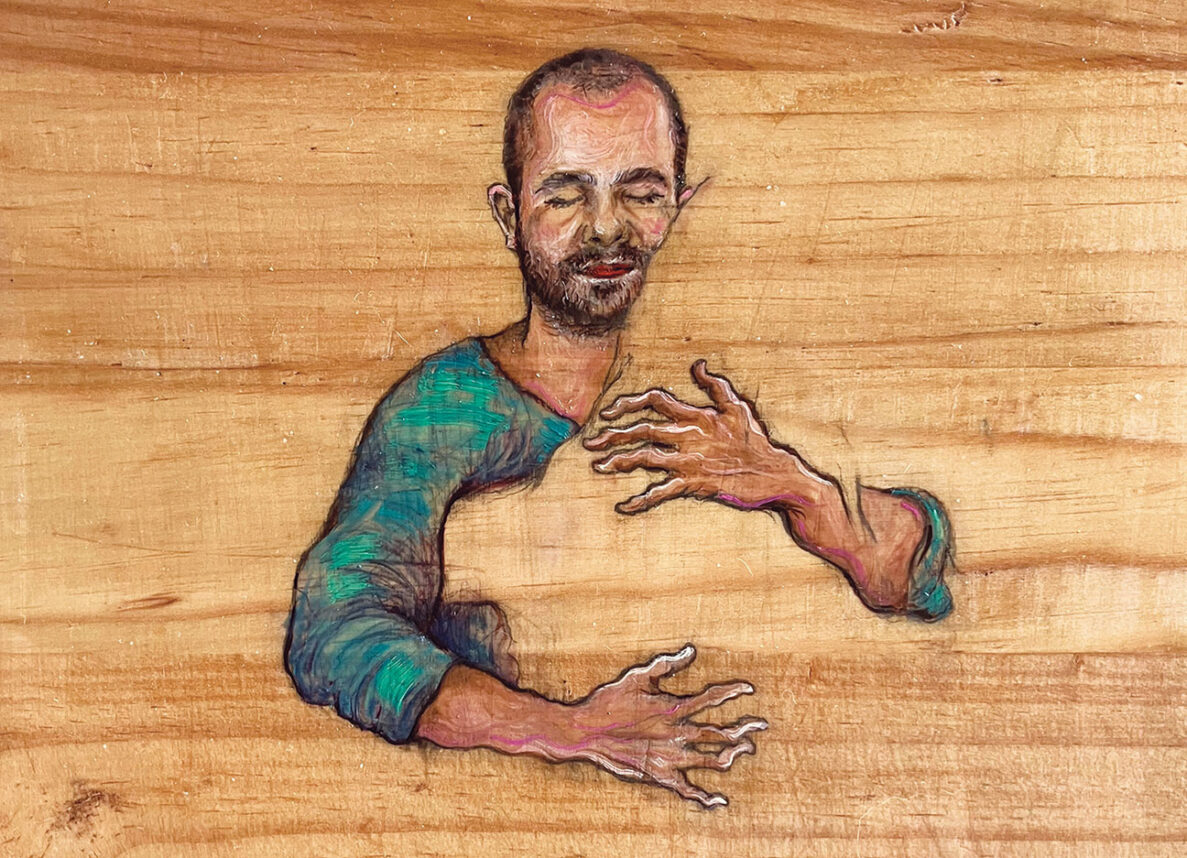
Before cancer, he had been a photographer. During treatment, he covered the walls of his hospital room with photographs he had taken — places he had traveled, moments he had captured, memories he cherished. What had been a sterile hospital room became something alive. A reminder of a life still unfolding.
One day he told me, “I’ll finish treatment, and then I’ll travel again. I want to take more pictures of beautiful places.”
He carried a future in his mind that existed beyond that hospital room. And no matter what he was facing, he would often say:
“Everything is fine. Everything will be OK.”
The words stopped me.
I had heard them before.
From my father.
In clinical research, we focus on what we can measure. But what I’ve learned from both my father and my patients is that sometimes the most powerful force behind every decision to keep going is something we cannot quantify.
Hope.
There are moments in my own life that I would not have overcome without what my father gave me. His resilience became mine. His mindset became my foundation.
Today, I see the results of everything he worked for. My sister was accepted into law school. My brother became a successful dentist. And I built a career in clinical research, helping bring new treatments to patients who are still holding on to hope.
Different paths. One foundation.
The belief my father gave us — that no matter what happens, everything will be OK.
Now it is something I carry forward. Something I hope to pass on to my daughter.
Because sometimes what carries us through life is not certainty.
It’s belief.
Papa, thank you.
Regina Portnoy is a clinical research leader with 20 years of experience across sites, CROs, and pharmaceutical/biotech organizations, primarily in hematology and oncology clinical trials.