Bathed in the warm, golden glow of the afternoon sun, the ancient ruins of the Parthenon and the Acropolis stand sentinel above the city of Athens. Strolling through the narrow cobblestone streets, these ancient ruins draw my eye with their majestic beauty. Knowing that they are 2,000 years old thrills me.
We pass dusty parks with old marble monuments and old men hawking roasted nuts or ice cream bars or cold drinks from old fashioned carts. We pass streams of tourists perusing the many gift shops with brightly colored magnets and keychains, totes and t-shirts.
There are impossibly romantic outdoor tavernas with sun bleached walls, wooden lattices covered in pale pink and fuchsia bougainvillea and rustic tables. The air is filled with the sounds of musicians serenading the al fresco diners with soft guitar and the strum of the traditional Greek bouzouki.
As tempting as the smells of the grilled fish wafting from the tavernas, Alan, Shevy and I were headed to dine at the only kosher restaurant in Athens, Gostijo, a Ladino word meaning gifts of food offered to friends and neighbors.
Alas, no outdoor taverna for us. There was a burly security guard checking IDs, a strong metal door and thick walls with no windows.
(Not to spoil the romantic imagery, but we couldn’t help noticing all the ugly anti-Israel graffiti on the walls in Athens, the many Halal restaurants and the many Arabic speakers.)
As so often happens in kosher restaurants, we ran into friends from Los Angeles and had lovely conversations with people visiting from Boston and Chicago.
For dinner, we ordered a mezze platter with falafel and salads, Greek classics like Moussaka, souvlaki and Bifteda, grilled meatballs.
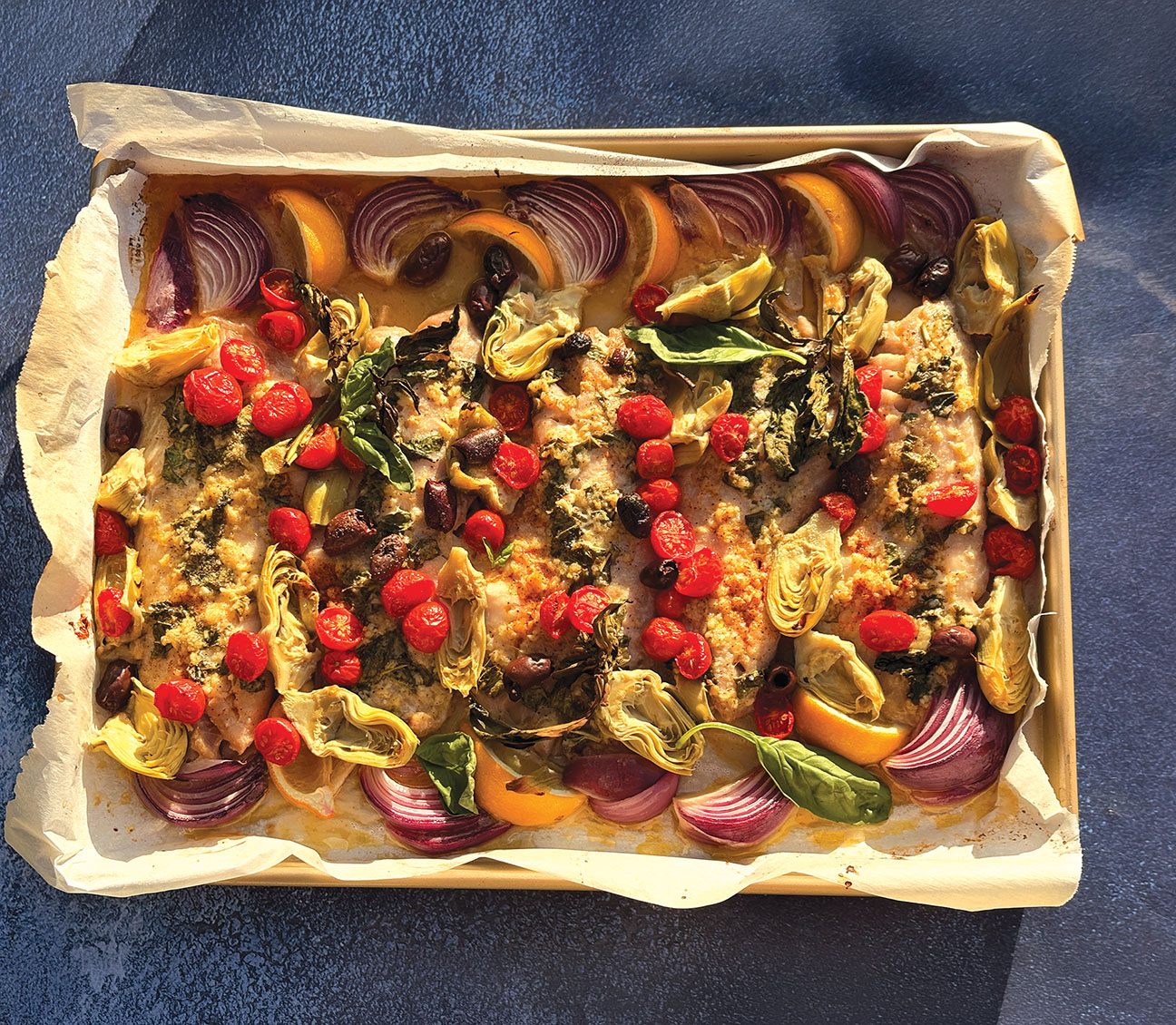
But memories of the tsipoura, a baked sea bream with cherry tomatoes and fresh herbs was the inspiration for this week’s recipe for Mediterranean Sea Bass. We made an herby sauce for the fish with extra virgin olive oil, freshly squeezed lemon juice, grated garlic and roughly chopped basil.
We placed lemon wedges and purple onion around the fish and layered artichoke hearts, cherry tomatoes, Kalamata olives and more basil over the fish.
The resulting dish looked like a work of art.
—Sharon
Did you know that Kalamata olives are named after the city of Kalamata in the southern Peloponnese, Greece? The deep, fertile soil and the warm Mediterranean climate are ideal for this special olive. Prized locally by the ancient Greeks, they became a valuable export commodity that fueled the region’s economy. Unlike common black olives, which are often picked early and artificially oxidized, Kalamata olives are handpicked in late autumn when they reach their signature deep purple color. The fresh olives are naturally bitter, so to make them edible, the olives are slit and naturally fermented in a brine of sea salt and red wine vinegar. (That’s why you need to buy special kosher brands.)
Kalamata olives are essential in my kitchen! I just love their plump, meaty texture and deeply savory flavor. Briny and salty but not overpowering, I always toss them into my green salad and Israeli salad. They have a distinct tang that cuts through rich foods, making them a great addition to charcuterie boards and cheese platters.
I especially love the way Kalamata olives play against fish, adding a perfectly intense and satisfying umami profile.
We hope you enjoy this special taste of the Mediterranean.
—Rachel
Mediterranean Sea Bass
2 lbs sea bass or red snapper fillets
1/3 cup extra-virgin olive oil
1 lemon, juiced
4 garlic cloves, minced
2 tsp kosher salt
1 tsp ground black pepper
1/2 cup chopped fresh basil
1 lemon, cut in wedges
1 red onion, cut in wedges
1 can artichoke hearts, drained and halved
1 cup cherry tomatoes, halved
1/2 cup Kalamata olives
Basil leaves, for garnish
Preheat oven to 400°F.
Place fish fillets on a parchment lined baking tray.
In a medium bowl, whisk together the oil, lemon juice, garlic, salt and pepper and basil to form a rough pesto.
Spoon the pesto over the fish fillets. Place the lemon and onions around the outer edges of the fish. Sprinkle the artichoke hearts, cherry tomatoes and olives on top of the fish fillets.
Bake in the oven for about 15 minutes, until the fish is flaky and the thickest part of the fillet is opaque.
Serve hot with roasted potatoes or white rice.
Sharon Gomperts and Rachel Emquies Sheff have been friends since high school. The Sephardic Spice Girls project has grown from their collaboration on events for the Sephardic Educational Center in Jerusalem. Follow them
on Instagram @sephardicspicegirls and on Facebook at Sephardic Spice SEC Food. Website sephardicspicegirls.com/full-recipes.