
One verse, five voices. Edited by Nina Litvak and Salvador Litvak, the Accidental Talmudist
“Speak to the Israelites: When a man or woman has committed any wrong toward a fellow human being, thus breaking faith with GOD, and they have realized their guilt, they shall confess the wrong that they have done. They shall make restitution in the principal amount and add one-fifth to it, giving it to the one who was wronged.”
– Numbers 5:6-7
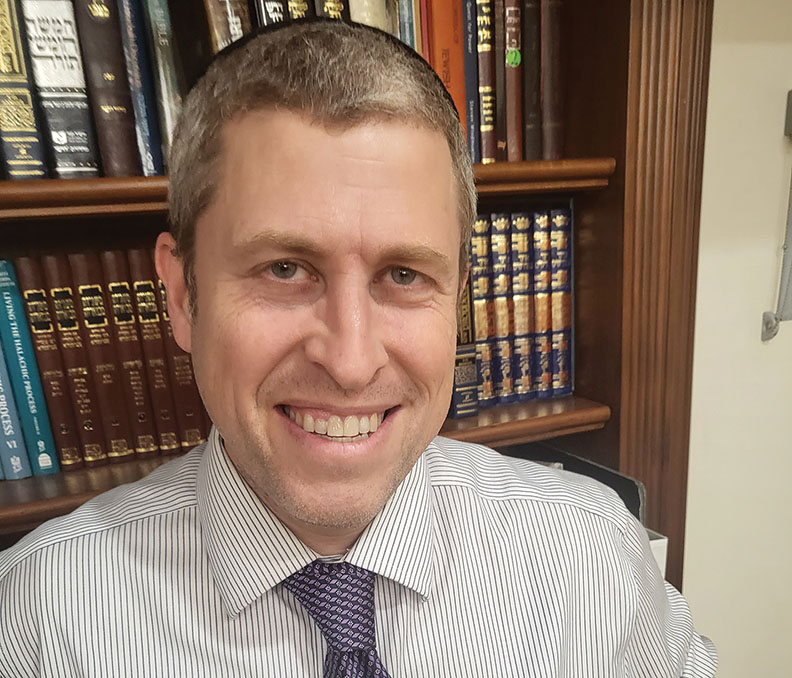
Rabbi Cheryl Peretz
Incoming Interim Dean, AJU Ziegler School of Rabbinic Studies
At first glance, these verses seem focused only on law and accountability. But what lies beneath is a deeply human truth: relationships matter, and when they are damaged, healing requires more than regret. It requires honesty.
Medieval commentator Sforno notes that the Torah describes wrongdoing here as “ma’al baAdonai,” trespass against God, even when the offense is committed against another person. Sforno teaches that when we betray another, we diminish the divine image within them and within ourselves for every act between people is an act before God. We are not defined by our failures. Instead, we are asked to admit what happened, take responsibility, and try to make things right. Though hard, confession in Judaism is an act of courage. Restitution is not punishment; rather, it is the rebuilding of trust and dignity.
In a world that often encourages defensiveness, blame, or silence, these verses call us to something higher. They remind us that greatness is not measured by never making mistakes, but by our willingness to take responsibility for them. Maybe that is why this is shared in the wilderness. Traveling forward is impossible if we pretend hurt does not exist. Real growth begins when people are willing to face one another truthfully and compassionately. So, the question is simple and deeply personal: when we know we have hurt someone, will we turn away and hope time erases it, or will we find the courage to reach out, speak honestly and begin healing that which was broken?
Rabbi Chaim Tureff
Pressman Academy and Author of “Recovery in the Torah”
Elton John said it best in his 1976 hit, “Sorry Seems to Be the Hardest Word.” This is evident by the world we live in. As somebody who works in the field of addiction recovery, the first parsha screams of both Steps eight and nine of Alcoholics Anonymous. Step 8 states, “Made a list of all persons we had harmed, and became willing to make amends to them all.” Step nine says, “Made direct amends to such people wherever possible, except when to do so would injure them or others.” Whenever someone is working through their sobriety, one of the key elements is taking responsibility for their mistakes as well as making reparations if necessary. This falls in line with our tradition, as Rambam states in the Mishneh Torah, “If a person transgresses any mitzvot of the Torah, whether a positive or a negative commandment — whether willingly or inadvertently — when he repents, and returns from his sin, he must confess before God.” This confession is a positive commandment. The Sefer HaChinukh states that by confessing we will come to feel remorse. It goes so far to praise one who actually confesses. What a concept in our world! Taking responsibility for one’s actions and actually saying sorry. We consistently see our leaders, whether globally, locally and everywhere in between, blame other people. Imagine the harmony we could have if we were to take the Torah’s advice and prove Sir Elton wrong and were willing to take ownership for our behavior?
Rabbi Scott Bolton
Congregation Or Zarua, NY, NY
In Parsha Nasso, the Torah offers a profoundly human approach to failure. It states: “When a man or woman commits any sin, they shall confess the sin they have committed, and make restitution …” This passage establishes that spiritual atonement is inseparable from practical restoration. Judaism does not view us as inherently sinful or demand a daily catalog of specific crimes. Instead, our liturgy — specifically the daily Amidah — serves as a form of sacred self-talk. As we gently tap on the doors of our hearts when we ask for forgiveness, the generalized terms of the prayers help us reveal what we personally need to confess. This process is not a plea for a magical pardon, but a stirring of the soul to take responsibility. We are reminded that the pursuit of “fixing” — tikkun — must begin at home. Too often, we focus our energy on the abstract goal of healing the entire world while neglecting the specific wrongs we have committed against those closest to us. The core of religious life is not found in grand gestures, but in the humble work of rectifying our mistakes and making straight what we have bent. That is the true meaning of tikkun. By healing the self and righting our personal wrongs, we create the only foundation upon which a better world can be built. May our words of confession, our self-talk in tefillah, lead us toward meaningful action. As it says in Psalms: “Create in me a clean heart, O God; and renew a steadfast spirit within me.” (Psalms 51:12)
Louis J. Shapiro
Certified Criminal Law Specialist
What stands out is the reference to Hashem, which at first glance seems unrelated to what appears to be a simple financial transaction. The Ramban explains that theft is a double betrayal — against the person who was wronged and against God Himself. A wrong against a person is never just between two people; it is a breach of trust that runs straight through the moral order itself. When one steals or deceives, it is not only property that is taken, but the very foundation of honesty and fairness that allows society to function.
That is why the Torah frames the act as a betrayal of Hashem. You cannot claim to be right with God while wronging the people around you. Faith is not measured in isolation, but in how one treats others in the most ordinary interactions. The Torah therefore requires more than regret. One must first confess, then make full restitution, adding a penalty to acknowledge the deeper harm caused. Only after the victim has been made whole does the Torah allow the individual to bring a korban asham. The order is the message: repair the human relationship first, and only then seek to repair the one above.
Yehudit Garmaise
Associate Marriage and Family Therapist
Why does this parsha go so far as to say that people who take things that do not belong to them “break their faith with G-d”? The Hebrew word “ma’al,” or “treachery” committed by a thief, might seem more relevant to idolatry or murder, G-d forbid, rather than theft.
Radical financial honesty, which has important spiritual implications, expresses respect for oneself, respect for others, and most of all: respect for G-d. The Ohr Hachaim explains that taking someone else’s belongings without permission or withholding workers’ wages denies Hashem’s hashgacha. In addition, thieves who deny their debts take Hashem’s name lightly, by making false oaths. The most egregious sin of Jews who steal, however, is that their immoral behavior adversely affects the entire K’lal. The Ohr Hachaim points out that while most of this passage is in the plural, the word “nefesh” is in the singular: teaching us that one financial sinner not only sullies himself, but he reduces other Jews’ abilities to access the awe that we might otherwise feel for the Divine Presence that rests among us.
Given this great power one nefesh has to affect the K’lal negatively, G-d forbid, we should be inspired to only take actions that affect others positively. When we recommit to respecting others’ property, paying every worker on time, paying every toll and fee, and paying every debt, we not only reinforce our faith in G-d and His Torah, but also strengthen G-d’s faith in us, while spreading light to the entire K’lal.