
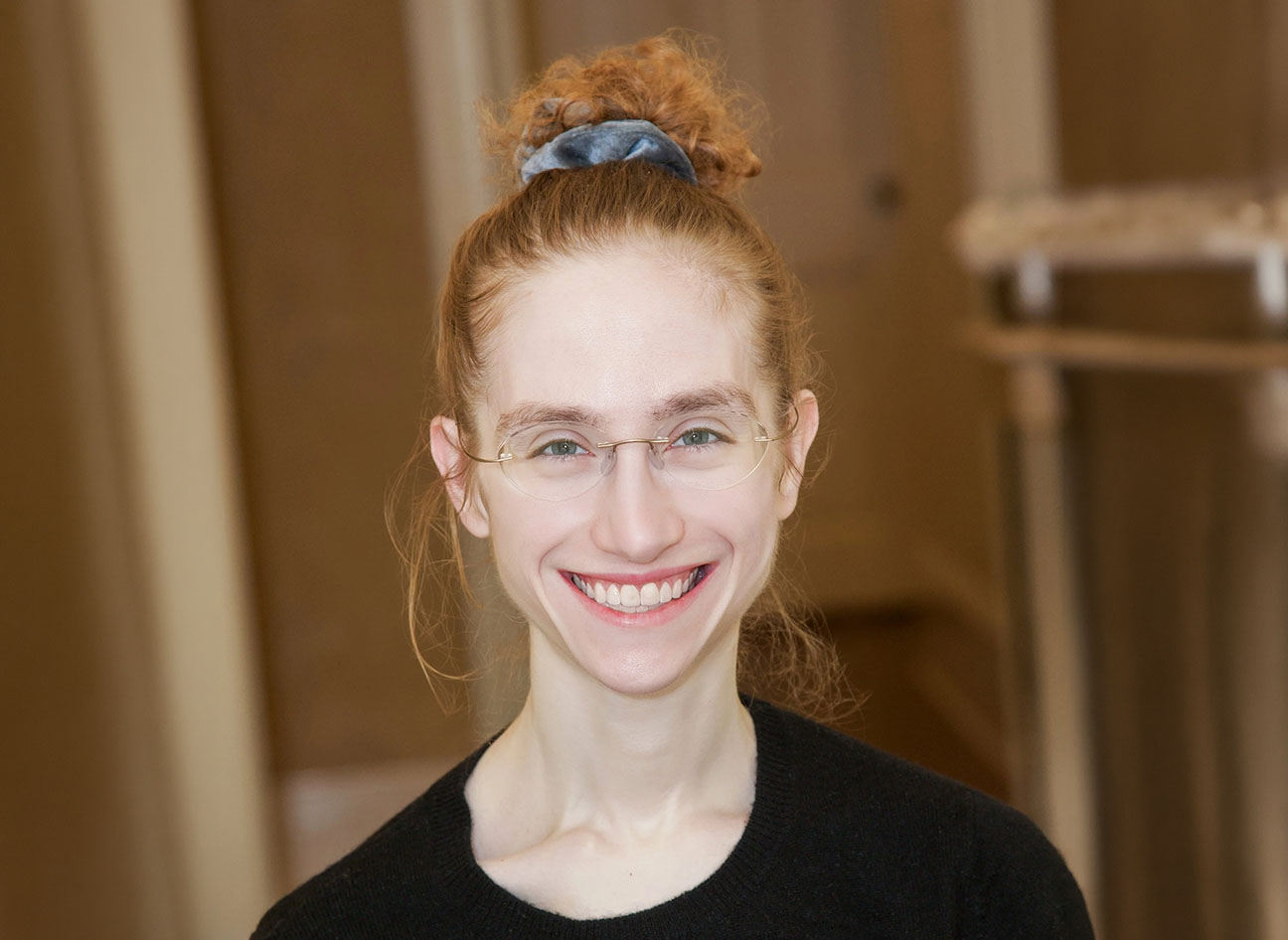
I read Elly Katz.
I’ve published Elly Katz.
But I’ve never met Elly Katz, so I never got to see her disability.
Elly had Ehlers-Danlos syndrome (EDS), a rare connective tissue disorder that lacks a cure.
What I knew very well about Elly was what she wrote. But those words, in an odd way, gave me a sense of guilt.
You see, Elly had this gift with words.
She’d write things like:
“I exist more like a vapor, spreading in all directions,
or perhaps stalwartly stationary.”
Or this:
“Photons—
quanta bidding me to abide, to scavenge unwatched, primal light from my incarceration within the firm bars of disabled flesh, as robust a barricade
against being as the skin of that oak.”
Or this:
“Thrownness—
we exist on the perimeter of ourselves,
cows grazing outskirts of fields,
neglecting the racing evergreen heart at the center.
The random, askance universe does not catch us.”
Elly loved poetry, but she also had a way with prose.
In a 2020 piece in The Journal describing her journey, she wrote:
“I crafted this autobiographical sketch while braced in a shoulder garment that hugs my right lower rib and shoulder, which dislocate during sleep almost nightly. A neck brace cloaks my cervical spine and offers some semblance of stability my frequent shoulder dislocations demand. My right arm, a helpless child uncertain of how to carry her own weight, tugs at the base of my scalp.”
In 2022, she suffered a stroke and hemorrhage that caused intense pain, paralyzed her right side, and interrupted her science studies at Harvard.
On a whim, she wrote about it in the third person:
“Suddenly, she failed to locate her entire right side. The once watertight GPS system between her brain and her body was breached. ‘Mom, is my right side on the bed? Where is my right side? Can you see it? Is it there?’ Her interrogatories gushed forth, the questions colliding with each other breathlessly as her terror mounted. Her throat constricted around syllables. Her body plan felt remapped to an uncharted terrain relative to before… It jolted her like a harrowing nightmare, a plot twist crafted in a science fiction workshop.”
Her fragile body could not weaken her vigorous dexterity with words:
“She could not determine where her right side ended, and the world began. Her sense of boundary dissolved. Her spine morphed from midline into a period, a hard stop, followed by a landslide of empty space. Her sense of center was catapulted to off-kilter. It still is. She lived out of context, at a remove from reference, inside the split-screen of her body.”
When I reviewed her book, “From Scientist to Stroke Survivor: Life Redacted,” I explained why her words brought me so much guilt.
“It doesn’t come from feeling sorry for Elly’s condition,” I wrote, “although I’m sure there is some of that.
“It doesn’t come from the selfish guilt of feeling grateful for not being in her shoes, although I’m sure there’s some of that, too.”
No, the guilt came from the pleasure I felt when I read her words.
I wondered: “Is it callous of me to read the most heart-wrenching tale of physical agony and think, ‘This is one of the most beautifully-crafted sentences I’ve ever read’”?
Reading Elly, I soon became entranced not with what she said but how she said it.
“Her prose disrupted my mind,” I wrote, “confronting me with words I had never seen come together before.”
In her own way, Elly brought home one of life’s deepest lessons: How we say things matters more than what we say.
Elly’s writing married lyricism with radical accuracy. She wanted the reader to know exactly what was going on with her, however clinical or painful.
So she chose to be radically honest and original.
Something else came across in her writing—a sense of gratitude that her ability to communicate was perfectly intact. That ability was encouraged by her mother: “From a young age,” she wrote, “my mother sculpted me into a writer, a poet, an ardent observer of my world.”
Writing was the gift that worked even when her body didn’t; the gift she fired on all cylinders.
“I am my own narrative, unfinished, exposed and frenzied.
Only I can tell myself the next sentence of my story,” she wrote in 2020.
“In making meaning, I am forced to literally redesign the dictionary, to redefine happiness, wellness and so much more.”
Elly passed away this week, but her gift for words is still with us.
The guilt I feel from the pleasure of reading those words is also still with me.
My one consolation is that wherever she is now, she might get some pleasure from hearing about mine.































