fbpx

August 13, 2026

Disarm, Verify, Withdraw. The Only Path Forward for Gaza

For more articles from The Media Line, click here.

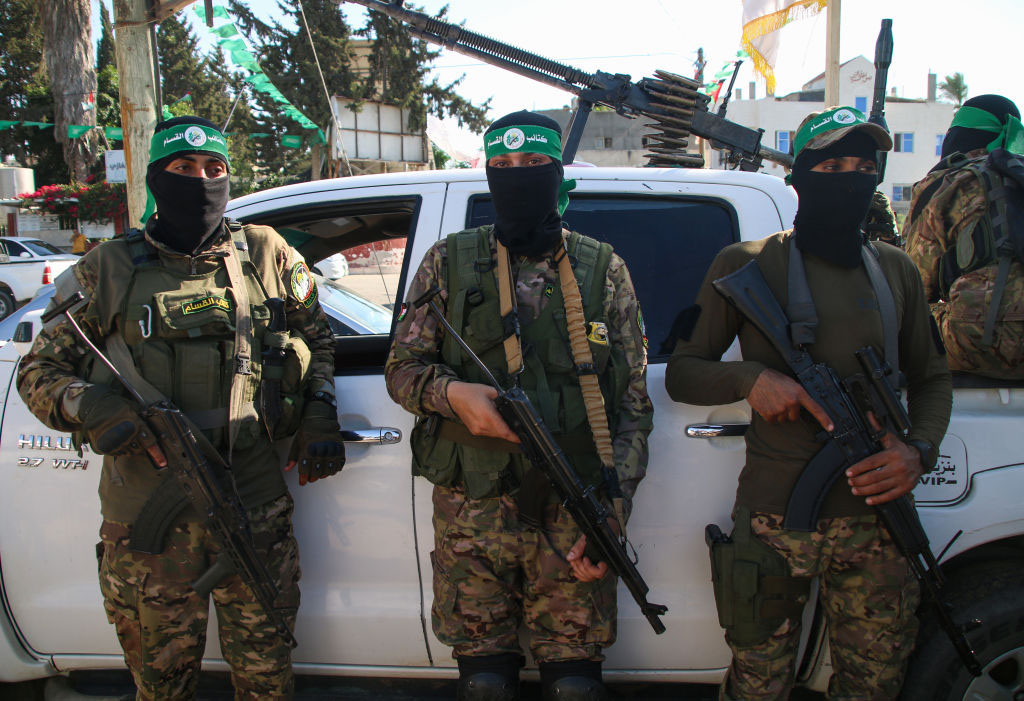
Nikolai Mladenov’s newly announced Gaza agreement offers a rare glimmer of hope amid years of bloodshed and despair. At its core is a straightforward proposition: the phased disarmament of Hamas and other Palestinian terror organizations in exchange for the eventual withdrawal of Israeli forces from the Strip. Israelis and Gazans alike desperately want Hamas’s weapons taken away, Gaza demilitarized, and a new form of leadership to take root—one rooted in respectful coexistence rather than endless jihad.

The desire for this outcome runs deep. Many Israelis, still reeling from the horrors of Oct. 7, when Hamas invaders massacred civilians in border communities, see demilitarization as the only reliable way to restore security to the kibbutzim and towns that face Gaza. They have no appetite for indefinite military operations. Popular rhetoric aside, neither the Israeli public nor the military wants to remain in Gaza indefinitely. What they want is simple: the absence of a genocidal terror organization on the other side of the fence, armed with rockets, tunnels, and an ideology of annihilation. Gazans, too, have every reason to support this. Years of rule by a mafia that prioritizes tunnels and rockets over schools, hospitals, and prosperity have exacted a terrible toll. A Gaza free of Hamas’ military apparatus could finally begin to rebuild and choose life over perpetual conflict.

Yet history teaches caution. Hamas has a well-documented record of tactical pauses. The Islamic concept of hudna—a temporary cessation of hostilities—has been invoked when jihadi forces find themselves at a disadvantage, only to be broken once strength is regained. If the current peace deal amounts to nothing more than another hudna, it will fail. What is required instead is genuine, complete disarmament: every long-range rocket, every AK-47, maps of the entire tunnel network, and the locations of weapons manufacturing sites, all handed over under independent international verification. Only then does the plan become something more than a ruse. Only then does it become a foundation for lasting change.

Israel’s actions will hinge entirely on whether that verification occurs. The absence of an immediate official Israeli endorsement is understandable in the current political climate. With elections approaching, any government is wary of appearing to accept international dictates that place civilians at risk. No responsible leadership will sign on to an arrangement that leaves the core threat intact. But once Hamas’s arsenal is demonstrably gone and the Strip is verifiably demilitarized, Israel has every incentive to withdraw. There is no strategic or public desire to remain. The moment the threat disappears, the justification for military action disappears with it. Before Oct. 7, Israel was not conducting operations inside Gaza. The pattern of cause and effect is clear: rockets, tunnels, and invasions produce defensive responses. Remove the cause, and the response ends.

This is not a call for endless war. It is a call for realism. Israel will continue to defend its citizens against those who use Gaza as a launchpad for attacks for as long as that threat exists. The alternative—hoping that an armed Hamas will somehow transform into a peaceful neighbor—has already been tested and found disastrous.

The same logic applies to the broader region. Palestinians in Gaza possess agency. They are not condemned by fate to endless cycles of terrorism. They can choose prosperity, dignity, and coexistence instead of the ideology that has repeatedly invited destruction. That choice begins with the surrender of weapons that make peaceful politics impossible.

The plan’s success will not be measured by signatures on paper or statements at press conferences. It will be measured by whether the weapons are actually collected, the tunnels mapped and sealed, and the verification process held to rigorous standards. If that happens, Israel will have every reason to step back, and Gazans will have a genuine opportunity to rebuild without the shadow of a terror dictatorship dedicated to war. Both populations have waited long enough for that chance. The responsibility now rests with those who hold the guns: hand them over, allow the process to be verified, and let the possibility of coexistence finally take root. Anything less returns everyone to the same deadly cycle that has already claimed too many lives.


Lt. Col. (Ret.) Jonathan Conricus is a former international spokesperson for the Israel Defense Forces. He currently serves as a senior fellow at the Foundation for Defense of Democracies.

This opinion article was originally published by The Media Line.

Disarm, Verify, Withdraw. The Only Path Forward for Gaza Read More »

Plea — A poem for Parsha Shoftim

Shoftim — judges (Deuteronomy 16:18–21:9)

Be fair, judges –
whether appointed or elected.
Hold the line.

Pursue, don’t pervert justice
whether it’s traffic citations
or human rights or

human…be human, judges –
your words make the path
and there are no

left and right turns on the path.
Only forward. Don’t go
backwards, judges –

blood has been spilled
to get us where we are.
Don’t step on the blood.

Don’t make it personal, judges –
whether it’s courts of laws
or poetry contests or

pie eating contests or
American Idol. (But mostly
courts of law. Forget I

said the other things, Judges.)
They’re sending you the
biggest choices to make.

Make them with
all the weight on you.
Everything depends on

your gavel
your judgments
your good sensibility.


Rick Lupert, a poet, songleader and graphic designer, is the author of 30 books including “Begin the Beget” and “God Wrestler: A Poem for Every Torah Portion.” Visit him at www.JewishPoetry.net

Plea — A poem for Parsha Shoftim Read More »

Remembering Elly Katz: She Came to Show Us How

I read Elly Katz.

I’ve published Elly Katz.

But I’ve never met Elly Katz, so I never got to see her disability.

Elly had Ehlers-Danlos syndrome (EDS), a rare connective tissue disorder that lacks a cure.

What I knew very well about Elly was what she wrote. But those words, in an odd way, gave me a sense of guilt.

You see, Elly had this gift with words.

She’d write things like:

“I exist more like a vapor, spreading in all directions,

or perhaps stalwartly stationary.”

Or this:

“Photons—

quanta bidding me to abide, to scavenge unwatched, primal light from my incarceration within the firm bars of disabled flesh, as robust a barricade
against being as the skin of that oak.”

Or this:

“Thrownness—

we exist on the perimeter of ourselves,

cows grazing outskirts of fields,

neglecting the racing evergreen heart at the center.

The random, askance universe does not catch us.”

Elly loved poetry, but she also had a way with prose.

In a 2020 piece in The Journal describing her journey, she wrote:

“I crafted this autobiographical sketch while braced in a shoulder garment that hugs my right lower rib and shoulder, which dislocate during sleep almost nightly. A neck brace cloaks my cervical spine and offers some semblance of stability my frequent shoulder dislocations demand. My right arm, a helpless child uncertain of how to carry her own weight, tugs at the base of my scalp.”

In 2022, she suffered a stroke and hemorrhage that caused intense pain, paralyzed her right side, and interrupted her science studies at Harvard.

On a whim, she wrote about it in the third person:

“Suddenly, she failed to locate her entire right side. The once watertight GPS system between her brain and her body was breached. ‘Mom, is my right side on the bed? Where is my right side? Can you see it? Is it there?’ Her interrogatories gushed forth, the questions colliding with each other breathlessly as her terror mounted. Her throat constricted around syllables. Her body plan felt remapped to an uncharted terrain relative to before… It jolted her like a harrowing nightmare, a plot twist crafted in a science fiction workshop.”

Her fragile body could not weaken her vigorous dexterity with words:

“She could not determine where her right side ended, and the world began. Her sense of boundary dissolved. Her spine morphed from midline into a period, a hard stop, followed by a landslide of empty space. Her sense of center was catapulted to off-kilter. It still is. She lived out of context, at a remove from reference, inside the split-screen of her body.”

When I reviewed her book, “From Scientist to Stroke Survivor: Life Redacted,” I explained why her words brought me so much guilt.

“It doesn’t come from feeling sorry for Elly’s condition,” I wrote, “although I’m sure there is some of that.

“It doesn’t come from the selfish guilt of feeling grateful for not being in her shoes, although I’m sure there’s some of that, too.”

No, the guilt came from the pleasure I felt when I read her words.

I wondered: “Is it callous of me to read the most heart-wrenching tale of physical agony and think, ‘This is one of the most beautifully-crafted sentences I’ve ever read’”?

Reading Elly, I soon became entranced not with what she said but how she said it.

“Her prose disrupted my mind,” I wrote, “confronting me with words I had never seen come together before.”

In her own way, Elly brought home one of life’s deepest lessons: How we say things matters more than what we say.

Elly’s writing married lyricism with radical accuracy. She wanted the reader to know exactly what was going on with her, however clinical or painful.

So she chose to be radically honest and original.

Something else came across in her writing—a sense of gratitude that her ability to communicate was perfectly intact. That ability was encouraged by her mother: “From a young age,” she wrote, “my mother sculpted me into a writer, a poet, an ardent observer of my world.”

Writing was the gift that worked even when her body didn’t; the gift she fired on all cylinders.

“I am my own narrative, unfinished, exposed and frenzied.
Only I can tell myself the next sentence of my story,” she wrote in 2020.

“In making meaning, I am forced to literally redesign the dictionary, to redefine happiness, wellness and so much more.”

Elly passed away this week, but her gift for words is still with us.

The guilt I feel from the pleasure of reading those words is also still with me.

My one consolation is that wherever she is now, she might get some pleasure from hearing about mine.

Remembering Elly Katz: She Came to Show Us How Read More »

Evolution is the Goal of Textual Study

Study of the Talmud teaches us that the goal of studying any text
should not be to find answers to a problem but
to the generation of questions about problems that have vexed
the reader while studying it. The text’s not used as a short cut
to finding in the words that it contained a literary solution
to problems in the questions that the text had raised,
this rationale for reading the source of their intellectual evolution,
and the reason why what is problematic in any text is what should be praised.

While Rashi’s explanations of the Talmud text are nearly always indispensible,
the questions they cause Tosaphot to ask don’t always provide answers that are sensible,
but generate talmudically in the texts a spiritual evolution
which enables scholars to stand on their heads in order to provide for all the questions a solution —
standing on one’s head a way to climb talmud texts which are trees of knowledge
that evolution enabled us to climb this way, one that is not taught in any yeshivah or college,
such evolution providing us with the prime program that prevents pollution
caused by progressive processes like those now threatening our nation with dismaying dissolution.

In “Many schools fail to instill a questioning mindset. Studies suggest most questions in the classroom are posed by teachers to students,” WSJ, 8/4/26, Andrew Stark writes:

Hilary Putnam often gave his Harvard philosophy students a final exam consisting of an unusual challenge. He instructed each student to decide on what questions the examination should include—and then respond to them. It was a devilish test. If a student came up with questions that were too hard, answering correctly would be a struggle. But if the questions were too easy, the student would lose marks for asking puffballs.
Interestingly Deuteronomy implies thatit provides solutioins to all the questions the king may ask. In “The Origins of Constitutional Thought—Found in Deuteronomy,” thetorah.com, Bernard Levinson writes in thetoraah.com:
https://www.thetorah.com/article/the-origins-of-constitutional-thought-found-in-deuteronomy
In the end, there remains for the king but a single positive duty: to “read each day of his life”—while sitting demurely on his throne—from the very Torah scroll that daily circumscribes his powers, with its legal paragraph containing Deuteronomy’s Law of the King:
‏דברים יז:יח וְהָיָה כְשִׁבְתּוֹ עַל כִּסֵּא מַמְלַכְתּוֹ וְכָתַב לוֹ אֶת מִשְׁנֵה הַתּוֹרָה הַזֹּאת עַל סֵפֶר מִלִּפְנֵי הַכֹּהֲנִים הַלְוִיִּם. יז:יט וְהָיְתָה עִמּוֹ וְקָרָא בוֹ כָּל יְמֵי חַיָּיו לְמַעַן יִלְמַד לְיִרְאָה אֶת יְ־הוָה אֱלֹהָיו לִשְׁמֹר אֶת כָּל דִּבְרֵי הַתּוֹרָה הַזֹּאת וְאֶת הַחֻקִּים הָאֵלֶּה לַעֲשֹׂתָם. Deut 17:18 When he comes to sit on the throne of his kingdom, he shall have a copy of this Torah written for him upon a scroll in the presence of the levitical priests. 17:19 It shall remain with him and he shall read in it all the days of his life, so that he may learn to fear YHWH his God by diligently performing all the words of this Torah and all the statutes.
Deuteronomy has reduced the king to mere titular head of state. The sole potent authority is the Deuteronomic Torah, the very lawbook in whose original reception, formulation, transcription, and implementation Deuteronomy’s king plays absolutely no role.  


Gershon Hepner is a poet who has written over 25,000 poems on subjects ranging from music to literature, politics to Torah. He grew up in England and moved to Los Angeles in 1976. Using his varied interests and experiences, he has authored dozens of papers in medical and academic journals, and authored “Legal Friction: Law, Narrative, and Identity Politics in Biblical Israel.” He can be reached at gershonhepner@gmail.com.

Evolution is the Goal of Textual Study Read More »

A Bisl Torah — If They’re Not Ready

During Elul, we think about the ways to return to each other, especially the relationships that are most fraught. Teshuvah is the process we engage in—returning to our best selves, returning to our loved ones, and returning to God.

But what happens when the other person isn’t ready to return to you? You keep reaching out. You try to call. You text. Repeatedly, you have shown up. But they haven’t responded. How does teshuvah work then?

Heartbreakingly, this kind of reconciliation needs a reframe. Not every return means a reunification. Instead, healing has to come from elsewhere; a healing in knowing you said you’re sorry and that you extended your hand. There is nothing more you can do.

And in that realization, give your soul the permission to settle, to relax—to engage with other angles of life because your soul has otherwise been consumed. Find comforts in areas you have yet to discover. It’s not about giving up. It’s making space for your own life to continue forward while the other person determines what is best for them.

The philosopher Maimonides explains that if someone asks you for forgiveness, you should be open to their heartfelt apology. But this isn’t always realistic. Even without their forgiveness, return is still possible: A return to an improved, growing soul that learns how to stretch and fall and get back up.

A soul that most of all, chooses to live.

Shabbat Shalom


Rabbi Nicole Guzik is senior rabbi at Sinai Temple. She can be reached at her Facebook page at Rabbi Nicole Guzik or on Instagram @rabbiguzik. For more writings, visit Rabbi Guzik’s blog section from Sinai Temple’s website.

A Bisl Torah — If They’re Not Ready Read More »

A Moment in Time: What We Let Through

Dear all,

As part of my sabbatical, I am taking a train across the United States. It has been a fascinating journey, meeting people from all backgrounds and seeing parts of the country often overlooked.

As our train glided along the Colorado River, our conductor pointed out a dam near the town of Gypsum. He explained that its primary purpose is irrigation.

I thought about that for the next few miles.

A dam doesn’t stop the river. It helps us channel a precious resource, releasing just enough, at just the right time, to bring life to something that might otherwise remain dry.

It made me think about a Jewish Psalm that we recite at the conclusion to our Amida prayer:

“May the words of my mouth and the meditation of my heart be acceptable to You, Adonai, my rock and my redeemer.”

We live in a world that encourages us to say whatever we are thinking, whenever we are thinking it. But perhaps we need our own emotional dams—not walls that keep everything inside, but moments of pause that help us decide what is worth letting through.

Does this need to be said?

Is this the right time?

Will these words nourish or wound?

Water is life-giving when it is channeled with intention.

And so are our words.

Perhaps the challenge is not to stop the flow, but to make sure we take a moment in time to ensure our words bring nourishment rather than hurt.

May the words of our mouths—and the meditations of our hearts—be worthy of that prayer.

With love and Shalom,

Rabbi Zachary R. Shapiro

A Moment in Time: What We Let Through Read More »

Print Issue: Education for Jewish Endurance | August 14, 2026

CLICK HERE FOR FULLSCREEN VERSION

Print Issue: Education for Jewish Endurance | August 14, 2026 Read More »