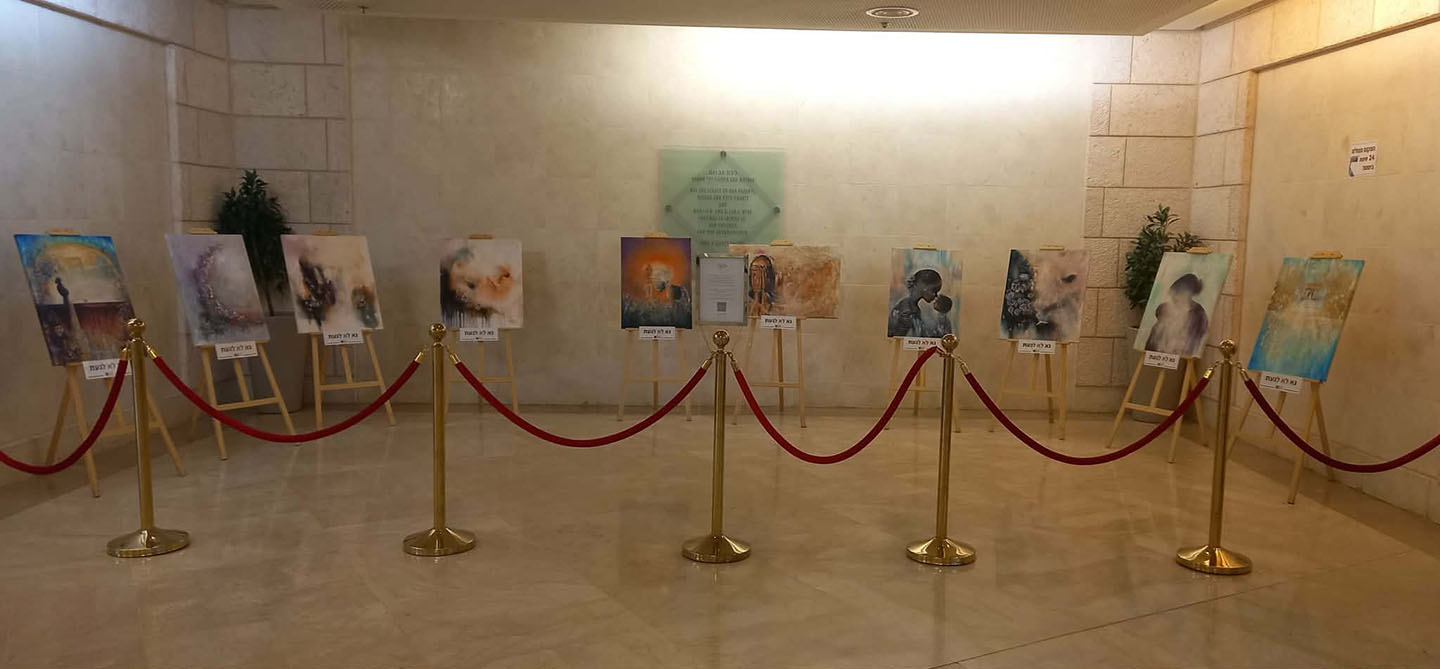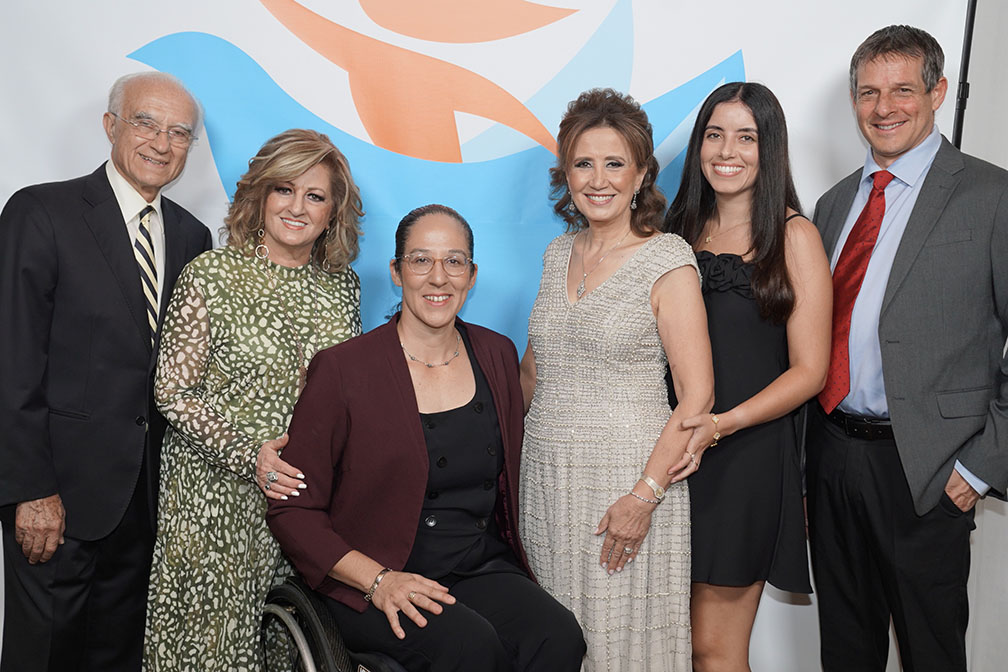
Three fascinating exhibitions now showing at the Skirball Cultural Center stand on their own, yet together they trace unexpected threads of Jewish identity, memory and cultural reinvention. They span the rebellious energy of punk to the layered visual language of comics and the intimate reflections of “A Palace in Time,” a joint exhibition by Lisa Edelstein and her husband Robert Russell.

Russell paints highly realistic still life of everyday and ritual objects — porcelain cups, a Shabbat teapot, a yahrzeit candle, and small figurines. His attention to detail is so precise that the works can easily be mistaken for photographs.
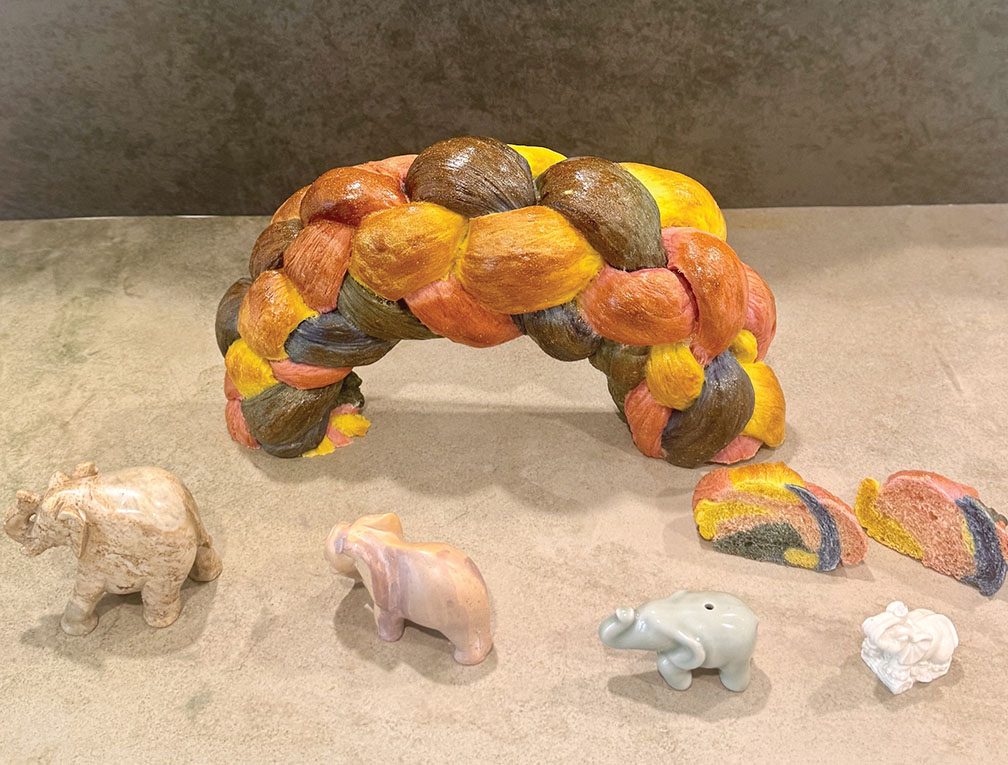
In his porcelain figurine series, Russell paints objects originally produced by the Allach Porcelain factory, later run under the SS during the Nazi era and linked to forced labor and propaganda. Working from archival and auction images, he renders them with striking realism, turning visually appealing decorative objects into reminders of their complex and troubling history.
Curator Vicki Phung Smith initially considered presenting the work of Russell on its own. It was only after visiting their home studio and seeing the paintings of his wife, actress-turned-artist Lisa Edelstein (“House,” “Girlfriend’s Guide to Divorce”) that the direction of the exhibition shifted. Recognizing a shared emotional and conceptual vocabulary between the two bodies of work, she invited Edelstein to exhibit alongside Russell, creating a dialogue between their works.
Edelstein started painting during COVID, when the sudden pause of daily life and constant screen time led her to revisit a long-dormant creative passion. After watching films throughout the lockdown, she felt an urge to shift direction and return to something more tactile and immediate. What began almost casually with markers quickly developed into a deeper practice, especially after her husband encouraged her to move from drawing materials to watercolor and later oil paint.
Together, their works construct a shared space in which private memory, Jewish ritual and visual storytelling intersect, transforming the idea of home into a site of artistic and emotional reflection.
Drawing on her own family photographs from the 1970s, Edelstein captures scenes of everyday life from family meals to lighting the Sabbath candles. The result is a personal archive where domestic life becomes a site of reflection on identity and time.
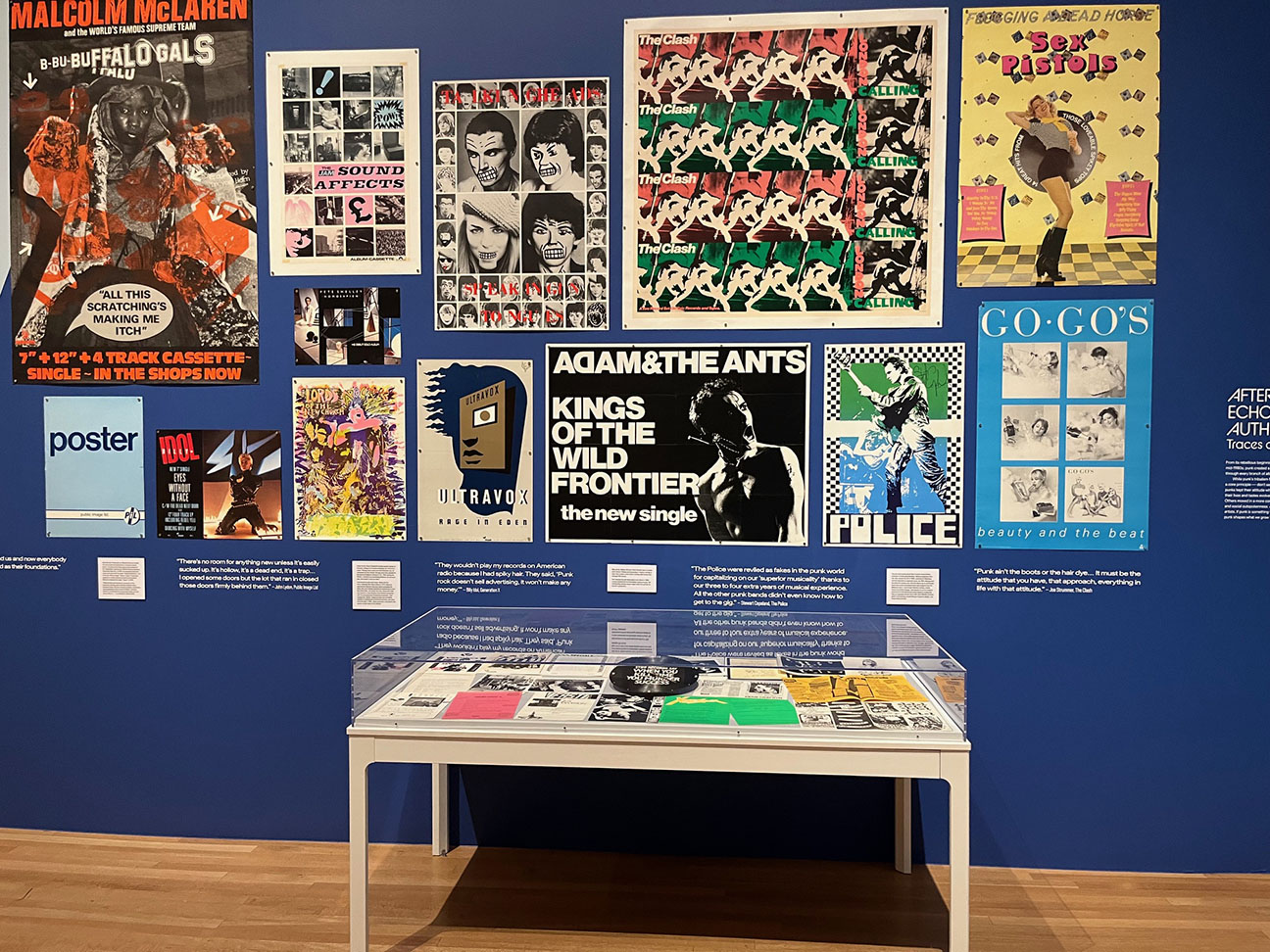
Down the hall, you’ll encounter a very different scene, one not usually recognized as “Jewish.” “Outsiders, Outcasts, Rebels + Weirdos: Punk Culture 1976–1986” traces punk’s rise from New York and London to Los Angeles and Washington, D.C., framing it not just as music or style but as an ideology shaped by refusal, contradiction and lasting cultural impact.

The exhibition also highlights the often-overlooked presence of Jewish musicians in the scene, including members of Bad Religion, The Dickies, The Pandoras and the short-lived band Jews from the Valley, which “was one of the first bands to have an explicit Jewish theme in their music,” curator Cate Thurston said.
She added that “anti-racist networks formed organically, with a clear line drawn: you are not welcome here,” describing how punk communities pushed out Nazi and extremist elements from the scene.
Rather than offering a single narrative, the show explores questions of visibility, identity and belonging within a movement that prized reinvention and frequently obscured personal backgrounds.
If punk tells the story of outsiders reshaping culture through sound and refusal, the comics exhibition, “Inventing America: The Comic Book Revolution,” reveals a parallel narrative rooted in ink, image and imagination.
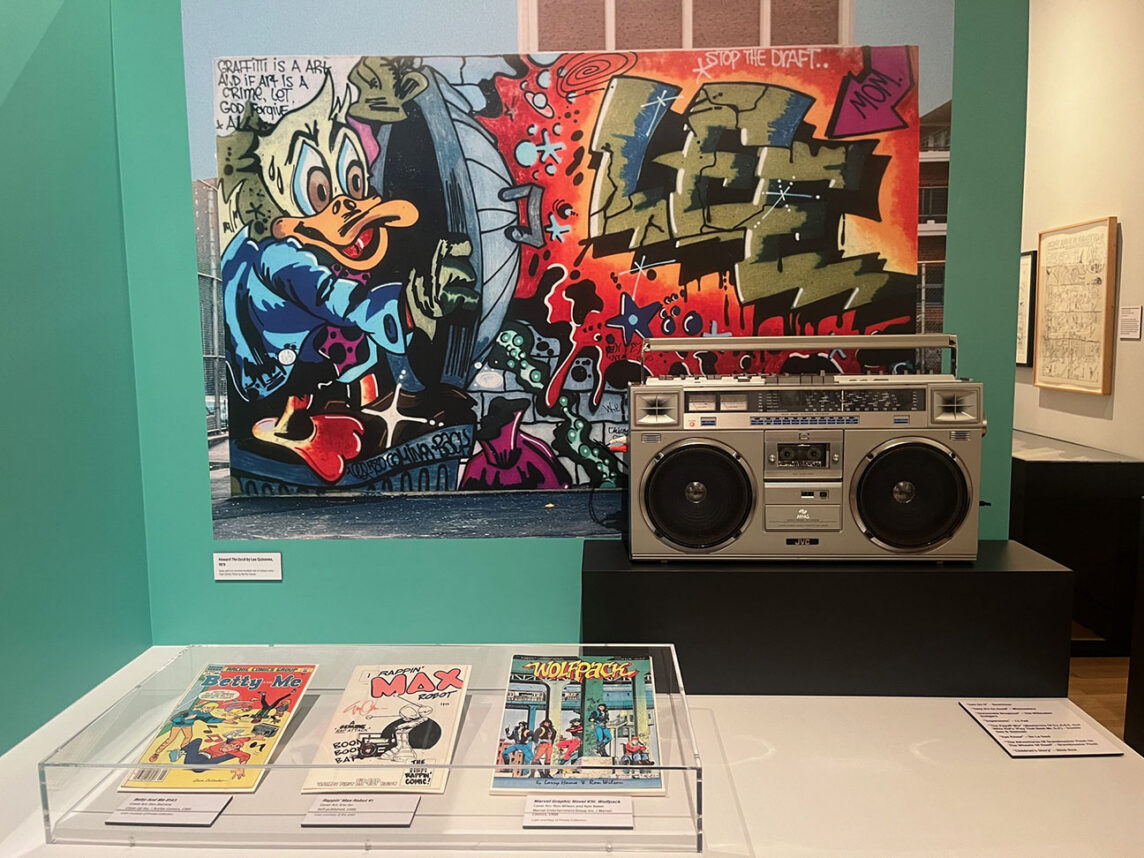
Immigrants and first-generation Americans, many of them Jewish, were instrumental in building the comic book industry. Arriving in the United States with limited English and few economic opportunities, many found an opening during World War II, when established artists were drafted and publishers needed new talent. Comics, which relied heavily on visual storytelling, offered a rare entry point where language mattered less and identity was less of a barrier.
Drawing on experiences of displacement and reinvention, these creators helped shape a distinctly American mythology through dreams, fears, and aspirations. As the field became more diverse over time, so too did the nation reflected in its stories.
Take, for example, the story of Lily Renée, a Holocaust survivor and one of the first women to break into the comic book industry. Born in Vienna, her childhood was upended by the Nazi occupation of Austria in 1938. Sent to England as a teenager, she endured years of hardship before eventually reuniting with her family in New York. She was hired by comic book publisher Fiction House and became a full-time comic artist, lending her polished linework to adventure and romance titles. She is best known for Señorita Rio, about a Hollywood actress turned secret agent who hunts Nazis in Central and South America.
The exhibition also highlights artists whose lives reflected the upheavals of the 20th century, including Mac Raboy, who began his career with the Works Progress Administration during the Great Depression and later rose to prominence drawing patriotic wartime imagery.
Visitors also encounter the influence of Stan Lee, born Stanley Martin Lieber to Jewish-Romanian immigrant parents, who served as Marvel’s primary creative force for more than two decades. Together with artists such as Jack Kirby, he helped expand the superhero genre while steering it toward more socially conscious storytelling. Their collaboration helped introduce characters like Black Panther in 1966, one of the first Black superheroes in mainstream American comics, and shaped narratives that confronted racism, corruption and inequality. By the late 1960s and into the 1970s, Marvel further deepened this shift toward social commentary; in a 1970 Amazing Spider-Man storyline, for example, a politician is revealed to have ties to hate groups, reflecting a growing willingness within mainstream comics to engage directly with contemporary social realities.
Kirby – born Jacob Kurtzberg to Jewish immigrant parents – brought a personal history shaped by displacement and war. His work is often read through themes of outsiders, resistance to tyranny and the fight against fascism, reinforced by his service in World War II and his upbringing in a Jewish immigrant household.
Also on display are some of the most iconic artifacts in comic book history, including Action Comics #1, which introduced Superman, and Superman #1. Created in 1938 by Jerry Siegel and artist Joe Shuster, Superman is often seen as the quintessential American hero, yet his origins lie in the imagination of two young Jewish creators. Seen in this context, these rare comics underscore how deeply Jewish immigrants and their children helped shape the visual language and mythology of American popular culture.
The exhibition frames comic books as more than entertainment; they emerge as a cultural mirror of a nation in constant reinvention. That evolution was not without disruption. Following the Comics Code Authority in the 1950s, many publishers closed while others shifted toward safer genres such as romance, teen drama and adapted literary classics. Titles like “Walt Disney’s Comics and Stories” reached mass circulation, while “Classics Illustrated” and “Treasure Chest” brought literary narratives to wide audiences.

Collector editions on display underscore comics’ lasting cultural value, from a 1960 Mad magazine issue celebrating John F. Kennedy’s election, originally sold for 25 cents, to Gay Comics (Summer 1993), originally priced at $3.50, and the oversized 1978 Superman vs. Muhammad Ali, originally sold for $14.99 (approximately $75 in today’s money), now considered a landmark collector’s item.
The comics exhibition will run through Feb. 28, 2027, while both “Outsiders, Outcasts, Rebels + Weirdos” and “A Palace in Time” are on view through Sept. 6.