My father died when I was 39; my mother when I was 49. Most of the time I spent walking my father through his cancer is a blur. For my mother’s funeral, she had to be brought from Florida to New Jersey. This might be the only time she was not afraid to fly.
When asked to identify her body, I asked my cousin to do it. He went over, looked in her coffin, and stood frozen for over a minute. Then he returned to me and said, “I think it’s her.” “You sure?” “Yeah, I think so.” It was very unsatisfying, but I never looked. I did not want what he saw as my last memory. The rest of the day is a blur.
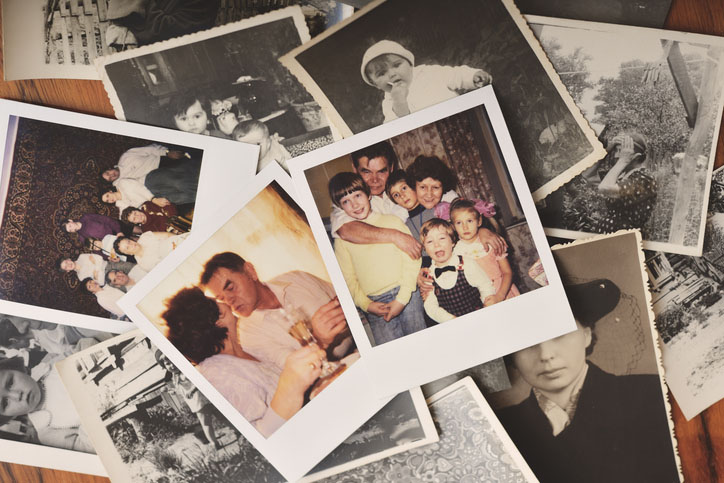
Memories of my school years are as scattered as if you dropped an open bag of marbles on a wooden floor.
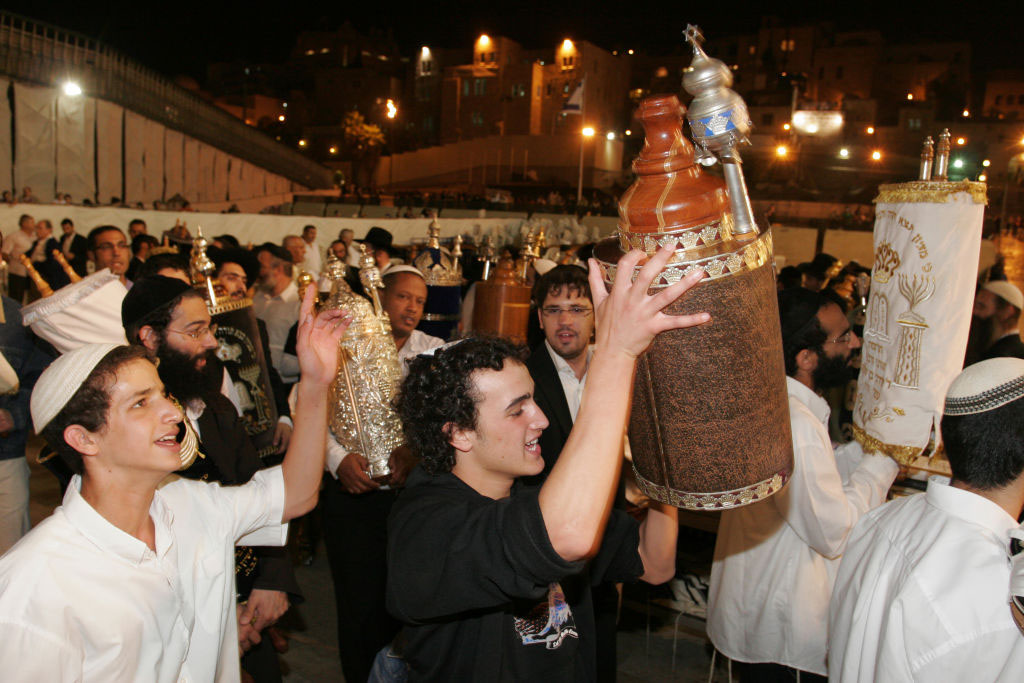
My wife and I raised three boys. I was there for all three deliveries. I saw everything. And I mean everything. Thank God that, too, is mostly a blur. We had their bar mitzvahs in Israel — blur, blur, blur. How many of us, even after two years, can remember much about our own weddings?
Recently, I wanted to look at our wedding album to see how many people had passed. After 36 years of marriage, the answer is 25 out of 85. It’s been so long since I last looked at the album, it was stuck to the shelf of the cabinet.
Watching our sons and their wives raise our grandkids while pinning them down like in a wrestling match or trying to strap them into the car seat or the kids screaming like they were just told you are going to cut their arm off with a corkscrew are creating their own fragments. I can’t even remember going through one of the thousands of moments. The frightening moments during the child-rearing years — gone quicker than lightning.
Even 45 years of live performances have disappeared like vapor from a humidifier. The ice cream has melted; at the bottom of the cup are only the hard chocolate chip fragments from the mint chip ice cream. Each chip is a mix of sweet and bitter.
In movies, it is when the main character gets amnesia and wanders aimlessly, trying to find anything to hold onto, and asking the big question: “Who am I?”
Hyperthymesia is a rare ability that allows people to remember nearly every event of their lives precisely. Hyperthymesia is a superior version of autobiographical memory (HSAM). As of 2021, 62 people worldwide have been diagnosed with the condition. How would you like to be married to one of those people? Believe me, my wife remembers way too much already.
For me, fragments are more than enough. They allow me to weave stories about my identity and prove that I’ve lived. Watch any husband or wife telling friends their life story; invariably, one of the partners disagrees with much of the version being told.
Memory is essential for our sense of self. We rekindle our experiences through our memories. Without memory, who are we, and how can we make sense of the world? Memory can help support our emotional well-being.
I had a bad fallout with a family member with whom I had not spoken to for years. When I contacted him and asked if we could work it out, neither of us remembered what caused the row. We are once again friends.
There is a comic I work with who brings his wife to many of his shows. She has Alzheimer’s. Once a force to help raise awareness for women worldwide to advance, she now sits with us and says very little. If you say hello, she smiles and says hello back. People in charge of the venue watch her when her husband is on stage. He said she has sometimes even forgotten who he is. Even the fragments are gone. They have no children, and if he outlives her, he will one day be left alone with half the fragments because so many of hers are also his and will be taken away.
Our bits and pieces of days gone by are to be cherished with all our hearts. They are you for now and forever.
Mark Schiff is a comedian, actor and writer and hosts, along with Danny Lobell, the “We Think It’s Funny” podcast. His new book is “Why Not? Lessons on Comedy, Courage and Chutzpah.”