
Maybe it’s just a coincidence that America’s 250th birthday falls on the Jewish Sabbath.
But let’s assume, in the interest of a more interesting column, that it is a kind of divine intervention that July Fourth falls on a Saturday.
What might this divine message be?
For me, it is simply that the Jewish Sabbath has what America needs most at the moment.
A taste of gratitude.
Not anger. Not division. Not politics.
Just gratitude.
Our country has become so polarized it’s difficult to put our partisan emotions aside for even one day. I can’t tell you how many tortured “happy birthday America” articles I’ve read that used the occasion to lament the sins of the opposing side. There is bitterness throughout the land.
Even on an extraordinary anniversary that comes along every 250 years, it seems that we can’t help ourselves.
The Jewish Sabbath says the opposite. It says we can help ourselves. It says we have agency. It says we can put the ugly and corrosive noise of the week behind us and contemplate the things that matter most.
Like gratitude.
“On Shabbat we celebrate the things that are important but not urgent,” the late Chief Rabbi Jonathan Sacks wrote. He called Shabbat “a day of gratitude, when the restlessness of the week subsides and we find refuge in an oasis of rest.”
In his classic book “The Sabbath,” Rabbi Abraham Joshua Heschel calls the Jewish holy day “the most precious present mankind has received from the treasure house of God.”
Our founders were aware of the supreme value of gratitude.
“It is no coincidence that the United States, founded by Puritans – Calvinists steeped in the Hebrew Bible – should have a day known as Thanksgiving, recognizing the presence of God in American history,” Sacks wrote. “On 3rd October 1863, at the height of the Civil War, Abraham Lincoln issued a Thanksgiving proclamation, thanking God that though the nation was at war with itself, there were still blessings for which both sides could express gratitude: a fruitful harvest, no foreign invasion, and so on.”
Lincoln understood that even at our lowest point—when we were at war with ourselves—it was essential, even existential, to find reasons to appreciate life’s blessings.
Look, I’m also at war with so much of what is going on in our country. A lot of it drives me nuts. Ironically, the one thing I especially can’t stand is a lack of gratitude for our nation.
But here’s the thing about Shabbat. It technically lasts one day, but its effect is for the whole week. Gratitude is not a 24-hour idea. It’s a full-time mental habit. It’s a social glue. It says we can be on opposing sides and still find ideals we have in common and reasons to be grateful.
Of course, in times of radical animosity, the last thing we think about is gratitude. And yet, it should actually be the first. Because the opposite of gratitude—resentment, bitterness, arrogance—is what ultimately destroys families and societies.
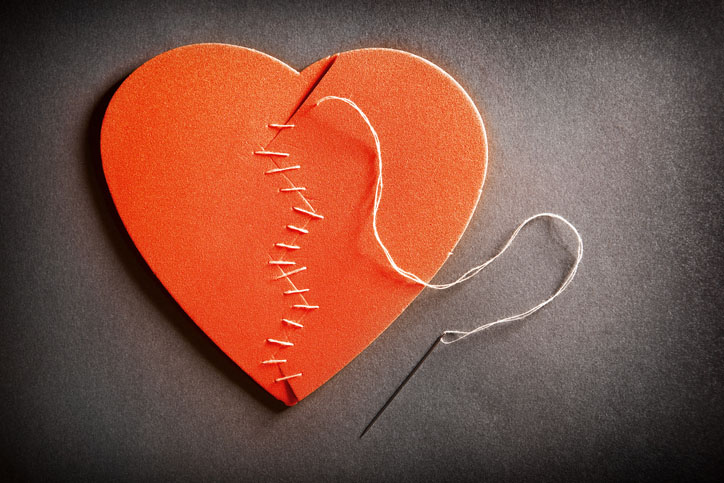
Shabbat comes to help heal our worst instincts.
Whether it’s a divine coincidence or not, it’s fortuitous that our national birthday falls on the Jewish Sabbath. In the midst of our parties and barbeques, Shabbat is God’s birthday present to America to remind us that we still live in the greatest country on earth.
So, as we say happy birthday tomorrow, whether we’re Jewish or not, we can also say Shabbat Shalom, America.