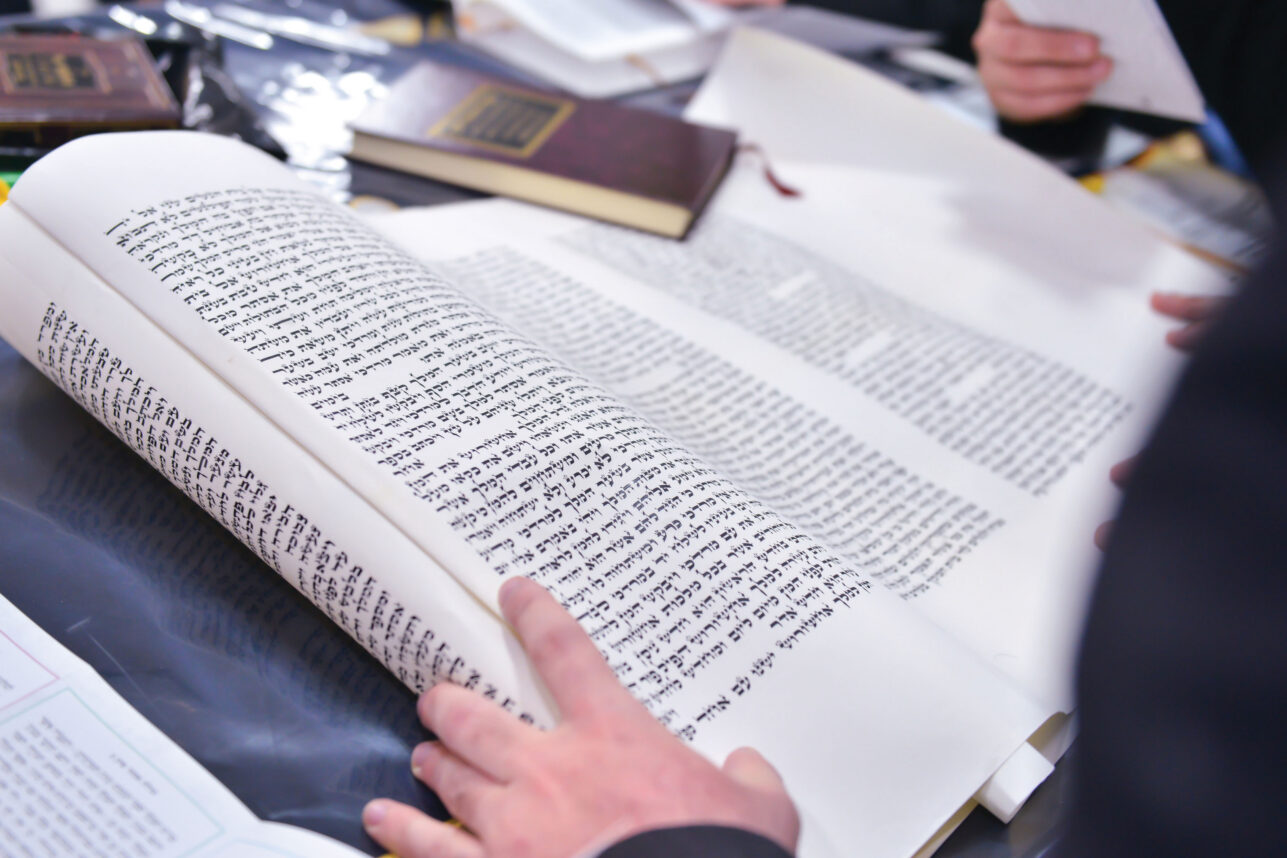
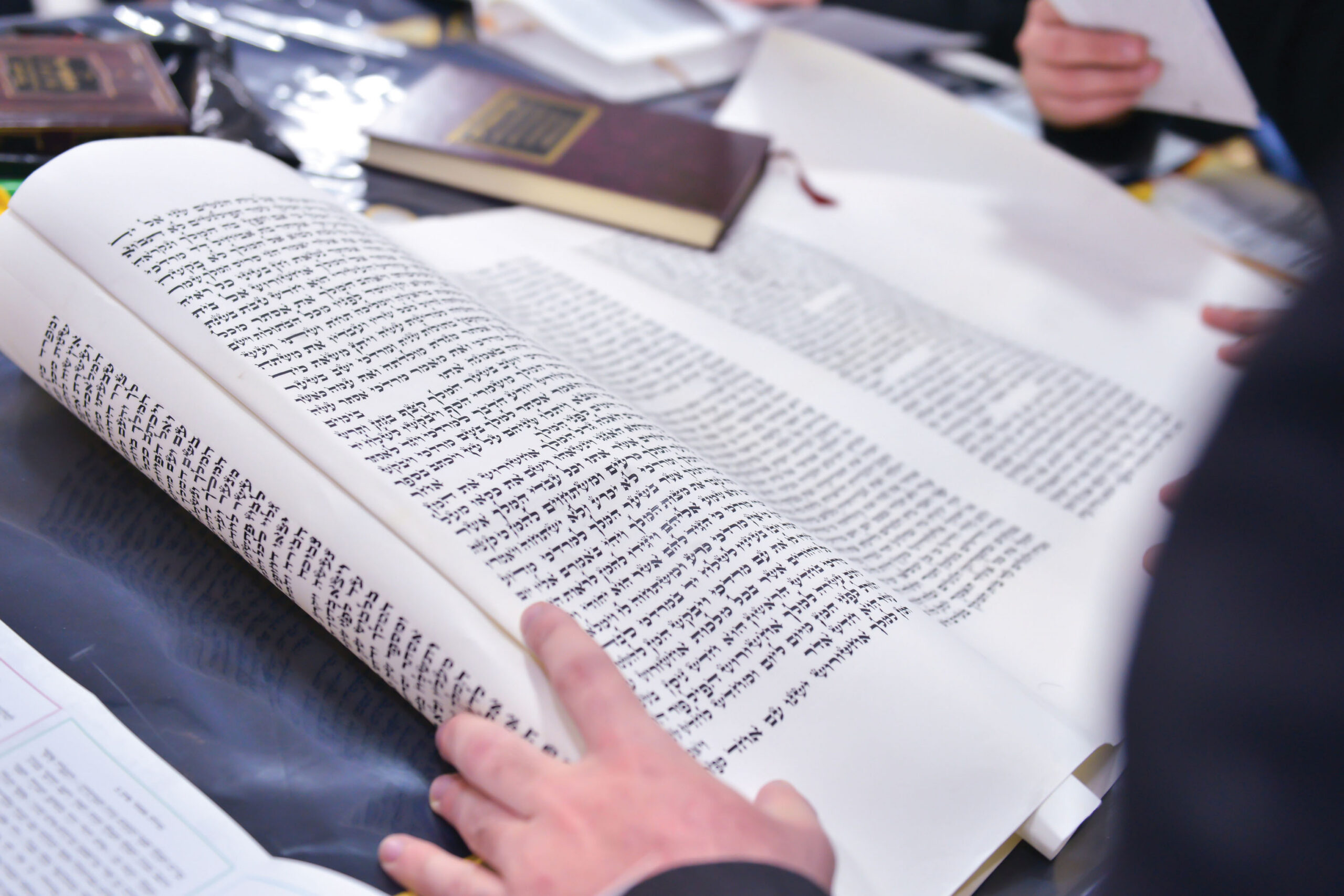
Torah isn’t just for professionals anymore. In fact, it never was. While many of us grew to adulthood with the sense that only rabbis (and maybe educators) studied Jewish texts, the reality is that quarantining the life blood of our existence, the very raison d’etre of Jewish identity to a small elite is a death knell. Torah was given to the entire people: men, women and children. And it belongs to Klal Yisrael, the entire people. Only if we all step up, only if we all say “Hineni, I am here” can this vibrant tool for human meaning, dignity and community hope to have a real future.
A remarkable revolution has hit the Jewish world: for the first time in its history, the Federations and secular organizations acknowledge that Jewish education must be one of the highest priorities of the entire Jewish community; every single one of us is now enlisted. If we think that being Jewish is of value, we all need to up our game. Funding that used to go to “Jewish” hospitals and other institutions whose Jewishness consisted primarily in the ethnicity of its top staff (rather than any distinctive programming or services offered) now must share space with the explicitly Jewish concern of talmud torah (Jewish learning). Institutions have proliferated that offer opportunities for learning at every age, and the new technologies and social media are part of this grand revolution of Torah and spirit.
Why the shift?
Because every study of the demographics of the Jews of North America affirms the simple truth that without Torah there will be no Jews. Without a desire, for some, to serve God through mitzvot, to study and to implement the Torah in our daily lives, and for others, to deepen our identity and cultural link to those who have gone before us, there is simply not enough reason to put up with all the bother and separation that Jewish identity entails. Especially in an age of rising antisemitism, banding together and educating ourselves isn’t a luxury for the few. It is nothing less than resistance to the haters. This is a pivot and a willingness that cannot be transferred to others or displaced on a group; each of us is needed. Each of us is called.
Making ourselves available to growth in learning is no mere matter of partisanship — every Jewish religious denomination has been asserting this truth for at least a quarter of a century. And it is no retreat from universalism, simply a recognition that any universalism that requires (or produces) our destruction as a distinct people and culture is a false universalism, more akin to a cultural imperialism than a centering human diversity and expression.
While Jews have been known as the Chosen People from time immemorial, it is now essential that we become choosing people. When called, Abraham answered, “Hineni, Here I am!” In his pivotal moment, Moses responded as well, “Hineni, Here am I!” It is time we choose the Torah anew: for our own survival, for the survival of our mission of exemplifying righteousness in an often-wicked world. It is time we each and all become fully present, fully available. “Here we are!”
The idea of choosing to follow the Torah, while often associated with the Reform movement within Judaism, is rooted in ancient Judaism as well. Toward the end of the Book of Deuteronomy, for example, the Torah lists a series of blessings that will accrue to the Jew who follows God’s commands and a series of curses that will strike one who rebels against divine dictates. The Torah records the words: “Cursed be the one who does not uphold the words of this teaching to do them, and all the people shall say, ‘Amen.’”
What is striking in this summation is the plain sense that the Jews can choose whether or not to follow God’s will. After all, one wouldn’t curse an automaton that malfunctions. If your television set’s remote control unit doesn’t do what you want it to you don’t curse it, you simply fix it. That God holds out blessings and curses to us implies that we do have a choice. God doesn’t coerce observance. Instead, through teaching, example, and incentive, God hopes to persuade us to voluntarily make ourselves available, as we elevate our behavior to incorporate the holy and moral code of Jewish living.
Rashi takes that notion of choice one step further. In commenting on this verse, Rashi says that “here [in these words] Moses included the entire Torah, and they [the people] accepted it upon themselves with a curse and with an oath.” While there are certainly midrashim that view Israel’s acceptance of the Torah as forced upon them, Rashi is here identifying with the idea that the Jews of Moses’ generation freely chose to be bound by the Torah.
In a sense, choosing Judaism is still what links the contemporary Jewish people, regardless of our denominational affiliations. An Orthodox Jew retains the individual liberty to choose to violate the words of the Torah and the traditions of Judaism yet is expected to choose to adhere to Jewish law in its totality as it is propounded by contemporary Orthodox sages. So too a Conservative Jew is expected to choose to bind themself to a rich life of Jewish observance as the Conservative movement in Judaism understands that heritage. And a Reform Jew is under a similar obligation — to freely choose to respond whenever they hear God’s commanding voice in a mitzvah. This same perspective links Reconstructionist and Renewal Jews as well. Where the denominations differ is in how they understand revelation, how they perceive Jewish law and its development and in who they think speaks authoritatively on behalf of Judaism, God, and their own spirituality. But all Jewish religious movements affirm the need to listen for God’s commands and to respond, as our ancestors did, with “Hineni,” Here I am.
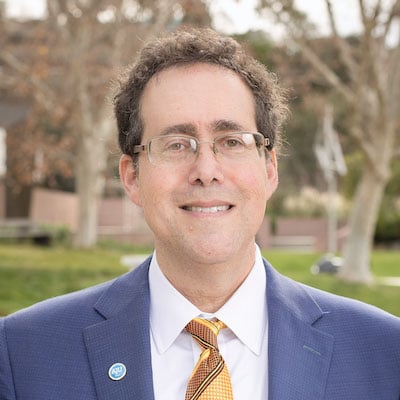
To advance this unifying goal, American Jewish University has asked me to serve as the Goldstine Distinguished Scholar, and part of my happy responsibility is to launch opportunities for Torah study across the breadth of Los Angeles. Stay tuned for gatherings where we can explore, dive deep, debate and grow in Torah together.
Our ancestors willingly embraced the yoke of the Torah — with its need for self-discipline, diligence and study. Despite great hardship, they made themselves available and open. They said, “Hineni.” As a result of their commitment, we are here today, and the world is a richer and more compassionate place. We, today, are called to make a similar stand, to choose a life of Torah, study, and mitzvot. And our Hineni can also transform the tomorrows yet to be.
We are not robots, and God cannot make our choice for us. As the Torah says, “Hear O Israel! This day you become a people for Adonai your God. You shall listen to the voice of Adonai your God, doing God’s commandments and God’s statutes which I command you this day.”
As always, we each have the power to choose to listen, to learn, and to grow, or we can shut our ears to that still, small voice.
Are you listening? Are you willing? Are you here?
Rabbi Dr Bradley Shavit Artson, a Contributing Writer for the Jewish Journal, is the AJU Goldstine Distinguished Scholar while also serving as Vice President of American Jewish University in Los Angeles. He is currently completing a book, “Judaism Beyond Belief: Wisdom for People who Simply Want to Thrive.”