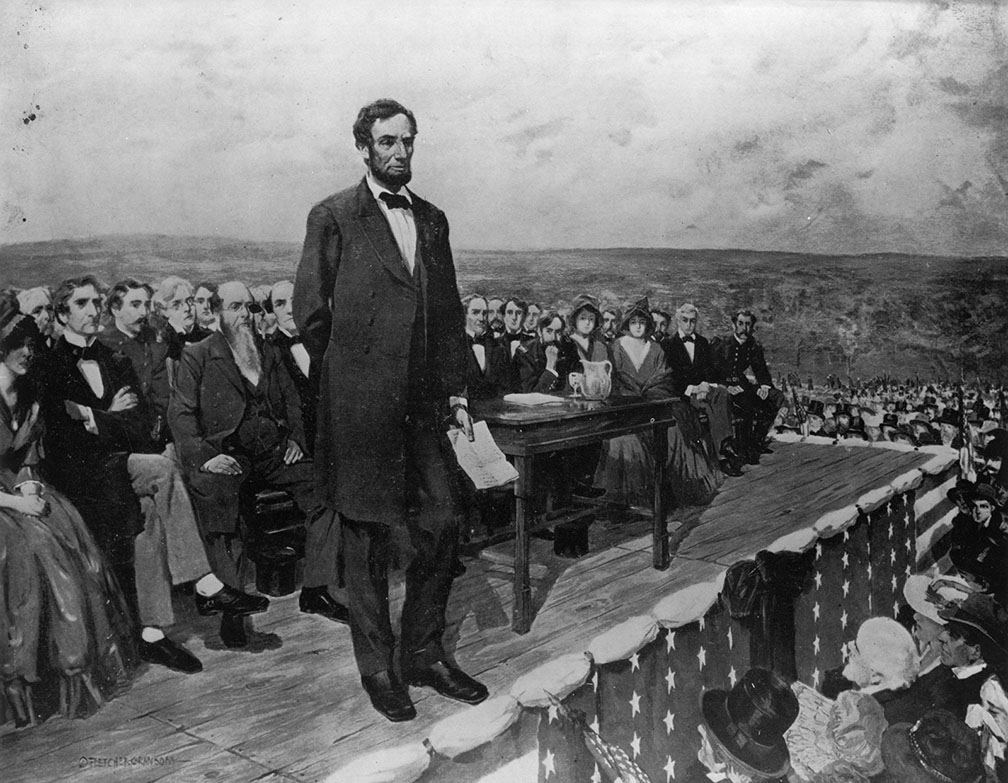
On March 30, 1863, while mired in the midst of the Civil War, President Abraham Lincoln turned to the model of Moses to motivate the Union. It is a moment worth remembering as America turns 250 and the Jewish community commemorates the fast day of the 17th of Tammuz.
A month from that day, Lincoln declared, would be a “day of national humiliation, fasting and prayer,” meant to evoke the aid of Providence in assisting the North in its fight.
His national proclamation of the occasion began by noting that it is the “duty of nations as well as of men to own their dependence upon the overruling power of God, to confess their sins and transgressions in humble sorrow, yet with assured hope that genuine repentance will lead to mercy and pardon, and to recognize the sublime truth, announced in the Holy Scriptures and proven by all history, that those nations only are blessed whose God is the Lord.”
Knowing that his biblically-infused countrymen would immediately understand his citation of the precedent of ancient Israel, which flourished when its faith was strong and floundered when its commitment to the covenant lagged, he then reminded them of their blessings, despite the dark times. “We have been the recipients of the choicest bounties of Heaven,” he noted, “we have been preserved these many years in peace and prosperity; we have grown in numbers, wealth and power as no other nation has ever grown.”
It was then that Lincoln offered a lament that drew from Moses’ last speech, in the Book of Deuteronomy, that warned the Israelites to “Beware that thou forget not the Lord thy God, in not keeping his commandments, and his judgments, and his statutes, which I command thee this day: Lest when thou hast eaten and art full, and hast built goodly houses, and dwelt therein; And when thy herds and thy flocks multiply, and thy silver and thy gold is multiplied, and all that thou hast is multiplied; Then thine heart be lifted up, and thou forget the Lord thy God, which brought thee forth out of the land of Egypt, from the house of bondage; Who led thee through that great and terrible wilderness, wherein were fiery serpents, and scorpions, and drought, where there was no water; who brought thee forth water out of the rock of flint; Who fed thee in the wilderness with manna, which thy fathers knew not, that he might humble thee, and that he might prove thee, to do thee good at thy latter end; And thou say in thine heart, My power and the might of mine hand hath gotten me this wealth” (8:11-17).
“But we have forgotten God,” Lincoln bemoaned. “We have forgotten the gracious hand which preserved us in peace and multiplied and enriched and strengthened us, and we have vainly imagined, in the deceitfulness of our hearts, that all these blessings were produced by some superior wisdom and virtue of our own. Intoxicated with unbroken success, we have become too self-sufficient to feel the necessity of redeeming and preserving grace, too proud to pray to the God that made us.”
Moses had concluded his admonition by instructing his flock “thou shalt remember the Lord thy God: for it is he that giveth thee power to get wealth, that he may establish his covenant which he sware unto thy fathers, as it is this day” (8:18). So too, Lincoln concluded, “It behooves us, then, to humble ourselves before the offended Power, to confess our national sins, and to pray for clemency and forgiveness.”
On April 30, he asked that “all the people to abstain on that day from their ordinary secular pursuits, and to unite at their several places of public worship and their respective homes in keeping the day holy to the Lord and devoted to the humble discharge of the religious duties proper to that solemn occasion.”
With the wish of “this being done in sincerity and truth,” the Union could “rest humbly in the hope authorized by the divine teachings that the united cry of the nation will be heard on high and answered with blessings no less than the pardon of our national sins and the restoration of our now divided and suffering country to its former happy condition of unity and peace.”
Lincoln’s covenantally-minded republic, what he called God’s “almost chosen people,” would emerge from the conflict victorious, just as Moses’ would eventually return to the Promised Land after their fracture and resulting exile. Both countries, forged through faith in God, would recommit to their mandate to be a light unto the nations.
Rabbi Dr. Stuart Halpern is Senior Adviser to the Provost of Yeshiva University and Deputy Director of Y.U.’s Straus Center for Torah and Western Thought. His books include the newly released “Jewish Roots of American Liberty,” “The Promise of Liberty: A Passover Haggada,” “Esther in America,” “Gleanings: Reflections on Ruth” and “Proclaim Liberty Throughout the Land: The Hebrew Bible in the United States.”